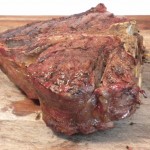
 Photos of recipes from the new book Tender Grassfed Barbecue
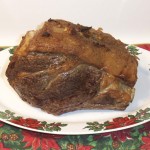 Photos of recipes from the cookbook Tender Grassfed Meat

A Video Worth Seeing about Truth in Food
By Stanley A. Fishman, author of Tender Grassfed Meat and Tender Grassfed Barbecue
Normally, I do not do blogs about YouTube videos. But this video is different.
It corrects some of the biggest false ideas most people have about eating. The message is clear, simple, and compelling. Modern eating makes us fat and sick. Traditional eating, eating the foods humanity ate before industrial food was invented, keeps us slim and healthy. Too much exercise wears us out, and does not make us lose weight.
Eating high quality food is the way to go. Counting calories is a waste of time. Most diets are worthless. The basic, unmodified foods of nature are best. Sugary, starchy foods are the worst. The more natural, the better. Eat grassfed meat. And many other good ideas, clearly presented.
This is all good advice, and totally contradicts the false precepts of the Standard American Diet (SAD), the diet that makes Americans the weakest, sickest, most crippled rich people in history.
I have corresponded with Jonathan Bailor, the maker of the video. His goal is to spread awareness of his message so it can actually reach the mainstream. This is a magnificent goal, as the mainstream believes in SAD, diets, high-carb eating, factory food , calorie restriction, and exercising until they are worn out as the way to be healthy and slim. That sounds ridiculous even as I write it—but most Americans believe this nonsense.
Many of you already know the truth about food, but we are a tiny minority. Ultimately, if we remain a tiny minority, the corporations and governments will make it impossible for anyone to get real food, including us. Knowing the truth about food will do us no good if we cannot get quality food. The best protection we can get is to have our knowledge go mainstream, and Jonathon has a plan to get there.
Jonathon’s immediate goal is to get one million views of this video, as he believes that will get attention and engage the interest of many people. I do not know if he is right, but I hope he is. So I support his goal of one million views.
Ultimately, it is vital that most people learn the truth about food, the sooner the better. If everyone knew the concepts on this video, and followed them, the health and understanding of most people would greatly improve. And that is a worthwhile goal, which is why I am asking you to consider viewing the video.
If you like the video, please consider spreading news of it to the people you know, and inviting them to view it.
The more people who understand the truth about food, the better our chances of being able to have real food in the future.
Here is a link to the video:
Slim Is Simple .org – The Non-Profit Nutrition Education Effort
Grassfed Fat, the Real Brain Food
By Stanley A. Fishman, author of Tender Grassfed Meat and Tender Grassfed Barbecue
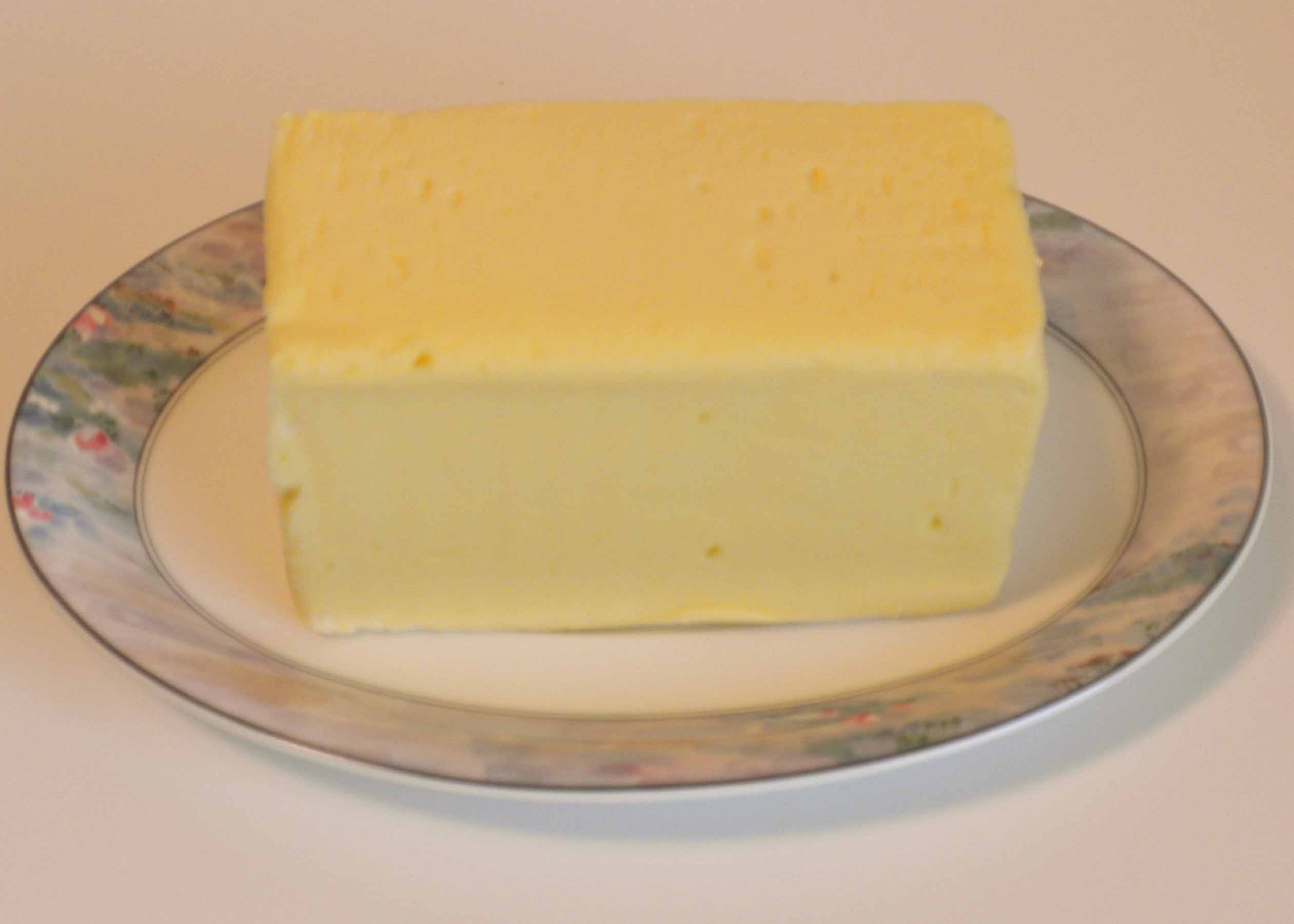
Pastured butter—the best brain food.
We are seeing an epidemic of mental illness and poor mental functioning that may be without parallel in human history. The frequency of many mental illnesses is expanding an alarming rate. A huge and constantly increasing percentage of children are being diagnosed with learning disabilities. The psychiatric profession claims that the increase is due to “better diagnosis,” and that the problems were always there, but I disagree.
When I was a child, learning disabilities were pretty much unknown. So what is the cause of the vast increase in mental illness and learning disabilities?
In my opinion, it is malnutrition. To be more specific, it is the lack of enough good fat in most diets. Because the very saturated fats that our brains need to develop and function properly have been demonized and removed from the diets of so many people, especially children.
Our Brains Need Saturated Fat
We are constantly told that saturated fat, especially saturated animal fat, is deadly, and will clog our arteries and cause heart attacks and strokes. This theory has never been proven, but is generally accepted as fact, due to persistent marketing by the industries who make a fortune from this false belief.
Most people, throughout most of history, have cherished saturated animal fat as their most valued and sacred food. Heart attacks and strokes were very rare throughout most of human history, despite the widespread eating of saturated animal fat in large amounts.
The truth can be seen in the composition of mother’s milk. Nobody really denies anymore that mother’s milk is the very best and healthiest food for babies. Yet more than half the calories in mother’s milk is from saturated animal fat. Nature herself has thus proclaimed the need for saturated animal fat.
Our brains our made largely from fat, and need fat and cholesterol to maintain themselves and function properly. Our ancestors knew this, and many traditional remedies for grief and depression involved the eating of rich, fatty foods. People who had lost loved ones were constantly urged to eat fatty foods. It helped calm the mind.
Dr. Weston A. Price designed a special lunch program for some poor children in Ohio. He intended the diet to improve the health of their teeth. It was a diet very high in saturated animal fat, containing plenty of marrow, grassfed meat fat, butter, and whole milk. Not only did the teeth of the children improve substantially, but their performance in school went from horrible to superb, as reported by their teachers.
Grassfed Fats Are Better
Unfortunately, not all saturated fat is the same. Prior to the twentieth century, most saturated animal fat came from animals fed their natural diet. For grass eating animals such as cattle, sheep, and bison, this meant grass. The twentieth century saw the introduction of feedlots and grain feeding for these animals. The change in diet made their fat different. While the fat of a grassfed animal has a perfect balance of omega-3 fatty acids to omega-6 fatty acids, grain feeding causes a huge imbalance in the ratio, creating a great excess of omega-6 fatty acids. Excess omega-6 fatty acids have been associated with a number of illnesses. The chemicals used in the raising and feeding of factory cattle also changed the content of the fat, to something that had never been eaten by humans before. The change in the composition of the fatty acid ratio is shown in this chart and the accompanying article, Health Benefits of Grass-fed Products.
While the full effect of the change in the composition of animal fats from grain feeding is not fully known, I am much happier eating the same traditional fats that humanity has always eaten.
The best way we can get the good saturated animal fats our brains need, in the proper form, is to eat plenty of fat from healthy grassfed animals. I eat the fat on the meat, use the grassfed tallow in cooking, and eat plenty of grassfed butter, milk, cheese, and cream.
Since I have done so, my mental functioning, which was always good, has improved greatly, allowing me to learn new things much faster and to think quickly and effectively. In fact, with my traditional diet, I learn more as time passes.
This post is part of Fat Tuesday, Real Food Wednesday, and Fight Back Friday blog carnivals.
Nine Ways to Enjoy Butter without Grains
By Stanley A. Fishman, author of Tender Grassfed Meat and Tender Grassfed Barbecue
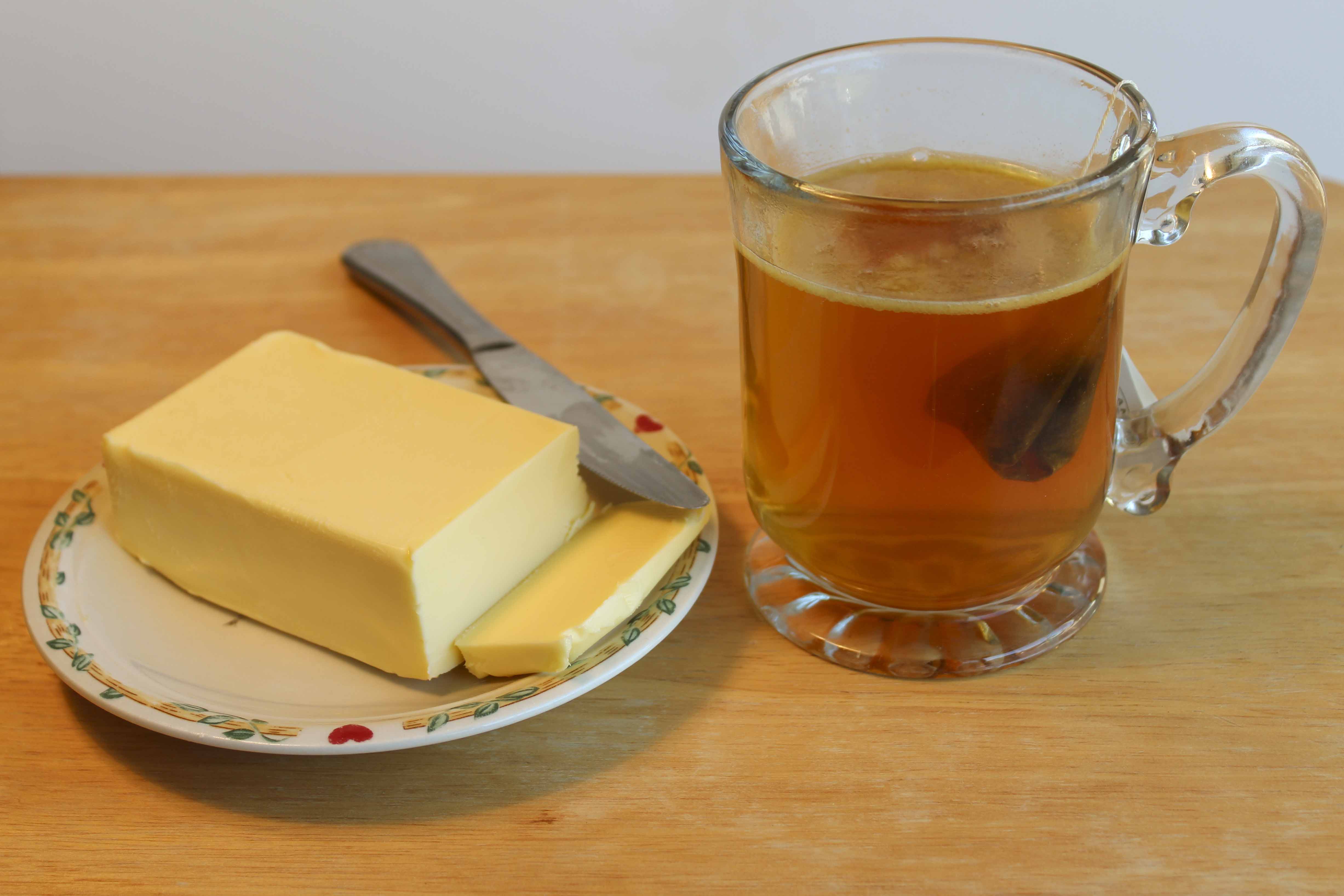
Adding grass fed butter to organic Earl Grey tea makes it more delicious and nutritious.
Most people seem to think that butter can only be eaten with bread or some other grain. Many people who cannot tolerate grains do without butter. This is a shame, because real pastured butter from grassfed cattle is one of the very healthiest foods we can eat, loaded with many nutrients that are hard to find elsewhere. Our ancestors realized the worth of this sacred food, and developed many ways to eat it.
Here are nine of my favorite ways to use butter without grains:
With Grassfed Beefsteak
This is one of the truly simple and magnificent combinations of flavor. It is best to have the butter at room temperature. Just before serving the steaks, place several thin slices of butter on the plate, and quickly cover them with the hot steak. The butter will melt, and mingle with the meat juices to make one of the easiest and most delicious sauces you will ever enjoy. Dipping each piece of meat in the butter just before eating is so delicious.
Alternatively, you can place the butter on top of the steak, but that will not melt as efficiently. Or, you can place the steak on the sliced butter and put some more thinly sliced butter on top of the steak. Delicious and nutritious.
With Roasting Meat
I have read literally thousands of old recipes for roasting grassfed meats. A huge number of them advise placing butter on the meat before roasting. It is utterly traditional. This technique is especially good for these fat phobic times, when butchers usually trim all of the fat off roasts. It is so simple to use. Just cover the top of the roast with butter. The butter will add wonderful flavor and nutrition to the roast.
With Hot Vegetables
One of the oldest and most delicious ways to use butter is to put it over steaming hot vegetables. This will greatly increase the taste and nutrition of any hot green vegetable, even making steamed vegetables palatable. Just put some thinly sliced butter over the vegetables just before eating them.
With Roast Sweet Potatoes
Sweet potatoes have enjoyed new popularity recently, and are full of nutrients. I like to roast sweet potatoes in their skins until they are very soft, slit them open, and stuff slices of butter into the sweet potato. I will mash the butter into the potato with a fork. When it melts, it is utterly delicious. And you get the vital nutrients of butter as well.
With Hot Coffee
Many people put cream in their coffee, but butter is even better. It works best with room temperature butter and hot coffee. Stir the butter into the coffee with a spoon, and drink while hot. Start with a small amount, and increase to your taste. It adds a wonderful buttery richness to the coffee. This will also work with coffee substitutes. Different but delicious.
With Hot Soup
Many traditional recipes call for adding butter to soups just before serving. This is especially good with soups that are based on cream or milk, like a traditional Boston clam chowder, but can be used with most western soups. The trick is to make sure the soup is hot, and to stir the butter in with a spoon. The butter adds a wonderful richness and its own unique nutrition.
With Hot Tea
Adding butter to hot tea sounds strange, but is an old tradition in Tibet. Tibetan butter tea is sipped at all hours of the day, being used to help withstand the cold, nourish the body, and prevent dehydration at Tibet’s high altitude. The Tibetans use yak milk and yak butter, which are richer and more pungent than cow’s milk and cow’s butter. Tibetan tea is complicated to make, but it is easy enough to slip some butter into the very hot tea of your choice. Forceful stirring with a spoon is advised, to mix the butter into the hot liquid, but the tea suddenly becomes a nutritional powerhouse, with a smooth rich flavor. You will have to experiment with the amounts you like, as this is different.
With Sauces
This is one of the most European ways of enjoying butter. Many of the classic sauces are difficult and time consuming to make, but there is an easy alternative. If you are making any dish with a sauce, add some butter to the simmering sauce. The butter will add richness and great flavor to the sauce, along with some unique nutrients.
With Eggs
Fried eggs are out of this world if you drizzle some hot melted butter over them just before serving. You can also add thinly sliced butter to hot scrambled eggs, or an omelet. The freshly melted butter will add a new dimension of taste and even more nutrients!
It is often possible to buy excellent pastured butter from a local farmer. If you cannot find local pastured butter, Kerrygold has made pastured butter widely available. I only buy the unsalted version, as it has a higher butterfat content, which is more traditional.
As you can see, there are so many ways to add butter to your diet. Traditional peoples who ate butter used it in many other ways as well. I never tire of the wonderful taste of pastured butter, and my body never tires of the wonderful nutrition that butter brings.
This post is part of Monday Mania, Fat Tuesday, Monday Mania, Real Food Wednesday, Fight Back Friday, and Freaky Friday blog carnivals.
Debunking the “Healthiest Meal Everâ€
By Stanley A. Fishman, author of Tender Grassfed Meat and Tender Grassfed Barbecue
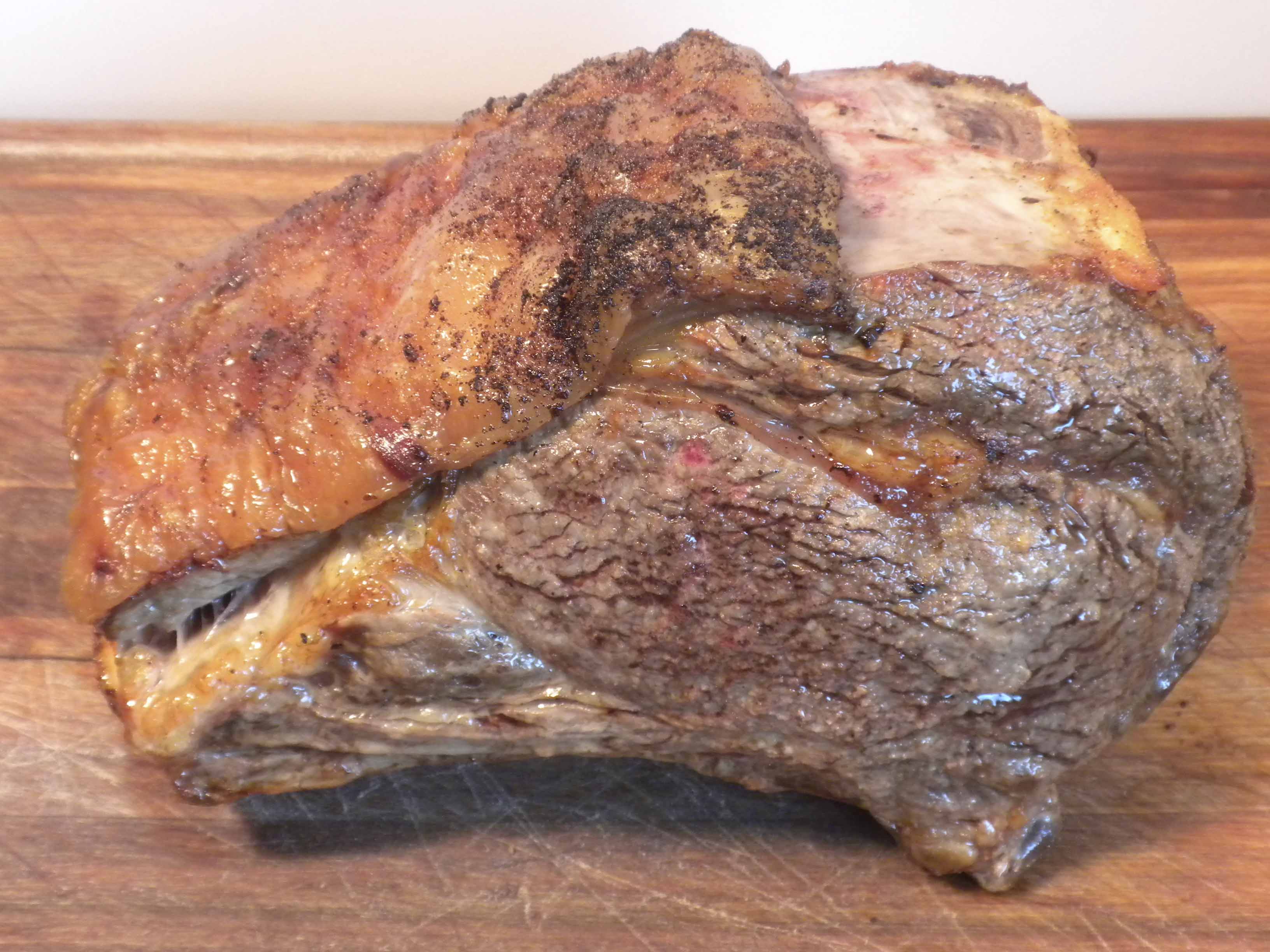
English Style Prime Rib, recipe on page 86, Tender Grassfed Meat
A group of British scientists, who specialize in food research, have designed a menu that they call “the healthiest meal ever.†Their list of dishes and ingredients does not even address the idea of where the food comes from, treating organic and chemical-free as being the same as factory and chemical-processed. While this is a common practice for food scientists, it totally destroys the validity of their argument. Just as bad, the “healthiest meal ever” boasts of avoiding saturated fats, being low-fat, and avoiding the ultimate demon, cholesterol. Never mind that the entire “low-fat is good—cholesterol is death†scam has long been exposed as invalid. This meal also leaves out the healthiest food ever—grassfed meat. Healthiest meal ever? Allow me to disagree, from a real food perspective.
Bear in mind that I have been unable to find the actual recipes, so this debunking is based on the information that has been reported.
The courses in the “healthiest meal ever” will be looked at individually. These are the courses:
Fresh and Smoked Salmon Terrine
Wild salmon is actually a very healthy food. But farmed salmon, the most common kind, is very different in flavor and composition. Farmed salmon is not allowed to roam the ocean as nature intended, and is usually fed food pellets, which is not their natural diet. In fact, many food pellets contain GMO soy, which is something salmon have never eaten before the twentieth century. Farmed salmon are so different from wild salmon that their flesh is colored white, not orange. A dye is added before the fish hit the market to fake the natural orange color of real wild salmon. The scientists fail to specify whether the salmon are wild or farmed, treating them as the same, which is a mistake. Since almost all Atlantic salmon are farmed, this dish would almost certainly be made of farmed salmon. And the other ingredients in the terrine are not even mentioned. Healthy? Not in my book.
Mixed Leaf Salad with Extra Virgin Olive Oil
This also sounds good at first glance. But no specification is made as to whether the vegetables should be grown without chemicals. If they are grown with chemicals, they contain pesticides, which are not healthy. No specification is made as to whether the vegetables are grown with artificial fertilizer or in rich natural soil. This makes all the difference when it comes to nutrient content, as vegetables grown with artificial fertilizer have far less. Even the types of leaf vegetables are not specified. This is an important omission because some raw leafy greens, such as spinach, contain large amounts of oxalic acid, a substance that prevents the body from absorbing vital minerals, such as calcium. To imply that any leaf salad, no matter what the vegetable is, is healthy is simply not true. This might not be so healthy, after all.
High-Fibre Multigrain Bread Roll
This does not sound even remotely healthy. Adding additional grain fiber to bread is a modern practice, not done by our ancestors. We can get all the fiber we need from fruits and vegetables, just like our ancestors did, for uncounted thousands of years. Many people cannot digest modern grains, and many are gluten-intolerant. Since high-fiber is specified, the grains are almost certainly whole grains, which contain large amounts of phytic acid. Phytic acid blocks the absorption of nutrients such as vitamins and minerals. Phytic acid can be neutralized through traditional soaking and sprouting techniques, but those methods are not even mentioned. The grains contained in the “multigrain bread roll†are not specified. Chances are overwhelming that it contains unfermented GMO soy, a substance full of toxins and mock female hormones, both as a “grain†and in the form of soy lecithin. It quite likely contains other GMOs, especially if it contains corn. Once again, the ingredients almost certainly come from grains grown with chemicals and pesticides. Chemicals and pesticides are not healthy. Processed grains like this are high in refined carbohydrates, which have an effect on the body similar to processed sugar. Healthy? Not in my opinion.
Chicken Casserole with Lentils and Mixed Vegetables
When I first read the title of this item, I let out a loud and heartfelt “Yuck!†My wife came over to investigate, and her face twisted in revulsion as she read the title. This dish sounds so horrible, both in title and content, that it could be an entrée in an American school cafeteria. Once again, no attention is paid to where the ingredients come from, treating organic the same as conventional. This dish is touted as “low-fat†and “low-sodium.†This can only mean that the chicken consists of the most boring meat on earth, skinless, boneless, tasteless, flavorless, chicken breast, most likely from a factory farm where the chickens never see the sun, are fed GMO corn and GMO soy, and are confined in crates. Of course, no specifications as to where the chickens should come from are made. The difference between true free-range chickens and factory chickens is huge. The lentils are almost certainly conventionally grown with chemicals. The “mixed vegetables†are not specified, are almost certainly grown with chemicals and pesticides, and could even come out of a can. It is quite likely that some of them are GMO. This is one dish that probably tastes just as bad as it sounds, like it came from an American school cafeteria. Not healthy to me.
Live Yogurt-Based Blancmange Topped with Walnuts and Sugar-Free Caramel-Flavored Sauce
While the yogurt sounds good, A blancmange always contains plenty of processed sugar. Walnuts can be healthy, but no distinction is made between walnuts grown with chemicals and walnuts grown without chemicals. The sugar-free caramel-flavored sauce almost certainly contains a number of artificial ingredients, especially artificial sweeteners, and does not even qualify as food, let alone as something healthy. I would not even taste this.
Now, it has been said that the British cannot cook, and this menu would seem to support that rumor, started by the French, I believe. However, I have had enough traditional English food to know that English food can be delicious. In fact, a traditional English dish was featured in the meal I am about to describe, and it was wonderful, both in taste and nutrition.
My Idea of a Much Healthier and Infinitely Tastier Meal
Since I feel I have an obligation not just to complain, but to come up with a better alternative, I will do so. Every ingredient in this meal was free of chemicals, raised on grass or on good soil.
The meal my lovely wife prepared for Father’s Day will do, as it was absolutely delicious and loaded with valuable nutrients. The menu contained:
Homemade Salmon Broth
This was made from wild salmon heads, stomachs, and collars, simmered for twelve hours. Loaded with the nutritional bounty of the sea, and delicious and invigorating.
Grassfed English Style Prime Rib (from Tender Grassfed Meat)
The king of roasts, a magnificent cut from U.S. Wellness Meats, full of grassfed goodness and nutrition, restoring, rejuvenating, delicious and satisfying beyond dreams.
Pan-Roasted Organic Yukon Gold Potatoes
These magnificent potatoes were cooked in the same pan as the prime rib, roasting in the delicious beef fat as the roast cooked, crisp on the outside, hot and tender on the inside, rich with the nutrients that come from good soil and grassfed fat.
Organic Carrots Cooked with Butter and Garlic
These deep orange carrots were naturally sweet, and savory, redolent with the wonderful combination of pastured butter and garlic, which are very healthy foods in their own right.
Crimini Mushrooms Sautéed in Butter
Butter and mushrooms are magic together, and the wonderful flavor of the deeply colored mushrooms combined perfectly with the pastured butter to make a simple, yet delicious masterpiece.
Roasted Organic Onions
These onions, rich with special nutrients, were roasted right along with the prime rib, and came out with a wonderful, caramelized, sweet and rich flavor.
Homemade Fermented Cilantro Salsa
This homemade condiment, made with cilantro, green onions, tomatoes and garlic fresh from the Farmers’ Market, provided the special nutrients of fermented raw vegetables, while perfectly complimenting the rich, deep taste of the prime rib.
Apricots in Season
These apricots, fresh from the Farmers’ Market, in season, smelled wonderful, tasted better than they smelled, contributed valuable nutrients, and were the perfect dessert for this magnificent meal.
Now, would you rather have my meal, or the one created by the English scientists?
This post is part of Monday Mania, Fat Tuesday, Real Food Wednesday, and Fight Back Friday blog carnivals.
Improve Your Terrain and Natural Functions with Real Food and Grassfed Meat
By Stanley A. Fishman, author of Tender Grassfed Meat and Tender Grassfed Barbecue
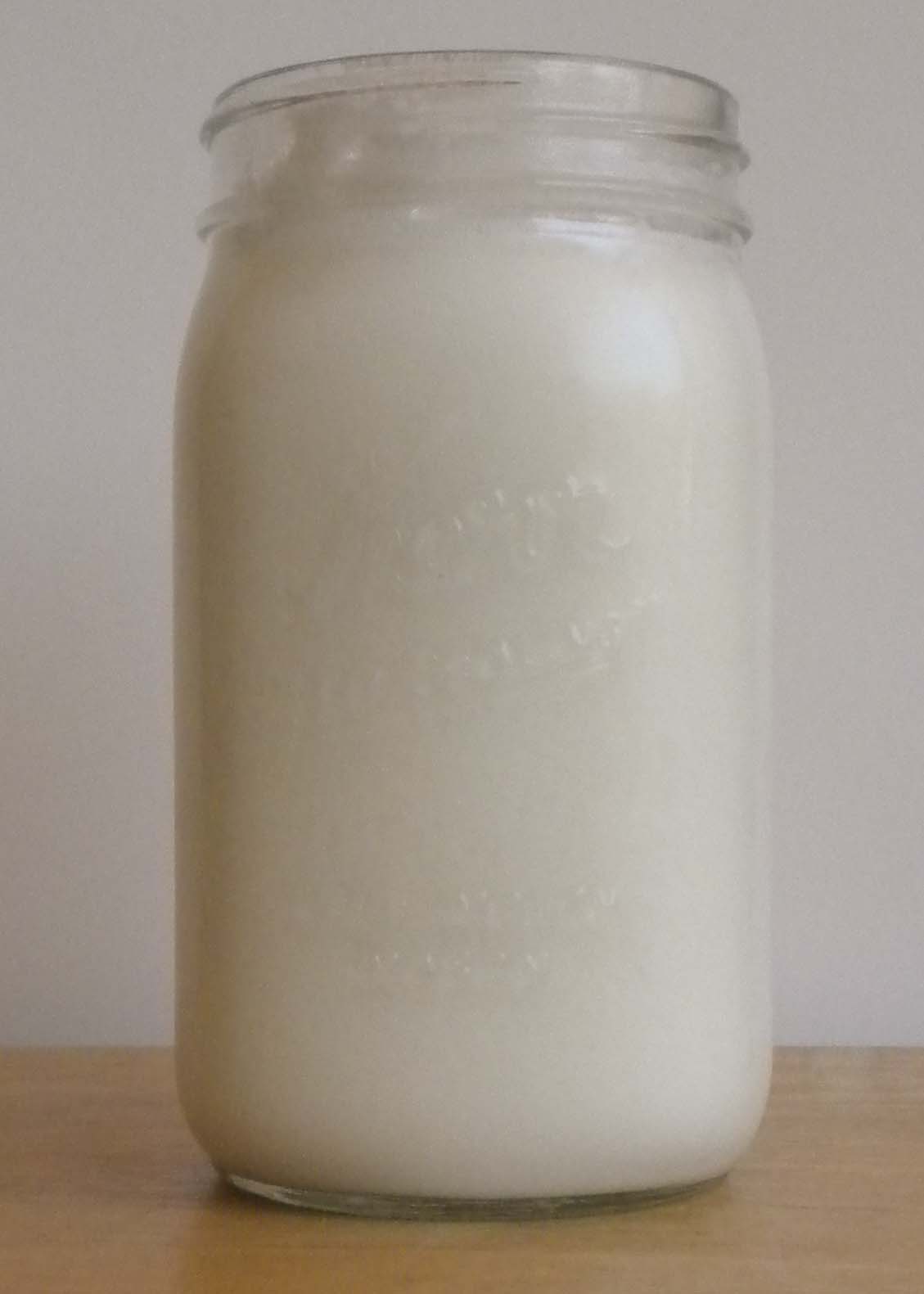
This cooling, traditional yogurt drink, known as Ayran, is full of beneficial bacteria.
I have been thinking recently about why real food, including grassfed meat, has made such a huge difference in my health and wellbeing. After all, I had been brought up to believe that healing could only come from doctors and medicine, and that I should do everything the doctor says. The very phrase “just what the doctor ordered” shows the power our culture gives this profession. Yet, the medical profession failed me completely. When there was nothing else they could do, I had to go somewhere else. Eventually, strengthening the natural functions of my body by avoiding toxins and bad foods, and eating real food and grassfed meat, restored me to good health. No doctor, drug, or medical procedure was involved.
This used to be puzzling to me, after all, everybody knows that bacteria are bad, and cause almost all disease. We are also taught that the only way to restore health is to kill the bad germs through medical procedures. But the chronic respiratory infections I used to get many times a year just stopped happening, a few months after my diet changed. Why?
The answer lies in a conflict of scientific theories, between Louis Pasteur and Claude Bernard. Almost everyone has heard of Pasteur, whose theories are the basis of modern medicine. But almost nobody has heard of Bernard. Yet, based on my own experience, Bernard was right.
Pasteur and Bernard
Louis Pasteur was a French scientist whose theories are the basis of much of modern medicine. Pasteur became famous when he developed a way to help the French wine industry deal with mold, a problem that had become so bad that the very existence of French wines was in jeopardy. Pasteur also developed the process that bears his name, Pasteurization, which is used to supposedly make milk safe to drink.
Pasteur believed that most disease was caused by bacteria and germs, and that killing these small microorganisms was the key to fighting disease and healing most illnesses. This theory is accepted by the modern medical profession, and governments, who try to control disease by killing germs and bacteria. Pasteur incorrectly taught that humans should have no bacteria at all, and all bacteria should be killed. We have learned that humans have a symbiotic relationship with certain bacteria, which are absolutely necessary for digestion and the proper functioning of the immune system, and other purposes. These are now called “good” bacteria.
Bernard, who lived and taught at the time of Pasteur, had a very different view. He saw bacteria as necessary to the proper functioning of the human body. He also taught that bacteria could change inside the body, going from beneficial to harmful, or from harmful to beneficial. Bernard believed that the form taken by the bacteria was completely dependent upon what he called the “terrain,†which was the actual condition of the body. As long as the body was well-nourished, well-exercised, and healthy, the bacteria inside the body would be beneficial and protective. But if the “terrain†was damaged, through injury, or malnutrition, or trauma, some of the bacteria would change to a pathenogenic form that would harm the body, cause disease, and even death. Conversely, if you improved the “terrain†through nutrition and other means, the bacteria would change back to a beneficial form and stop harming the body. To Bernard, the condition of the “terrain†was everything.
In other words, there were two very different theories. One tried to cure by killing bacteria and viruses. The other tried to cure by strengthening the body, which would cause the bad bacteria to be gone, by changing form.
On his deathbed, Pasteur is reported to have said, “The germ is nothing, the terrain is everything.”
Improving the Terrain
The two theories are not completely opposed to each other. It is generally recognized that a strong, well-functioning immune system enables people to fight off disease. And someone who is afflicted by an infection may well need help to fight the infection and give their body a chance to recover. And it is true that the body will fight and kill harmful bacteria and viruses.
But nobody that I know is opposed to a body that functions well, or, in other words, a body with great “terrain.†So how do we improve the “terrain�
The route I have taken is to avoid toxins, emissions, and poisons, and to eat the nutritious foods of our ancestors. I have also come to realize the importance of avoiding stress, avoiding anger and fear, and getting enough sleep. All these things improve my “terrain,†and should help most people.
Avoiding Toxins
This is very difficult to do in a world polluted with chemical poisons. But you can do many things to reduce the amount of chemicals and toxins that enter your body. To me, this means avoiding all food and items that contain added chemicals, to the extent possible. Since chemicals are everywhere, this requires learning about the toxins and how to reduce your exposure to them. Two of the most basic ways you can do this is to eat only foods that are organic or the equivalent and drink filtered water. The best source I know for the right way to eat is contained on the website of the Weston A. Price Foundation, which has a huge number of online articles on many important subjects. This was how I learned the truths that enabled me to rebuild my “terrain†and restore my natural functions, which has resulted in the best health of my life. I have had no reason to see a doctor for over ten years now.
It is important to filter water, as water contains many toxins such as fluoride, aluminum, chlorine, drug-residue, and many others.
Eating Real Food and Grassfed Meat
This was, without doubt, the key part of my journey to health. Real food is the food of our ancestors, raised, cooked and eaten without the use of chemicals. It does not include GMOs or flavor enhancers. It merely includes food, and nothing else. I found that eating grassfed meat was the key to rebuilding my body to strength and vitality. Many traditional peoples used meat for this purpose. Only grassfed meat has had this effect on me, as the factory meats raised with chemicals and unnatural feeds just did not help me. Using cooking methods similar to those of our ancestors is also important, as modern cookware is often full of toxins that can leach into the food.
Avoiding Stress, Fear, and Anger
There is a good deal of stress in life. But most stress is created not so much by what actually happens, as by how we think of it. Stress causes the body to produce free radicals that actually damage the body, harming the “terrain†and hampering the natural functions. Fear and anger have a similar effect, causing the release of chemicals that pump the body up to take drastic fight-or-flight action, which is useful only if you are fighting or running. These chemicals also harm the “terrain,†and interfere with the natural functions. I try to cultivate a happy, peaceful attitude, and to avoid stressful situations to the extent that I reasonably can. I also choose to avoid responding with fear or anger, to the extent reasonably possible, by thinking positively when I can. I have also found that focusing on happy thoughts, by paying attention to and enjoying the many good things that happen seems to help the “terrain.†After all, feeling good feels much better than being scared or angry. There are times when it is very hard to avoid fear or anger or stress, but to the extent there is a choice, I choose to avoid them.
I am not a medical professional, and I can only use my own experience as my guide. I am sharing that experience, and my thoughts on what happened to me. But, for me, I am confident that improving my “terrain†through real food and grassfed meat enabled the natural functions of my body to function well, and improved my “terrain,†as did taking a more positive view of life.
Related Post
Traditional Drink Cools and Restores Nutrients
This post is part of Monday Mania, Fat Tuesday, Real Food Wednesday, and Fight Back Friday blog carnivals.
Why Taste Enhancers Should Be Avoided and How to Do It
By Stanley A. Fishman, author of Tender Grassfed Meat and Tender Grassfed Barbecue

The smell of good food cooking is the only taste enhancer needed.
What if the food you ate was spiked with a chemical that caused you to have hallucinations? A chemical that distorted what you saw to the extent that you could not trust your eyes, because the chemical was causing your brain to see things that were not there? A chemical that caused you to see things the manufacturer and seller wanted you to see?
Would you object to such a chemical? Would you want such a deceptive chemical banned from the food supply?
Almost every person would. After all, we need to be able to trust what we see with our own eyes, to get accurate information from our senses. Yet you almost certainly have ingested many chemicals designed to deceive and trick your senses. Except the sense they deceive is not your eyesight, but your taste.
These chemicals are known as taste enhancers. If they appear on a food label at all (and they often do not), they can be called artificial flavors, or a host of other names.
The purpose of these chemicals is to trick your mind into believing it is eating something that is not there. Since our sense of taste serves many important functions, these functions are also deceived by this false information, and cannot function accurately. These chemicals have one purpose, to get you to buy the product they are placed in.
The Importance of Taste
We have over ten thousand taste buds in our mouths and tongue. They are there for a reason. The reasons include these:
- To detect poison
- To detect food that is good to eat
- To detect spoiled food
- To detect the presence of nutrients in a particular food
- To signal the digestive system so it can properly prepare to digest the food that is coming
- To stimulate the production of and release of saliva with the right mix of enzymes to predigest the food as we chew it
- To regulate our appetite
- To let us know when we have had enough
There are many other functions, almost certainly including functions we have not yet discovered. An accurate sense of taste is vital to our knowing what and how much to eat. For most of human history, we could trust our sense of taste. It protected us from harm, and provided the best possible feedback on how much we should eat.
I consider it crucial to have accurate taste feedback at all times. If the natural taste of something is really bad, or even a bit off, our body is telling us not to eat it. If the natural taste of something is really good, our body is telling us that we need the nutrients in that food, and to keep eating it. If we have eaten enough of a particular food, the taste changes, and we know when we have had enough.
For example, the first bite of a perfectly cooked grassfed steak will make me want to eat more, as it tastes so good. But after I have swallowed the nutrients that I need, the steak no longer tastes as good. My body is letting me know that I have had enough. If I were to force myself to eat more, the taste would become worse and worse. This is nature’s way of letting us know when we need to eat more of something, and when we need to eat less. If you eat only real food, cooked with the traditions of our ancestors, your sense of taste should work properly to let you know what to eat and how much. Since every one of us is unique, this is much more useful, in my opinion, than “one size fits all” nutritional guidelines.
But if you eat food spiked with taste enhancing chemicals, it is a different story.
The Trouble with Taste Enhancers
The first widespread flavor enhancer was Monosodium Glutamate, also known as MSG, which was invented in Japan. During World War II, American soldiers eating captured Japanese rations were astonished by how good they tasted. This lead to the widespread use of MSG in the American food industry, and to the creation of many other flavor enhancers.
Taste enhancers work on a neurological level, which means that they deceive the senses and directly affect the brain. Some make food appear to taste much better than it actually does. Others fool your brain and body into thinking you are eating meat, even when you are not. Others convince your brain that you are experiencing a particular taste, but you are not. This gives false information to your body and brain, and your natural functions act according to this false information. There are literally hundreds, perhaps thousands, of chemical combinations that are used to enhance and create taste in processed foods, and in fast foods. They are created and modified by skilled chemists who are trying to create a particular taste or effect. Unfortunately, these chemists are very good at their jobs.
Why are taste enhancers used? To enhance profits. Processed foods and factory foods are designed for long shelf life. They often contain many ingredients whose natural taste is foul and revolting to humans. They are processed, often heavily, to remove these foul tastes, and often have very little flavor. Tasteless foods often contain fewer nutrients than tasty foods. If the flavor was not enhanced to be better, much better than it naturally is, very few people would eat these products, because they just would not taste good enough. While giving a false good taste to inferior processed foods is a major reason for the use of taste enhancers, it is not the only one.
Taste enhancers can get you to eat more and more of a particular food. They do this by sending false information to your brain that makes you believe that you want to eat more and more of the food they are added to. The problem is made even worse by the poor nutritional content of factory and packaged foods, which makes your body hungry for nutrients which are not there. This combination is one explanation why so many people will eat a whole bag of cookies, or pint of ice cream, or huge amounts of soft drinks, cereal, fast foods, and any number of other factory foods. Obviously, if people eat more and more of a product, profits are enhanced. Getting us to eat much more food than we actually need is a big key to the profits of the food industry. These chemicals can be so effective that they totally override the natural appetite control built into our sense of taste.
A third and related use is to get our brains to crave a particular product. If you crave a particular fast food item, or packaged food, what you really crave is the chemicals used to enhance its taste. I still have a craving for a particular fast food item. I have had that item only once in the last ten years, yet I still crave it. When I ate it, I wanted to eat more and more of it, no matter how much I had. I tried it a few months ago, just to see what would happen. I ordered a small amount, which I quickly wolfed down, much faster than I intended. I immediately wanted to eat more, and more. It took a lot of willpower to leave the place. When I researched the contents of that particular food, I found that it contained several chemical taste enhancers.
The biggest problem with taste enhancers is that they deceive our sense of taste, and reduces its ability to perform its natural functions. Which means that the ability of our sense of taste to prevent us from eating foods that we should not, and to regulate our appetite, is greatly diminished.
The Solution
It takes work, but there are great benefits to avoiding chemicals, eating real food, and helping your body function as it was intended to do. It has made a huge difference in my life, giving me much more harmony, joy, and health. And my sense of taste has improved steadily, greatly increasing my appreciation of the food I eat. And I eat much less than I used to, without effort.
The only way I have found to restore my sense of taste to its proper function is to avoid taste enhancers. This means avoiding all packaged foods, except certain organic items. Even then, I read every label and reject everything that has an ingredient with a scientific or chemical name, or includes the words “flavors,†or “spices.†There are some wonderful traditional fermented foods out there, but I will only buy from a company that I have checked out and trust. To the extent that I can, I cook everything from scratch. I do my best to obtain foods that have been raised without chemicals, and which are traditionally raised on good soil.
I use traditional cooking methods and ingredient combinations. I only eat grassfed meats, or in the case of pork or poultry, meats that are pastured or naturally raised. I generally avoid most restaurants, and I am very careful to know the food of the few restaurants I will eat in. I never eat fast food, except for that experiment I described above.
What if you do not know how to cook? I respectfully advise you to learn. I think cooking is one of the most important skills anyone can have, as it gives you the freedom and ability to eat and prepare food that will be wonderful for you and your loved ones. And, given that we are what we eat, what could be more important?
Is all of this a lot of trouble and work? You bet it is. But it is worth it. Convenience was and is the great temptation that convinced most of us to rely on packaged foods and factory foods. The work of obtaining good food and the work of preparing and cooking them allows my sense of taste to function properly. I eat much less, though I eat as much as I want. I feel content and renewed after every home-cooked meal. I enjoy my meals without any negative consequences. And eating this way has resulted in the best health of my life, by far, as my natural functions work as intended, without being deceived by chemicals.
This post is part of Monday Mania, Fat Tuesday, Real Food Wednesday and Fight Back Friday blog carnivals.
Only Small Farms Produce Magical Food
By Stanley A. Fishman, author of Tender Grassfed Meat and Tender Grassfed Barbecue
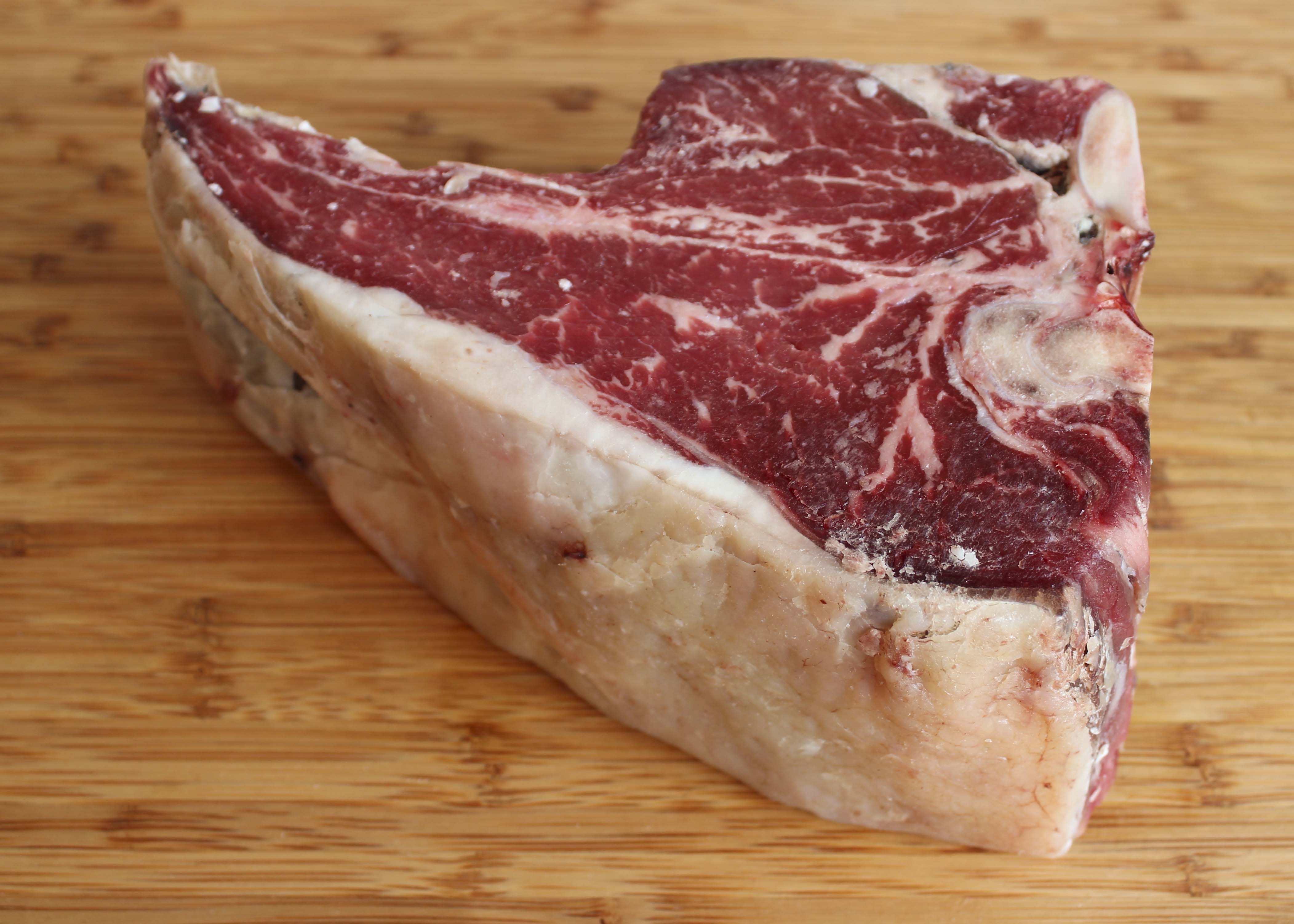
Grassfed Porterhouse steak aged to perfection. Cut by master butcher Robert Webster.
I had pre-ordered a grassfed Porterhouse steak for a special occasion. My butcher had dry aged the meat for several weeks. I waited with anticipation as he finished trimming off the dark, dry exterior, while leaving a healthy fat cap on the steak. When he presented me with the finished steak, I was stunned. I had expected it to look good, but not like this.
You can see the steak in the accompanying photo, with a deep, beautiful color, well marbled with fine flecks of life giving grassfed fat. It was one of the most beautiful steaks I had ever seen. I could only imagine how good it would taste. It looked even better in person than in the photo.
I have had plenty of great meat from this particular rancher, but nothing that looked like this. I asked the butcher why this meat looked so outstanding. He told me that they had been getting some beautiful meat from this rancher recently, even better than his usual excellent grassfed meat. And he told me the secret. The rancher said that there was a special pasture that he could use only part of the year. There was something about that particular pasture that his cattle thrived on. Every year when they grazed that pasture, they produced outstanding meat even better than usual. And meat that had a great deal of beautiful grassfed marbling. And the taste was also much better. The rancher just knew that this particular parcel of pasture produced magnificent meat. He finished as many of his cattle as he could on that pasture.
We had that steak for a special occasion, and I can tell you that it tasted even better than it looked. The tenderness was outstanding, and the flavor—that flavor would have won a prize anywhere. If that steak was a wine, it would have been a prize vintage. It was like magic. The magic of a special pasture, used wisely by a skilled rancher, enhanced by the art of two master butchers.
No factory meat, fattened on industrial feed, could come close to tasting like this.
Real food raised by artisan farmers is good beyond belief, Industrial food has no magic.
One of the worst things about industrial food is that we lose the joy, the magic of food. . Once, in America, farmers just did not use an industrial mix to grow food or feed animals. They used the unique magic of the land itself. The local people knew what farmer had particularly good cherries, or corn, or beef, and these farmers used their knowledge of the unique aspects of their land to produce food that was so good it was magical. Fruits and vegetables were eaten in season, at the peak of their perfection. Cattle were finished on special pastures chosen for their richness and wonderful effect on the cattle. Cattle and sheep might graze in a particular meadow, whose plants would give a nice flavor to the meat. Every farmer and rancher had their own special knowledge, often passed down from father to son, mother to daughter. And they would use this special knowledge to create food that was so much tastier and nutritious than the industrial food of today that there is no comparison. Eating this artisan food will renew your body and energy, enabling all the natural functions of your body to perform perfectly.
Industrial agriculture produces food that has no soul. This food, raised with chemicals from a lab, has a mediocre taste that is the same no matter where it grown, and no art, no magic. Just fodder that people eat because they have gotten used to the mediocre taste, and know no better. Food that is inferior in taste, in appearance, in texture, and in nutrition. Food with no magic.
My father, who grew up in rural Canada many years ago, constantly told me how much better the food was, and how modern fruits, vegetables, and meat had hardly any flavor, and never made you feel good. I thought he was old, and lost his sense of taste. I realize now he was right all along.
Magic food only comes from small farms and ranches.
I have been blessed in being able to eat some unbelievably wonderful food on many occasions. Grassfed beef, grassfed bison, grassfed lamb, and heritage pork that have the magic that only a master rancher, with great pasture, can produce. Vegetables with so much flavor that they make even organic supermarket vegetables taste like cardboard. And I have experienced the wonderful nutrition you get from food like this. Not only do you have the great pleasure of eating magical food, your body feels wonderful and renewed. You never feel stuffed or bloated on food of this quality.
But you can only get food of this quality from one kind of place. A small farm or ranch, where the farmer knows the magic of producing superior, real food. Every farm and ranch like this is a treasure, one well worth preserving. The quality of food from such a place ranges from excellent to even better. And sometimes, if you buy just the right food at just the right time, you will experience the food magic that most modern people have lost.
Let us do all we can to support our great small farmers, so the magic will not die.
This post is part of Monday Mania, Fat Tuesday, Real Food Wednesday, Fight Back Friday and Freaky Friday blog carnivals.
Michigan Massacre Kills Freedom, As Well As Hogs
By Stanley A. Fishman, author of Tender Grassfed Meat and Tender Grassfed Barbecue

 photo credit: Caveman Chuck Coker
The Michigan Massacre continues. Heritage pigs are being slaughtered, down to the last baby piglet. The farmers who own these pigs are forced to kill them, or watch them be killed by DNR agents. If they fail to cooperate, or resist, they face years in state prison and a felony conviction, along with huge fines. These farmers are having their herds destroyed without trial or hearing, losing their livelihoods without compensation. It is not only the pigs that are being massacred in Michigan, it is our liberty.
The fourteenth amendment to the Constitution of the United States of America provides in part:
“(N)or shall any state deprive any person of life, liberty, or property, without due process of law. . . ”
Due process means a fair hearing, with the right of appeal, except in the most dire emergency circumstances.
And domestic farm animals, including heritage pigs, are property.
Heritage hogs behind a fence are not that kind of emergency, not by any means. What due process did the Michigan pig farmers get?
There was no trial, no hearing of any kind, no right of appeal. The kill-all-pigs order did not even come from the state legislature. Instead, the Michigan Department of Natural Resources issued a regulation. A regulation that is totally insane. A regulation that demands the extermination of almost every breed of pig in the state, based on how they look, including all heritage breeds raised by small farmers. This applies even when the pigs are behind strong fences, with no chance of escape. Oh, but the pigs in the CAFOs (Concentrated Animal Feeding Operations), raised in confinement, are not affected by the regulation. The Michigan Pork Producers Association used its lobbying power to block an attempt in the state legislature to delay the implementation of the regulation.
In other words, big corporate hog farms are not affected, while small farmers raising heritage pork will have all their pigs killed, without compensation.
What “due process” do the small farmers get? Several carloads of armed DNR agents, who show up at their farm giving the farmer the choice of killing all their pigs or being charged with a felony that could put them in state prison for years. The fact that the agents may have a warrant is not due process. This is the same kind of process used in every totalitarian dictatorship, from Nazi Germany to Soviet Russia to East Germany to North Korea—those armed thugs had papers as well.
Liberty is dying in Michigan this month, while the federal government and the Michigan government do nothing.
If corporate America is allowed to destroy the production of real food by influencing state regulatory agencies, there will be no real food.
Many small pig farmers have already destroyed their herds, afraid of going to state prison for years, and being heavily fined. But a few farmers are standing strong. This article and the accompanying video, on the Hartke Is Online blog, describes how a brave man is standing against this tyranny:
On the Darkest Days of the Local Foods Movement, a Hero Takes a Stand
This post is part of Real Food Wednesday blog carnival.
Rely on Real Food, Not Labels
By Stanley A. Fishman, author of Tender Grassfed Meat and Tender Grassfed Barbecue
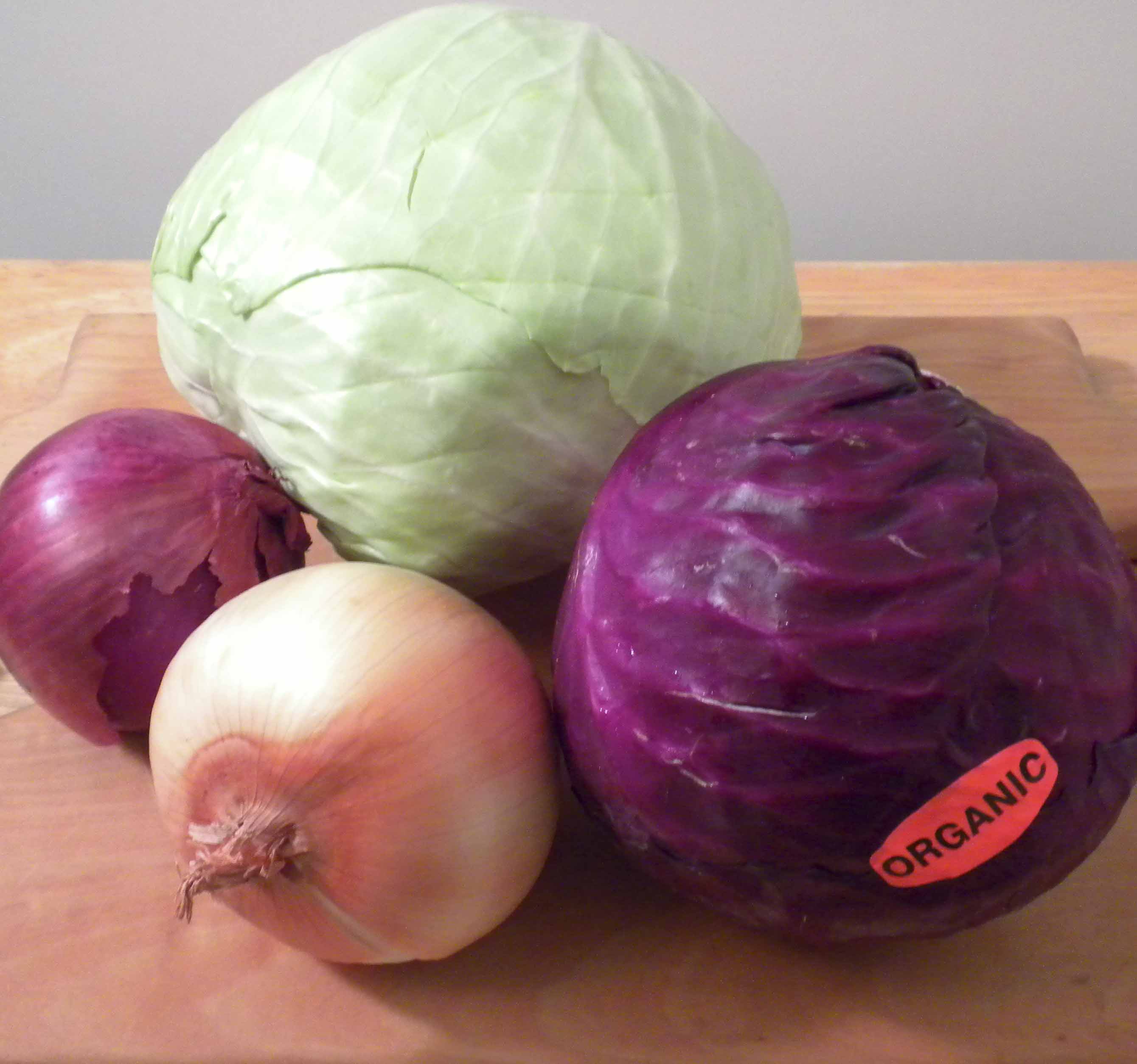
Local organic produce
Most of us believe that all ingredients will be listed on the label when we buy a food. After all, the USDA and the FDA are there to make sure our food is safe, and that we know what is in our food, right?
Wrong. Food labels do not contain many of the ingredients that have been added to the food. The federal agencies allow a host of chemical additives to be added to packaged foods, without labeling. As long as the amount of the ingredient is below a certain percentage, it is not required to be listed on the label. This has led the food and chemical industries to develop a number of chemicals that are so strong that even a tiny amount can have a dramatic effect on the food. Since the amount used is so small, the ingredient need not be labeled.
In addition, ingredients added to packaging are not labeled as an ingredient, since they are considered to be part of the packaging, not the food. But these ingredients are in direct contact with the food, and get into the food.
Many products labeled as “organic” may not actually be organic.
Rather than making our food safe and informing the public of ingredient content, the mission of the federal agencies seems to be to protect the profits of the large food industry at all costs. This is apparent if you look at what they actually do, rather than listening to what they say.
The only solution I have found is to buy as much of my food as I can from farmers and ranchers I know and trust. And to buy local whenever possible. I do not trust food labels, but I do trust real food, as raised by the farmers I know and trust.
What Is Not on the Label
The food industry has developed a number of preservatives, sweeteners, and flavor enhancers that are so powerful that even a tiny amount will have a huge effect on the food. None of these compounds occur in nature, and all of them have been developed in a lab. Many new ones are developed and added to food every year. Because they are so powerful, they can be added to food in amounts so small that they do not have to be labeled. Yet no one really knows what effect long term use of these substances will have on the human body. Do you want to be a guinea pig for the food and chemical industries? I do not. But you cannot rely on labels to protect you from being a guinea pig for these artificial, lab-made substances.
The ingredients in the packaging are not labeled, either. For example, many kinds of food packaging have nanites added. But you will not find nanites on the label. If you think nanites sound like something out of a science fiction novel, you are right. Currently, they are incredibly tiny particles that are used to kill bacteria in food. What will these tiny particles do when they get into the human body? Will they kill the beneficial bacteria we all need to digest food and be healthy? Will they enter our cells and damage them because they are so tiny and can penetrate cell walls? Will they interfere with the vital functions of organs like the heart, lungs and kidneys by penetrating them? All these concerns have been raised, but there are no clear answers, and no long-term testing. Once again, we are guinea pigs without even knowing it.
In addition to nanites, BPA and many other chemicals are added to food packaging. BPA and other chemicals have been shown to interfere with human hormones. But you will not find them on a label.
GMOs are not labeled, either. In Europe, the presence of GMOs must be placed on food labels. But not in the U.S. In fact, I have yet to see a single label that discloses the presence of GMOs. GMOs are plants that have been modified by biotechnology to have certain characteristics, usually a heightened tolerance to pesticides. They do not occur in nature and are designed in a laboratory. Most people do not want to ingest them. Yet almost all non-organic packaged foods contain GMOs. Almost all food animals are fed GMO crops as feed. If you eat a conventional diet, you are getting plenty of GMOs in your body.
Finally, the feed and chemicals that have been used to raise a food animal are not on the label. Factory beef, for example, is usually raised with artificial growth hormones, artificial steroids, non-therapeutic antibiotics, GMO corn, GMO soy, and can contain a number of other “feeds” that are approved by the government, including chicken manure, processed restaurant waste, candy bars, and many other ingredients that no ordinary person would ever think of feeding to cattle. But none of these substances is on the label.
But Can You Trust Organic?
You should be able to trust the organic label. It means that everything in the bottle or package is organic, without pesticides or chemical additives, right?
It should. But it doesn’t always. The label “organic” now means that only ninety-five percent of the ingredients must be organic, with the other five percent coming from an approved list of non-organic materials. If it says “100% organic,” then everything in the box or package is supposed to be organic. But is it?
Again, not always. A lot of organic food comes from foreign countries, particularly China. The safety of food from China has been a subject of controversy for years. Food safety outbreaks have happened in China so often that the government has actually shot people who were deemed responsible for tainting food. China has generally not allowed foreigners to inspect food plants in China, so most of the food that is certified organic is inspected by a Chinese company. Many people have raised concerns over whether organic food from China is actually organic, or contaminated with pesticides and chemicals. This issue became particularly identified with Whole Foods Market, the giant multi-billion-dollar grocery conglomerate. Whole Foods used to get most of its organic foods from China. After an ABC news story in 2008 that questioned whether foods from China were actually organic, a huge controversy broke out, with Whole Foods steadfastly insisting that its organic food from China was in fact organic, while critics claimed it was impossible to adequately verify whether food sold in China was actually organic. In 2010, Whole Foods announced that most of the organic fruits and vegetables sold under its 365 label would be purchased from countries other than China. However, it was unclear whether other foods sold under that label such as sauces, condiments, etc, had organic ingredients that were not from China.
The issue of whether foreign foods labeled “organic” actually are organic has risen in regards to foods from other foreign countries besides China. So what is true? I do not actually know. But, since avoiding pesticides and chemicals is very important to me, I do not buy organic food that does not come from the United States, or Canada, or the European Union. I am familiar enough with their certification programs to believe they are usually enforced, whereas I just do not know about the standards in the other foreign countries. I prefer not to take the risk. I also like the idea of supporting local farmers, and food from foreign countries is the opposite of local, especially when it is shipped thousands and thousands of miles from China.
Another problem with organic foods in the U.S. is the packaging. The packaging can contain various chemicals that can enter the food. For example, even organic tomatoes can have BPA in the lining of the cans they come in. For this reason, I only buy organic foods that come in glass jars, as I think they do not have chemicals added to the glass.
The Best Solution—Buy Local, Buy Trusted
Because of the many problems with labeling, along with the widespread use of chemicals and pesticides by the food industry, I have found that the best solution is to buy as much food as possible from local farmers and ranchers I trust. It is worth getting to know the people you buy food from, to understand their values, and to feel that they are raising the kind of food you want to eat. In this case, the use of organic farming techniques, often called the equivalent of organic, is much more important than certification. Organic certification can be very expensive, and some of the best farmers cannot afford it. There are many great farmers and ranchers out there, but there are some who have lower standards, and it is crucial to know your farmer. It takes some time and effort, but I have found it to be worth it, as the food my family eats is so important to me.
This post is part of Monday Mania, Fat Tuesday, Real Food Wednesday. and Freaky Friday blog carnivals.
When it Comes to Food, “One Size Fits All†Fits Nobody
By Stanley A. Fishman, author of Tender Grassfed Meat and Tender Grassfed Barbecue

photo credit: Jeffrey Beall
The recent confiscation of a four-year-old’s homemade lunch, which resulted in her being given chicken nuggets instead, has outraged people all over the United States. Many comments on the Internet have made it clear that this is not an isolated incident, but that many similar actions have occurred, not only in preschools, but in elementary schools as well.
The Federal government is attempting to dictate what constitutes a healthy meal, and what every child should eat. While the intent might be good, the execution is a disaster, as flawed standards are dictated, and these standards are required for every child, regardless of their individual needs. The basic human right of parents to select food for their children is completely ignored.
The inevitable result is that the children are much worse off, because their needs as individuals are ignored.
Federal Standards Ignore Quality and Individuality
The federal government has decided that all children in preschools, even home preschools, will have a lunch that consists of the following:
- One serving of meat or meat substitute;
- One serving of low-fat or nonfat milk;
- One serving of grain;
- Two servings of fruit and/or vegetables;
- Each serving size is set at three ounces.
No mention is made in the standards as to the quality of the food. The government standards treat all food as being of equal quality, and demand the same lunch for every child. The truth is that every kind of food varies greatly in quality, from heritage organic foods raised on small sustainable farms (the best), to factory foods raised on huge factory farms that are lacking in many vital nutrients, and are full of pesticides and other chemicals, often containing GMOs and soy protein isolate (the worst).
The government programs often mandate that the cheapest source of the required foods be selected, which guarantees that the worst quality food is selected for government-financed food programs. Yet the government insists that each lunch must contain the required servings, and ignores the issue of quality.
Lunch Inspections Lead to Worse Nutrition, Not Better
The incident that sparked so much outrage deserves a close look. A four-year-old preschool student brought a lunch prepared for her by her family. The lunch included a turkey and cheese sandwich, a banana, a bag of potato chips, and some apple juice. Her lunch was INSPECTED, by some kind of official. This resulted in the child being told that the lunch her family packed was not good enough. She was told to put the home lunch away and to get a cafeteria lunch. The only portion of the cafeteria lunch that the child actually ate was three chicken nuggets. The nuggets, since they had to be the cheapest available, almost certainly were made from slaughterhouse scraps treated with ammonia, the infamous pink slime. Soy protein isolate was almost certainly added to this mix, along with artificial flavor enhancers and who knows what else.
Does anyone seriously contend that this child got a better lunch than the one her family packed for her?
By trying to force the child to eat the one-size-fits-all government lunch, the government deprived her of a good lunch and caused her to have the equivalent of no lunch at all.
In fact, government interference resulted in her having a truly inadequate lunch, rather than the much more nutritious lunch packed for her by her family, consisting of foods that her family knew she would eat.
The incident was later blamed on “teacher error,†by a school district administrator. Yet even this administrator said the child should have been given a container of milk. This must have been the cheapest possible low-fat or non-fat factory milk. What if the child was allergic to milk, as so many children are? What if her parents did not want her to drink that type of milk? What if milk gave her indigestion? What if they wanted her to drink only high-quality organic milk? What if they did not want her to drink milk at all? What if they knew the child would not drink milk, but would eat the cheese they put in her sandwich?
The point is, the government does not know any of these details, and does not appear to care. To them, one-size-fits-all, every child gets a carton of factory milk, whether they or their parents want it, or not. Whether it is good for the child, or not. That is exactly why the government should not be making food choices for children, why parents know best, and why one size fits NOBODY, when it comes to food.
Here is a link to a great post by my friend, Kimberly Hartke: Keep America Safe for Brown Bags!
This post is part of Monday Mania, Fat Tuesday, Real Food Wednesday, and Fight Back Friday blog carnivals.
« Previous Page — Next Page »