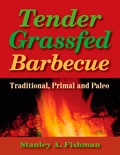
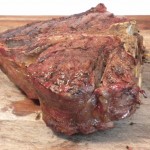
 Photos of recipes from the new book Tender Grassfed Barbecue
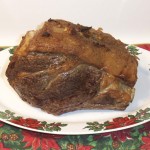 Photos of recipes from the cookbook Tender Grassfed Meat

Three Great Reasons to Attend the Annual WAPF Conference
By Stanley A. Fishman, author of Tender Grassfed Meat and Tender Grassfed Barbecue

Anyone who reads my books or this blog will soon learn that I often refer to Dr. Weston A. Price and the Weston A. Price Foundation. There is a very good reason for that. The information presented by the Weston A. Price Foundation enabled me to save my life and restore my health. Much of the very same information that saved my life and restored my health, and more, will be presented at a wonderful conference in just a few weeks.
The Weston A. Price Foundation will be having its annual conference in Dallas, Texas, from Friday, November 11 through Sunday, November 13. There are also some activities on Monday, November 14. You can sign up for the conference and get more information here.
I recommend that everyone who can attend this conference do so. Here are the reasons for my recommendation:
Knowledge
It is said that the truth will make us free. Here, the truth can make us healthy. There will be more invaluable knowledge presented on human health and nutrition at this conference than anywhere else on earth. There will be many lectures and classes, presenting the best real food and alternative health information available anywhere. I believe that the key to human health is great nutrition. Most people suffer greatly from malnutrition. Most people know very little about good nutrition, as they have been misled by those who exploit them. The theme of this conference is “Mythbusters,†and the invaluable truth about nutrition will be presented along with the busting of nutritional myths. This is information you can use to make your life much, much better.
Many of the leading people in the real food and alternative health movements will be speaking, including famous alternative physicians like Dr. Natasha Campbell McBride, Dr. Thoman Cowan, and Dr. Joseph Mercola. Also speaking will be Sally Fallon Morell, the founder and president of the Weston A. Price Foundation, my friends Kimberly Hartke and Sarah Pope, and many, many others. The information they have to share is invaluable.
Food
This is probably the one time that you can not only trust that the food at a conference will be good and healthy, but something to really look forward to. All meals will be available at the conference, including special selections for those who are gluten-intolerant. Grassfed meat is featured in the menus in a big way, along with pastured pork and a multitude of healthy, delicious, real foods ranging from wonderful grassfed butter, to the finest fermented foods such as traditional sauerkraut, many wonderful cheeses, to all kinds of real vegetables, Most of this food is from some of the finest producers in the world, such as U.S. Wellness Meats, Pure Indian Foods, Miller Organic Farm, and many others.
It is usually so hard to find food worth eating when we travel. At the conference, not only will the food be well worth eating, it should be delicious!
People
The first time I attended the WAPF conference, I was astonished at how healthy most of the people looked. So many of them literally glowed with health and vitality. I will never forget the sight of babies and small children raised on a real food diet—they were so alert, so happy, so alive that they made most other children seem like sleepwalkers in comparison.
People were so friendly, so welcoming, so committed to helping others. We had so many wonderful conversations, and heard so many great stories about how people had use the Weston A. Price wisdom and real food to heal all kinds of illness and to improve the health of themselves and their families. It is such a joy to be in a place where just about everybody you talk to really understands about nutrition, and knows the truth about food and medicine. It is so inspiring to hear how people have restored their health and become healthy in natural ways, often by real food alone. It gave us a great sense of community, and confirmed once and for all that there are many other fine people on the same path, enjoying the same benefits.
If you go, you can expect a wonderful, delicious, inspiring experience that you may never forget.
This post is part of Monday Mania, Real Food Wednesday and Fight Back Friday Blog Carnivals.
Where’s the (Grassfed) Beef in the “Healthy Eating Plateâ€?
By Stanley A. Fishman, author of Tender Grassfed Meat
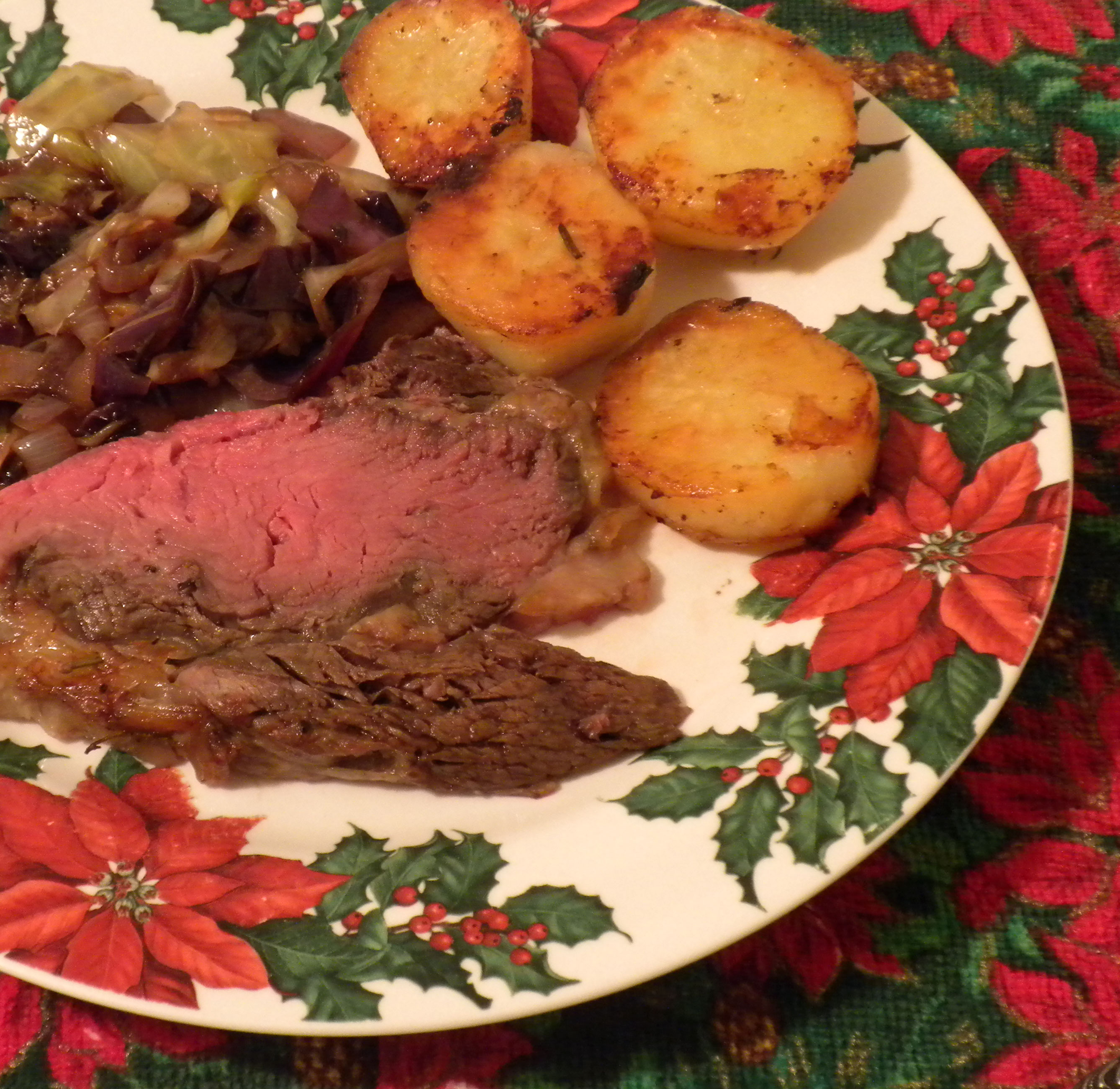
This is my plate, grassfed meat, potatoes roasted in beef fat, and vegetables sauteed in bacon fat. Very satisfying!
I will never understand how the bureaucrats and academics who try to control every aspect of our lives think. Why do they believe that posting a graphic of a plate divided into brightly colored sections labeled “Fruits, Vegetables, Protein, and Whole Grains†would convince anyone to change the way they eat?
Come to think of it, that graphic is a lot more attractive than photos of the industrial food they want us to eat.
No matter how silly, the multicolored plate divided by labeled sections is apparently the state of the art in food persuasion, as we now have another plate to tell us what to eat. Harvard has come out with its own version, entitled the “Healthy Eating Plate.â€
This “Healthy Eating Plate†is pretty much identical to the government’s “MyPlate,†though the size and shape of the colored blocks is a bit different.
- Fats, the most important food group, are completely missing from both of them.
- Both plates include large amounts of vegetables.
- Both plates include large amounts of whole grains.
- Both plates include large amounts of fruits.
- Both plates avoid the “M word†(meat) and include a relatively small section labeled “Protein.â€
In other words, an even more extreme version of the old food pyramid, a high-carb, very low or no fat, low-protein diet. The same diet that has ruined the health of the American people and led to an epidemic of obesity and disease. The fact that these sorry, worthless guidelines have failed completely over the last twenty years means nothing. The motto of these people seems to be—if it fails, and fails again, and fails always—do it again, and do more of what has always failed.
But the academics provide us with more detail as to what these sections mean. Protein means fish, beans, nuts, lean chicken. Red meat is to be avoided. In other words, there is no place for red meat on the Harvard plate. Not even grassfed meat.
Nowhere does either plate differentiate between industrial food and real food. Nowhere does either plate point out the immense difference between grassfed meat and factory meat. Nowhere does either plate refer to the presence of chemicals in food. GMOs are not even mentioned, as if they do not exist.
This is a serious matter, because the Harvard plate supports the government plate. The government imposes its food guidelines on schools, the military, and a host of programs and institutions. The people who are forced to follow these guidelines could be deprived of all red meat, with no consideration of the difference between grassfed and grain-fed.
The best diet for humans has been known for a long time. Dr. Weston A. Price discovered it and described it after ten years of on-location research in his 1939 book, Nutrition and Physical Degeneration. The people who ate this diet functioned so well that they were literally free of disease and obesity. A good guide to this diet is the Weston A Price Foundation’s Dietary Guidelines. These are the diet guidelines that should be adopted, though the choice of what to eat should be left to each individual.
Instead, we have guidelines that are focused on profit, not health.
As for me, I will continue to eat plenty of grassfed red meat, pastured pork, wild seafood, organic or the equivalent produce, traditionally fermented foods, real dairy, and lots of grassfed animal fat.
I reject both plates completely.
This article was inspired by a brilliant post by my friend Jimmy Moore, Harvard’s ‘Healthy Eating Plate’ Only Marginally Better Than USDA’s MyPlate.
This post is part of Fight Back Friday blog carnival.
Eating the Whole Wild Fish
By Stanley A. Fishman, author of Tender Grassfed Meat

 photo credit: phoosh
Why does a blog devoted to grassfed meat mention fish? I eat fish too. I consider some seafood to be important for a balanced diet.
But more importantly, the quality of most fish sold in the U.S. has become just as compromised as the quality of feedlot beef.
Today I had an absolutely fantastic whole wild fish for lunch, which inspired me.
Farmed Fish are Not the Same as Wild Fish
When I was a child, just about all fish were wild, eating their natural food, which was usually a smaller kind of fish. Fish were often very fresh, often caught near the place where they were sold, and packed with all kinds of nutrients that they received from their natural diet. Fish were also very cheap, except for a few very expensive varieties.
In some areas (especially Asia), freshwater fish were farmed in tranquil ponds, ponds that were full of the natural food of such fish.
Times sure have changed. Most fish sold in U.S. stores have been farmed and frozen. The fish at fish farms are fed a variety of substances, but the feed often contains substantial amounts of GMO soy, something that was never fed to fish before. Much fish feed consists of various kinds of fishmeal, which consists of the bodies of smaller fish that have gone through industrial processing to be turned into meal. Other substances are also used, which are not part of the natural diet of fish.
I have not seen any studies, but wild fish eating their natural diet tastes much better to me than any farmed fish. When food is natural, truly natural, the way it tastes is a message to you from your body as to whether you should keep eating it. I believe this to be a good indication of how nutritious the food is. Obviously, the use of chemicals and flavor enhancers can confuse this taste system, which is yet another good reason to eat only food that is free of chemicals and unprocessed. Good food is also satisfying, meaning you do not have to eat huge amounts of it to be satiated and full. I have found farmed fish to be watery and tasteless. Farmed fish never satisfied me.
The oceans, lakes, and rivers have become seriously polluted, and some of the pollutants find their way into the fat and flesh of some fish. Mercury especially is a concern.
Even the wild fish you buy may have been frozen twice, if it is cut into fillets. That is because these fish are frozen when they are caught, then shipped to China where they are defrosted, cut into fillets, and refrozen, then shipped back to the U.S. to be sold in the markets. They are often defrosted a second time and put on the counter.
Fish has also become very expensive, farmed or wild.
Most people only see fish in the form of boneless, skinless fish fillets. This was not the way our ancestors ate fish. Wild fish were caught, and often cooked the same day, whole, with all their nutrients. Large fish were often cut into thin strips, and dried or fermented to provide food that could be stored. Some medium-size fish were preserved by smoking and salting, as were pieces of larger fish. Some fish were cut up and preserved by salting. Salt cod became a staple food all over Europe.
How I Find Healthy Wild Fish
It took a while, but I finally found a way to get wild fish that satisfies me.
The best way to get fish is to catch your own, preferably from waters that are only lightly polluted, and process them yourself. This is beyond the circumstances of many of us.
What I do is buy small or medium-sized whole fish, and cook the whole thing in one piece. Best to leave the head on for flavor, but you do not have to. I will later use the bones and head for fish broth, a wonderful elixir that is said to cure anything. There is an excellent recipe for fish broth in Nourishing Traditions by Sally Fallon Morell.
I try to buy fish from the less polluted waters such as Alaskan waters.
The small size of the fish means that it has not absorbed much mercury.
The fact that it is whole means it has not been filleted in China, with the necessary defrosting and refreezing.
The fact that it is wild means that it was eating its natural diet when caught, and should be rich in nutrients.
I will also buy fillets if they appear to have been frozen only once, and have not gone the China route. A few wonderful markets process whole fish and cut them into fillets themselves, rather than subcontracting the job to China.
I will even buy flash-frozen fish fillets, as flash freezing of a quickly frozen fish preserves freshness (though it can never compare with a truly fresh fish), if I am convinced that it was only frozen once.
Just like grassfed meat is vastly superior to the industrial variety in taste and nutrition—whole wild fish are far superior to the farmed variety.
This post is part of Monday Mania, Real Food Wednesday and Fight Back Friday blog carnivals.
Related Post
Smelt Soup for Natural Iodine
A Real Paleo Diet — Grassfed Meat, Fat, and Organ Meats
By Stanley A. Fishman, author of Tender Grassfed Meat
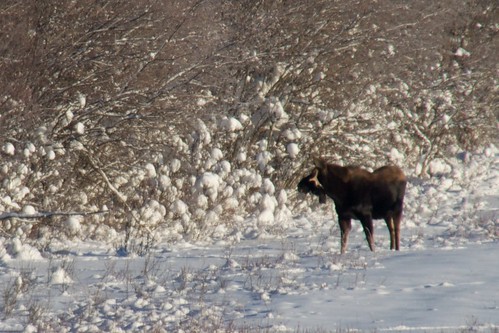
photo credit: tuchodi
The idea behind the Paleo diet makes a great deal of sense. For tens of thousands of years, humans have been eating the foods available during the Paleolithic period. Our bodies have adapted to use these foods and easily digest and process them. Our bodies know how to use the nutrients in these foods, and how to dispose of the waste in these foods.
But what is the Paleo diet? What did Paleolithic peoples really eat?
The Paleo diet is generally agreed to consist of foods that were only available during the Paleolithic period, before agriculture and the keeping of domestic animal herds had been developed. All grains, dairy products, all modern processed foods and oils are excluded. Wild meat, fish, roots, shellfish, berries, fruits, eggs, some tree nuts, vegetables, and edible fungi such as mushrooms are included.
Some say that the Paleo diet should be meat-heavy. with an emphasis on lean meats. Others say it can be mostly fruits and vegetables. Some say it should be high-fat, and others say it should be low-fat. But what did the Paleolithic peoples really eat?
A true Paleolithic diet was discovered and recorded by Dr. Weston A. Price, the great food researcher. In 1933, Dr. Price visited a native people living in the far north of Canada, far from the sea. These people were eating the same diet their ancestors had, consisting only of foods that were readily available during the Paleolithic period.
These people had no agriculture, and no herds. They were so far north that they were deprived of all fruits and vegetables for most of the year. They were far from the sea, and the rivers were so frozen that there were no fish. In fact, they ate very little other than the wild animals they hunted, often moose.
They ate not only the meat of the animals, but the organs, and the fat, especially the fat. Meat was always eaten with fat. They also ate bone marrow, chewed on the bones, and used the bones in cooking. The animals they ate were mainly herbivores, grass-eaters, so they were eating grassfed meat and fat, and the organs of grassfed animals. And just about nothing else.
Dr. Price found that these people were in excellent health, strong, happy, and vital. Though the temperature would often be seventy below zero during the long, cold winters, these people had learned how to keep warm and well-fed. The women would give birth quickly and easily, to healthy children who were free of birth defects. They had no dentists, and no cavities. Despite the extreme cold, nobody had arthritis. They did not have heart disease or cancer. They did not have diabetes or any of the chronic diseases so common in the modern world.
Dr. Price wanted to know why they did not get scurvy, a disease caused by the lack of Vitamin C that causes teeth to fall out, and eventually results in death. Dr. Price learned that they got the Vitamin C they needed by eating the adrenal glands and second stomachs of the animals they hunted. Scientific research later confirmed that the adrenal glands of grassfed animals were the richest known source of Vitamin C, containing far more than any fruit or vegetable. These native people knew what part of the animal to eat, so they could get the nutrition they needed. In fact, they got all their vitamins and minerals from the fat, organs and bones of the animals they hunted.
These people were so free from crime that nobody locked their doors, and nothing was ever stolen.
After Dr. Price left these people, he traveled south, and studied the native peoples he met on the way. Many of these people had adopted modern food like jam, sugar, syrup, and bread. The native peoples eating modern foods were riddled with disease, many suffering from crippling arthritis. Tuberculosis, cancer, and tooth decay were very common.
Dr. Price’s research described a true Paleolithic diet, and the wonderful health of the people who followed it.
While this is not the only Paleolithic diet, it shows how beneficial a true Paleolithic diet can be.
This post is part of Monday Mania and Real Food Wednesday blog carnivals.
The Blessings of Pastured Pork Lard
By Stanley A. Fishman, author of Tender Grassfed Meat
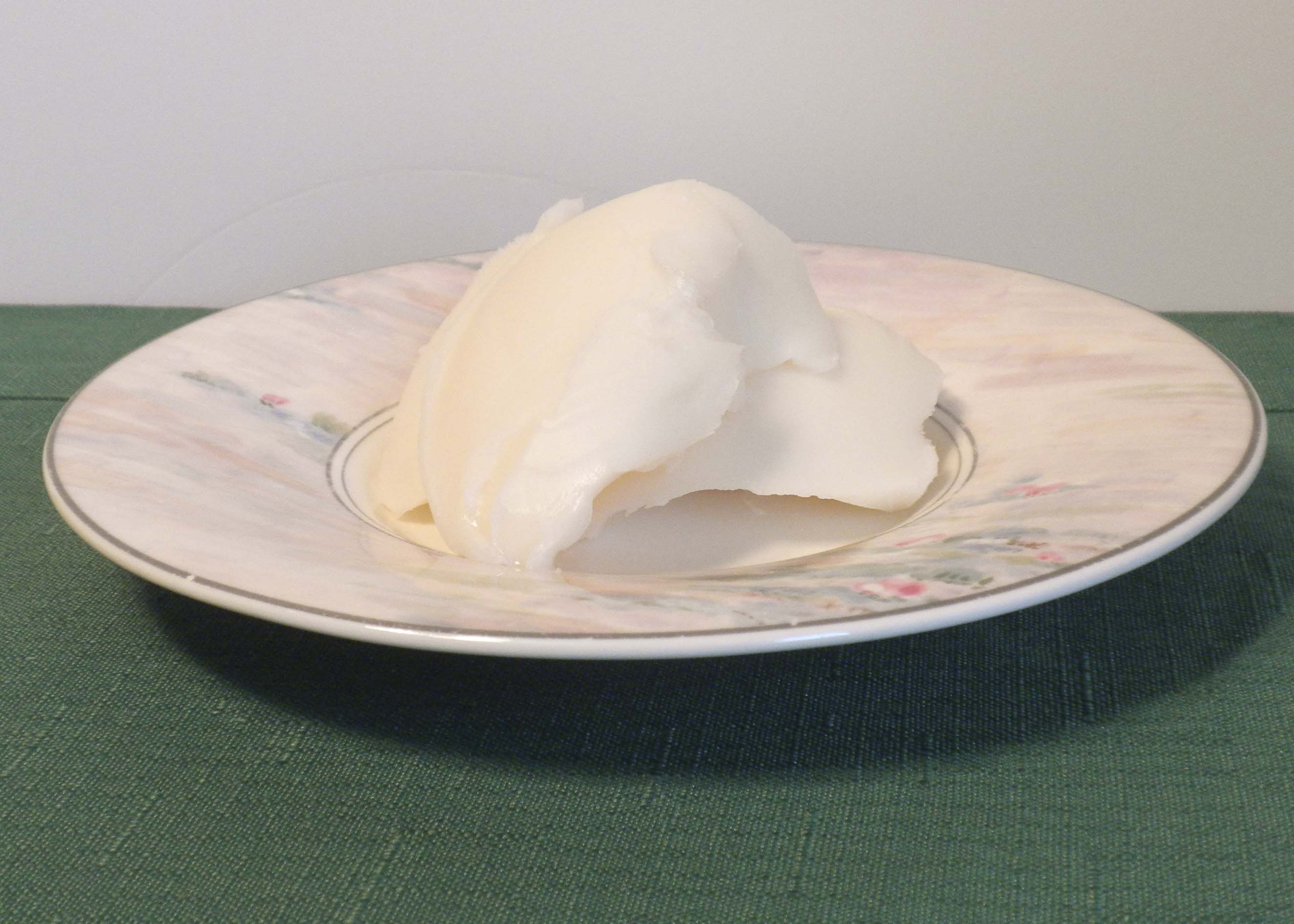
Natural, unhydrogenated, pastured pork lard.
Animal fat is demonized in our society, and this includes pork lard. People are brainwashed into thinking that eating pork lard, or any animal fat, will “clog” their arteries, causing heart attacks and strokes. Animal fat seems to be blamed as the cause of almost every conceivable disease. This is truly ironic, as animal fat, especially pork lard, was the most popular cooking fat for most of humanity, throughout most of history.
The traditional diets of two of the healthiest peoples studied in modern times, the Georgians of the Caucasus, and the Okinawans of the Pacific, were quite different in the actual foods they ate. Yet both of these healthy peoples did share a favorite food—pork lard and fatty pork. Despite the fact that these healthy peoples ate large amounts of pork lard, along with fatty pork, heart disease and strokes were very rare for them. Both of these cultures were known for a very high number of people who lived to be 100 years old, or older, and were healthy at that advanced age.
The truth is that traditional peoples whose religion did not forbid it loved pork lard and animal fat, and ate huge amounts of it. Not only did they eat it and cook with it, they would often use pork lard to treat damaged skin, and as a moisturizer.
Pork lard has many uses in cooking, and excels in all of them. Breads, biscuits, pies, and cakes made with pork lard come out especially delicious, and the fat in the lard helps counter the glycemic effect of the grains.
Pork lard is perhaps the perfect frying medium, having a very high smoke point, cooking at an even heat, and providing a wonderful flavor to the foods fried in it. In fact, pork lard was the traditional fat used for stir-frying in Chinese cooking, and is still perfect for it, enhancing the flavor of every dish. Pork lard (along with duck and goose fat), was used for making confit, a way of cooking and preserving meat in large amounts of fat.
Though pigs are omnivores, and not grassfed, I use a lot of pork lard in my recipes for grassfed meat. I use pork lard to sauté other meats, which gives them a nice flavor. I will also rub pork lard on various grassfed roasts, especially those which lack fat. The lard keeps the meat moist, adds great flavor, and causes any vegetables added to the pan to come out caramelized and delicious. The flavored pork lard from such a roast is also perfect as a base for gravies or sauces, making them utterly delicious. The ancient Chinese would often fry other meats in pork lard, just for the flavor. I have tried this, and it is delicious.
But it is very important to know your pork lard, just as it important to know all of your food.
I would not even taste most of the pork lard on the market, and I avoid it. If that sounds odd after I have been filling this article with praise for pork lard, there is a reason. Most of the pork lard sold in the U.S. has been hydrogenated, which means that it has had an additional molecule added to its structure through artificial processing. Not only does this create a fat which never existed in nature, it affects the nutrition and the taste. But the food industry invented this kind of modified lard because it can be stored at room temperature, and can stay on the shelf for a very long time.
I make a real effort to eat food only in a natural, unmodified state, and it creeps me out to have the very molecular structure of a food altered for profit. It is now accepted that hydrogenated fats are bad for human health. I strongly dislike the taste of hydrogenated lard.
All of the benefits of lard described in this post came from real, unmodified lard, the kind that will actually spoil, and must be refrigerated or frozen. The best of this lard comes from pastured pigs, from heritage breeds, who are raised in a traditional manner, rather than being stuffed with GMO corn and GMO soy. This kind of lard is actually very good smeared on bread, like butter, and has a pleasant, nutty flavor. This is the only kind of lard I use or recommend.
Natural, unmodified pastured pork lard is wonderful for cooking and eating.
This post is part of Monday Mania, Real Food Wednesday and Fight Back Friday blog carnivals.
Diabetes Study Proves Nothing about Grassfed Meat
By Stanley A. Fishman, author of Tender Grassfed Meat

photo credit: Alan Vernon. Bison grazing in Yellowstone National Park.
Once again, we are hit with yet another study claiming that red meat increases our chances of getting a horrible disease—Type 2 diabetes. It joins a host of other studies claiming that eating red meat increases the chances of just about every chronic disease you can think of. In fact, since humanity ate mainly red meat and saturated animal fat for most of its existence, we must be extinct, since all those diseases would have wiped us out long ago, when we got almost all our calories from meat and fat. All of these studies still have one thing in common. They totally fail to distinguish between the factory meat that did not exist until the twentieth century; and grassfed and wild meat, which has been the basic food of humanity for most of its existence. Since all the studies claiming that meat is unhealthy are based on people eating factory meat, these studies are totally meaningless when it comes to grassfed meat.
Grassfed Meat Is Different
There are many differences between the composition of grassfed meat, and factory meat.
Grassfed Meat Has:
- A perfect balance of omega-3 fatty acids to omega-6 fatty acids;
- Considerably more CLA (conjugated linoleic acid);
- The benefits of having the animals eat the food they were evolved to eat, which is natural for them;
- A natural balance of nutrients, which our bodies have evolved to use over hundreds of thousands of years, if not more.
Factory Meat Has:
- A gross imbalance of omega-6 fatty acids to omega-3 fatty acids, which does not occur in nature;
- Far less CLA;
- The detriments of having the animals eat a totally unnatural diet in the feedlot, including GMO soy, GMO corn, animal by-products, restaurant waste, and many other things that were never the natural food of grass-eating animals;
- An unnatural balance of substances in the meat, often including growth hormones, antibiotics, chemical residues, and others.
The very composition of the two kinds of meat is so different that consumption of factory meat is very different than eating grassfed meat.
The Study Fails to Prove that Eating Red Meat Increases the Risk of Diabetes
As I once wrote before, it is crucial to study the study before you blindly believe the conclusions drawn from the data. I have carefully looked at the latest study, and my own opinion is that it has no proof that any kind of unprocessed meat increases the risk of diabetes.
Why did I reach this conclusion?
The study concluded that eating red meat was associated with an increase in Type 2 diabetes, and seemed to recommend that people stop eating red meat on a regular basis.
But the data was inconclusive, with even the scientists who conducted the study admitting that it was hard to pinpoint the actual dietary factors that caused an increase in Type 2 diabetes risk.
The study was limited to roughly 60,000 doctors and nurses, and consisted mainly of reviewing food questionnaires sent in by the participants over a multi-year period.
The study did find a correlation in increased Type 2 diabetes risk by those who ate the most red meat. The increase for those who ate unprocessed meat was approximately one-third the risk increase of those who ate processed meat. But the data also showed the following:
- Those who ate more meat also consumed more sugary soft drinks;
- Those who ate more meat also ate considerably more calories, which almost certainly included a lot of refined high-carbohydrate foods;
- Those who ate more meat drank more alcohol.
Many studies and other research have shown that increased consumption of sugar (from the soft drinks), alcohol, and refined high-carb foods is directly related to causing Type 2 diabetes.
The people who ate more sugar, more alcohol, and more refined carbohydrates had a higher incidence of diabetes, which is exactly what you would expect, regardless of their meat consumption. Since we know that sugar, refined carbohydrates, and alcohol can cause Type 2 diabetes, the amount of meat eaten proves nothing.
But what about the result that eating processed meat had a much higher risk factor than eating unprocessed meat?
The answer is simple. Almost all factory-processed meats contain substantial amounts of added sugar, whether in the form of sucrose, fructose, dextrose, or just sugar. In addition, almost all factory-processed meats contain substantial amounts of industrial salt, which often has sugar added to it. In other words, the people who consume more of these processed meats are consuming more sugar. In other words, the sugar added to the processed meat would increase the risk of Type 2 diabetes, all by itself.
It is totally unknown whether the consumption of meat has any relevance at all to the risk of Type 2 diabetes, because you cannot separate it from the consumption of sugar and refined carbohydrates in this study. It is impossible to know whether the increase was caused just by the higher intake of sugar, alcohol, and refined carbohydrates; or by the combination of this with more red meat; or by red meat alone.
Although I believe the researchers to be sincere, their conclusion that red meat causes an increase in the risk of Type 2 diabetes is not supported by the data in their study, in my opinion. It is also clear from reviewing the remarks of the researchers in various articles that they already believed that eating red meat is unhealthy.
I will point out that this study, like all the others, failed to distinguish between eating grassfed meat and factory meat.
But there is an earlier study that addressed the affect of eating wild and grassfed meat on chronic disease. Dr. Weston A. Price spent ten years traveling around the world to study the diets of traditional peoples. Most of the peoples he studied ate plenty of wild game, and/or grassfed meat and fat. As long as these people ate their traditional diet, they had none of the chronic diseases common to the modern world. They had no cancer. They had no heart disease. And they had no Type 2 diabetes.
It is reasonable to conclude that if eating red meat caused Type 2 diabetes, the peoples studied by Dr. Price would have a diabetes epidemic, because they ate so much wild and grassfed red meat. But since they had no diabetes at all, it is equally reasonable to conclude that eating wild or grassfed red meat did not increase the risk of Type 2 diabetes. I will also point out that these people did not eat sugar or refined carbohydrates, and their diet was considerably lower in carbohydrates than modern diets. Of course many other factors were involved, but you cannot deny the fact that they ate large amounts of wild and grassfed red meat, and they did not get diabetes.
As a personal observation, I know many people, including myself, who eat red grassfed meat on a regular basis. I eat it almost every day, sometimes several times a day. I love it. It makes me feel good and gives me strength. None of those people, including me, have any symptoms of Type 2 diabetes. Not a scientific study, just real life observation.
Finally, I do not eat factory meat. It tastes like blah, and makes me feel stuffed rather than great. I love grassfed meat!
This post is part of Monday Mania, Real Food Wednesday and Fight Back Friday blog carnivals.
Traditional Drink Cools and Restores Nutrients
By Stanley A. Fishman, author of Tender Grassfed Meat
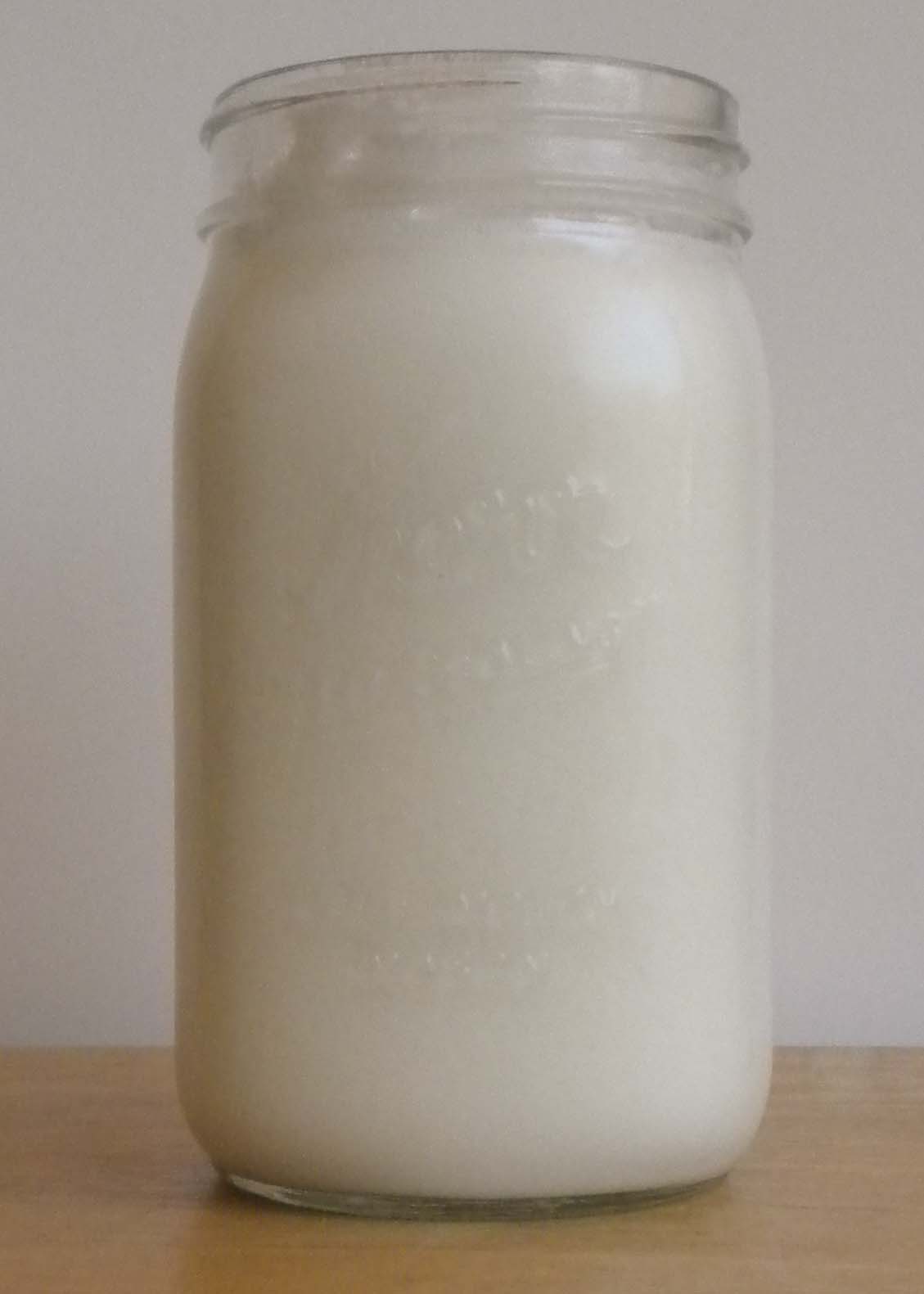
Cool, refreshing, nutritious traditional drink Ayran.
The United States is suffering from a widespread heat wave. The heat causes people to lose electrolytes, water, and minerals through sweating. Traditional peoples also suffered from hot weather. But they developed their own ways of cooling down. One of the oldest and easiest is a drink called Ayran, which also has other names.
Ayran was probably developed in Turkey, but it is widely used in the Middle East and the Balkans. While there are only two to four ingredients, the details and proportions differ, and there are many different versions.
Ayran includes old-fashioned, full-fat unflavored yogurt, and water. Salt is often added, sometimes mint leaves. The yogurt is full of nutrients that replenish a sweating body. The fat in the yogurt also provides energy. The salt not only replenishes lost salts, but minerals. The drink is very cooling and refreshing, and really helps deal with the heat. Ayran has no sweeteners and no chemicals, being a very pure drink.
It is best to use organic or the equivalent full-fat plain yogurt, which is what was used traditionally. Unrefined sea salt is ideal for this recipe, as it contains many minerals.
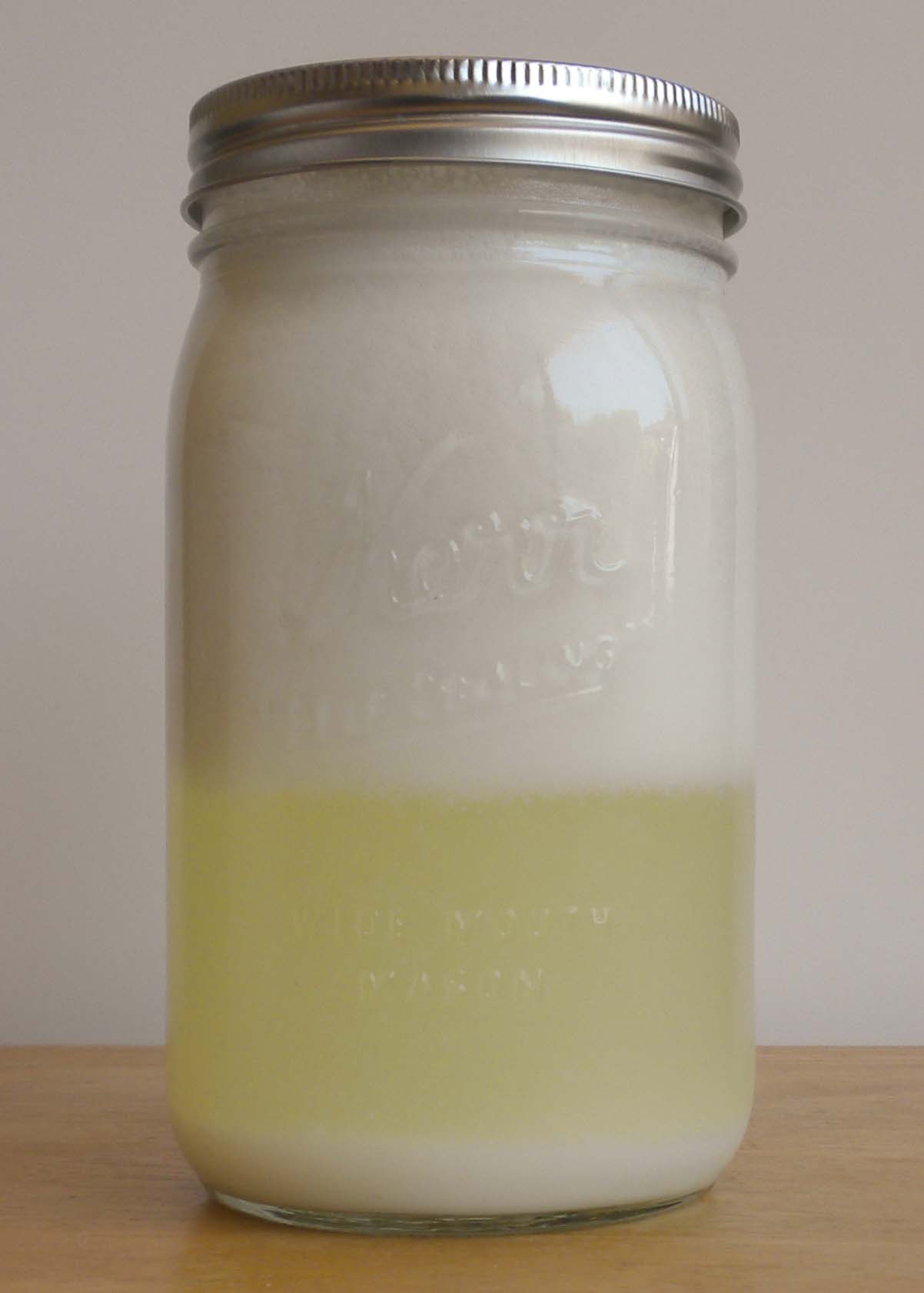
It is quite common for the drink to separate in the refrigerator. If this happens, a brisk stirring with a long fork will solve the problem.
Here is the version I like best:
Makes one quart. (You can double the recipe if you wish.)
INGREDIENTS
1 pound full-fat unflavored yogurt, preferably organic or the equivalent
2 cups cold filtered water
½ teaspoon unrefined sea salt
- Combine all ingredients in a blender or mixer. Blend for 1 minute.
- Chill in the refrigerator for at least 1 hour.
- If the mixture has separated, stir briskly until it recombines, which should happen very quickly.
Serve and enjoy this cooling drink.
This post is part of Weekend Gourmet, Real Food Wednesday, Fight Back Friday and Monday Mania blog carnivals.
Finally! Modern Study Proves the Benefits of Grassfed Meat
By Stanley A. Fishman, author of Tender Grassfed Meat
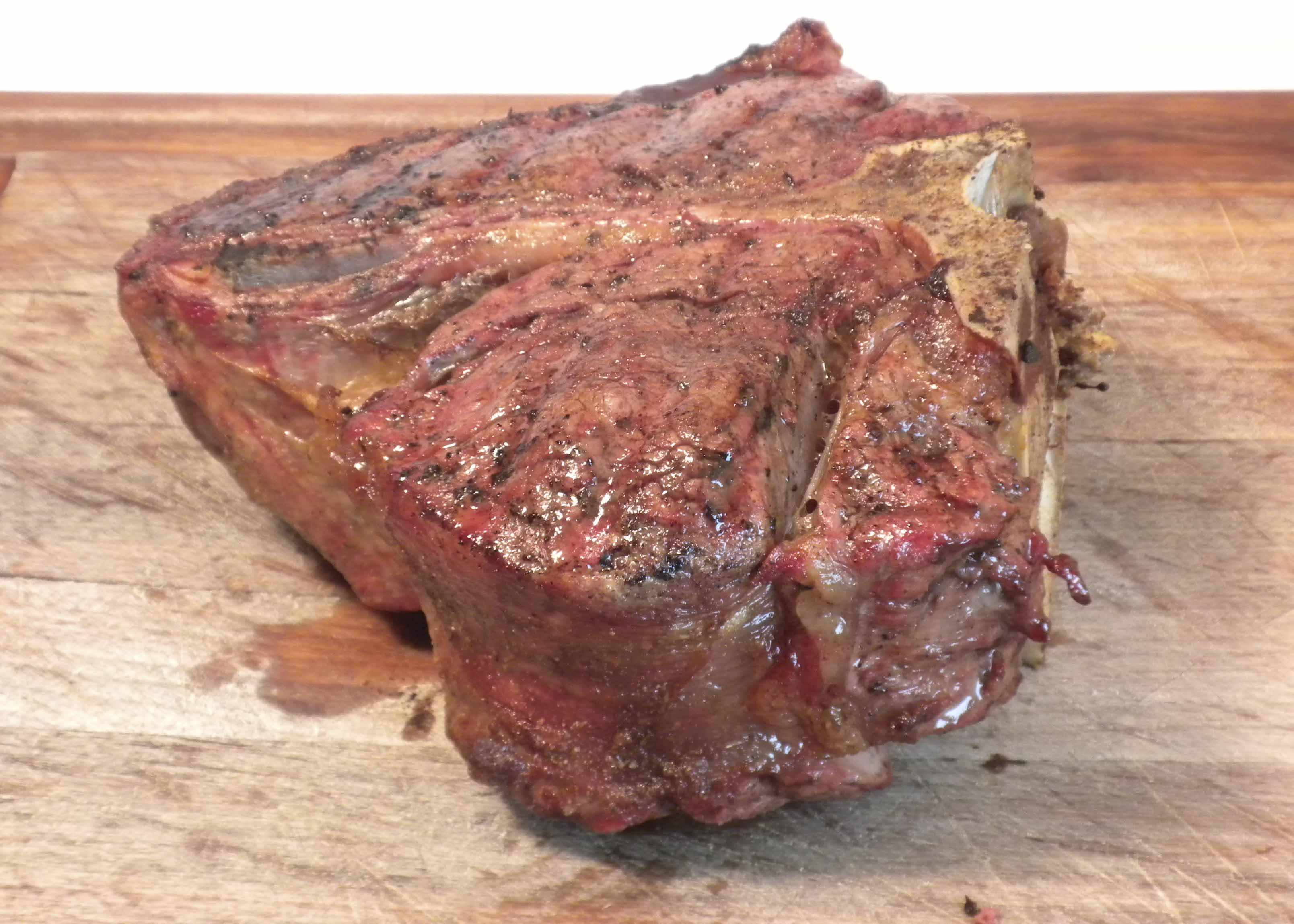
Eating this delicious grassfed steak will increase the omega-3s in your bloodstream. Much tastier than fish oil!
I have been convinced for a long time that eating grassfed meat is much healthier than eating feedlot factory meat. Our ancestors ate grassfed meat, and thrived on it. The healthy peoples studied by Dr. Weston A. Price ate grassfed and wild meat, and thrived on it. Many studies have shown that grassfed and grass-finished meats have much higher levels of omega-3 fatty acids, a perfect balance of omega-3 fatty acids to omega-6 fatty acids, and a much higher level of CLA.
But the factory meat industry has been able to produce other studies claiming that the difference in omega-3 fatty acid content between grass-finished and feedlot meat is minimal. It has also been claimed that any difference is meaningless, since the omega-3 fatty acids are supposedly destroyed when cooked.
Yet there has been no study on the issue of whether people actually get more omega-3 fatty acids when eating grassfed and grass-finished meat instead of feedlot meat. Until now.
An Irish study, reported in the British Journal of Nutrition has shown that people who eat grassfed meat have significantly higher levels of omega-3 fatty acids in their blood when compared to people eating feedlot meat.
The study was of healthy people. All the meat eaten by one group was grassfed and grass-finished. All the meat eaten by the other group was feedlot meat. I assume the meat was cooked, as the abstract of the study would have mentioned if the meat was raw. After four weeks, the blood of the two groups was tested.
The blood of the group that ate grassfed meat showed significant increases in omega-3 fatty acid levels. It fact, the increase was so dramatic that it was comparable to the omega-3 levels of people taking fish oil capsules. The omega-3 levels in the blood of the group eating feedlot meat were much lower than the grassfed group.
This is very important, because the Standard American Diet (SAD) is totally unbalanced in favor of omega-6 fatty acids. Most Americans have a large imbalance of omega-6 fatty acids.
An excess of omega-6 fatty acids has been associated with a substantially increased risk of cancer, heart disease, obesity, rapid aging, and many other problems. Many doctors advise their patients to take fish oil capsules to help with the imbalance, as a proper balance can help reduce the risk of all these illnesses.
I would much rather enjoy the wonderful taste and tenderness of grassfed meat, as a delicious way to increase the omega-3s in my blood.
In other words, I will continue to eat grassfed meat as a way to support the natural functioning of my heart and body. I will also continue to eat grassfed meat because it tastes so much better.
Now we finally have a well-conducted scientific study that confirms the lessons of history, tradition, and common sense—grassfed and grass-finished meat is much better than feedlot meat.
This post is part of Real Food Wednesday, Fight Back Friday and Monday Mania blog carnivals.
When It Comes to Meat — Study the Studies First
By Stanley A. Fishman, author of Tender Grassfed Meat
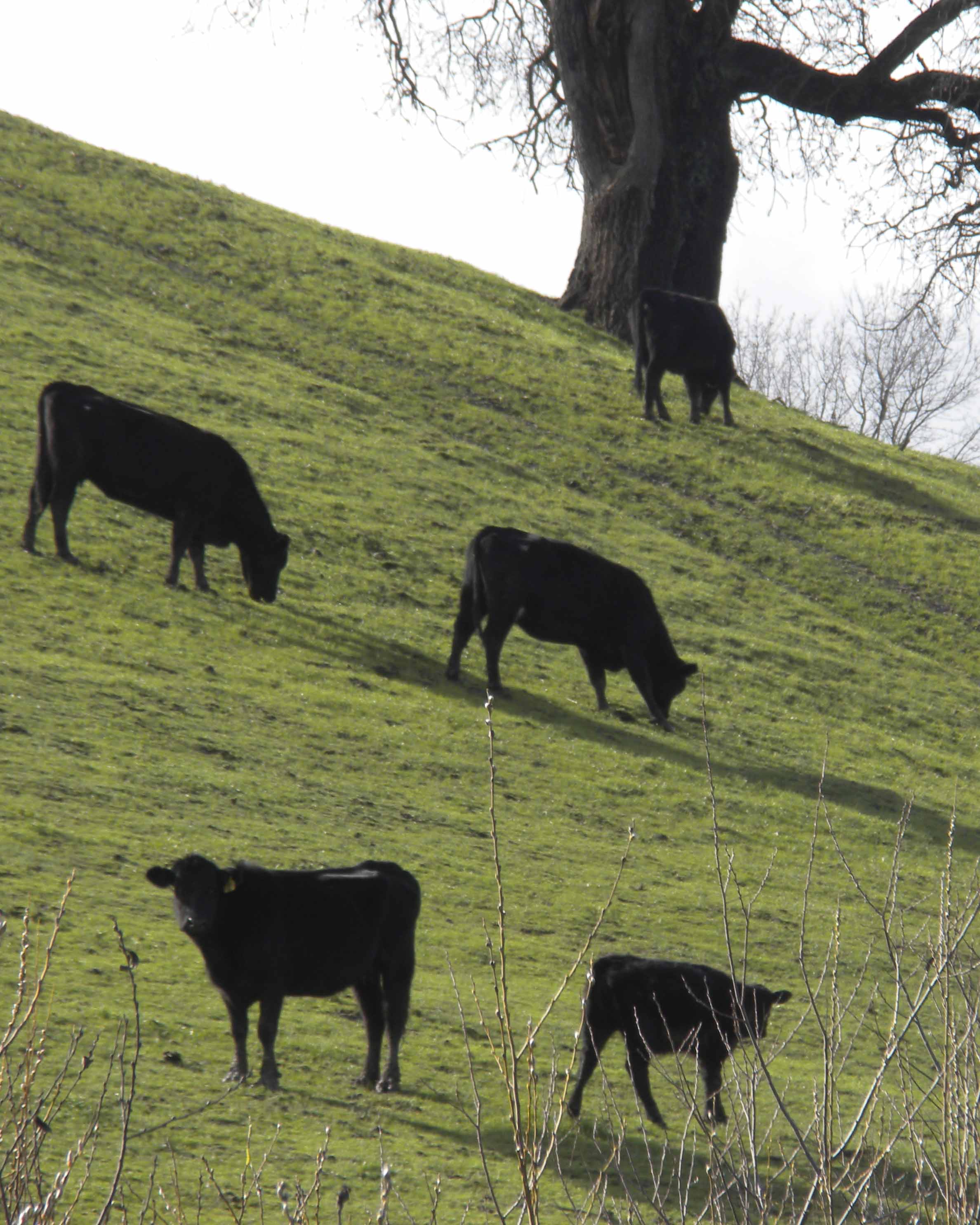
Grass—the ideal food for cattle
It was the first hour of the first class on my first day in law school. The teacher, a man who actually practiced law during the day, and taught it at night, wrote a statement on the blackboard. I can still see the words in my mind. “There is no truth.â€
Being a believer in the truth of science in that time, I had to challenge that. I asked, “But what about scientific truth, established by properly conducted studies?â€
The teacher, an attorney of vast experience, answered—“No matter what position you take in a lawsuit, you can always find an expert to support it, and the expert can always find studies to support his position. You will find an expert who will testify that 2 plus 2 equals 3, and the other side will find an expert who will testify that 2 plus 2 equals 5. And each of them will find studies to support their completely contradictory positions. That is why there is no truth, at least not when you are practicing law.â€
After more than a quarter century as an attorney, I found his words to be absolutely true. Whenever there was an issue of science, psychology, medicine, or just about anything else, each side in the lawsuit was able to find an expert, often a superbly qualified scientist, to support their position. And every expert was able to find studies to support his or her support of that position.
This is not to say that every scientist is corrupt. But it does show that scientists who study the same issue often come up with results that contradict each other. The differences arise from the details of the study, the assumptions made that will be accepted as fact but not tested, and the bias, both subconscious and actual, of a scientist whose future income depends on pleasing the customer who is paying for the study. It is crucial to understand these factors before you accept the conclusions of a study as true.
Let us look at the studies on meat, for example. We have been bombarded for the last fifty years with study after study that claims that meat is unhealthy. According to various studies, meat causes heart disease, cancer, strokes, aging, and many other illnesses. In fact, if you believe all of these studies, it seems impossible for humanity to exist—given the fact that most generations of humans ate mainly meat and fat, you would have expected our ancestors to have died out from all these diseases long ago, rather than thriving and multiplying.
I have read study after study about meat. And one crucial fact emerges—nearly all of these studies treat all meat, whether raised with or without artificial hormones, raised with or without subtherapeutic antibiotics, fed their natural diet or an artificial one, fresh, or heavily processed meats loaded with preservatives and artificial chemicals, as being the same for the purposes of the study.
I have always found the assumption that all meat is the same to be flawed. This assumption makes it impossible to tell if the results are caused by the meat or by the chemicals, hormones, antibiotics, and preservatives added to some of the meat.
Two Swedish studies have shown how vital this detail is. The first study, done on Swedish women, treated all meat as being the same, and found that eating “meat†increased the risk of stroke. This study was heavily publicized by the Reuters news agency.
The second study, done on Swedish men, differentiated between fresh meat and processed meats. This study found that fresh meat made no difference in the risk of stroke. This study also found that eating meats processed with chemicals and preservatives did increase the risk of stroke, as shown in this article.
The conclusion I draw from these studies is that it is the chemicals and preservatives added to processed meats that are to blame for the increased stroke risk, not the meat itself.
I am aware of only one study that reviews the effect of grassfed meats on human health, but that study is the most extensive ever done. Dr. Weston A. Price studied traditional peoples eating the diets of their ancestors. Dr. Price actually visited every people he studied. The study lasted ten years, and is described in detail in Dr. Price’s magnificent book, Nutrition and Physical Degeneration. Dr. Price did not let bias interfere with his analysis—a very spiritual man, he had hoped and expected that these healthy peoples would be vegetarian, but faithfully reported the fact that they thrived on animal foods.
Most of the peoples studied by Dr. Price ate plenty of meat and fat as part of their traditional diet. The meat was grassfed or wild. No chemicals. None of these people had cancer, or heart disease, or stroke, or any of the chronic diseases that plague modern society.
Part of the findings of Dr. Price’s study is that grassfed meat and fat do not cause disease, but support the natural functions of the body, enabling these people to thrive. This is a conclusion I completely agree with.
This post is part of Real Food Wednesday and Fight Back Friday blog carnivals.
Related Post
In Defense of Nutritious, Delicious Grassfed Butter
By Stanley A. Fishman, author of Tender Grassfed Meat
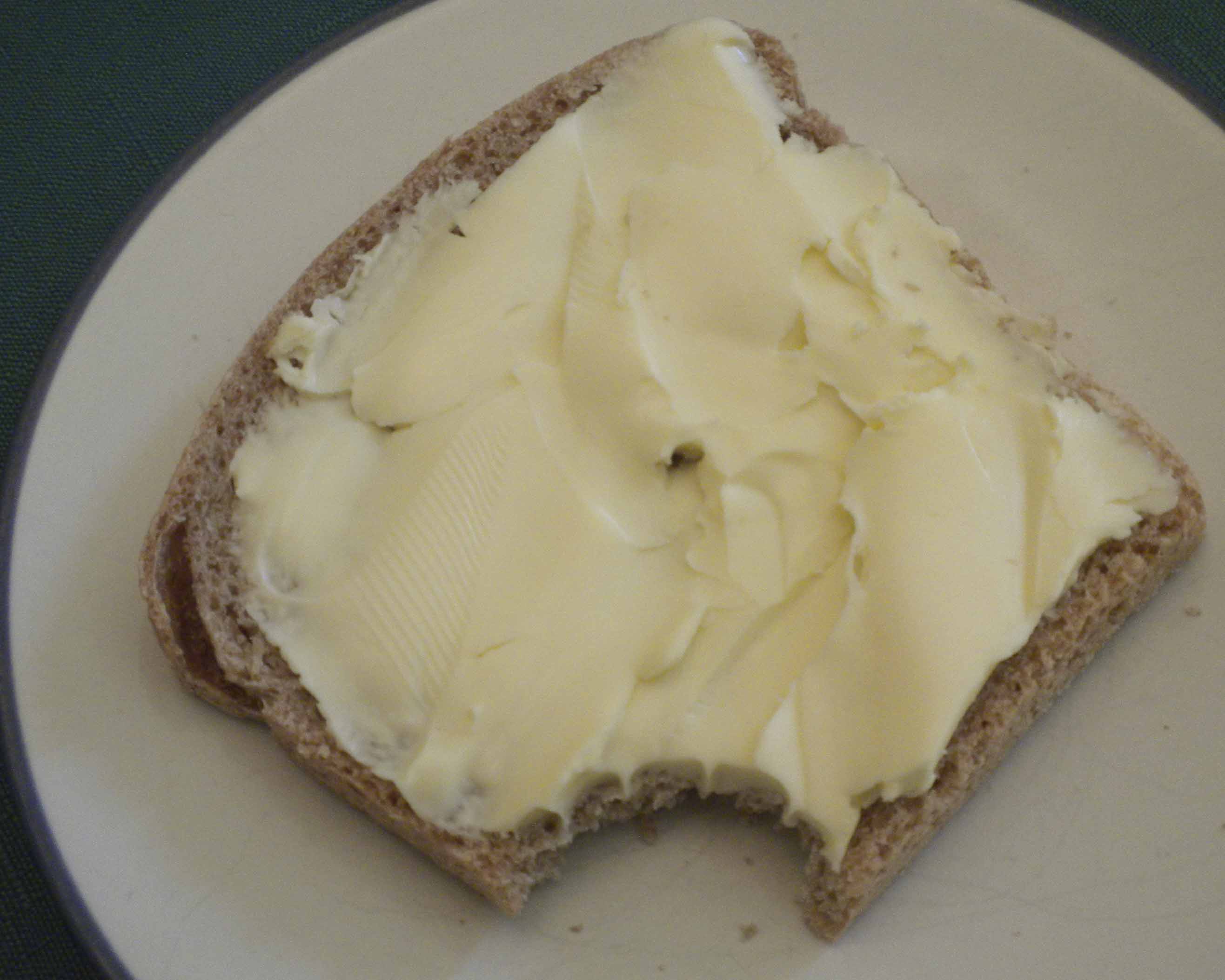
Toothmarks show that this is the right amount of butter, as inspired by Sally Fallon Morell.
The domination of our government by the large agricultural industry has led to some of the most ignorant and ill-advised nutritional advice in the history of our planet. I thought the idiotic “food pyramid†with its emphasis on dead carbohydrates as the foundation of diet and its demonizing of healthy fats and protein was as bad as it was going to get.
I truly did underestimate our government. The replacement for the “food pyramid,†“MyPlate,†is even worse.
The first clue as to how bad this is comes when you look at the plate, at “choosemyplate.gov.†The plate has sections for fruit, vegetables, grains, and protein. There is also a small circle labeled dairy. The text on the page informs us that the dairy should be 1% fat, or less. But there is no place for the most important food group, fats. To our government, fat is no longer a food.
I know that the most nutritious food ever discovered is the butter from grassfed animals. But where in “MyPlate†is the butter?
How the Government Sees Butter
The “MyPlate†page includes a link to “My-Food-a-Pedia,†a huge compendium of marketing and misinformation. In My-Food-a-Pedia, all solid fats, including butter and the healthy fat of grassfed animals, are lumped together in a group called “others.†Like a group of alien invaders. Besides “solid fats,†the “others†include added sugar and alcohol. There is no difference between butter and candy bars? Or butter and light beer? Or butter and whiskey? At least, according to our government all these foods are the same. According to our government, the amount of “others†in our diet is to be strictly limited.
The links included a window listing the various food groups. I looked at each of them, to see where butter was classified. Where’s the butter? Butter is not a vegetable. Butter is not a fruit. Butter is not a grain. Butter is not protein. Butter is not even dairy. Butter, as a “solid fat†is included in a group called “Empty Calories.†“Empty Calories†are defined as items that have “little or no nutritional value,†but a lot of calories.
So, according to our government, butter has “little or no nutritional value.â€
This is the equivalent of saying that ice is hot, or water is dry, or the moon is made of green cheese. It is absolutely not true.
Butter Is the Most Nutrient-Dense Food on Earth
Butter is full of nutrients, and the factors needed to absorb and use them. Here is a list of some of the nutrients in grassfed butter:
- Retinol, the real Vitamin A;
- Vitamin D;
- Vitamin K;
- Vitamin E;
- The substance Dr. Weston A. Price named “Activator Xâ€: Vitamin K2
- Arachidonic acid;
- Short and medium chain fatty acids;
- Omega-3 and omega-6 fatty acids, in perfect balance with each other:
- CLA;
- Lecithin;
- Glycosphingolipids;
- Trace minerals;
- And many others.
An excellent article explaining the nutrients in butter and other good animal fats, and how the body uses them, can be found at The Skinny on Fats.
Little or no nutrition? Hogwash.
Why this Matters
The utter demonization of butter and animal fat, to the point of denying that it is even a food, has consequences.
This is much more than a bad joke. The government forces schools and other institutions that get government aid to comply with nutritional guidelines. It controls the diet of our military. It controls the diet of many medical facilities and rest homes. If the government insists that the guidelines be followed, butter and natural animal fat could be banned from the schools, and many other institutions. This could lead to a nutritional disaster that is even worse than the one we are experiencing today.
I will eat my butter and cover “my plate†in it!
This post is part of Real Food Wednesday, Fight Back Friday and Monday Mania blog carnivals.
« Previous Page — Next Page »