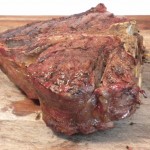
 Photos of recipes from the new book Tender Grassfed Barbecue
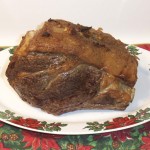 Photos of recipes from the cookbook Tender Grassfed Meat

Search Results:
Mushroom Cream Sauce Makes Luxurious Leftovers
By Stanley A. Fishman, author of Tender Grassfed Meat
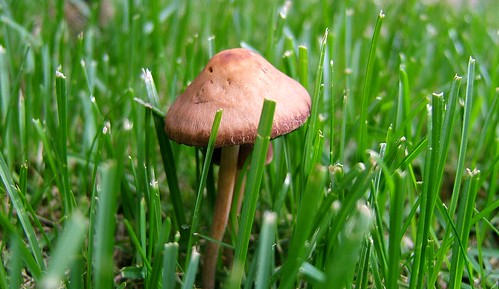

Grassfed meat is so filling and satisfying that we often have leftovers. I have just discovered a new favorite way to enjoy leftovers. In fact, this is so delicious that you may find yourself eating less just so you can have more leftovers to reheat.
The secret to luxurious leftovers is this traditional recipe for mushroom cream sauce. Forget about the stuff that comes out of a can, this is the real deal, made from scratch in this simple, but absolutely delicious recipe. This sauce is perfect for leftover beef, lamb, and bison. It is also excellent with any kind of ham, and could be used to reheat any meat. This is the tastiest way I know to reheat previously cooked meat. Just make sure the meat is sliced very thin. This sauce is so good that we make sure that every bit of it is served and enjoyed.
Traditional Mushroom Cream Sauce for Leftovers
2 tablespoons pastured butter
1/4 pound fresh mushrooms of your choice, sliced, (I prefer crimini, but any good fresh mushroom will do)
2 more tablespoons pastured butter
2 tablespoons organic sprouted flour, either spelt or wheat, (you could substitute your favorite unbleached healthy flour)
1 cup whole organic full fat unhomogenized milk, (you could substitute your favorite full fat unhomogenized healthy cows milk)
1/3 cup full fat organic cream, (you could substitute your favorite full fat healthy cream)
1/4 teaspoon coarse unrefined sea salt, crushed
Thinly sliced leftover meat of your choice
- Melt 2 tablespoons butter in a medium-size, heavy-bottomed pan over medium heat. When the butter is hot and bubbly, turn the heat to medium high, add the mushrooms and stir until the mushrooms are nicely browned, but not scorched. Remove the mushrooms from the pan and reserve.
- Turn the heat down to medium. Add 2 more tablespoons of butter to the pan. When the butter is hot and bubbly, add the flour. Stir the flour and butter with a wire whisk, until well combined. Slowly pour in the milk, a little at a time, whisking well to incorporate the milk as you add it. When all the milk has been added, add the cream and whisk well. Continue to cook, stirring, until the mixture starts to thicken. Add the salt, and the reserved mushrooms. Stir well.
- Add the thinly sliced meat, and cover with the sauce. Turn the heat down to low, and simmer for a minute or two, until the meat has been reheated.
Serve with the sauce and enjoy.
This post is part of Real Food Wednesday Blog Carnival at Kelly the Kitchen Kop.
Also check out Fight Back Friday at Food Renegade.
Beautiful, Nutritious, Delicious Bones
By Stanley A. Fishman, author of Tender Grassfed Meat
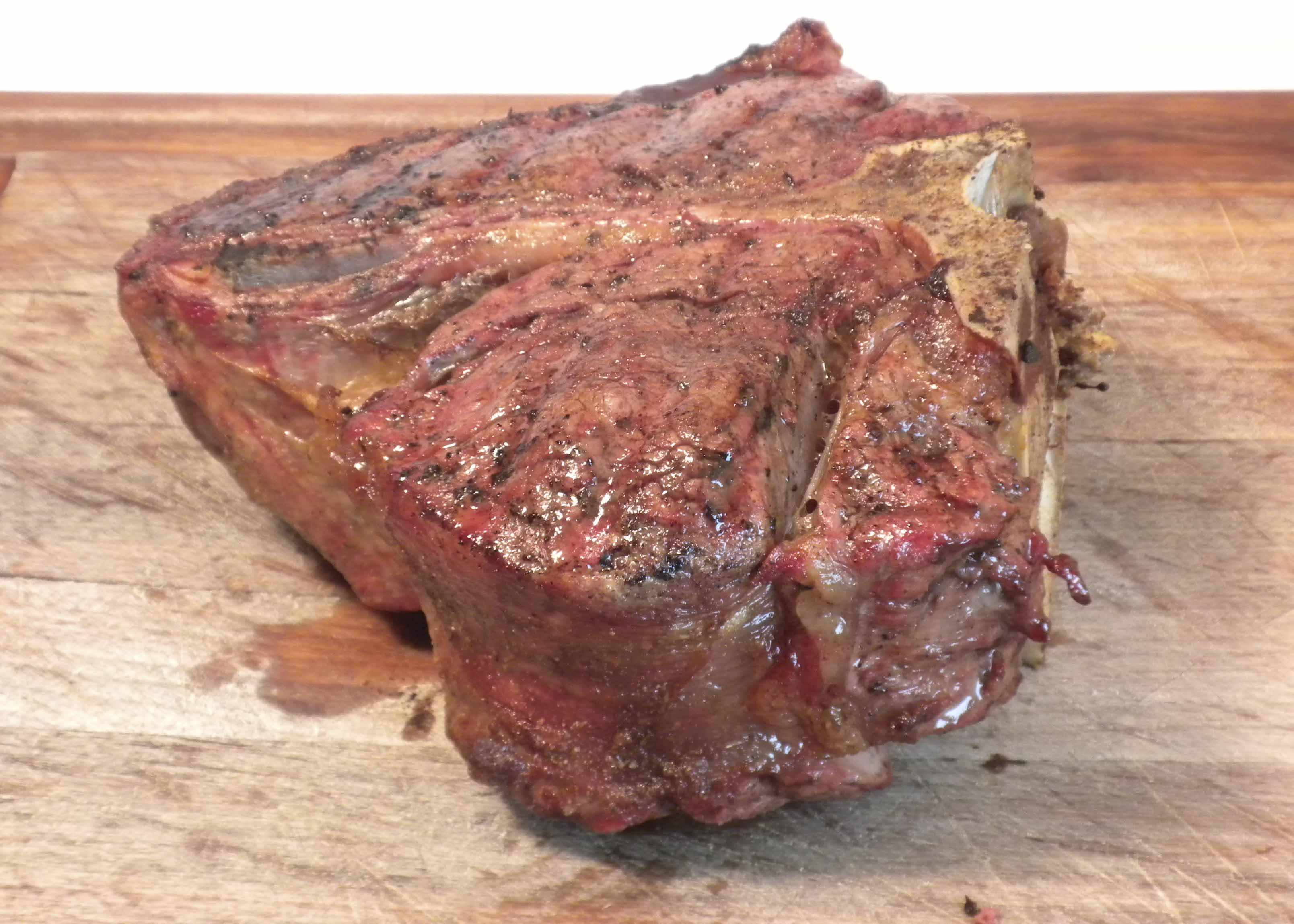
Grassfed Bone In Porterhouse. It tasted even better than it looks.
There is a very old saying,â€the nearer the bone, the sweeter the meat.†This saying celebrates the traditional knowledge that meat on the bone is valuable, both for taste and nutrition. The meat right next to the bone is sweeter and tastier, flavored with bone marrow and other substances that enter the meat during cooking. Grassfed meat cooked on the bone has so much flavor that spices are often unnecessary. I prefer to cook grassfed meat on the bone. Bone in meat has great nutritional benefit. Bone in meat is more tender. Bone in meat cooks more evenly. And it tastes so much better.
Why Most Meat Cuts Are Boneless
Most of the meat cuts sold today, including grassfed cuts, are boneless. There are several reasons for this. Bones are heavy, and most meat is shipped a long way. Cutting off the bones reduces transportation costs. I have talked to grassfed farmers who do not sell bone in meat because they are afraid the bones will penetrate the plastic they ship their meat in. The emphasis on lean meat promotes the use of boneless cuts, as bones contain fatty substances such as bone marrow. Carving bone in meat requires more effort than dealing with boneless cuts. Most people think of bones as waste, and do not want to pay for them. Actually, bones have tremendous nutritional and culinary value.
Bone In Meat Is More Nutritious
Bones are made up of minerals such as calcium, phosphorus, magnesium, and many others. When you put your mouth on a bone, the saliva in your mouth dissolves some of these minerals, which thus enter your body. Your body knows exactly how to digest and process these minerals and the cofactors which come with them. Need minerals? Eat the meat next to the bone, and you will get plenty, in a form that your body can easily assimilate and use. Also, you can suck discreetly on a tasty bone.
Bones also contain bone marrow, a fatty substance that is extremely nutrient dense, and is invaluable in making your own bones strong and healthy. Bone marrow is released into the meat during the cooking process, making the meat more nutritious and sweeter. There have been few, if any, scientific studies on the nutritional value of bones and bone marrow. However, there are some very old “studies,†conducted by our ancestors, the traditional peoples studied by Dr. Weston A. Price, and even wild animals.
Traditional People Knew the Value of Bones
The earliest habitats of primitive humans were found in caves. Many of those caves had one thing in common—a large pile of smashed and split animal bones. It is universally agreed that those bones were smashed and split to get at the bone marrow.
Traditional cuisine is full of references to bone marrow, which was eaten in many forms, and highly prized. The most prized meat in early Europe was the chine portion, a cut of meat reserved for the elite members of society, the heroes. Ancient Irish warriors fought to the death for the right to eat the chine portion, also known as the Hero’s Portion. Even the mightiest warrior in the Iliad, Achilles, cooked a chine portion for himself and the other great heroes of the Greeks. The chine portion was the same cut as a modern rack of lamb, or prime rib, or pork rib roast, except that the chine bone was always left on.
The Native Americans would actually use heavy rocks to pound bison bones into powder, which was made into a nourishing broth.
For most of history, meat was always roasted on the bone. Even stews had bones added to the pot, and the pieces of meat often contained bones. Many traditional peoples would chop chicken and other soft boned meats into pieces, so the marrow and other nutrients would be released into the pot during cooking. These traditions are still carried on today, in traditional cuisines all over the globe.
Several of the peoples studied by Dr. Weston A. Price, particularly the Inuit, split the bones so they could eat the marrow. All of the peoples studied by Dr. Price ate foods made with bones, often in the form of bone broths. These people had excellent teeth, strong bones, powerful immune systems, and were robustly healthy.
Finally, predators such as lions, wolves, and coyotes value the bones of their prey. After eating the liver of their kill, these animals will crack the bones for the marrow and chew on them, often leaving the lean meat for the scavengers. If you have ever given your dog a bone, you can see that dogs also have this traditional wisdom. Chewing on the bones is one of the best ways that these animals can get necessary minerals.
Meat on the Bone Tastes Much Better
Prime rib of beef, Porterhouse steak, T-bone steak, and lamb chops are bone in cuts that are popular even today. These cuts are very expensive and highly prized. Our ancestors ate a much wider variety of bone in cuts. Sirloin steaks, strip loin steaks, lamb roasts, beef roasts, pot roasts, pork roasts, and stews were all cooked with the bones. Almost all poultry was cooked with the bones, as were most fish. The reason for this was that the bones add so much flavor, as well as nutrition. When you cook meat on the bone, the marrow and other substances from the bones actually flavor the meat, adding succulence and a depth of taste that just does not exist with a boneless cut. The bones also help keep the meat moist, and help conduct heat throughout the meat so it cooks more evenly. If you are cooking the meat in liquid, the bone marrow, gelatin, minerals, and other substances from the bone enter the liquid, imbuing it with wonderful flavors, and causing it to thicken into a wonderful, flavorful sauce. There are a number of traditional recipes that call for adding extra bones to stews, pot roasts, and even the roasting pan to add these flavors to the dish. Meat is always tastier when cooked on the bone.
How to Add the Benefits of Bones to Your Diet
The simplest way to enjoy the benefits of bones is to cook bone in cuts. These are cuts of meat that still have the bone attached. When you eat the meat, do not be afraid to chew all the meat off the bones. Do not hesitate to discreetly suck on the bones, especially if you can get some of the marrow. You may find this to be immensely satisfying, as I do. Of course, don’t swallow any bones.
Another great way to enjoy the benefits of bones is to make real bone broth from the bones of pastured animals, simmered for many hours so the nutrients of the bones are released into the broth. My cookbook, Tender Grassfed Meat, has a number of such broth recipes, as does Sally Fallon’s magnificent work, Nourishing Traditions. Tender Grassfed Meat also includes a number of recipes for cooking bone in meat.
This post is part of Fight Back Friday Blog Carnival at Food Renegade.
Reviews
Price-Pottenger Journal of Health and Healing
 Volume 33/Number 4
Winter 2009 – 2010, Page 31
Review by Gina Alianiello
American consumers have been accustomed to cooking and eating factory beef since it became the standard after WWII. But grassfed beef is different. It not only has a different taste and texture with more nutrition, but requires different preparation. Stanley Fishman revives, with passion, the age-old tradition of grassfed beef—meat that is produced from animals raised only on grass and pastured plants from start to finish, unlike modern factory – and grain – finished beef. He not only disproves the modern myth that grassfed meat is tough, but proves that, when prepared “right,†and with all the “right†ingredients, even the not-so-tender cuts of beef turn out more flavorful and tender than any alternative. Fishman likens himself to a wine connoisseur with a keen taste for the varying nuances of grassfed beef according to the type of grass the animal has eaten. He reminds the reader that when bison eat their natural diet of grasses, the meat has a “clean, sweet taste,†very different from the indistinguishable beefy taste of most commercial bison fed on grain and soy. From his exhaustive historical research and excavation of thousands of recipes from all over the world, Fishman has lovingly adapted grassfed beef, bison, and lamb for the modern kitchen.
The ingredients and cooking methods throughout are basic, consistent, and uncompromising, yet every page yields surprises from diverse recipes of rich complexity, with insights of how ingredients work together. From basic Beef Broth to Roast Sirloin Tip with Apple Onion Marinade to Blueberry Bison Stew, there are fundamentals for which the author will accept no substitutes. Conventional, or even organic beef that has been grain finished—meaning animals have been fattened on grain in the final months before slaughter, usually requires heavier seasoning. Grassfed beef does not respond to the artificial ingredients routinely used to mask tasteless factory raised beef, but instead requires fewer seasonings to bring out the natural quality of the meat. Fishman always insists on everything organic in cooking—including all vegetables, fruits, spices, and herbs. The standard marinade for meat in most of the recipes is extra virgin organic olive oil—specifically unfiltered—in order to penetrate with tenderizing enzymes and for carrying any other flavors deep into the meat. Some of the recipes rely on a few crushed vegetables as a tenderizing marinade. Unrefined sea salt is another staple ingredient for most recipes, except for bison, which gets tougher when salted. For extra flavor, salt is applied to beef only in the later stages of cooking since the salt will otherwise toughen the grassfed beef, which is denser and less watery than commercial beef.
Fishman also draws liberally on the innate flavor and tenderness that comes from the right kind of animal fats filled with nutrients from grassfed animals. To replace the fat too often trimmed away by meat producers, he uses various fats traditionally eaten by our ancestors: beef suet or tallow, pastured butter, lamb fat, lard, and bacon.
This book is already becoming a favorite resource. Finding true grassfed beef can be challenging, but Fishman provides a list of sources. There is no problem for the epicurean novice finding confidence to try the world-class recipes. They are clearly presented, thanks to the tireless experimentation by the author. The real dilemma is in how to pick a recipe. There are the healing bone broths simmered for hours. There are the many roasts rested on beds of caramelized vegetables or apples, and cooked gradually from higher to lower temperatures to mimic a real fire. There is the sublime combination of mushrooms, onions, and organic sour cream in the Beef Stroganoff. The Meatloaf made with fermented organ sausage is a delectable concoction of the most nutritive parts of the grassfed animal.
Tender Grassfed Meat is simple, practical, creative, engaging, and comprehensive. It explains the differences between factory and grassfed beef and why grassfed meat is best. The book covers the types of cuts, and discusses the minimal but necessary equipment and cookware. It honors every cultural tradition while respectfully adapting to modern methods. From the first section of the book on preparing and cooking grassfed meat the right way, to the over one hundred and fifty pages of detailed recipes, Fishman’s offering is an ode to grassfed beef that makes a difference.
Gina Alianiello is a freelance writer with a strong interest in the grassfed movement.
More Reviews of Tender Grassfed Meat
“Neither fat nor flavorings are spared in this collection of delicious recipes… The chapter on steak alone is worth the price of this book—so many variations… A Thumb’s Up for this one—happy eating.†[Read more…]
Sally Fallon Morell, President, Weston A. Price Foundation, Wise Traditions, November 2009
“Christmas shopping was super easy this year. Everyone on my list is getting the same thing!… Tender Grassfed Meat—Traditional Ways to Cook Healthy Meat by Stanley A. Fishman.†[Read more…]
Kimberly Hartke, Hartke Is Online, Publicist, Weston A. Price Foundation
“Natural real whole food advocates will LOVE this book!†[Read more…]
Jimmy Moore, Livin’ La Vida Low Carb
“I highly recommend this cookbook if you are looking for great healthy recipes for you and your family.†[Read more…]
Sheri Fogarty, Moms for Safe Food
Buy the Book
Price-Pottenger Nutrition Foundation
Why I Eat Organic or the Equivalent
By Stanley A. Fishman, author of Tender Grassfed Meat
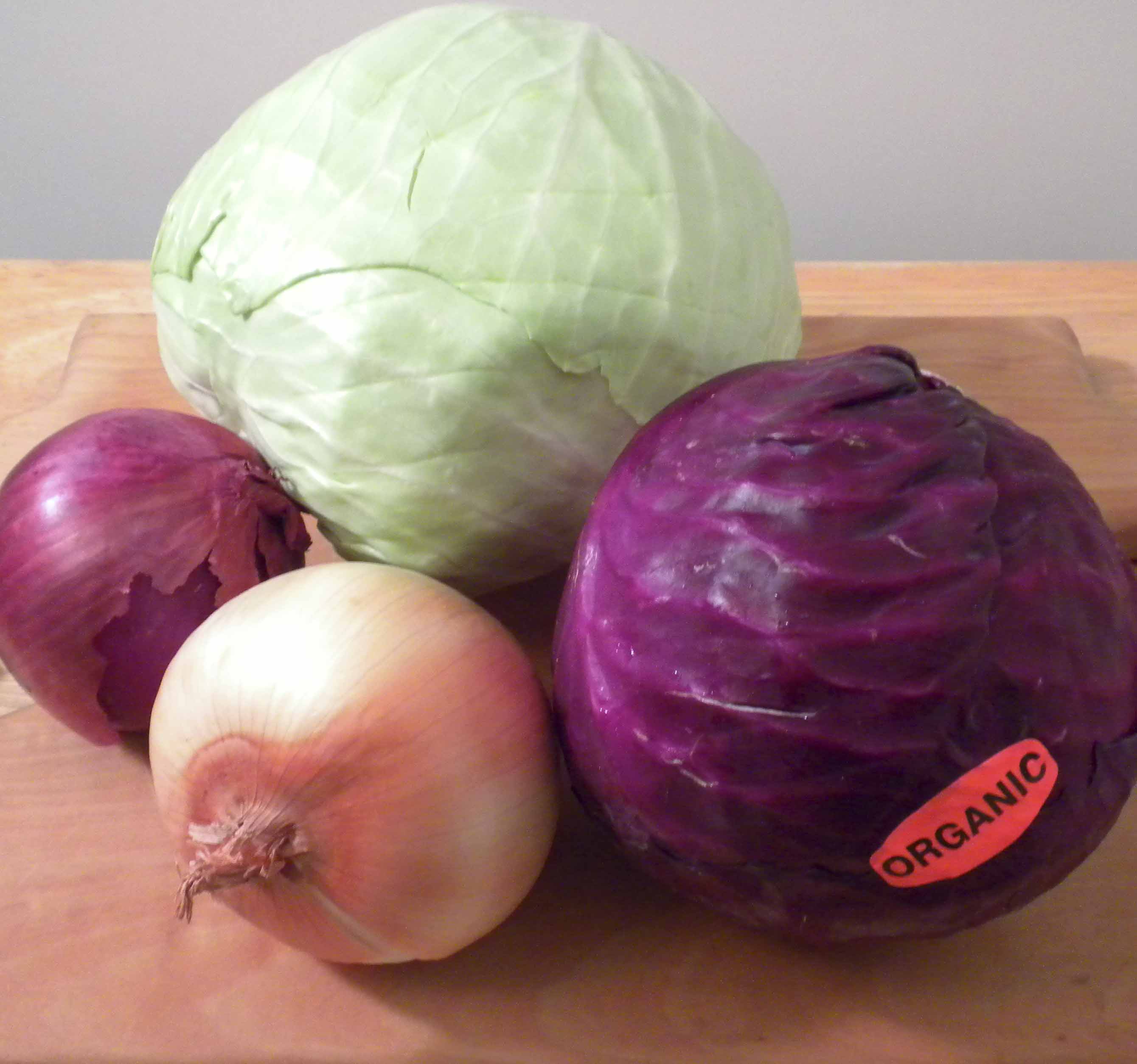 I strongly recommend the use of organic ingredients in Tender Grassfed Meat. The reason is simple. I want to eat the most nutritious food I can, and the tastiest food I can. Dr. Weston A. Price discovered that people eating the traditional diet of their ancestors were healthy. All of the food contained in these traditional diets was organic or the equivalent. My health was restored by trying to copy the diets described by Dr. Price. After I restricted my diet to organic or the equivalent, I learned something. The food tasted better — much better.
The human body is made to process natural, unaltered food.
The methods that the human body uses to sustain, nourish and rebuild itself are many, and very complex. Nutrients are not processed in isolation, but together. For example, it is now known that an oversupply of one B vitamin can actually cause a deficiency in other B vitamins, because the body is set up to process these nutrients together, the way they are present in food. When you get your nutrients from unaltered food, everything is present that is needed to fully assimilate the nutrients. Our ancestors learned which foods were good to eat, and all of the nutrients and cofactors in those foods are necessary to properly assimilate the nutrients. Our ancestors also learned to combine foods to ensure proper nutrition. While they could not identify specific vitamins, minerals, amino acids, and fatty acids, they knew what to eat. This knowledge was passed from generation to generation, over thousands of years.
Non-organic foods are altered and different from traditional foods.
Modern food raising practices have altered the very chemistry of food. For example, feeding grain and other non-grass substances to cattle change the balance of omega-6 to omega-3 fatty acids dramatically, from one to one to twenty to one. When you eat meat from an animal made to eat grass, your body expects the food to have the proper ratio of omega-6 to omega-3. When the meat does not have the proper ratio, your body is not getting what it is ready to process. We do know that an excess of omega-6 fatty acids can cause inflammation and a host of illnesses.
Vegetables that are sprayed regularly with pesticides, which they absorb, are different from the vegetables humankind has eaten for most of history. Artificially fertilized soil lacks many of the nutrients and minerals present in naturally rich soil, and food grown with artificial fertilizers is different from food grown in naturally rich soil. This forces your body to process substances that either have never existed before (artificial chemicals and pesticides), and/or lack the substances the body expects to find in the food, which may be necessary to properly process and assimilate the nutrients.
GMOs did not exist in nature, and were not eaten by our ancestors.
None of the healthy peoples studied by Dr. Price ever ate GMOs (Genetically Modified Organisms), because GMOs did not exist at the time. GMOs are plants that are changed in a laboratory, sometimes having insect genes and other foreign components added to them. This once again presents your body with substances that it does not expect. Most GMO crops are designed with an internal pesticide, or designed to absorb and tolerate huge amounts of pesticides, amounts that might kill a normal plant. The presence of these pesticides in the crops once again forces your body to deal with a substance it does not expect, or know what to do with.
Modern science has identified only some of the nutrients and cofactors needed by our bodies.
Scientists keep discovering new nutrients as time goes on, from vitamin K2 (which used to be unknown), omega-6 and omega-3 fatty acids, which were also unknown decades ago, and a number of other substances. Vitamin K2, omega-6 and omega-3 fatty acids all are very important nutrients. The point is that there are dozens, maybe hundreds of nutrients and substances necessary to process nutrients that are currently unknown. Since conventional agricultural practices change the very chemistry of food, it is impossible to know what nutrients are altered or missing, since so many nutrients have not even been discovered.
How to get all the nutrients and cofactors.
How can we get all of the nutrients and cofactors we need, if science has not identified all of them? The answer is very simple and I know it works because I have done it. Eating the nutrient-dense food enjoyed by our ancestors will give us all the nutrients and cofactors we need. Foods that are organic or the equivalent are the closest we can get to the food that was actually eaten by our ancestors.
What is the equivalent of organic?
The phrase “organic or the equivalent†is often used. “Equivalent†means food that has been raised according to organic food practices, but has not been certified organic by an authorized agency. The food is the same, it just doesn’t have the stamp of approval, which can be quite expensive and time-consuming to obtain. Food meets my definition of “organic or the equivalent†if it is raised without the use of pesticides, artificial fertilizers, chemicals, or ionizing radiation. It cannot be GMO. Animals must be raised without the use of growth hormones or antibiotics. I add another requirement to the meat that I eat. The food that is fed to the animals must be species appropriate, meaning that it is very similar to the natural diet of the animal. For ruminant animals, such as cattle, bison, and lamb, this means 100 percent grassfed.
Organic food tastes much better.
There is another benefit to using ingredients that are organic or the equivalent. They will make your food taste much better. Vegetables grown in good soil, without the use of pesticides or artificial fertilizer, have much more flavor. You can really taste this when you use a recipe that has only a few ingredients. Organic spices grown in good soil that contains the full range of minerals and nutrients have a depth of flavor that is far superior to the conventional varieties. The meat of grassfed animals who have eaten lush, green grass, grown in good soil has a deep, wonderful flavor that no feedlot meat can equal.
I eat organic or the equivalent because it is healthier and tastes better.
This post is part of the blog carnival: Fight Back Friday. Click here to read more great posts at FoodRenegade.com
Health Benefits of Grassfed Meat
By Stanley A. Fishman, author of Tender Grassfed Meat
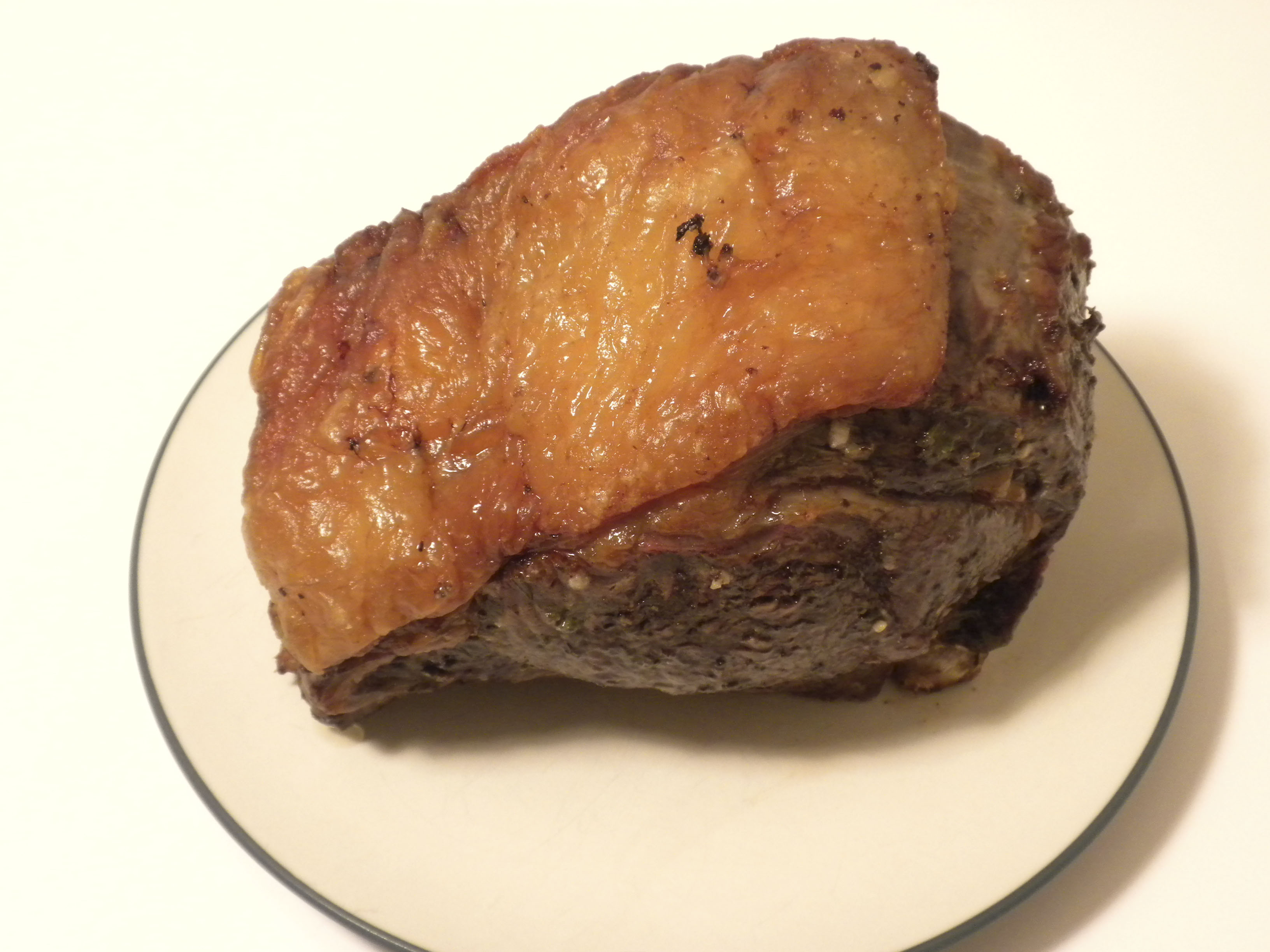
English Style Prime Rib, page 86, Tender Grassfed Meat.
Why did I spend three years writing a book on cooking grassfed meat? Why did I read over 300 cookbooks and novels? The answer is very simple. I wanted to improve my health by enjoying the immense health benefits of grassfed meat. Grassfed meat and fat are so nutritious that they can literally rebuild your body. They certainly rebuilt mine.
Grassfed meat is a completely different product from conventional meat. The natural food of cattle, bison, and lamb is grass and meadow plants. That is all they should be eating. When the animals are raised on grass, their meat is packed full of nutrients in the perfect proportion for good health, in a form that can be easily assimilated by the human body.
Meat that is not 100 percent grassfed and grass finished is fed a mixture of grain, soy, and many other things that were never a part of the natural diet of these animals. The “other things†can include rendered restaurant waste, various animal parts, cement dust, plastic balls, chicken manure, and many other unsavory ingredients. Some producers only feed a 100 percent vegetarian diet to their animals. However, even these diets usually consist of a large amount of grain and soy, which are not part of the natural diet of grass eating animals.
Omega-3 Essential Fatty Acids
The meat of grain finished animals is very different in composition than the meat of grassfed animals, and lacks many of the wonderful nutrients that are present in grassfed meat. For example, the natural balance of omega-6 fatty acids to omega-3 fatty acids should be no more than four to one. In grassfed meat, the ratio is usually one to one. In meat that is not exclusively grassfed, the ratio of omega-6 to omega-3 is often twenty-to-one. The omega-6 excess in the American diet has been associated with a greatly increased risk of cancer, heart disease, obesity, rapid aging, and many other health problems. Many doctors advise their patients to take fish oil capsules to try to help with the imbalance. Grassfed meat has the same ratio of omega-6 to omega-3 as wild fish.
The Benefits of CLA
In addition to having the proper ratio of omega-6 to omega-3 fatty acids, grassfed meat contains a large amount of CLA (Conjugated Linoleic Acid). The amount of CLA goes down when the animal is fed grain. The more grain fed to the animal, the less CLA. Various studies have shown that CLA:
- Increases the metabolic rate
- Increases muscle mass while reducing fat
- Decreases abdominal fat
- Strengthens the immune system
- Reduces the risk of cancer
- Reduces the risk of heart disease
- Reduces the risk of diabetes
- Reduces the risk of hyperthyroidism
- Normalizes thyroid function
More Nutrients in Grassfed Meat
But that is not all. Your body does not use nutrients in isolation, but is accustomed to receiving them together with other substances that are present in the food and necessary for your body to assimilate and use the nutrients. These substances are known as cofactors. When the cofactors are missing or altered, the ability of your body to use the nutrients is greatly reduced. This is why vitamin supplements are often ineffective, because your body needs the cofactors present in real food to properly assimilate nutrients. When you eat 100 percent grassfed and grass finished meat, you know you are getting all the cofactors, in their proper form.
Grassfed meat also provides a wide variety of vitamins, minerals, and amino acids. All of these nutrients are present in proper proportion to each other, along with the cofactors needed for your body to properly assimilate them.
My health has improved enormously since I made the switch to eating only 100 percent grassfed and grass finished meat. Learning how to cook grassfed meat was worth all the time, trouble, and expense. Good health is worth it!
Disclaimer:
I am not a doctor, and the above is not intended to be medical advice. Grassfed meat is a food, not a medicine. By all means, see a doctor if you want medical advice. The above is just a description of my understanding of the nutritional benefits of grassfed meat.
This post is part of GAPS Friendly Friday blog carnival. Read more great Real Food Wednesday blogs at Kelly the Kitchen Cop.
Tender Grassfed Meat

Grassfed meat has less fat, a lot less water, a denser texture, and much more flavor. Since grassfed meat is a totally different product, you cannot cook it like conventional meat, and expect to have a great meal. I learned this the hard way, when I ruined every piece of grassfed meat I cooked. I researched the methods that were used to cook meat when grassfed meat was the only meat available. I learned that the methods our ancestors used were very different than modern methods.
Tender Grassfed Meat is the book I wish I had when I first tried to cook grassfed meat. If grassfed meat is cooked like conventional meat, it will be tough and terrible. If grassfed meat is cooked properly, it is tender and absolutely delicious, with a depth of flavor that can never be achieved by conventional meat.
Tender Grassfed Meat was designed to make it easy to cook delicious and tender grassfed meat. It was designed both for the beginner and the experienced cook, with a wide variety of recipes.
Tender Grassfed Meat covers beef, bison, and lamb. There are many good suppliers of all of these meats, both on the Internet and locally. All three of these animals were meant to eat grass, and their meat and fat are some of the healthiest and most nutritious food you can eat.
Tender Grassfed Meat has a detailed Table of Contents and a very detailed Index, which makes it very easy to find everything. You can look inside the book and browse the Index and Table of Contents at the book’s page at Amazon.
Part One explains in detail why grassfed meat is best, and the substantial differences between grassfed meat and other kinds of meat. This section also goes into detail on what ingredients and cooking equipment are best. I share specific techniques for making some of the most tender and delicious grassfed meat you could possibly eat.
Part Two contains a number of detailed recipes for grassfed beef, bison, and lamb, as well as a section on how to eat liver and love it.
- 7 Broth Recipes
- 60 Grassfed Beef Recipes
- 17 Grassfed Bison Recipes
- 13 Grassfed Lamb Recipes
- 4 Grassfed Liver Recipes
- 8 Marinade Recipes
- 17 Recipes for Side Dishes
The Appendix contains sections on finding and purchasing grassfed meat and recommends some specific sources for grassfed meat.
The Recipes

Many of the recipes contain traditional flavor combinations taken from the cooking of old Europe. These are flavor combinations that have been used for hundreds, and in some cases thousands of years, to season meat. These combinations were used for such a long time because they make meat taste wonderful. The recipes contain flavor combinations from France, Italy, Germany, Poland, Hungary, Russia, England, Scotland, Ireland, Spain, Portugal, Romania, Transylvania, Bohemia, and even ancient Rome. Other recipes feature flavor combinations from China, Vietnam, the United States, and Native Americans.
These recipes are extremely detailed, broken down step by step to make them easy to use. The book is designed so that the entire recipe is visible at all times. You never have to turn a page while using a recipe.
I read hundreds of cookbooks while researching this book. I wrote this book so it contained everything I would ever want to see in a cookbook in terms of detail, ease of use, and most importantly, absolutely delicious food. I have cooked every recipe in the book several times. This is the food that I cook for my family, and I continue to make these recipes for our meals, because they are healthy, tender, and delicious.
Praise for Tender Grassfed Meat
“Neither fat nor flavorings are spared in this collection of delicious recipes… The chapter on steak alone is worth the price of this book—so many variations… A Thumb’s Up for this one—happy eating.†[Read more…]
Sally Fallon Morell, President, Weston A. Price Foundation, Wise Traditions, November 2009
“Christmas shopping was super easy this year. Everyone on my list is getting the same thing!… Tender Grassfed Meat—Traditional Ways to Cook Healthy Meat by Stanley A. Fishman.†[Read more…]
Kimberly Hartke, Hartke Is Online, Publicist, Weston A. Price Foundation
“Natural real whole food advocates will LOVE this book!†[Read more…]
Jimmy Moore, Livin’ La Vida Low Carb
“I highly recommend this cookbook if you are looking for great healthy recipes for you and your family.†[Read more…]
Sheri Fogarty, Moms for Safe Food
Click Here to Purchase

By Stanley A. Fishman