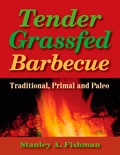
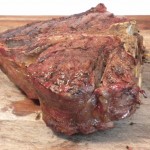
 Photos of recipes from the new book Tender Grassfed Barbecue
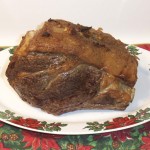 Photos of recipes from the cookbook Tender Grassfed Meat

Great Soil Makes Great Meat and Great Vegetables
By Stanley A. Fishman, author of Tender Grassfed Meat and Tender Grassfed Barbecue
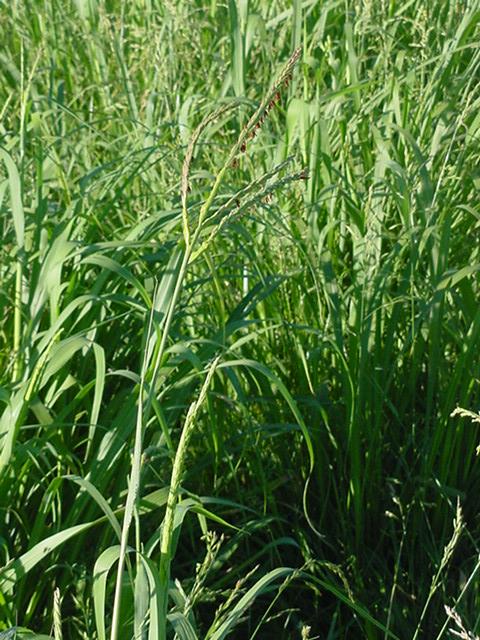
Rich, nutrient-dense grass on John Wood's farm—the perfect food for cattle.
I was in a hurry Saturday afternoon. I had to make a pot roast, but I had very little time. So I decided that we would settle for a meal that was good and nutritious, but simple and easy to prepare. I browned the grassfed roast in grassfed beef suet, took it out of the pan, and browned an onion and some shallots in the drippings. I returned the roast to the pan, added some water, salt and pepper, covered it, and stuck it in a low oven. The whole procedure took about ten minutes. Several hours later, we ate what I thought would be a mediocre but acceptable pot roast. I was wrong.
The roast was absolutely delicious, with a wonderful rich flavor, and a great texture. We all remarked on how wonderful it was. I was shocked that it tasted so good. After thinking about it, I realized what made the meal so wonderful—the quality of the ingredients.
But why were the ingredients so good? After all, all the meat we eat is grassfed, and all the vegetables we eat are organic. After some thought, I realized that all the ingredients came from farms that had particularly great soil, from farmers who really cared about the quality of their food The lesson I learned is that even in the world of real food, some food is exceptional.
The Importance of Soil
Every plant and grass gets its nutrition from the soil—the richer the soil, the more nutritious the plant. Grassfed cattle get their nutrition from the grass. Grass growing in rich soil makes great feed for cattle, resulting in great flavor and nutrition, and fatter cattle, which are more tender and flavorful. Factory agriculture depletes the soil, relying on chemicals and artificial fertilizer to produce plants that are far inferior to plants grown on rich soil. Yet even good soil is not as desirable as great soil.
The Wonderful Meat
The roast came from U.S. Wellness Meats. I have been ordering grassfed beef from U.S. Wellness Meats regularly since August 2006. They sold me the first grassfed meat I successfully cooked. Their meat was excellent then. The business has grown a great deal since 2006, and the quality of the meat has changed. It has become steadily better, more tender, more flavorful, more energizing. While the quality of most companies’ products suffer as they grow bigger, U.S. Wellness Meats is an exception to the rule. I credit the fact that their meat is getting steadily better to their founder, John Wood, who constantly takes measures to improve the quality of the soil on his farm, and to raise even better meat. This blog post I did on how John is improving the soil on his farm shows how he did it: Grassfed Farmer Renews the Land. The improving quality and terrific flavor of his already superb meat show the results. The wonderful natural flavor of the meat was a huge factor in producing this easy, yet delicious roast.
The Amazing Onion and Shallots
There is a farm at our local farmers market. A couple months ago, I passed their stand and was struck by the beautiful vibrant color of their organic Italian peppers. We already bought our produce from another organic farm in the market, and were very happy with their produce, but these peppers looked so wonderful, I bought a few. After sautéing the peppers simply, we were completely blown away with their incredible flavor and pleasing texture. And we felt good after eating them, a feeling I usually get only when eating grassfed meat.
Next week, we stopped at the stand, and bought all kinds of gorgeous produce. I talked to the farmer, and told him how much I enjoyed the peppers. He said, “This is the food I feed my family.†He said it seriously, with pride and satisfaction, as if feeding his family was the most important thing in the world, and it was his duty to do it well, and he knew he was doing his duty. We talked a bit more, and he spoke about the natural measures he took to improve his soil, which he did every single year. No chemical fertilizer or pesticides for his family! No wonder his produce was so wonderful.
The onion and shallots came from his farm, and their rich complex flavor blended perfectly with the fantastic meat from U.S. Wellness Meats.
All factory foods taste pretty much the same. Factory beef has the same flavor, no matter where it comes from. All factory vegetables taste pretty much the same as well. But grassfed beef had a wide variety of tastes, and grassfed beef from cattle raised on healthy grass growing on rich soil has incredible flavor and tenderness. Organic or the equivalent vegetables also vary widely in flavor, but the very best comes from those wise farmers who improve their soil. When you eat food of this very high quality, even a simple, easy recipe can result in a magnificent meal.
This post is part of Monday Mania, Fat Tuesday, Real Food Wednesday and Fight Back Friday blog carnivals.
When it Comes to Food, “One Size Fits All†Fits Nobody
By Stanley A. Fishman, author of Tender Grassfed Meat and Tender Grassfed Barbecue
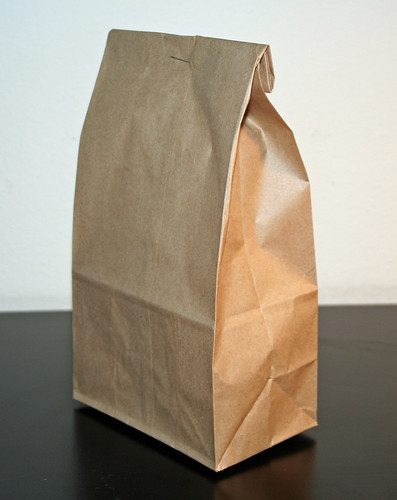
 photo credit: Jeffrey Beall
The recent confiscation of a four-year-old’s homemade lunch, which resulted in her being given chicken nuggets instead, has outraged people all over the United States. Many comments on the Internet have made it clear that this is not an isolated incident, but that many similar actions have occurred, not only in preschools, but in elementary schools as well.
The Federal government is attempting to dictate what constitutes a healthy meal, and what every child should eat. While the intent might be good, the execution is a disaster, as flawed standards are dictated, and these standards are required for every child, regardless of their individual needs. The basic human right of parents to select food for their children is completely ignored.
The inevitable result is that the children are much worse off, because their needs as individuals are ignored.
Federal Standards Ignore Quality and Individuality
The federal government has decided that all children in preschools, even home preschools, will have a lunch that consists of the following:
- One serving of meat or meat substitute;
- One serving of low-fat or nonfat milk;
- One serving of grain;
- Two servings of fruit and/or vegetables;
- Each serving size is set at three ounces.
No mention is made in the standards as to the quality of the food. The government standards treat all food as being of equal quality, and demand the same lunch for every child. The truth is that every kind of food varies greatly in quality, from heritage organic foods raised on small sustainable farms (the best), to factory foods raised on huge factory farms that are lacking in many vital nutrients, and are full of pesticides and other chemicals, often containing GMOs and soy protein isolate (the worst).
The government programs often mandate that the cheapest source of the required foods be selected, which guarantees that the worst quality food is selected for government-financed food programs. Yet the government insists that each lunch must contain the required servings, and ignores the issue of quality.
Lunch Inspections Lead to Worse Nutrition, Not Better
The incident that sparked so much outrage deserves a close look. A four-year-old preschool student brought a lunch prepared for her by her family. The lunch included a turkey and cheese sandwich, a banana, a bag of potato chips, and some apple juice. Her lunch was INSPECTED, by some kind of official. This resulted in the child being told that the lunch her family packed was not good enough. She was told to put the home lunch away and to get a cafeteria lunch. The only portion of the cafeteria lunch that the child actually ate was three chicken nuggets. The nuggets, since they had to be the cheapest available, almost certainly were made from slaughterhouse scraps treated with ammonia, the infamous pink slime. Soy protein isolate was almost certainly added to this mix, along with artificial flavor enhancers and who knows what else.
Does anyone seriously contend that this child got a better lunch than the one her family packed for her?
By trying to force the child to eat the one-size-fits-all government lunch, the government deprived her of a good lunch and caused her to have the equivalent of no lunch at all.
In fact, government interference resulted in her having a truly inadequate lunch, rather than the much more nutritious lunch packed for her by her family, consisting of foods that her family knew she would eat.
The incident was later blamed on “teacher error,†by a school district administrator. Yet even this administrator said the child should have been given a container of milk. This must have been the cheapest possible low-fat or non-fat factory milk. What if the child was allergic to milk, as so many children are? What if her parents did not want her to drink that type of milk? What if milk gave her indigestion? What if they wanted her to drink only high-quality organic milk? What if they did not want her to drink milk at all? What if they knew the child would not drink milk, but would eat the cheese they put in her sandwich?
The point is, the government does not know any of these details, and does not appear to care. To them, one-size-fits-all, every child gets a carton of factory milk, whether they or their parents want it, or not. Whether it is good for the child, or not. That is exactly why the government should not be making food choices for children, why parents know best, and why one size fits NOBODY, when it comes to food.
Here is a link to a great post by my friend, Kimberly Hartke: Keep America Safe for Brown Bags!
This post is part of Monday Mania, Fat Tuesday, Real Food Wednesday, and Fight Back Friday blog carnivals.
We Need Real Restaurants Serving Real Food!
By Stanley A. Fishman, author of Tender Grassfed Meat and Tender Grassfed Barbecue

Restaurants aren't what they used to be.
Do you ever get tired of the poor quality and high prices of most restaurants?
I certainly do. The main choice seems to be between chain restaurants serving large amounts of the worst factory foods, or higher-end restaurants serving tiny portions of somewhat better food. The taste is often mediocre at best, and if you are used to eating real food, your stomach will often rebel against what you have put into it. And the money you spent on this expensive meal could have bought you a large amount of excellent grassfed meat and real food, since restaurant prices can be so high.
I run into these problems in supposedly high-quality restaurants with great reviews and reputations, as well as the more pedestrian places. Even the smaller ethnic restaurants have similar problems. Most of the time, I count myself lucky if I do not get an upset stomach after eating at a restaurant. Just about all of the time, I go home hungry because the food lacks the nutrients my body has become used to when eating real food.
Enough is enough. Instead of accepting the current miserable situation, we need real restaurants serving real food!
The Problem
When I was a child and a teenager, many restaurants were excellent. They had to be. This was a time when most families had good home cooks, and most people just would not go to a restaurant unless the food was better than at home. This set a very high standard for taste and quality. Also, there were no GMOs, and much of the food was far more real than it is now.
We now live in a time where most people do not know how to cook. Packaged factory foods form a huge part of SAD (Standard American Diet). Most people have been brainwashed into thinking all food is the same. This lack of competition has allowed restaurants to get away with mediocre food, terrible ingredients, and huge prices.
The Solution
We should no longer accept mediocrity or worse. A meal at a restaurant should taste wonderful, use high-quality real food, be cooked and served under sanitary conditions, and leave you feeling satisfied after eating it. Nothing less is acceptable.
I have nine suggestions toward reaching this goal.
1.   Serve real food only.
This is crucial. Even restaurants that boast of the quality of their ingredients often use factory ingredients to save money. They often buy from restaurant supply companies that supply the cheapest factory food. Food should be organic or the equivalent, preferably local. One of the few restaurants that does it right is Chez Panisse, in Berkeley, which buys almost all of its foods from quality local farms and ranches. This is a good standard.
2.   Drop the factory meat and serve only grassfed and grass-finished meat.
This seems like a very radical suggestion, and it is. But the rewards of implementing it are immense. Grassfed and grass-finished meat is far superior in nutrition, much more satisfying to the appetite, and is perhaps the oldest food of humankind. It tastes much better than factory meat, when properly cooked. I have made this suggestion in a number of places, and the answer is always along the lines that grassfed meat is “tough.†No, it is not tough. Properly cooked grassfed meat is very tender. The chefs and cooks just need to learn how to cook it.
3.   Serve only wild fish.
Most restaurants serve only farmed fish, which are the nautical equivalent of factory meat. Farmed fish are fed a totally unnatural diet, and are far less nourishing than wild fish. Wild fish taste much better.
4.   Stop using modern vegetable oils, and use only traditional fats in cooking.
Almost all restaurants use modern vegetable oils. The favorite modern oils are soy and canola, as they are also the cheapest. These modern oils, which were never used prior to the twentieth century, have a terrible overbalance of omega-6 fatty acids, and are far inferior in nutritional value to traditional fats such as butter, lard, ghee, beef tallow, coconut oil, pure extra virgin olive oil, etc.
5.   Serve a full plate of nourishing food, and fill up the empty spaces.
Few things annoy me more than ordering an expensive entrée and getting a tiny serving, with plenty of empty space on the plate. When I was a child, you could not even see the bottom of the plate until you had eaten something. Now, tiny portions of expensive entrées are “plated,†which is a fancy term for increasing profits by shortchanging people on food while leaving large areas of the plate empty. This results in people going home hungry, or buying appetizers on equally empty plates to try to satisfy their appetites. While this may increase profits, it is not fair to the customer, in my opinion. While restaurants seem to love the “deck-of-playing-cardsâ€-size meat servings pushed by the government, they still charge huge prices for these tiny portions.
6.   Throw away the microwave.
Many restaurants reheat a frozen entrée in the microwave, and serve it as “fresh.†Not only are there serious concerns about what microwaving does to food, but this practice is detrimental to both nutrition and taste. Freshly cooked food tastes much better.
7.   Keep it clean.
Many restaurants are downright filthy. Many restaurant refrigerators are not nearly cold enough. There is no excuse for this. Every kitchen, serving area, food storage area, dish, and utensil should be clean. No exceptions. Every refrigerator should be at least forty degrees, or colder. People often get sick from the filth in restaurants and their food, and this can always be avoided.
8.   Cook it great, every time!
Restaurant cooks and chefs are supposed to be professionals, who cook for a living. Every single dish they turn out should taste great, every single time.
I have eaten in many restaurants where a dish is good one time, and terrible the next. Many dishes are poorly cooked and mediocre. This can ruin a restaurant’s reputation. Good ingredients, properly cooked, taste great. It is that simple.
9.   Stop using chemicals and flavor enhancers.
No restaurant should use MSG or other chemicals to artificially enhance the flavor of their food. Not only can these chemical additives be harmful, they mask the taste of poorly cooked food, and deceive the public as to the quality of the meal.
Many in the restaurant industry will claim that these suggestions are too expensive. As recently as the 1980s, many restaurants had similar standards (except for grassfed meat). Restaurants have a great ability to buy food wholesale, and to negotiate prices, especially when they are buying from individual farms and ranches. But more to the point is that restaurants are already very expensive, and I see no need to spend money on poor quality restaurant food.
This post is part of Monday Mania, Fat Tuesday, Real Food Wednesday and Fight Back Friday blog carnivals.
Before Weight Loss Surgery — Try Grassfed Fat
By Stanley A. Fishman, author of Tender Grassfed Meat and Tender Grassfed Barbecue
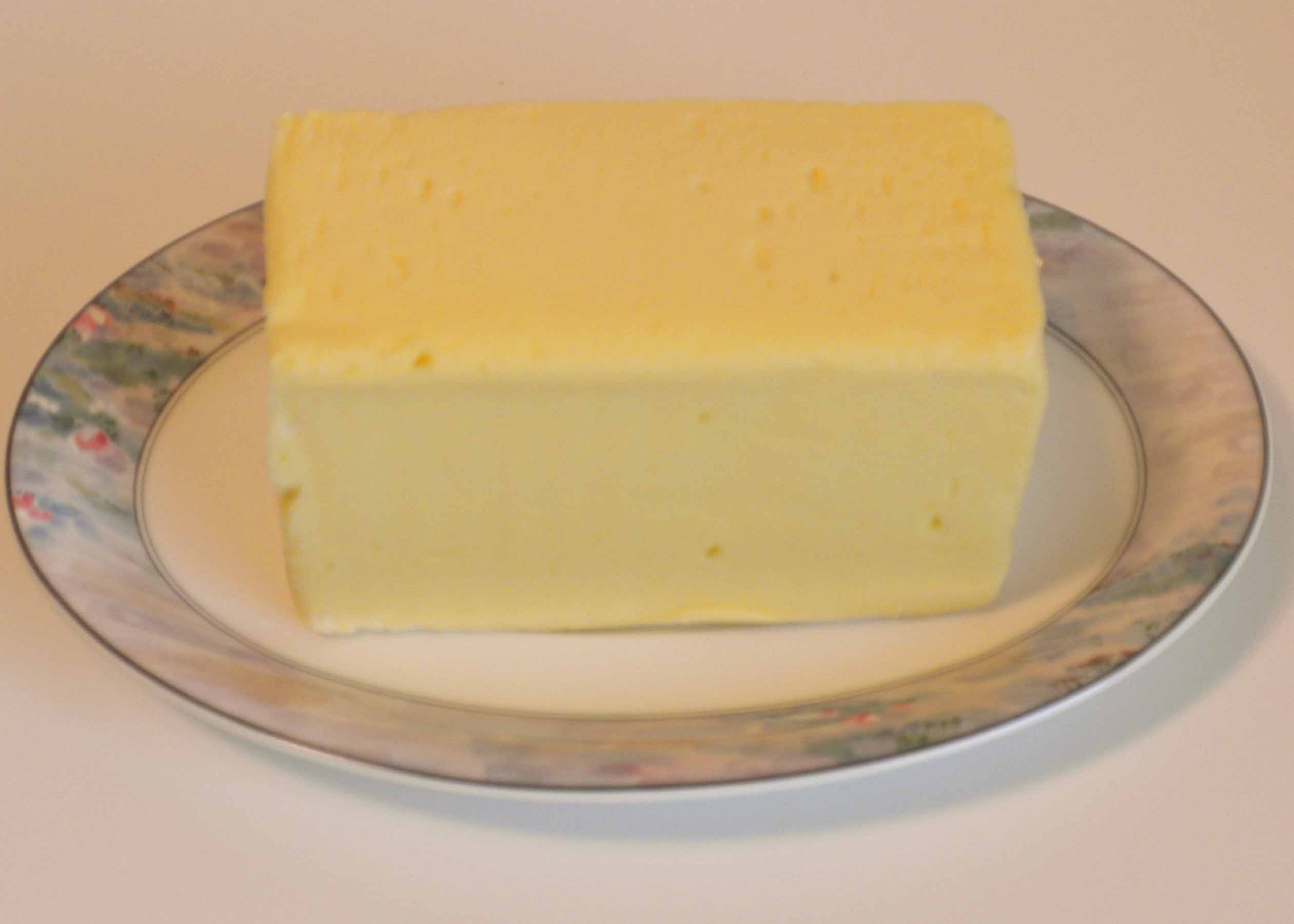
Pastured butter—this is what people used to eat to lose weight.
The FDA recently claimed that some advertisers of “Lap Band†weight loss surgeries were not properly disclosing the many dangers of the procedure.
It is a total mystery to me why anyone would accept the risks of surgery if they had any alternative. Why anybody would accept mutilation, internal scarring, and the insertion of a foreign device into their bodies. To have this done for the purpose of losing weight is incomprehensible to me.
But it is supposed to be so hard to lose weight, and to keep the weight off. And weight loss surgeries like gastric bypasses and the “Lap Band†are supposed to make it easy.
But there is a much safer and ultimately easier way that will work for most people. A way that was in common use before World War II, from a time when obesity was very rare. A way that is simple and effective. This is the “secret†that was commonly used in the early twentieth century, with great success—eat a low-carb, high-fat diet.
Weight Loss Before
Before animal fat was demonized by the completely discredited “lipid hypothesis,†there was no massive diet industry. There were no surgeries for weight loss. There was very little obesity. If somebody wanted to lose weight, the common medical response was to prescribe a low-carb, high-fat diet. This was so effective in achieving weight loss that obesity was not a problem. And people did not suffer from malnourishment with such a diet, as grassfed animal fat is one of the most nutrient-dense substances on Earth.
The food at that time was also different. There was much less processed food. Meat was always grassfed and grass-finished. While there was far too much sugar in the diets of many people, going on a low-carb, high-fat diet would remove the sugar-heavy foods and the carbohydrate-rich foods. People who went on the low-carb, high-fat diet would usually eat large amounts of pastured animal fats such as butter, lard, beef tallow, and fatty meats, from animals that were grassfed and pastured. The fat of grassfed animals is rich in CLA, a nutrient that actually reduces body fat. It was not hard for most people to stay on such a diet, because the animal fats are so satisfying.
Weighing too much was simply not a problem for most people, and when it was a problem, there was an easy solution that worked for almost everybody.
And there was no market for a huge diet industry.
The Change
Obesity started to become a huge problem after World War II. The fear of cholesterol was created, and eating fat was identified with consuming cholesterol. Animals in the U.S. were finished in feedlots, a practice that resulted in the animal losing almost all the CLA in its meat and fat. Doctors stopped prescribing the low-carb, high-fat diets that had been so effective in the past, because of the fear of animal fat. People ate more and more high-carbohydrate, processed foods, more sugar, and more food additives. At the same time, they greatly reduced their consumption of animal fats and greatly increased their consumption of vegetable oils that could only be made with modern technology.
The result? Americans became fatter, and fatter, and fatter. The diet industry was born.
Weight Loss Now
You would think that something would have been learned about the fact that high-carbohydrate, low-fat diets make people fat, after decades of experience. And you would be right. Unfortunately, one of the things that was learned is that such a diet would make huge numbers of people fat, and that a fortune could be made by keeping them fat and giving them weight loss programs that would provide only temporary relief. Thus, we have a multi-billion-dollar diet industry, a segment of the medical industry that “treats†obesity, and millions of suffering people who are exploited by these industries.
Millions of people starve themselves, and exercise themselves into exhaustion as they follow these programs and get advice from medical professionals, in a desperate attempt to lose weight. Most people who lose weight, after much effort, suffering, and expense, gain it back, and the whole horrible cycle starts again.
This has led to the creation of “weight loss†surgical procedures, which promise an easy way to keep weight off. Two of the most popular are gastric bypasses and “Lap Bands.â€
A gastric bypass actually involves stapling the stomach, and rerouting the food digestion so the small intestine is avoided. Normally, all food passes through the small intestine, which is crucial to digestion. This make it impossible for the body to function properly in digesting food, which leads to weight loss.
A “Lap Band†involves the surgical, interior attachment of an inflatable belt around the stomach. The belt constricts the size of the stomach, so it cannot expand to hold more food to digest. This makes it impossible for the stomach to function properly in digesting food, which also leads to weight loss.
Both of these procedures have many risks and a high chance of serious side effects, which often lead to more surgeries to try to correct the problems that arise.
The Solution
My own personal experience has convinced me that the best way to deal with almost any body issue is to strengthen the natural functions of the body, by eating a nourishing traditional diet, full of foods rich in pastured animal fat. Surgeries that interfere with and disable the natural functions of the body are something that I would never agree to.
If weight is the issue, the low-carb, high-fat diet is tried and true. It is important to eat only real food and grassfed meats when you are on such a diet, as those were the foods available when the diet was common and obesity was rare.
I am not giving medical advice, just writing about how things were done and about my own experience. If you have a medical issue, you should consult a medical professional, preferably one who treats each patient as an individual and is open to new ideas.
There are many such diets, with the Atkins diet being the most famous. The book “Eat Fat, Lose Fat†by Sally Fallon Morell, describes an effective high-fat diet, using a Weston A. Price perspective. My friend Jimmy Moore is devoted to providing information on low-carb, high-fat diets, and there is a ton of useful information on his website, Livin’ La Vida Low-Carb Blog. Jimmy will also answer questions about the subject by email.
This post is part of Monday Mania, Fat Tuesday, Real Food Wednesday, and Fight Back Friday blog carnivals.
Aging in Reverse with Real Food—Then and Now
By Stanley A. Fishman, author of Tender Grassfed Meat and Tender Grassfed Barbecue

photo  credit: 4johnny5  The redwood tree gets stronger and more beautiful with age.
My wife gave me a wonderful gift for Christmas. A DVD showing photos of our son when he was a baby and a small child. He looked great, and it was amazing to see how tiny he used to be. But there was someone else in some of the photos. Someone who did not look great. Someone who looked sick and strained, even at the happy times when these photos were taken. That someone used to be me.
These photos were taken from twelve to seventeen years ago. The man in those photos looks so much older, weaker, and sicker than I look today. The difference is so remarkable that I think it is worth describing. It is a living testimony of the difference that switching to real food can make.
The Skin—Then and Now
Then. The man in the photos has pale, pasty skin, quite blotchy, with a very unhealthy pallor. I remember that it was often itchy and irritated, with small growths that would come and go.
Now. My skin is smooth, supple, and a healthy color. It is hardly ever itchy and never irritated. The growths are gone.
The Mouth and Breathing—Then and Now
Then. The man in the photos always had his mouth wide open, and often appeared to be gasping for breath. I remember that I was on many medications for asthma and the constant respiratory infections I was afflicted with. I saw doctors frequently and occasionally had to be rushed to the emergency room when I got an asthma attack that the medication could not control. I remember that I could never get enough air, and could only breathe through my mouth. Often breathing and gasping for air would end with a nasty, painful hacking cough.
Now. My mouth is shut unless I am talking, or eating, or laughing. I breathe easily through my nose at all times. I hardly ever notice my breathing, which is effortless. I do not cough, or gasp, or choke. I am on no medications (over-the-counter or otherwise), and have not seen a doctor for at least nine years.
The Hair—Then and Now
Then. The man in the photos had dull, damp, thin, coarse hair that looked like it was about to fall out. I remember that I was losing hair, with ever growing bald spots.
Now. My hair is lighter in color, with a fair mixture of gray. But it is very thick, and gleams. It is soft and full-bodied. It never falls out. In fact, the bald spots seem to be shrinking a bit.
The Eyes—Then and Now
Then. The man in the pictures often had a look of pain in his eyes, even at the happy times when those pictures were taken. I remember that I was almost always in pain, with all kinds of discomforts, aches, and soreness—all over my body.
Now. My eyes are calm and serene. Many people tell me I have “kind eyes.†I usually feel good, with no pain or discomfort of any kind. When there is an occasional bump or ache, it goes away very quickly.
Posture—Then and Now
Then. The man in the photos is always slumped, whether sitting or standing. I remember that it seemed hard to hold my head up, to sit or stand straight, as I was so tired all the time. It was so hard just to get out of bed in the morning.
Now. I sit and stand straight naturally, without even thinking about it. I am full of energy most of the day and much of the night. I am eager for the day, which is always full of good things. I leap out of bed without effort.
What Did I Do Differently?
I switched completely to real food, in particular, grassfed meat, and stopped eating processed and factory foods. I followed the dietary guidelines of the Weston A. Price Foundation, modifying them a bit to eat only meats that are grassfed and grass-finished. It took years, but all my many illnesses healed, and I have had no need for drugs or doctors.
This is what real food can do.
This post is part of Monday Mania, Fat Tuesday, and Real Food Wednesday blog carnivals.
Give the Gift of Real Food
By Stanley A. Fishman, author of Tender Grassfed Meat and Tender Grassfed Barbecue
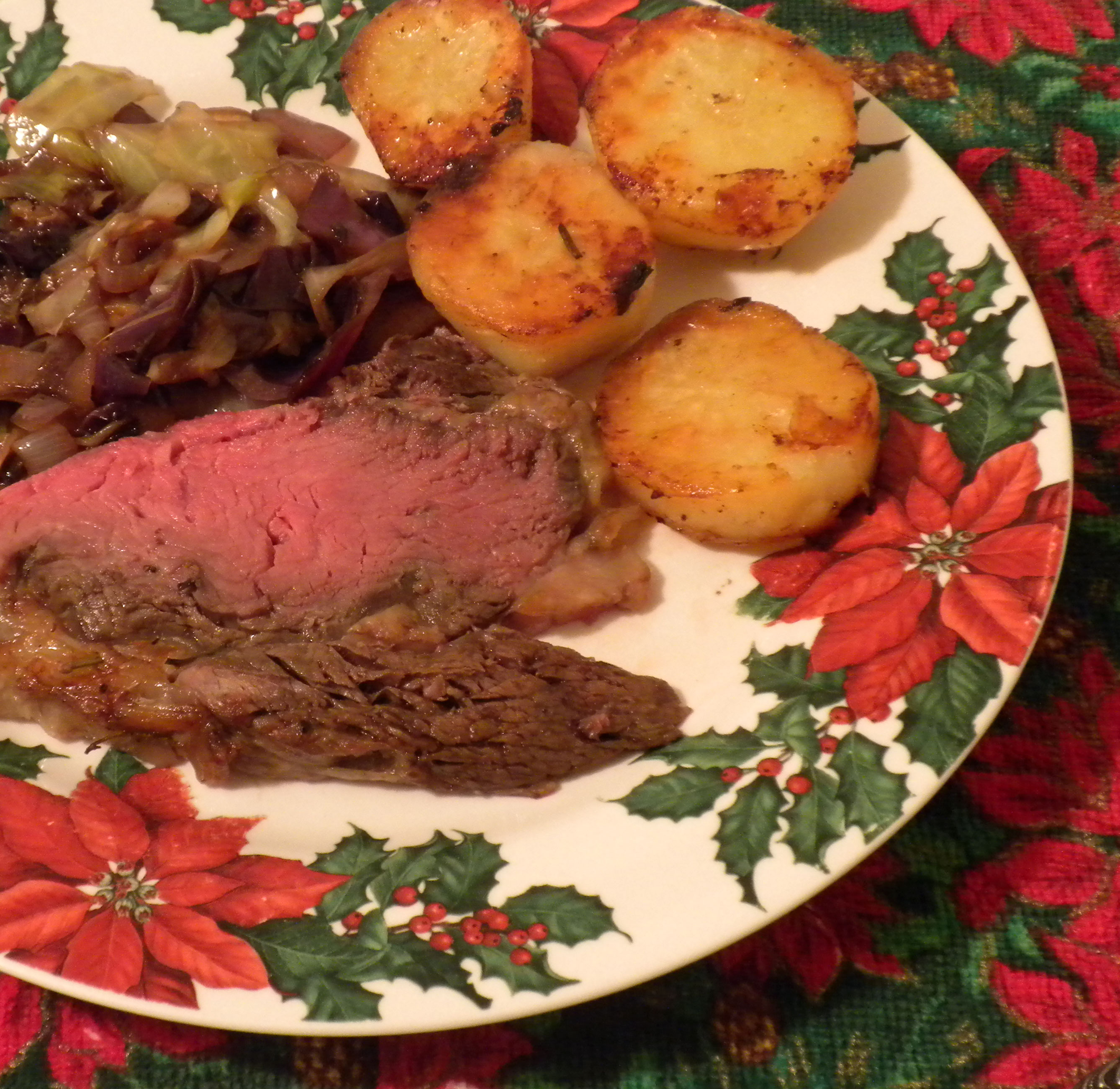
This delicious holiday meal of grassfed prime rib, pan-roasted potatoes, and sautéed cabbage was a joy to cook and eat.
This holiday season, like all holiday seasons, is a time to give and receive.
Gifts are a wonderful way to express your appreciation of another person, whether it is a relative or a friend. Some people are impressed by expensive, fancy gifts. I prefer gifts that give a real benefit, and the price or status of the gift is not important to me. A gift that shows something of the giver is often the best of all. A gift that gives pleasure, and supports joy, is a gift I cherish, both as a giver and a receiver.
Would you like to give a gift that has the following benefits:
- Gives great pleasure to the person who receives it
- Gives great pleasure to the giver
- Creates a wonderful aroma in the home
- Makes the person who receives it feel wonderful
- Improves the natural functions of the body
- Creates a wonderful feeling of contentment and satisfaction
- Warms the body and soul
For me, this most magic of gifts is real food, skillfully and lovingly prepared.
The Most Traditional of Gifts
Many decisions are being made about gifts at this time of year. In modern times, we often think of commercial products like electronics, jewelry, designer clothing, and a host of other products when we are deciding what to give. Yet in older times, one of the most popular and appreciated gifts was that of food. Not just any food, but special foods that would not only be appreciated for their wonderful taste, but would nourish the body and soul of the receiver. These special foods were not factory candies and cakes, but some of the most nourishing and delicious real foods available.
Not only was the giving of special foods a tradition, but the cooking of those foods by a skilled cook was a much-anticipated blessing of the holiday season, and great efforts were made to have this happen. This was true for almost everybody. For the poor, the holiday season might be one of the few times they actually had grassfed meat or pastured pork to eat, or another special meat such as goose, or duck, or a capon. Grassfed or pastured meat, or wild fish, were the featured highlight of holiday meals. The traditional European holiday feast dishes covered such wonderful dishes as roast prime rib of beef, pork loin roasted with the skin on, rack of lamb, saddle of lamb, roast stuffed goose, roast stuffed turkey, roast duck, and many others.
What made these gifts unique is that they actually nourished the bodies of the lucky people who ate them, improving their natural functions and creating a wonderful feeling of well-being and contentment.
Traditionally, these foods were real food, not factory food, and were exactly the kind of traditional food our bodies welcome and thrive on.
It is true that many holiday foods were special desserts. But these were different than modern desserts. They always contained large amounts of saturated animal fat such as butter, lard, and egg yolks. They were only served at the end of a meal, when the eater’s body was well-nourished with traditional fats and other nutrients that protected the body from the effects of the sugar in the desserts.
GMOs, pesticides, and artificial chemicals had no place in these wonderful, traditional foods.
While you may not find much real food in the supermarket, local farmers and ranchers, and farmers’ markets often have wonderful real food available, including grassfed and pastured meat, and organic or the equivalent vegetables and fruits. There are some wonderful Internet sources of great grassfed and pastured meat. Three of my favorites are U.S. Wellness Meats, Homestead Natural Foods, and NorthStar Bison.
Give the Blessings of Your Cooking
Even the best quality real food needs a skilled cook. A skilled cook can turn the best natural ingredients into a feast that will provide great eating pleasure and nutrients to all who are lucky enough to share in the meal. If you can cook, the time and effort you put into making a holiday feast is a wonderful gift to all who eat it, and to yourself.
If you do not think of yourself as a skilled cook, I have some good news.
Cooking wonderful real food is easy, and simple. There is an old saying, “God gives us good meat, the devil sends us cooks.†The meaning of this saying is that high-quality food should not have its great natural taste overwhelmed by fancy and complicated cooking. The wonderful natural flavors and tastes of the food will do most of the magic for you. All you have to do is bring them out. The recipes I use create wonderful food, yet most of them are very simple and easy to use. Tender Grassfed Meat and Tender Grassfed Barbecue are full of simple recipes for grassfed and pastured meat that result in wonderful food, cooked in an easy and natural way.
I spend a big part of the holiday season planning and cooking the holiday feasts, as a gift to my loved ones. It is also a gift to me, as I also get to share in the feast!
This post is part of Monday Mania, Fat Tuesday, Real Food Wednesday and Fight Back Friday blog carnivals.
CLA—Another Great Reason to Eat Grassfed Meat, the Fatter the Better
By Stanley A. Fishman, author of Tender Grassfed Meat and Tender Grassfed Barbecue
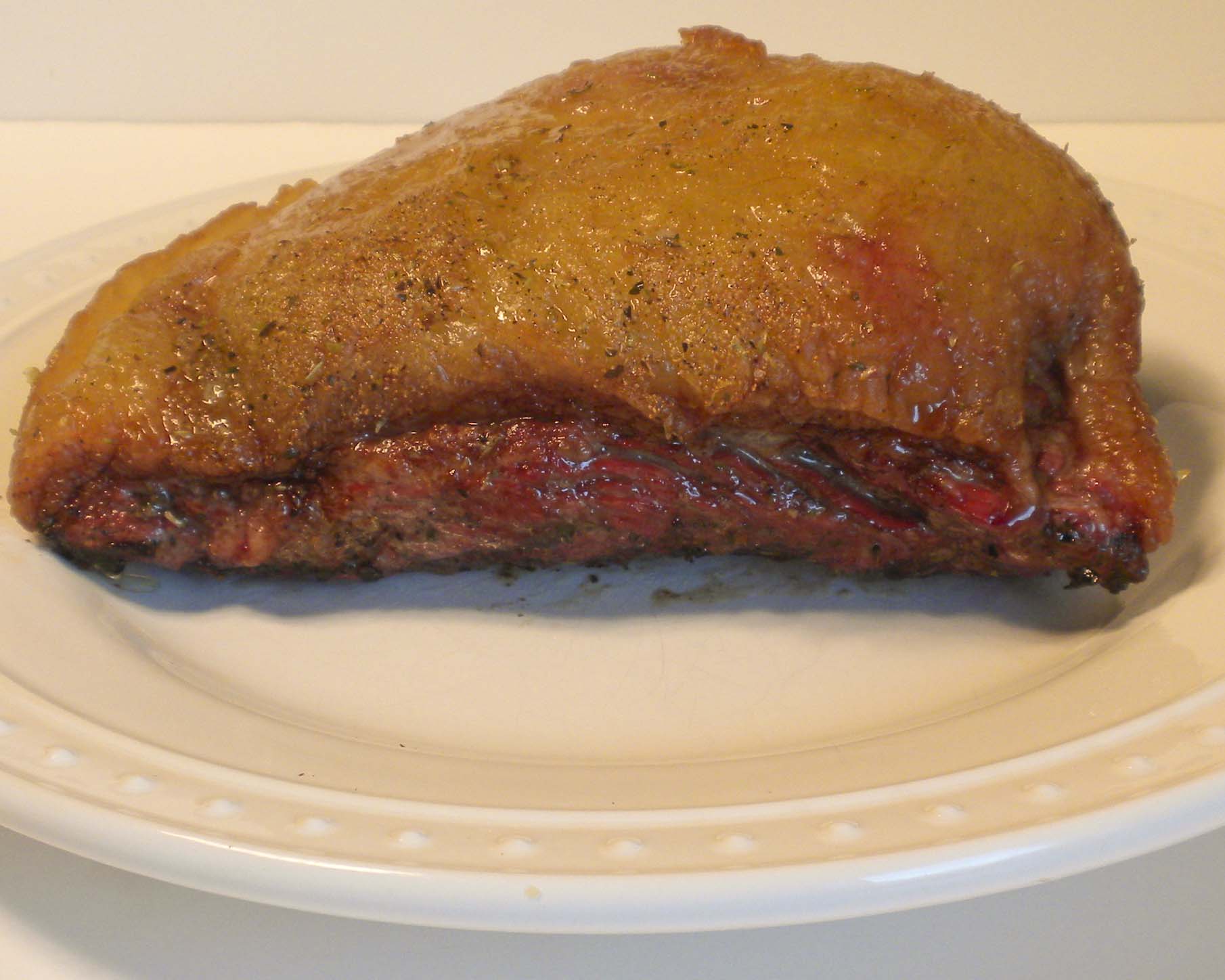
This picanha (New York tip) roast has a great fat cap, full of CLA.
Where do you find the nutrients our bodies need in these days of industrial agriculture? We are given nutritional advice by the powers that be which is motivated by profit only. Food is not what it used to be. Hybrid varieties are developed for shelf life, not nutrition. Meat animals are fed unnatural feeds (as well as growth hormones and antibiotics) to make them fatten faster and to increase profits. Factory food has made it hard to get essential nutrients. Soils depleted and contaminated by pesticides and artificial fertilizers compound the problem.
My solution is to eat the pure foods of our ancestors, unmodified, raised and cooked in traditional ways. Eating this way has brought me back to good health and greatly increased my enjoyment of food, because real food tastes so much better. Many other people have found the same solution. Every now and them, research comes through that supports the real food way of eating, and science confirms what instinct and feeling good has already told us—real food is good for us, and gives our bodies what is needed to support the natural functions that keep us healthy and strong.
However, many people have turned to using nutritional supplements as a solution. These supplements vary widely in their content and purity. Let me put it this way. What if a substance was developed that would give the following benefits?
- Increases the metabolic rate
- Increases muscle mass while reducing fat
- Decreases abdominal fat
- Strengthens the immune system
- Reduces the risk of cancer
- Reduces the risk of heart disease
- Reduces the risk of diabetes
- Reduces the risk of hyperthyroidism
- Normalizes thyroid function
Would you want to take a supplement that contained this very beneficial substance?
Well, you do not have to. Various studies have shown that all of the benefits listed above come from eating food containing Conjugated Linoleic Acid, more commonly known as CLA.
The very best source of CLA is grassfed meat and fat, which are rich in this wonderful nutrient. CLA is a very useful nutrient that is used by the natural functions of our bodies to create all of the benefits listed above.
CLA is found in its most digestible form in the fat and marbling of grassfed animals. This is yet another reason to eat the fat on and in grassfed meat, and to get well-marbled grassfed meat, rather than the leaner grassfed meat.
The CLA from grassfed animals is not the same as CLA from plant sources, or in supplement pills based on plant sources. CLA is much more abundant in the meat of grassfed and grass-finished animals than in feedlot meat. Almost all meat animals are started on grass, but are finished in a feedlot, eating foods that are not natural for their species, such as processed grains, GMO-corn and GMO-soy, and a host of other things that were never part of the natural diet of any herbivore, often including such substances as chicken manure, cement dust, restaurant plate waste, and even plastic balls. Studies have shown that grassfed meat contains three to five times more CLA than factory meat. The fattier the grassfed meat, the more CLA it contains. (Source What Is CLA?)
Not only does grassfed meat and fat contain 300% — 500% the CLA of feedlot meat, the grassfed meat also contains many substances that promote the absorption of the CLA. It is not known whether factory meat contains these substances, or in what amount. It has been shown that feedlots can cause the amount of nutrients in the meat to greatly decline. For example, the amount of omega-3 fatty acids in meat almost vanishes by a typical stay in the feedlot. (Source Health Benefits of Grass-Fed Products)
While CLA can also be found in dairy products from grassfed and grass-finished cows, I believe that grassfed meat and fat are the richest source, and the easiest to absorb.
This post is part of Monday Mania, Fat Tuesday, Real Food Wednesday and Fight Back Friday blog carnivals.
Why Grassfed Meat Is Better
By Stanley A. Fishman, author of Tender Grassfed Meat and Tender Grassfed Barbecue
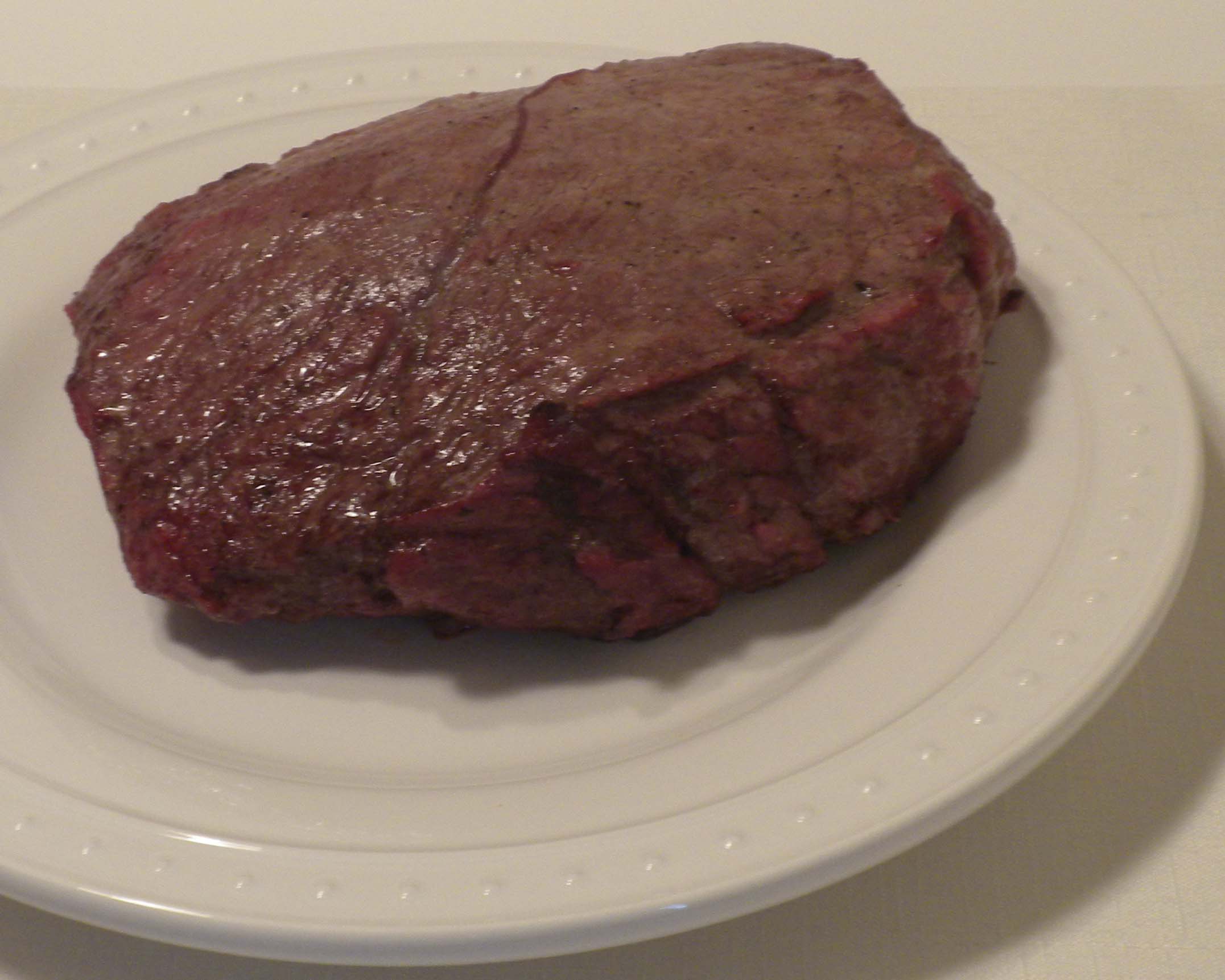
Grassfed Butter Steak, Tender Grassfed Barbecue, page 76
One of the questions I get asked most often is this—“What is different about grassfed beef?â€
Many people seem to think the only difference is that grassfed beef is “always tough,†and that grassfed beef lacks the “great flavor†that is supposed to come from “corn feeding.†I have found that properly cooked grassfed meat is very tender, has much more flavor, and a much better texture than conventional beef.
There are many important differences between grassfed and conventional meat. The very composition and content of the meat is very different.
Because of the vast difference in the qualities of the meat, grassfed meat is best when cooked differently than conventional, “corn-fed†meat.
How Grassfed Meat Is Different
Grassfed Meat Is an Ancient Food
Grassfed meat, coming from herbivorous animals eating their natural diet of grass and meadow plants, is one of the oldest foods of mankind, maybe the oldest. This means that the human body has adapted over uncounted thousands of years to digest and process this meat. Our bodies know the composition of grassfed meat, and how to absorb nutrients from it, and expect to find all those nutrients there when they digest the meat. Conventional meat has a totally different nutritional profile, and had not been eaten by humans until the twentieth century. Grassfed meat, fat, and bones are perhaps the most primal of foods.
Grassfed Meat Has Superior Nutritional Value
Grassfed meat has the proper balance of omega-3 fatty acids to omega-6 fatty acids, containing far more omega-3s than conventional meat. Grassfed meat is also rich with CLA, a valuable nutrient that has many benefits. Conventional meat has a much higher ratio of omega-6 fatty acids, one that does not occur in naturally-fed meat. Conventional feedlot beef has far less CLA and omega-3 fatty acids than grassfed meat. Grassfed meat is also richer than conventional meat in many other nutrients.
Grassfed Meat Has Far Less Water and Should Be Cooked Differently
Grassfed meat is denser than conventional beef, and shrinks far less in cooking. Conventional meat is often quite watery, and that water cooks away when the meat is cooked, resulting in much more shrinkage. The need to deal with the water has led to the development of modern meat-cooking techniques, which will ruin grassfed meat. Because grassfed meat has far less water, it is best when cooked differently than conventional beef.
Grassfed Beef Tastes Much Better
Properly cooked grassfed meat is not tough, but tender, and has much better flavor than conventional meat. I can no longer stand the taste and texture of conventional meat, because grassfed meat tastes so much better. Grassfed meat from different breeds and producers taste different, in many wonderful ways, providing a wonderful variety of deep, rich flavors. The best comparison is with the many varieties of fine wine, which have many different tastes. Conventional beef always tastes the same—blah.
Grassfed Meat Cooks Faster and Easier
Grassfed meat cooks much faster than conventional meat, and is much easier to cook. This statement may surprise some people, but grassfed meat has so much flavor that it needs far less in the way of spices and sauces to be absolutely delicious. When you know the right techniques for cooking grassfed meat, it is very easy to cook. Tender Grassfed Meat: Traditional Ways to Cook Healthy Meat and Tender Grassfed Barbecue: Traditional, Primal and Paleo are both full of easy ways to cook delicious grassfed meat.
There are many other differences, but these are the major ones. Tender Grassfed Meat and Tender Grassfed Barbecue both cover the subject in detail, pointing out the many differences in the composition and cooking qualities of grassfed and conventional meats.
This post is part of Monday Mania, Fat Tuesday, Real Food Wednesday and Fight Back Friday blog carnivals.
My Real Food Plate
By Stanley A. Fishman, author of Tender Grassfed Meat and Tender Grassfed Barbecue
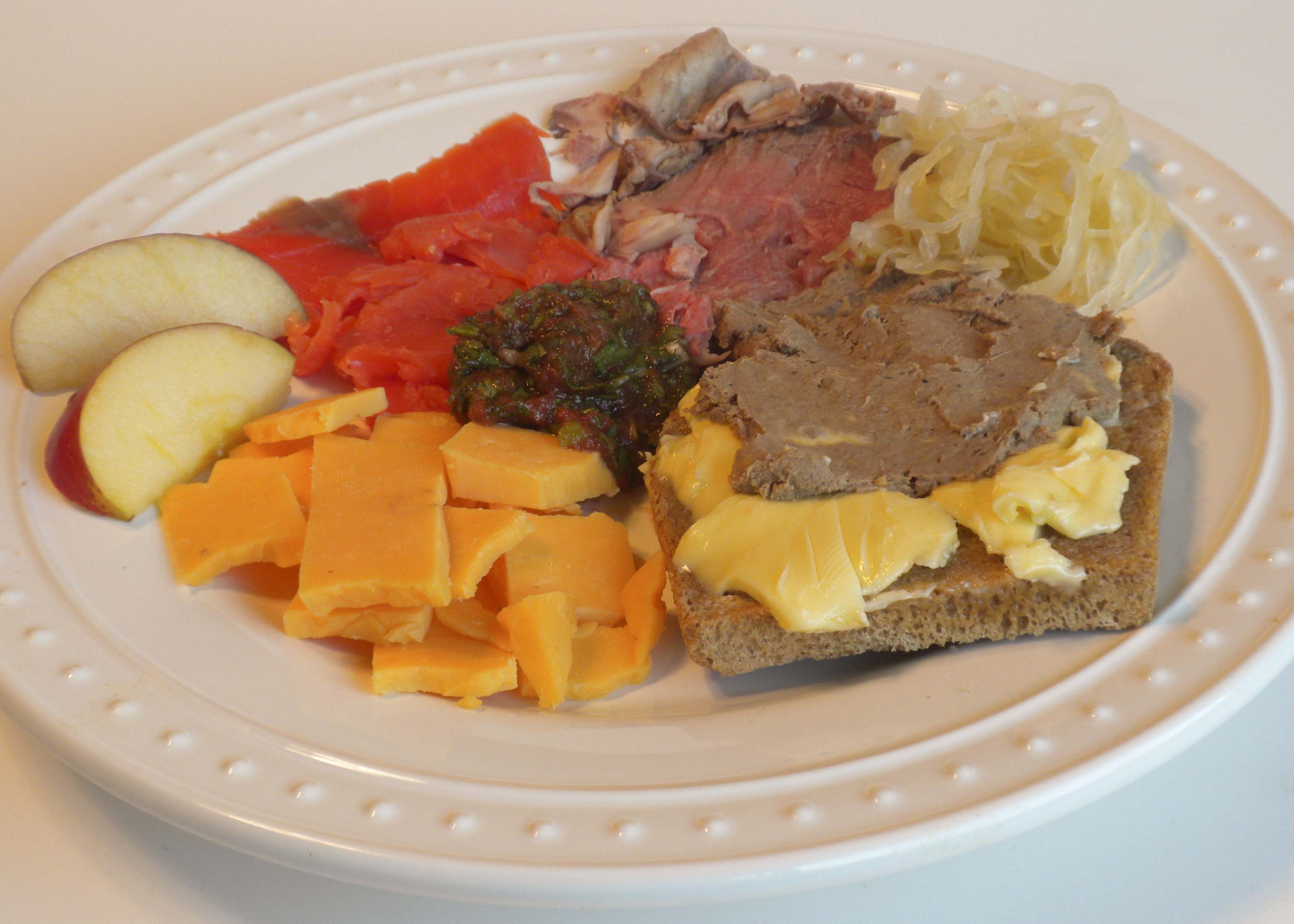
My Real Food Plate (clockwise from top): grassfed beef and fat; traditional sauerkraut; sourdough spelt bread with pastured grassfed butter and grassfed bison liver pâté; raw cheese; smoked wild salmon; and fermented vegetable salsa.
“MyPlate†is the new brainwashing concept introduced by the U.S. government, since the horrid “food pyramid†did not convince enough people to eat the way the diet dictocrats dictated. “MyPlate†has bothered me ever since Jimmy Moore exposed its many problems in this great blog post: Harvard’s ‘Healthy Eating Plate’ Only Marginally Better Than USDA’s MyPlate.
“MyPlate†has somehow managed to be even worse than the “food pyramid,†which is quite an accomplishment, being a true route to dietary disaster, severe malnutrition, and rampant disease. However, the dietary guidelines have been effectively debunked by many, including the Weston A. Price Foundation in Comments on the USDA Dietary Guidelines.
I have also been thinking about the Weston A. Price Foundation Conference, which will begin this Friday, November 11, 2011, all the wonderful real food they will serve, and wishing I could be there.
So I thought I would present “My Real Food Plate,†made up of what I actually eat, based on the research of Dr. Weston A. Price, the recommendations of the Weston A. Price Foundation, and what makes me feel good and healthy, while tasting wonderful. You can see “My Real Food Plate†in the above photo. After the photo was taken, I brought the plate to the table, and happily ate every bit of it. So you can see that I back my writing with my appetite, unlike the diet dictocrats. (You NEVER see them eating what they attempt to impose on the rest of us.)
These are the foods on “My Real Food Plate†(clockwise starting with the grassfed meat at the top):
- Grassfed beef and fat. This leftover roast beef, made from 100 percent grassfed and grass-finished beef (from U.S. Wellness Meats) has a perfect ratio of omega-3 to omega-6 fats, large amounts of CLA, and a wonderful range of vitamins, amino acids, and other valuable nutrients. I eat the little pieces of fat you see around the meat. The nutrition in grassfed fat is great fuel for our bodies. Grassfed meat is one of the oldest foods, going back to the Paleolithic Era and the very beginning, and our bodies welcome it. And it tastes so good!
- Traditional sauerkraut. This traditional lacto-fermented sauerkraut is made from nothing but cabbage and salt, and the fermentation process. It is also full of nutrients and enzymes, enhanced by the fermentation process. These enzymes help with digestion, and it is delicious. Sauerkraut is one of the oldest and most traditional foods in the world, going back to ancient China and beyond.
- Sourdough spelt bread. This bread contains only three ingredients: spelt, water, and salt. The grain is grown without the use of chemicals. A sourdough starter is used in making this bread, consisting of nothing but spelt and water. This bread is absolutely delicious, and easy to digest. It is covered with pastured grassfed butter, and bison liver pâté, as I always eat grains with plenty of good animal fat. This is one of the most traditional of breads, and is full of valuable minerals.
- Pastured grassfed butter. Real butter, full-fat, from grassfed animals, is one of the most nutrient-dense foods you can eat, and utterly delicious. Butter is full of fat-soluble vitamins such as Vitamin A and Vitamin D. Grassfed butter also is the best source of Vitamin K2, and contains many components that are great for our bodies. This kind of butter is one of the most valued and traditional foods in Europe, where people would eat it at every meal if they could get it.
- Homemade grassfed bison liver pâté. Liver is one of the most nutritious of foods, if it comes from healthy, grassfed animals. Liver is full of the perfect range of B vitamins, and many other vitamins and nutrients including Vitamin A and Vitamin D in a form that is easily absorbed by the body. Liver also has many amino acids and helpful substances, and high-quality fat and protein. Grassfed bison is one of the healthiest of animals, and its liver is a superfood. The large amount of pastured butter I use in the pâté helps make it delicious as well as even healthier. Liver pâté is yet another traditional food. Even people who hate the taste of liver can enjoy liver pâté.
- Raw cheese. This full-fat traditional cheese, made from unpasteurized, raw milk, is one of the most nutrient-dense foods you can eat. It is full of good fats, easily-absorbed quality protein, and many vitamins, nutrients, and enzymes. Since cheese is a fermented food, the nutritional value has been enhanced through the fermentation process. Raw cheese is one of the most traditional foods in Europe, and many other parts of the world.
- Organic apple wedges. “An apple a day keeps the doctor away†is ancient wisdom. Since I consider doctors and their poison drugs, radiation, and surgery to be the biggest single threat to my life and health, I do want them to be kept away from me. And I have not needed them for over eight years. In addition to protection from doctors, organic apples have many wonderful nutrients, including vitamins, minerals, and special substances that help reduce inflammation and fight the effect of free radicals on our bodies.
- Smoked wild raw salmon. The delicious meat of wild salmon has been traditionally cold smoked to preserve it, which gives it wonderful flavor. The beautiful orange color of the fish is real, unlike farmed salmon, and the raw fish is full of minerals and nutrients abundant in the sea such as iodine and magnesium, and helpful enzymes. Smoked wild fish is one of the most ancient of foods, going back thousands of years.
- Homemade fermented vegetable salsa. Chopping various organic vegetables into tiny shreds and lacto-fermenting them is a traditional way to enhance their nutritional value and digestibility. The traditional fermentation process makes the vegetables easier to digest, and increases the vitamin content, while adding beneficial probiotics. This kind of salsa not only provides great nutrition, but aids digestion.
My real food plate is 100 percent free of GMOs, soy, modern refined foods, modern vegetable oils, modern grains, and all the other factory foods that comprise the Standard American Diet, known as SAD. Instead, my real food plate makes me HAPPY.
This post is part of Monday Mania, Fat Tuesday, Real Food Wednesday and Fight Back Friday blog carnivals.
Related Post
Where’s the (Grassfed) Beef in the “Healthy Eating Plate�
Real Food, Real Taste, Real Appetite
By Stanley A. Fishman, author of Tender Grassfed Meat and Tender Grassfed Barbecue
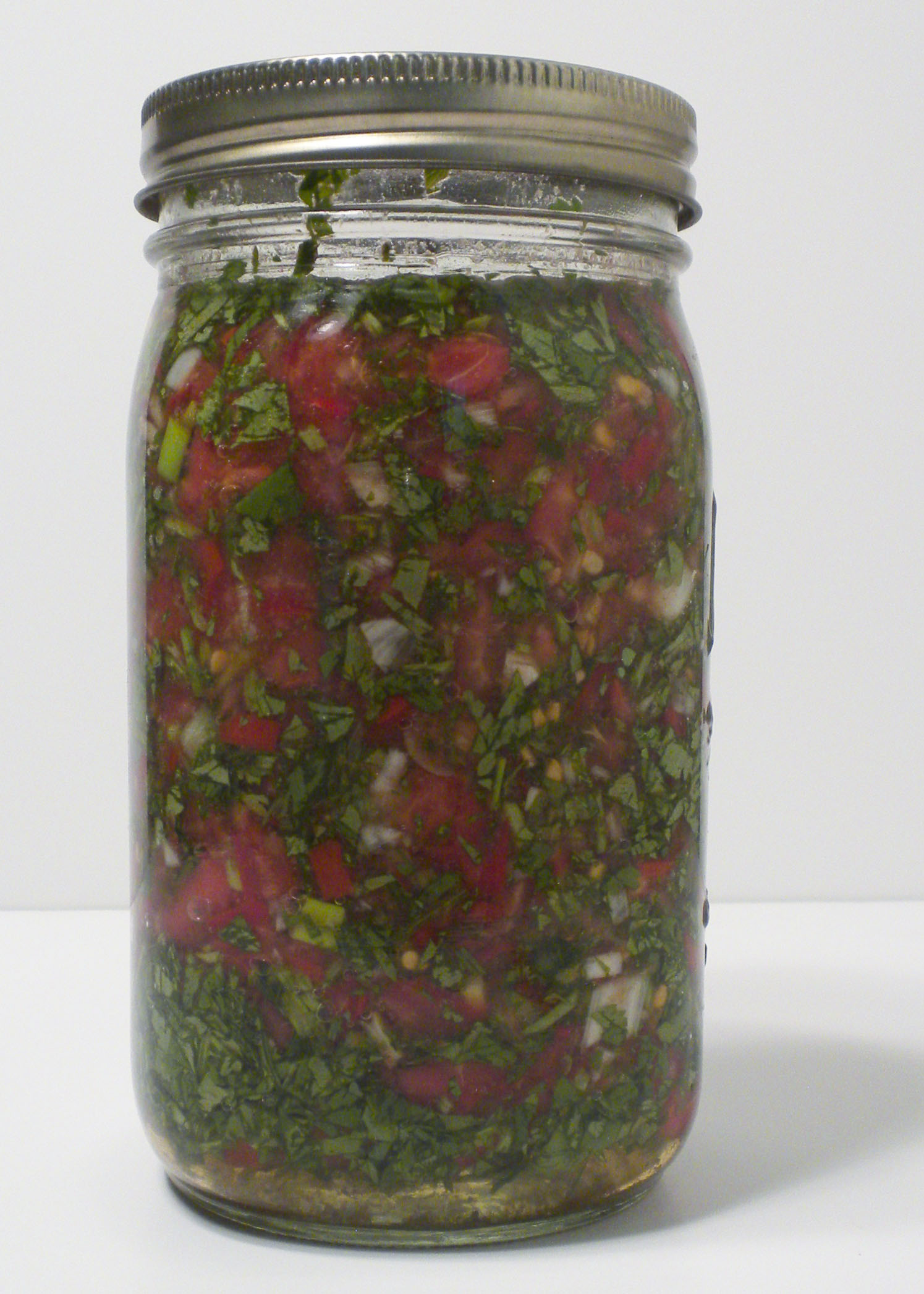
Fermented Cilantro Salsa, part of our satisfying meal.
We had a wonderful dinner last night. Grassfed rib steak marinated with herbs, and sautéed in pastured butter. Organic potatoes roasted crisp and tender in a shallow lake of pastured pork lard. Carrots fresh from the farmers’ market, simmered in water so full of butter that the carrots caramelized when the water evaporated. Homemade fermented salsa, full of nutrients, and tangy, refreshing flavor. Everything was beyond delicious. But some food was left over. As wonderful as it was, all three of us stopped eating when we were satisfied.
One moment, I was hungry for more of these wonderful tastes. After I swallowed the next mouthful, it was enough. The hunger ended instantly, and I stopped eating. My desire to eat more was gone. Naturally enough, I stopped eating. I was satisfied. I was content.
I was not stuffed. I was not bloated. I felt great and renewed. I just was not hungry anymore.
What happened? My sense of taste and smell directed me to eat the food I needed by making me hungry for it. Since everything I ate was real food, with real tastes, my senses could accurately determine how much I needed to eat to get the nutrients I needed. When I had the nourishment I needed, the hunger ended naturally, at that moment.
Obesity was unknown to the healthy peoples studied by Dr. Weston A. Price, and was rare among people eating a real food diet. But obesity and overeating are an epidemic in the United States today. People eat and eat and eat, and eat some more, and are still hungry. It seems like their appetite is permanently on, and they can never get enough.
Why? I am convinced that the answer lies in the poor nutrient content of factory foods, and the deceptive stimulation of our appetites by chemical flavors made in a laboratory, along with the horrible nutritional guidelines pushed by industry and their servants in our government.
Factory foods lack the nutrients contained in real food, so we are not satisfied when we eat factory foods. Processed foods have no good taste of their own, so industry has developed chemicals to fool our bodies into thinking that we are actually eating tasty and nutritious food. The natural taste and appetite mechanism of our bodies is deceived by these chemicals, and can no longer accurately determine how much we need to eat.
These chemicals, created by chemists in a laboratory, never existed until the twentieth century. These chemicals can recreate almost any taste. I once saw a show on television that went to a lab that made these chemicals. Small glass bottles were labeled with various flavors, including “charcoal-grilled hamburger.†The visitor to the lab closed her eyes, and tasted a small piece of bread that had a tiny amount of the chemical added to it. She said it tasted just like a charcoal-grilled hamburger.
When you see the words “artificial flavors” or “natural flavors†on the long lists of ingredients on a food label, you can be almost certain that chemical flavors have been added to the food. These chemicals are added to almost all fast food. Not only do these flavors make food taste much better, they can make you very hungry for it.
This could be an explanation for why so many people overeat. A chemical deceives your senses into making you hungry for the food you are eating, but the food does not contain much of the nutrients you need. If not for the chemical, your natural senses of taste and smell would make the nutrient-poor food taste bad, and you would not eat it. But the chemical deceives your senses, as it was designed to do, and you want more and more of that food. But, no matter how much you eat of it, you will still be hungry, because it does not actually have much of the nutrients you need. This causes people to eat more and more of the factory food, which increases profits for the seller of this concoction. And the nation gets fatter and fatter.
I also believe that some of these chemicals are deliberately designed to make us hungry, so we will eat more of the product.
The food guidelines pushed by industry and the government ban saturated animal fat, a nutrient that is crucial for human nutrition, and one of the most satisfying of foods. A lack of this fat contributes to hunger. This results in hungry people devouring factory foods that can never satisfy their appetites because the needed nutrients are just not there. Great profits for the food industry, and great suffering for a malnourished, hungry people.
I tested this theory last week. There was a particular fast food I used to love, and could never get enough of. I had not tasted it for ten years, but I still remembered the taste, and still desired it. I went to the fast food place, and ordered a small portion. I had decided that I would eat one bite, and see how it made me feel. Well, I took that first bite. I was astonished to find out that the food tasted EXACTLY the way I remembered it, even though it had been ten years. I then found myself greedily wolfing down the rest of the food, even though I had intended to eat only one bite. I was ravenously hungry for it, and not at all satisfied. I wanted to buy more. Fortunately, I started to feel slightly sick and that helped me leave the fast food place before I bought and ate more.
After all that, I still crave that fast food, even though I felt sick after eating it.
What is the solution? For me, it is to eat no processed, artificial, or fast food, and to eat the most pure traditional foods I can find, cooked from scratch. Foods like organic (or the equivalent) fruits and vegetables; traditional full-fat milk, butter, and cheese; traditionally fermented foods like old fashioned sauerkraut; grassfed organ meats; and, of course, grassfed meat and fat, the most satisfying of all.
When I only eat these real foods, my taste and appetite mechanism functions perfectly, and I stop eating when I am satisfied, which happens with every meal. I eat all that I want to eat, letting my appetite control how much I eat. When I am satisfied, I stop eating. And I find that I am satisfied with smaller portions as time goes on, and the needs of my body are satisfied.
This post is part of Monday Mania, Fat Tuesday, Real Food Wednesday and Fight Back Friday blog carnivals.