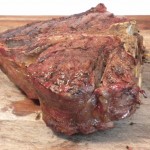
 Photos of recipes from the new book Tender Grassfed Barbecue
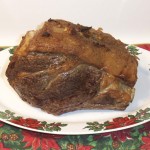 Photos of recipes from the cookbook Tender Grassfed Meat

Bulgarian Food Wisdom and Dr. Weston A. Price
By Stanley A. Fishman, author of Tender Grassfed Meat
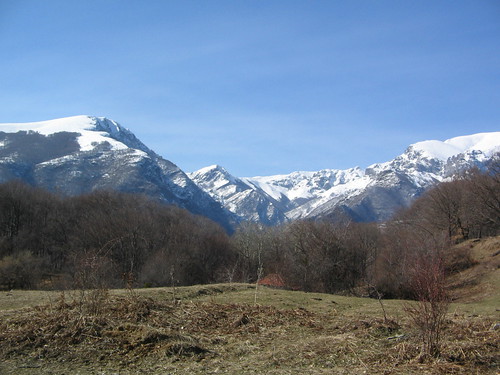
 photo credit: Evgeni Karalamov
The people of Bulgaria are famous for their long life spans, and robust good health. At the beginning of the twentieth century, it was discovered that the Bulgarians lived longer than any other known people, having an astonishing number of centenarians. In fact, Bulgaria had a higher proportion of people 100 or older than any other nation. The question of why the Bulgarians lived so long and were so healthy has been studied for a long time. The original credit for Bulgarian health and longevity was given to a strain of bacteria found in their yogurt. This discovery led to yogurt becoming popular all over the western world. However, yogurt is only a small part of the traditional Bulgarian diet. A careful examination of the traditional foods of Bulgaria shows that they ate a diet quite similar to the diets eaten by the healthy peoples studied by Dr. Weston A. Price.
No wonder the Bulgarians lived so long and were so healthy!
The Diets Studied By Dr. Weston A. Price
Dr. Weston A. Price was a dentist in the early twentieth century. He noticed that each generation of his patients was less healthy than the previous generation and had worse teeth. Dr. Price decided that the answer was in nutrition, and he spent ten years traveling around the world to study healthy peoples who ate their traditional diets. He also studied what happened to these peoples when they ate modern food. Dr. Price discovered what the healthy peoples ate, and what they did not eat. The healthy peoples studied by Dr. Price did not have the chronic diseases that plague the modern world, like heart disease, cancer, diabetes, etc.
Dr. Price discovered that the healthy traditional diets had many things in common with each other.
High Animal Fat Consumption
The healthy peoples studied by Dr. Price ate a huge amount of animal fat from healthy animals, either pastured or wild. This included dairy fats such as butter, cheese, and cream, the natural fat of all kinds of animals, and the fat contained in the internal organs of animals, such as liver and kidney.
The traditional Bulgarian diet was full of animal fat from pastured animals and wild game. The natural fat of the animal was eaten with the meat. Meat was often cooked with large amounts of butter. Butter and cheese were often a vital part of traditional breads. Organ meats were very popular, even being eaten in soup. Large amounts of yogurt were eaten. The yogurt was always full-fat. A popular traditional drink was Aryan, which was made of yogurt and cold water blended together. Meat roasting in front of a fire was often basted with a chunk of animal fat. Large amounts of full-fat cheese were also eaten. Many Bulgarian breads and pastries were made with huge amounts of butter, often stuffed with full-fat cheese, or with cheese as a basic ingredient.
Meat and Game Eaten with Fat
The healthy peoples studied by Dr. Price valued meat as a food, whether it came from pastured animals or wild game. These peoples always ate meat with fat.
Pastured meat of all kinds was valued in Bulgaria, and wild game was a favorite. Meat in Bulgaria was almost always served with the natural fat, cooked with fat, and served with other foods containing fat.
Large Amounts of Organ Meats
The healthy peoples studied by Dr. Price valued the organs of animals as food, and ate large amounts of organ meats, particularly liver, but also heart, kidney, and many other organ meats.
The traditional Bulgarian diet valued all kinds of organ meats, serving them in many forms, with “Organs Soup” being a favorite dish.
Wild Fish and Seafood
The healthy peoples studied by Dr. Price ate plenty of wild fish and seafood if they could get it, with fish eggs being a valued food.
Wild fish and seafood were favorites in Bulgaria, and were widely and frequently eaten as part of the traditional diet. Fish eggs were valued, and often served.
Eggs and Poultry
The healthy peoples studied by Dr. Price ate large amounts of eggs, poultry, and other wild birds, if these foods were available.
Eggs and poultry were an important part of the Bulgarian diet. Eggs were not only eaten as a valued dish, but were added in large amounts to many other foods, such as traditional pasta and baking.
Fermented Foods
The healthy peoples studied by Dr. Price ate some fermented foods, often made from vegetables, on a daily basis.
Sauerkraut and other fermented foods were widely used in traditional Bulgarian cuisine, often being served at every meal in small quantities.
Fresh Vegetables and Fruits Grown in Rich Soil
Some of the healthy peoples studied by Dr. Price ate substantial amounts of vegetables and fruits, which were always grown organically, without chemicals, in rich soil full of nutrients.
Bulgaria had some of the richest soil on earth, and was famous for the wonderful qualities of their fruits and vegetables, which were widely eaten, and a crucial part of traditional cuisine.
No Refined Foods
The healthy peoples studied by Dr. Price did not use refined or industrial foods, like processed sugar. Everything was made from scratch, and the only processing was traditional ways of preserving and fermenting food. When a member of one of these healthy peoples moved to an area where they ate refined foods, they quickly lost their health, and often their teeth.
The Bulgarians traditionally made everything from scratch, using only traditional ways of preserving and fermenting foods. The Bulgarians did eat desserts made with lots of refined sugar and flour, but only on very rare occasions such as religious holidays. These rarely served desserts were served with a meal that was full of healthy fats and other healthy foods, which limited the damage done by the refined foods.
A Healthy Attitude Towards Food
So many people today are afraid of food. Traditional foods like animal fat are demonized, and blamed for almost every chronic illness. Traditional peoples did not blame food for disease, but saw their food as the very stuff of life, the source of life and health. Their traditions of how to cook and combine foods were carefully followed and provided excellent nutrition.
There is much evidence that modern processed foods create nutritional deficiencies that lead to all kinds of illness. This was never true of traditional foods prepared and served in traditional ways.
The traditional Bulgarian attitude towards food was very similar to that of healthy traditional peoples. The idea was to let your appetite be your guide as to what you should eat, and how much. In other words, eat what you desire, and as much of it as you desire, and let the needs of your body as expressed by your appetite be your guide.
This attitude works very well with traditional foods, containing the full range of needed nutrients.
Unfortunately, this attitude can lead to disaster with factory foods, which often lack vital nutrients, and are full of all kinds of artificial chemicals, sometimes chemicals designed to make you want to eat more of a particular processed food.
My solution is to avoid all factory foods, and let my appetite be my guide when I am eating real food only. It works beautifully.
The similarities between the diets studied by Dr. Price and the traditional Bulgarian diet are no coincidence. The principles discovered by Dr. Price are the best guide to great nutrition, and the traditional Bulgarian diet is yet more evidence of this fact.
This post is part of Real Food Wednesday, Fight Back Friday and Monday Mania blog carnivals.
Grassfed Meat and Fat are Ideal for Paleo Diets
By Stanley A. Fishman, author of Tender Grassfed Meat
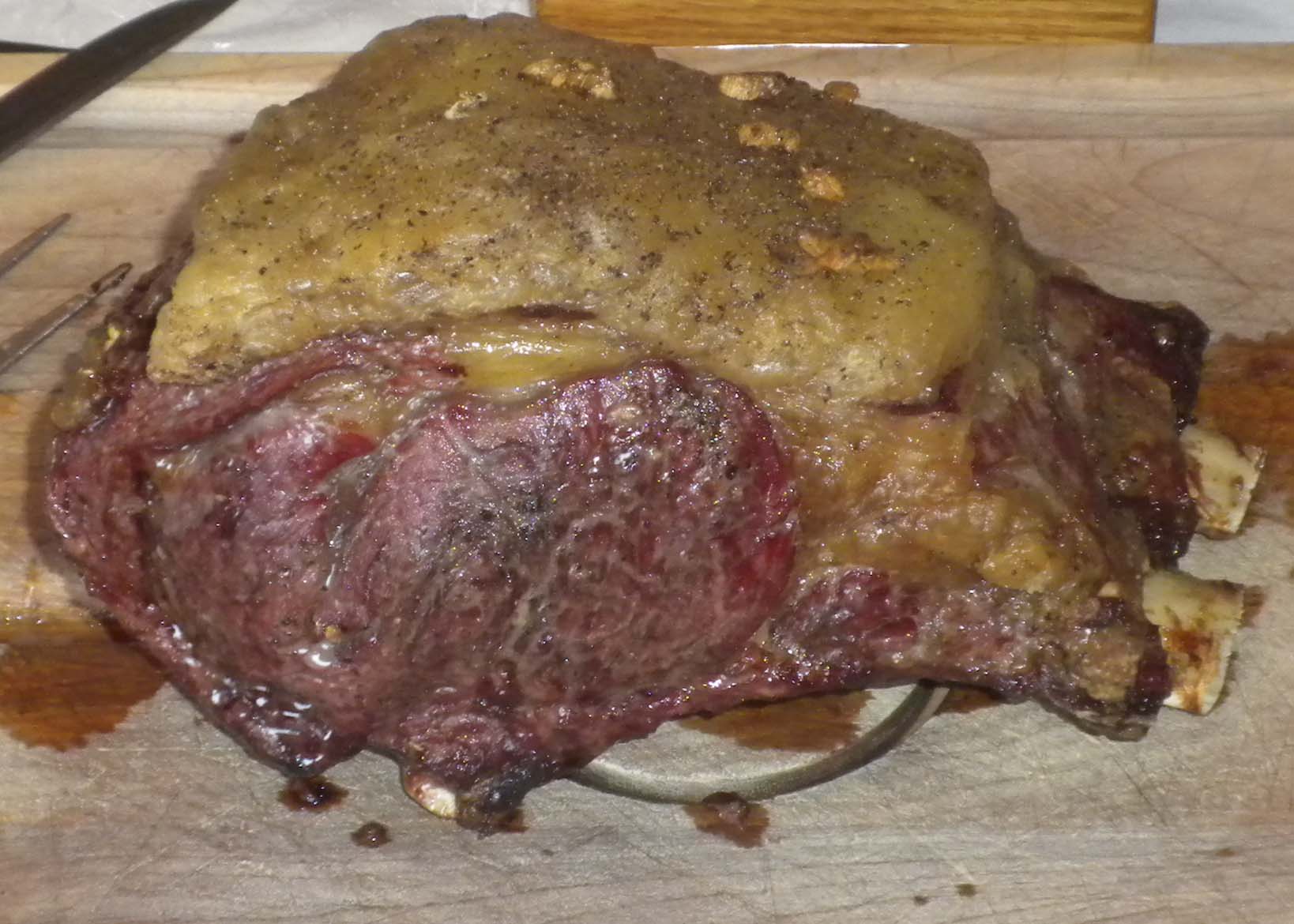
Barbecued Grassfed Prime Rib with a Garlic Marinade from my upcoming book.
The Paleo diet has been adopted by many people, and the numbers are growing. The idea that we should eat like our ancestors makes complete sense, as our bodies have evolved to eat and process the foods they used over tens of thousands of years. While there are different variations of Paleo diets, one thing is true for all of them—grassfed meat is ideal, especially when barbecued.
What is Paleo?
I did not know about the Paleo diet when I wrote my first cookbook, Tender Grassfed Meat. As I followed news of my book on the Internet, I came across a number of comments on Paleo websites that praised my book and talked about how it was great for people following a Paleo diet. These comments inspired me to learn about Paleo.
The Paleo concept is both simple and profound. The idea is that we should eat the same foods that our distant ancestors ate, before agriculture was developed. The argument is a powerful one—agriculture is only a few thousand years old, but humanity has existed for tens of thousands of years, or much longer.
The foods eaten by humanity over these tens of thousands of years included the meat and fat of ruminant animals, the meat and fat of other animals such as wild boar, the meat and fat of a huge variety of birds, wild fish, and seafood. Nuts, berries, wild roots, and plants were also eaten. Meat was eaten on the bone whenever possible, and bones were cracked open for their marrow, and formed the basis of early broths. Because humans have been eating these foods since the beginning, they are ideal for our bodies, since we have evolved to eat and digest them.
The food of agriculture, such as grains and dairy, as well as all of the modern processed foods, are new to our bodies and can cause problems with digestion and absorption, as well as allergies and other problems.
Therefore, a true Paleo diet would avoid all modern foods, and many traditional foods, including all grains and dairy.
I personally eat lots of dairy, but only in its traditional forms. Humans have been eating traditional dairy for about ten thousand years, and my body does fine with it. I avoid most grains, and find that I can easily do without them. I avoid all modern processed foods. But the food I enjoy and crave the most is Paleo—grassfed meat and fat, cooked in front of burning coals.
But it is not enough just to eat meat and fat. Modern industrial meat has a totally different nutritional content from the meat eaten by our ancestors. Grassfed meat and fat is as close as we can get to the meat that nourished our ancestors (with the exception of wild game).
The Price–Paleo Connection—Modern Examples of a Real Paleo Diet
Dr. Weston A. Price, spent ten years studying the diets of the traditional peoples who were free from the chronic diseases that plagued the modern world, such as tooth decay, heart disease, asthma, cancer, allergies, birth defects, and just about every chronic modern illness. He did not read reports or studies, but actually travelled to where these people lived and met them, taking detailed notes on what they ate and how they lived.
Three of the healthy peoples studied by Dr. Price were eating a Paleo diet, in that they had no agriculture and no dairy. They lived completely from hunting and gathering. Their traditional diets had not changed for many thousands of years. These peoples included Alaskan Eskimos (Inuit), Australian Aborigines, and Canadian Native Americans.
When these peoples ate their traditional Paleo diet, they were healthy. When they ate modern foods, they were riddled with all kinds of chronic disease, and died in large numbers from diseases such as tuberculosis.
These peoples all ate the meat, organs, and fat of grass-eating animals, as well as other animals. Those who lived by the sea also ate huge amounts of wild seafood and fish. While all of these peoples gathered and ate a variety of nuts, berries, and plants, their diets focused heavily on meat, organs, and fat, both from land and sea animals. All of the animals they ate were eating a species-appropriate diet such as grass and meadow plants for herbivores.
Grassfed and Paleo—a Perfect Match
Most of the foods eaten by early humans are not readily available to us. But we can find and eat foods that have a similar nutritional profile. The major food of these people was the meat and fat of animals, especially ruminant animals. We can get an almost identical set of nutrients by eating plenty of grassfed meat and fat, as well as the organs of grassfed animals.
Grassfed bison meat, from bison grazing their natural habitat, is just about identical with the bison that was eaten by early humans.
Grassfed beef is very similar, even though the breed and characteristics of the animals have changed from the wild varieties available before agriculture.
Grassfed lamb and goat also have a similar nutritional profile.
Pastured pork, from pigs who have been allowed to root in the forest like their wild ancestors, is another meat that is close to the meat eaten by early humans.
Grassfed Barbecue and Paleo—an Even Better Match
While the peoples studied by Dr. Price ate some of their meat raw or fermented, much of their meat was cooked, and it was almost always cooked in front of a fire.
I do not know if any nutrients are enhanced by the barbecue process, but the taste certainly is. The mouthwatering smell and taste of charcoaled meat appeals to most people on a primal level. The smell of meat roasting in front of a fire, the flavor added by the burning coals, is one of the oldest human pleasures, one that has been enjoyed for ages.
By barbecuing grassfed meat in a traditional manner, we can enjoy this primal taste, as did our ancestors.
This article was taken from my upcoming book on grassfed barbecue.
This post is part of Real Food Wednesday, Fight Back Friday and Monday Mania blog carnivals.
Natural Salt vs. Industrial Salt
By Stanley A. Fishman, author of Tender Grassfed Meat
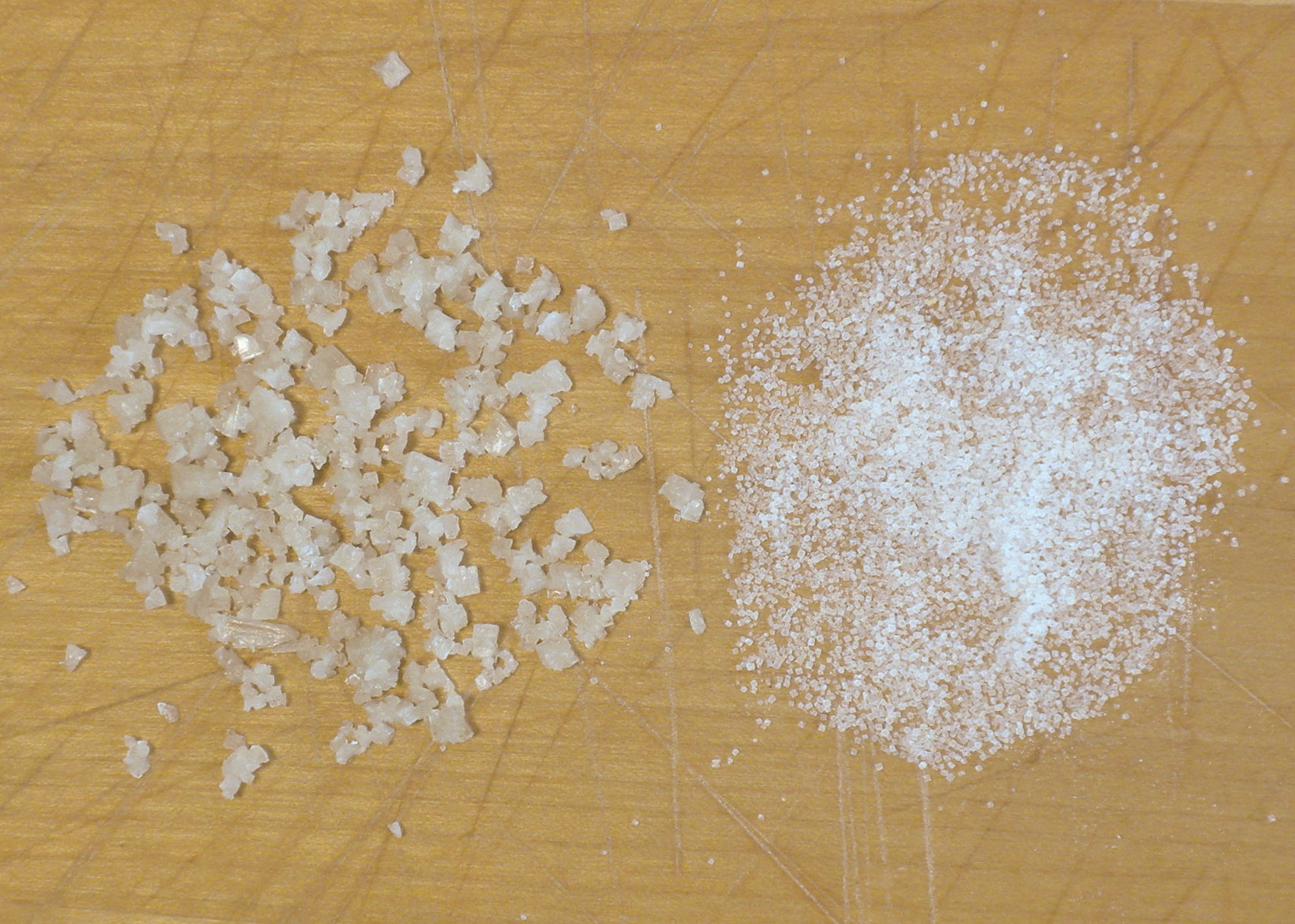
Natural unrefined sea salt on the left and industrial salt on the right.
Salt is necessary for life. If you get only some of the salt you need, you will experience serious health problems.
If you do not get a minimum amount of salt, you will die.
Yet salt is vilified and blamed for high blood pressure and other diseases. The idiotic nutritional guidelines issued by the government demand that everybody cut their salt intake substantially. Various city governments are also trying to seriously reduce the amount of salt eaten, even putting restrictions on restaurants.
The studies are inconclusive and often contradictory. Yet no authority bothers to distinguish among the two major kinds of salt:
- Salt as it is found in nature, which comes with dozens of minerals and other substances;
- Industrial salt, which has everything but sodium chloride processed out of the salt.
Natural salt has been used by humans since the beginning of humanity. Industrial salt did not even exist before the twentieth century. But this crucial difference is ignored by a large portion of the medical profession and by the government, which considers all salt to be the same.
There is a great difference between the two salts—in composition, nutrient content, and taste. Natural unrefined salt is greatly superior, in every way but one.
The Two Salts Are Different in Composition and Nutrient Content
Natural, unrefined sea salt contains dozens of trace minerals and other substances.
Industrial salt contains only pure sodium chloride, and chemicals and sweeteners that have been added to make the salt eatable and free-flowing.
When we eat salt, our bodies have evolved to expect all the trace minerals and other substances to come with the salt. When those minerals and substances are not in the salt, our body craves them, and sends out the hunger signal to eat more salt. But no amount of industrial salt will satisfy this craving, because the minerals and other substances are just not there. This craving causes many people to eat too much industrial salt.
Natural, unrefined sea salt contains all the trace minerals and other substances that our bodies have evolved to use when salt is consumed. This kind of salt is very satisfying, and I find that it takes much less natural salt to satisfy my salt hunger.
The Two Salts Are Vastly Different in Taste
Many years ago, my father bought me a subscription to a renowned medical publication. The very first issue contained an article on salt. The author, a scientist with many letters after his name, asserted the following:
All salt, from the cheapest supermarket brand to the most expensive sea salt, is the same.
All salt, from the cheapest supermarket brand to the most expensive sea salt, tastes the same.
I promptly cancelled the subscription to the publication. Why? Because both of those statements were utterly untrue. I knew that the composition of these salts were different just by looking at the content of the salts. I knew the taste was different because I have a tongue.
Unrefined sea salt comes in various forms, which vary in taste, but all of these sea salts taste so much better than industrial salt.
In fact, pure sodium chloride tastes so harsh and bitter that nobody can stand the awful taste. That is why sweeteners and chemicals are added to change the taste. One of the most common additions to industrial salt is—sugar.
Salt Is Refined for Profit and Ease of Use
Why is salt refined? Money. The trace minerals extracted from refined salt are valuable and have many industrial applications.
Industrial salt is much cheaper. That is why industrial salt is used in most processed foods.
The other reason is convenience. Unrefined salt tends to clump together, and not flow freely. The user must break up the clumps to use the salt. Industrial refined salt flows freely and easily, because it has chemicals added to make it so.
I would much rather deal with salt clumps than eat industrial salt.
I only use unrefined sea salt for cooking and seasoning. I have two reasons: I believe my body has evolved to use salt in its natural form with the trace minerals, and unrefined sea salt has a much better flavor.
Some people have asked why Tender Grassfed Meat uses only unrefined sea salt in the recipes. The answer is that unrefined sea salt tastes so much better.
Disclaimer: I should mention that I am not a doctor or a scientist, and I am not advising anybody on the safety or usage of salt, or what salt, or what amount of salt to eat. I am merely describing my understanding of the differences, and my personal reasons for only using unrefined sea salt.
This post is part of Real Food Wednesday, Fight Back Friday and Monday Mania blog carnivals.
Grassfed Bone Broth—The Traditional Mineral Supplement
By Stanley A. Fishman, author of Tender Grassfed Meat

Beef bone broth made from nutrient-rich grass fed beef.
Traditional peoples did not have the ability to purchase mineral supplements. Instead, they had something far better—bone broth. A soup made from the bones, sinew, and meat of grassfed animals.
These people had no scientists to identify and classify the minerals, or to come up with “minimum daily requirements.†Instead, they had something far better. A tradition of simmering the bones, sinew and meat from animals for many hours, and drinking the mineral-rich broth every day, getting everything needed to fully assimilate and use the minerals.
Just about every traditional people used bone broth.
Bone broth is not hard to make, though it must simmer for many hours for the nutrients to be released into the broth. Tender Grassfed Meat contains a number of recipes for traditional bone broth.
Bone broth is still the best and most natural way to ingest minerals and other vital nutrients. We can still get the bones, meat, and sinew to release their nutrients into the broth by simmering for many hours. However, it is vital to make broth from nutrient-rich bones, meat, and sinew. Which is why I make all my broths from the bones, sinew, and meat of grassfed or pastured animals.
The Magic of Bone Broth
We need many minerals to have healthy bones, and to support the proper functioning of our bodies. The bones and sinew of meat animals contain just about all of these minerals. However, the minerals are locked into the bones. Our ancestors found that the best way to get the nutrients out of the bones was to make a broth that would simmer for many hours. Water is a solvent, very good at getting things to dissolve. Simmering water is even better. The sinew and meat that cling to the bones also contain many beneficial nutrients, which are also released into the broth by long simmering.
The nutrients in broth are easily absorbed by the body, and you get the full range of nutrients. Human beings have drunk bone broth for many thousands of years, and our bodies have evolved to easily absorb the nutrients in broth.
The use of bone broth, from the bones of grassfed or pastured animals, or from wild fish, is universal among traditional cultures. Just about every people knew of the nutritional power of bone broth. Broth was a universal remedy for illness used by just about everybody.
Good Soil, Good Bones
It is important to realize that bones cannot release nutrients that are not there in the first place. The animals used for the broth should have been raised on good soil, so the animals got the nutrients that they needed for healthy bones. The animals should also have been fed their natural feed, grass.
Unfortunately, the nutrient content of soil, plants, and animal foods has been steadily declining because of the unnatural practices of industrial agriculture, which deplete the soil of many important nutrients. Industrial agriculture also gives species-inappropriate feed to meat animals, which often has an adverse effect on the nutritional value of the animal.
Grassfed animals, raised on good soil, have healthy bones loaded with nutrients, and are the best choice for bone broth. Grassfed bones also make the broth taste much better.
My family has some homemade bone broth every day. The broth tastes so good, and feels so right as it is slowly sipped and absorbed. Grassfed bone broth is a nutritional treasure.
Related Post
Smelt Soup for Natural Iodine
This post is part of Real Food Wednesday, Fight Back Friday and Monday Mania blog carnivals.
I Am Grateful for Grassfed Meat and Real Food
By Stanley A. Fishman, author of Tender Grassfed Meat
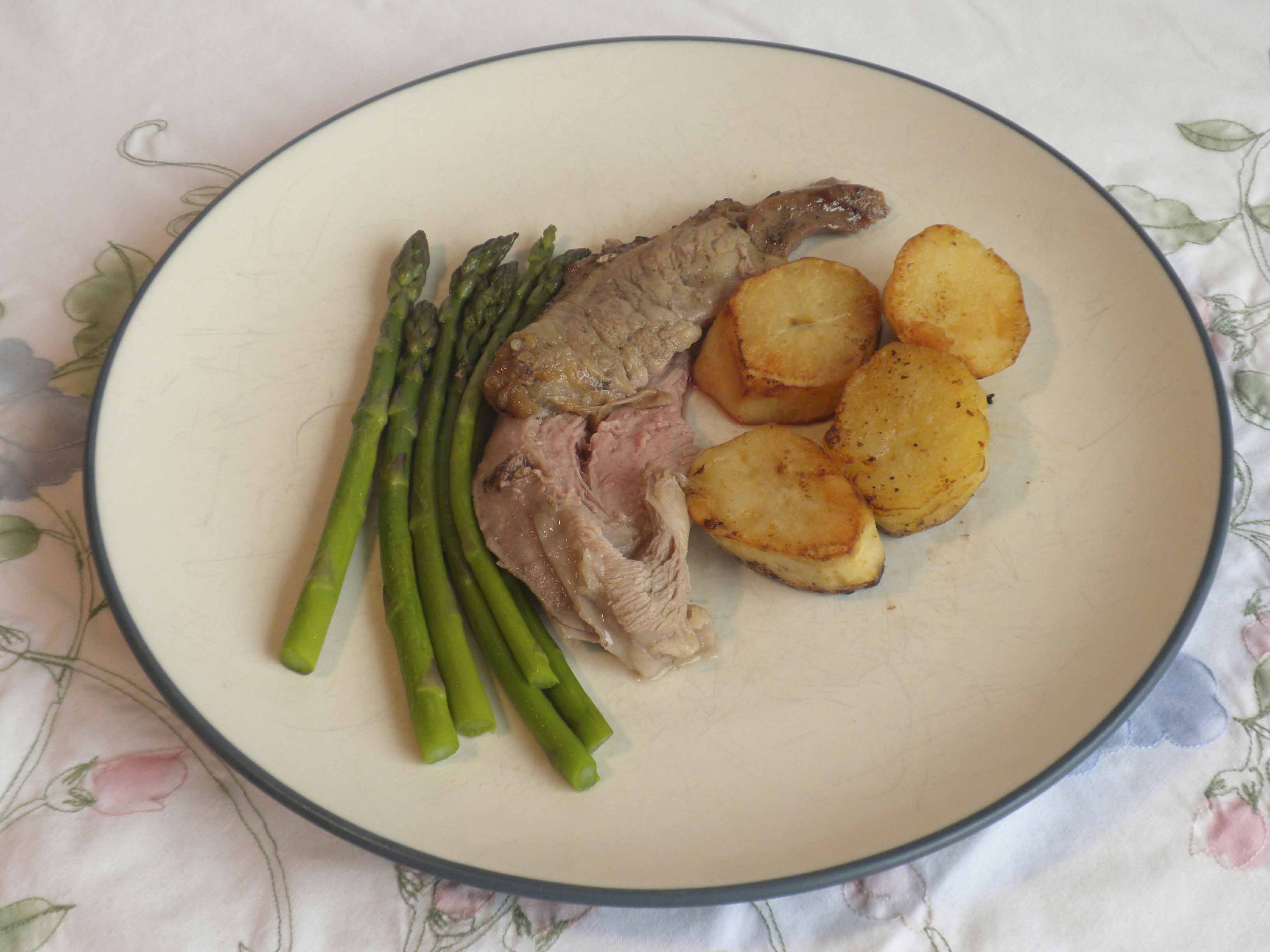
Roast grassfed Spring lamb with organic asparagus and potatoes.
I am grateful for grassfed meat and real food. Thanks to the ranchers and farmers who raise real food. Thanks to those who spread the truth about food.
I was sitting quietly last night, thinking about my life. The life that was supposed to have ended eight years ago. The life that is free of pain and illness. The life that is drug-free, medication-free, doctor-free, and symptom-free. The life that is full of joy and love and purpose. The life that is full of wonderful, delicious, nourishing food, the food that made life itself possible.
And I thought about the people who spread the word, giving me the knowledge that saved my life and made the health and joy I experience every day possible.
I am deeply grateful to those who raise the food, and to those who spread the word.
From There to Here
As discussed in detail in the “About†section on this website, I was very ill for most of my life. After getting a medical death sentence in 1998, and being told I had no more than five years left, I realized that the medical profession could not help me. I searched for another way, and found the teachings of Dr. Weston A. Price, as demonstrated and presented by the Weston A. Price Foundation.
My path to health was nothing more or less than eating the right food, and avoiding the wrong food. The right food is the unmodified food eaten by our ancestors, designed by nature to make us strong and keep us healthy. The wrong food is modern factory food and artificial ingredients, designed by greedy men to make money.
The right food includes the meat and fat of grassfed animals, pastured animals, wild fish, and vegetables grown in good soil, without chemicals. The right food also includes traditional foods like butter, full fat cheese, pastured eggs, unmodified and unprocessed milk, fermented foods like sauerkraut and other lacto-fermented vegetables, organ meats from grassfed or pastured or wild animals, and many other traditional foods. The right food is demonized by the government, the media, the medical profession, the drug industry, industry, the educational system, and big agriculture.
Why do they demonize the food we need to thrive and be healthy? Because people who eat the right food and avoid the wrong food have little or no need for doctors, drugs, or industrial agriculture.
When I avoided the wrong food and ate the right food: my health returned, as did my eyesight, sense of smell, energy, joy of life, enthusiasm, and many other qualities associated with youth. Last night, I enjoyed a wonderful feeling of total well-being, health, and contentment—at age 59.
None of this would have been possible without two very wonderful groups of people. Those who spread the word and those who raise the food.
Thanks to Those Who Spread the Word
My first thanks goes, with all my heart, to Dr. Weston A. Price. Dr. Price spent 10 years traveling around the world to learn the truth about nutrition. He succeeded, and recorded his findings in Nutrition and Physical Degeneration, a book that explains and documents this truth. I am a living example of the truth of his teachings, as are many others. The last words of Dr. Price were not about himself, but his calling – “You teach, you teach, you teach!â€
My second thanks goes to Sally Fallon Morell, the founder and President of the Weston A. Price Foundation. Nobody has heeded the call of Dr. Price better than her. She made the teachings of Dr. Price far more understandable and accessible, posting a free library of nutritional truth at the Foundation’s website, writing a magnificent cookbook and nutrition resource entitled Nourishing Traditions, and selflessly spreading the teachings of Dr. Price throughout the world through the Foundation and her own travels. The website of the Weston A. Price Foundation gave me the knowledge I needed.
My third thanks goes to the many others who spread the teachings of Dr. Price, and/or other nutritional wisdom, often through blogging, writing books and articles, and giving seminars and lectures. The list of these people is just too long to include by name.
My fourth thanks goes to everybody who had the courage and wisdom to actually try real food, and to share their experience with their families, neighbors, and friends.
Thanks to the Ranchers and Farmers
Knowing what to eat is not enough. You have to be able to find the food. Raising real food is much more difficult and requires far more knowledge than raising factory food. My deep gratitude to all who raise grassfed meat and other real food, without chemicals, in accordance with the laws of nature.
I will thank those wonderful farmers and ranchers who raise the food eaten by my family, including John Wood and all the folks at U.S. Wellness, Glenn and Caryl Elzinga of Alderspring Ranch, Ed Wimble and his partners at Homestead Natural Foods, Reed Anderson of Anderson Ranches, Lee and Mary Graese of Northstar Bison, Leland Mora of Humboldt Grassfed Beef, Chris Kerston of Chaffin Family Orchards, the farmers at the Danville and Walnut Creek Farmers’ Markets, and everybody else who has had a part in raising the wonderful food we are so lucky to eat.
I owe my good health to two magnificent groups of people—those who spread the truth, and those who raise real food.
This post is part of Real Food Wednesday and Fight Back Friday blog carnivals.
Why Grassfed Meat Is Worth It
By Stanley A. Fishman, author of Tender Grassfed Meat
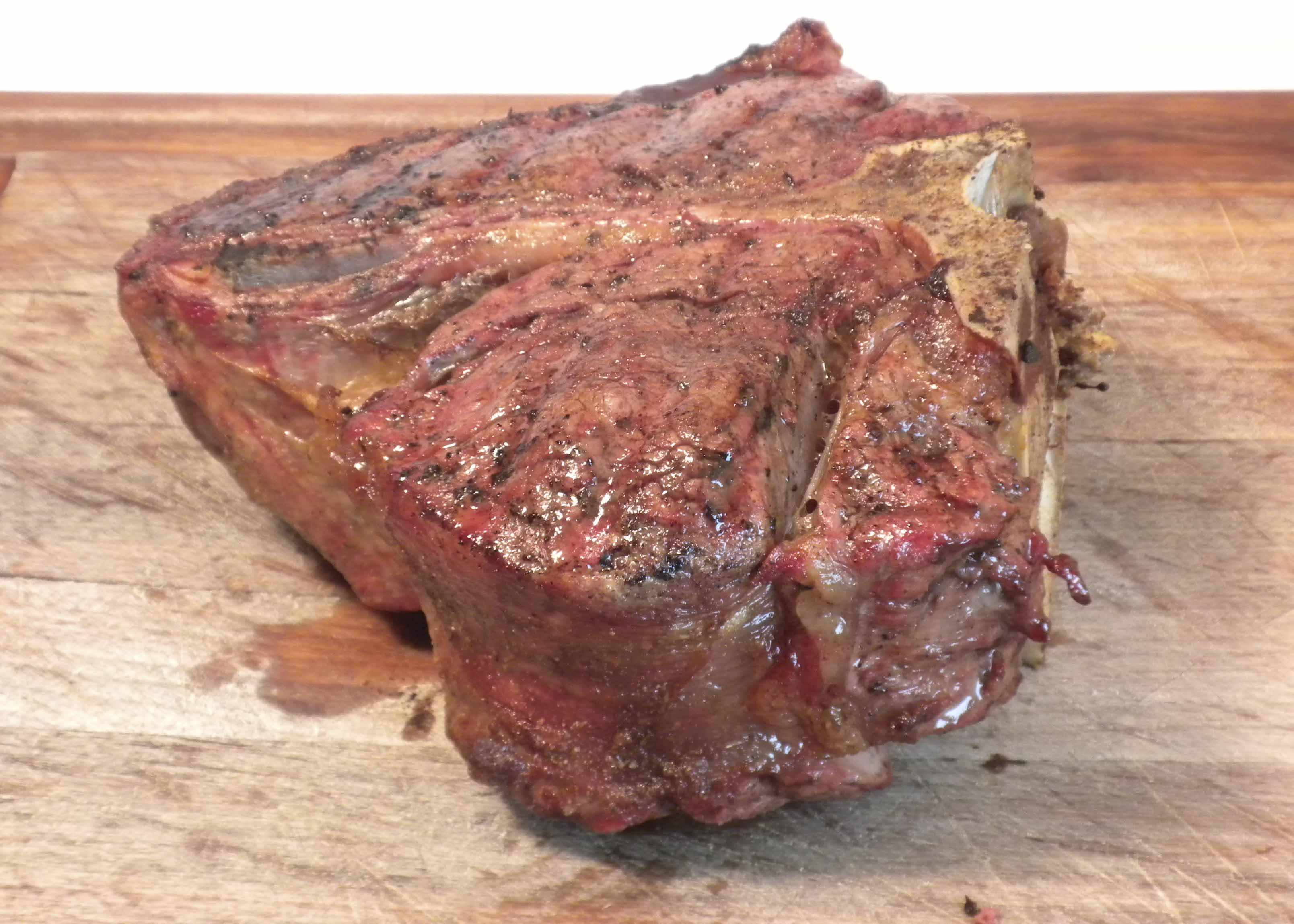
Barbecued Grassfed Bone In Porterhouse Steak
Most of the people I know eat factory meat. When I encourage them to try grassfed, they have two major objections.
The first objection is the belief that grassfed meat is “tough.†Grassfed meat is exquisitely tender when cooked properly. But grassfed meat must be cooked differently than factory meat, because it is a very different product. That is why I wrote Tender Grassfed Meat, which contains detailed instructions on the proper cooking of this wonderful food.
But the biggest objection, the one that convinces most people not to buy it, is the price. Grassfed meat costs more per pound than most factory meat. That is a fact. But price is not everything. Grassfed meat is worth the additional price to me. Why?
- Grassfed meat is almost always raised without artificial hormones and regular doses of antibiotics, unlike factory meat;
- Grassfed meat is not fattened in a feedlot on foods unnatural to cattle;
- Grassfed meat is the meat humanity has been eating for tens of thousands of years, with factory meat being created in the last century;
- Grassfed meat is far more nutrient-dense than factory meat, having the nutrient profile are bodies have evolved to use;
- Grassfed meat shrinks much less in cooking, so you are buying more meat and less water;
- Grassfed meat satisfies the appetite;
- Grassfed meat tastes much better.
Grassfed Meat Is Raised Without Artificial Growth Hormones
Most factory beef is given artificial growth hormones, and given regular doses of antibiotics. Both of these practices result in the factory steer growing and fattening much faster than a grassfed steer. While this increases profits, concerns have been raised about the effect of these practices, which are not natural. Many countries ban the use of these hormones. The medical profession and many scientists have objected to the regular feeding of antibiotics to cattle, stating that it could cause the growth of bacteria that is antibiotic-resistant.
Every grassfed meat producer I know makes a point out of the fact that they do not use artificial growth hormones or regular doses of antibiotics.
Grassfed Meat Is Not Fattened in a Feedlot
Factory cattle spend the last 90 to 180 days of their lives crowded together in a feedlot, eating foods that are inappropriate for cattle, such as GMO soy and GMO corn, and many other unnatural foods. This changes the natural balance of omega-3 to omega-6 fatty acids dramatically (see this fine article at EatWild.com Health Benefits of Grass-Fed Products), deprives the cattle of the nutrients that are present only in green, living grass, and results in meat that is spongy and full of water.
True grassfed cattle are out on the pasture where they belong, eating the foods they have evolved to eat, and have a perfect balance of omega-3 to omega-6 fatty acids, and many other nutrients that are depleted or missing in feedlot cattle.
Grassfed Meat Is the Food Humanity Has Been Eating for Tens of Thousands of Years
The meat and fat from grassfed animals is one of the oldest human foods. Humans have been eating this meat for tens of thousands of years, maybe much longer. Our bodies have evolved to eat, digest, and process this food, and need the nutrients in the fat, meat, and organs.
Factory meat was invented in the last century, and has been eaten widely for less than 60 years. Our bodies have no meaningful experience with it, in evolutionary terms.
Grassfed Meat Is Far More Nutrient-Dense Than Factory Meat
Credible studies have shown that grassfed meat gives you far more important nutrients than factory meat. This includes far more omega-3 fatty acids, in an ideal ratio to omega-6 fatty acids, much more CLA (a nutrient that helps the body maintain normal weight and cell structure), and many other vital nutrients (see Health Benefits of Grass-Fed Products).
Factory meat has a huge imbalance of too much omega- 6 fatty acids, far less CLA, and less of the other nutrients.
Grassfed Meat Shrinks Much Less in Cooking
Factory meat may be cheaper on a per pound basis, but much of the cheaper meat you are buying is water. Factory meat will often release much water into a pan when cooked, and will shrink dramatically when cooked. That is why cooking with really high heat is so popular when cooking factory meat—the high heat is needed to deal with the water. This applies to every form of cooking, including roasting, grilling, and sautéing.
Grassfed meat will shrink very little when roasted, grilled, or sautéed, and does not release water into the pan.
Grassfed Meat Satisfies the Appetite
I find that I eat about half as much meat now. This is because I switched to grassfed meat, and grassfed meat is so nutrient-dense that I am satisfied with much less meat. After I have eaten a nice serving of grassfed meat and fat, my hunger ends, and I am satisfied.
I was never satisfied when eating factory meat. No matter how much I ate, my body was still hungry for something that was not there.
The natural balance of nutrients in grassfed meat and fat gives our bodies exactly what they need, and hunger ends.
Grassfed Meat Tastes Much Better
Americans have been marketed into believing that the dull, flavorless taste of factory beef is what they like. All factory beef tastes pretty much the same. No wonder most people cover the meat in catsup and other condiments.
Grassfed meat has a richness and depth of flavor that is wonderful to experience. The taste of grassfed meat will vary, depending on the breed, grass condition, age, aging process, actual plants eaten, and other factors. The wide variety in delicious tastes is something I enjoy. Grassfed meat must be properly cooked to have these flavors released, but the taste is so much better. Grassfed meat does not need much in the way of seasoning to be terrific, and a simple combination of traditional ingredients is all that is needed. Tender Grassfed Meat is full of recipes that demonstrate this delicious fact.
After years of eating grassfed only, I experimented with some factory meat. This factory meat was free of hormones and antibiotics, but came from a feedlot. I cooked it with one of my favorite pre-grassfed period recipes. It could not begin to compare with the taste, texture, and joy of eating grassfed meat.
Grassfed meat is worth the extra per pound price. There are a number of ways to greatly reduce the price, such as looking for the frequent specials, and buying a quarter, half, or even a whole steer. Grassfed is worth it.
This post is part of Monday Mania, Real Food Wednesday and Fight Back Friday blog carnivals.
Earth Day, Grassfed Meat, and Dr. Weston A. Price
By Stanley A. Fishman, author of Tender Grassfed Meat

Happy cows grazing on rich grass grown on soil restored by John Wood of U.S. Wellness Meats.
Earth Day was created to appreciate and encourage the preservation of the natural blessings of our planet. Perhaps the greatest threat to our planet and ourselves is the massive loss of good soil that has been going on since the last century. Without good soil, most life cannot ultimately survive. The attack on our soil has been led by the chemical industry, and factory farmers who abuse the land, killing the very life in the soil, causing erosion, and a reduction in usable water. Massive soil erosion leads to deserts. Yet it is not too late to save and restore our soil.
Conventional science, with its incomplete knowledge and obsessive focus on grants and profits, is not going to save us. In fact, it is the products of conventional science, such as pesticides, artificial fertilizers, modified plants and germs, and massive chemical pollution from artificial chemicals that are the greatest cause of the problem. But nature itself can save us, if we have the humility and wisdom to follow nature’s laws.
Nature itself has left a blueprint on how to make good soil, and tens of millions of desert acres have been turned into fertile grasslands, with long-dead rivers and streams coming back to life as part of the process. This was accomplished by following nature’s laws.
Dr. Weston A. Price, the pioneer who discovered the truth about nutrition, said it this way:
“Life in all its fullness is nature’s laws obeyed.â€
Why Good Soil is Crucial for Life
Soil that will nourish healthy life is much more than just dirt. It is a magnificent combination of minerals, bacteria, insects, microbes, and many nutrients (including unknown substances), all coming together to form the very source of life.
Plants need soil to grow, and soil needs plants to hold it in place against wind and rain, or it just erodes away. The nutrients in the soil grow the plants that keep the soil in place.
These nutrients nourish the plants that grow in this good soil, and the nutrients go into the plants, which pass these nutrients on to the people and animals who eat them. Food plants grown in good soil contain many vital nutrients that we all need to be fully healthy. Animals grazing on these rich plants develop nutrients in their flesh, fat and organs which are crucial for human health, and which are only there if the animals get all the nutrients they require.
It is crucial to understand that science has not identified all of these nutrients, and does not know everything about how they work together. But our bodies know, and expect all these nutrients to be there in the food we eat.
Dr. Weston A. Price discovered that traditional peoples eating the diets of their ancestors, foods from animals grazing on rich soil, plants grown in rich soil, or seafood taken from the rich ocean, were immune to tooth decay. This immunity went far beyond tooth decay, as these people did not have cancer, heart disease, asthma, allergies, birth defects, mental problems, or any of the host of chronic diseases that torment modern humanity. Dr. Price understood that good soil was the mother of good food, and included a chapter on the vital importance of soil in his magnificent work, Nutrition and Physical Degeneration.
How the Soil is Lost
Growing and harvesting certain crops depletes the soil of nutrients. Farming the same soil year after year could lead to erosion. The traditional solution was to rotate fields, to let the land rest and renew, or plant certain crops that would restore nutrients to the soil. Natural fertilizers like animal manure were also used. These solutions worked, but part of the land could not be used for food crops while it rested. Science supposedly “solved†this problem by using artificial fertilizers. These fertilizers enabled crops to grow in depleted soil. The same land could be used for crop after crop, without rest. But these fertilizers only provided some minerals and nutrients, not all of them. In fact, some of these fertilizers interfered with the ability of the plants to absorb nutrients. The plants that grew from the depleted soil were weak and far less able to resist pests, so artificial pesticides were introduced. Pesticides are poisons that kill plants and insects. The introduction of these poisonous artificial chemicals into the soil changed it, having a dramatic effect on the life in the soil, and killing much of that life. Soil is also damaged and changed by artificial chemicals created by industry, which are not part of the natural cycle.
Soil is also damaged and contaminated by the huge amounts of manure and liquid created by CAFOs (Concentrated Animal Feeding Operations). The miserable animals in CAFOs are crammed together in a small space and not allowed to graze. They are fed grains and other species-inappropriate feeds. This cruel and unnatural practice creates huge lagoons of manure and urine that greatly exceed the ability of the land to absorb them.
The result of this artificial tampering with the soil was less nutrients. Plants cannot have nutrients that are not in the soil. Food animals cannot have nutrients that are not in the plants. People cannot get nutrients that are not in the plants and animal foods we eat. Our bodies cannot function properly without all the nutrients we have evolved to need.
Artificial agriculture has caused a huge loss of useable soil, a serious loss that is continuing. And the soil that remains has far less nutrients. Even in the 1940s, studies showed that fruits and vegetables had far less vitamins and minerals than vegetables grown in the 1920s. The situation is much worse today. For example, researchers have tested commercial oranges that contained hardly any vitamin C.
How Nature Makes Good Soil
We can restore the health of the soil by following nature’s laws. The Great Plains of the United States were some of the richest land ever known on earth. Before the plains were fenced and farmed, more than 60 million bison roamed the plains. The bison traveled in tightly packed herds, so they could defend each other against predators. The herd would travel into an area, eating all the grass, and breaking up the earth with their hooves and concentrated numbers, using their hooves to expose more grass. As they ate the grass, seeds would fall off and get trampled into the earth by the hooves of the massed bison. They would deposit their manure on the soil, returning the nutrients to it.
In effect, the bison actually farmed the land. They harvested the grass by eating it. They plowed the land by breaking it up with their hooves. They planted the new grass by trampling the seeds into the earth. They fertilized the land with their manure.
Then they would move on, leaving the land to rest and grow. By the time the herd returned, they would be greeted with a new crop of rich green grass, and the cycle would begin again.
All of the great grasslands in the world were created in this manner, with different types of animals and herd sizes.
But the blueprint remained the same—the animals were concentrated into tight herds, the herd grazed in a concentrated manner, then moved on, allowing the land to rest, recover, and regrow.
Many grassfed ranchers follow these methods, concentrating their herds, doing intensive grazing, then moving the herds so the land can recover. Some of these ranchers add additional natural nutrients to their soil as well. (See Grassfed Farmer Renews the Land.) Every time I buy grassfed meat, I am supporting these ranchers who are restoring the soil with their herds. Every time I eat the meat and fat from animals raised on rich grass, I am blessed by receiving a full natural range of nutrients, giving my body exactly what it needs to function properly.
These methods have been adapted and used to literally change millions of acres of desert into grassland. Even long-dead streams have come back.
We can restore our good soil to the earth, by following nature’s laws.
This post is part of Monday Mania, Real Food Wednesday and Fight Back Friday blog carnivals.
Smelt Soup for Natural Iodine
By Stanley A. Fishman, author of Tender Grassfed Meat
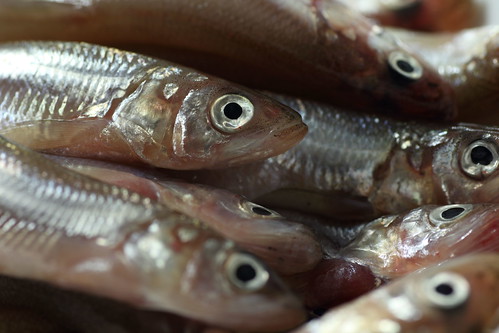
The Standard American Diet (also known as SAD) is severely deficient in many vital nutrients. This includes iodine, which is vital for the function of many body processes.
The recent nuclear disaster in Japan has motivated many people to raise their iodine levels, in the hope that this will prevent them from absorbing radioactive iodine. Most people who do this use supplements. There is a risk in using supplements, because iodine is only needed in minute amounts, and an overdose of iodine can cause problems ranging from minor to serious. While I am not a doctor, and am not giving medical advice, I always prefer to get my nutrients from food to the extent possible. I believe that this is the most natural and efficient way to get nutrients, along with any as yet unknown cofactors that enable the body to digest them properly.
The healthy peoples studied by Dr. Weston A. Price usually had much more iodine in their diets than modern people. One of the most common ways they got this iodine was from eating seafood. Some seafood contains a significant amount of mercury, a substance that I avoid as much as possible. However, small fish and shellfish contain very little mercury.
Seafood contains many other vital nutrients in addition to iodine, especially when the whole fish, including the head, is eaten. Fish bones are a terrific source of minerals. The organs of the fish, some of which are within the head, are full of nutrients. One of the best ways to get nutrients from seafood is by making a broth. There is an old South American saying: “Fish broth will cure anything.â€
Our ancestors ate only wild fish, taken from their natural habitat, and that is a tradition I follow. Farmed fish are almost always fed a diet that is not natural for seafood, usually including processed soy, and they are not the same as wild fish.
This soup is simple to make, delicious, and loaded with iodine and other nutrients. The use of small fish avoids the mercury problem, and the ginger and garlic reduce the odor, while enhancing the already fine flavor. The fish sauce adds even more nutrients, while further improving the flavor. The long simmering causes the fish to break up and release their nutrients into the broth.
Smelt Soup
INGREDIENTS
2 pounds wild whole smelt, with the heads, fresh or frozen
2 gallons filtered water
2 tablespoons Thai fish sauce
1 (2 inch) piece organic ginger, crushed
4 cloves organic garlic, crushed
DIRECTIONS
1.     Put the fish into a large stainless steel stockpot. There is no need to cut up the fish, they will break up as they simmer. Add the vegetables and the water.
2.     Heat the pot until the water begins a strong simmer. This will take a while because of the large volume of ingredients and water.
3.     When the water is close to boiling, remove all the scum that rises to the top with a skimming spoon. This can take a long time, but it is necessary to remove these impurities.
4.     When the scum is gone, add the fish sauce.
5.     Cover and simmer gently for at least 8 to 10 hours, or even longer. The fish will break up into the broth.
6.     Strain into mason jars, cover, and refrigerate once the bottles have cooled down. Use or freeze within five days. If you freeze the broth, you can boil it down to a concentrate, place in safe plastic freezer bags when cool, and rehydrate when you thaw it at a later date.
Tender Grassfed Meat contains a number of broth recipes for grassfed meat.
This post is part of Weekend Gourmet, Real Food Wednesday and Fight Back Friday blog carnivals.
Real Food, Wise and Robust Old Age
By Stanley A. Fishman, author of Tender Grassfed Meat

photo credit: conner395. Inverness Castle in the Scottish Highlands, home of a healthy people.
Old people in modern times are considered weak, foolish, and helpless, unable to survive without care. Most people expect to be weak and helpless when they get old, and to end their lives in a “rest home.†We often read in the news media that young workers will have the burden of taking care of an aging population.
Yet this is a new and horrible way of aging. Through most of history, old age was associated with wisdom, strength, and leadership. Most older people who ate a traditional diet not only took care of themselves, but led their communities, taught the young, and were the repository of knowledge and leadership for their peoples.
What is the difference? Why did old age change from a time of wisdom and leadership to a time of failing minds, deteriorating bodies, and chronic illness?
What we do know is that people eating the healthy traditional diets of their ancestors, with little or no medical care, remained wise and strong into their nineties.
We also know that modern people eating the Standard American Diet (SAD) become helpless in their sixties and seventies and even younger, unable to care for themselves, needing all kinds of expensive medical care and procedures just to keep breathing.
In other words, real food is the key to a wise and healthy old age.
Traditional Old Age
Throughout most of history, old age was associated with strength and wisdom.
Age was considered a prerequisite for leadership, and younger leaders always had older advisors. Every village, from England to Africa to the Americas to Russia to India to China, and almost everywhere else, depended on a council of elders, who would make decisions for the whole village, based on their experience and knowledge. It was accepted that these old people were the only ones who had the knowledge and experience to make important decisions. The knowledge of childbirth, cooking, what was safe to eat, and healing was usually taught and administered by the older women, who were universally respected.
On a national level, many traditional societies had councils of elders who would make decisions for the whole nation or tribe.
It should be understood that old people eating traditional diets were not only much wiser, but much healthier physically. History has thousands of examples of people who were “old†but showed great physical prowess. A few examples:
Gebhard Von Blucher
He was a nobleman, growing up on the finest food his culture could provide, eating huge amounts of wild game and grassfed meat.
He commanded the Prussian Army at the battles of Ligny and Waterloo, in 1815. Blucher was 73 at the time. During the battle of Ligny, Blucher led a cavalry charge against the French. His horse was shot, throwing Blucher to the ground. The horse then fell on Blucher, pinning him to the ground. The opposing cavalry forces charged several times over the area, back and forth, which resulted in Blucher being repeatedly trampled by horses, sustaining many wounds from their hoofs. After the battle, the horse was pulled off Blucher. Blucher poured brandy on his many wounds and drank some, and recovered in a few hours. He reorganized his defeated army and led them to Waterloo, a couple days later, where the sudden appearance of his army on the French flank helped the Allies win the battle.
Malcolm Macpherson
He was a Highlander, growing up on a traditional diet that had not changed for thousands of years. At age 57, he took part in the rebellion of Bonnie Prince Charlie, and fought in the battle of Culloden in 1745, wielding a heavy broadsword. Macpherson blamed the French for the Highland defeat. When Britain went to war against France some years later, Macpherson joined a Highland regiment at age 70. He fought the French in North America, using his heavy broadsword so effectively in hand-to-hand combat that he was taken to England to meet the king.
It should be understood that the above examples of robust old people were not unusual, and old people were expected to carry their weight and take part fully in all the activities of life, no matter how difficult.
Dr. Weston A. Price studied healthy peoples eating the diets of their ancestors. The elders of these people kept their teeth and their eyesight, leading active productive lives without illness or doctors. They did not live in fear of chronic diseases like cancer and heart disease—these illnesses did not exist in their societies.
In fact, studies of the healthy peoples eating traditional diets have repeatedly found that most people remain healthy and productive into their nineties or even longer. They will usually slow down at some point, where they become consistently less active for a period of several months, then die in their sleep.
These healthy peoples ate plenty of fat from grassfed animals and wild game, fatty meats, seafood, organ meats, butter, all kinds of animal fat, organic fruits and vegetables, and did not touch modern processed foods.
Modern Old Age
Old age has become a time of sickness and horror for many people eating a modern diet. Most old people are on a number of prescription drugs, and eat a diet of refined foods that does not support the functions of their bodies. Most of them are impaired in their ability to do most things and many are completely unable to care for themselves. There is no wisdom in many of these people—many of them cannot remember what they said one minute ago.
Many cannot walk unaided, and have bones so brittle they break easily. Many have had one or more of their hips and or knees removed and replaced with an artificial construct. Many are emaciated, suffering from severe malnutrition, which makes all their symptoms worse.
Many live each day in a mental fog, and do nothing useful with their time. Many have actually shrunk in size, as their bones deteriorate and collapse. Many have lost all their teeth, and rely on dentures. Many start to die as their organs stop working, suffering from problems with their hearts, livers, kidneys, digestive systems, and just about everything else.
Every function of our bodies requires proper nutrition in order to work effectively. When our bodies are starved of the vital nutrients we need, our bodies deteriorate. The longer we are starved, the faster and more serious the deterioration.
We are told that this deterioration is the inevitable result of old age. However, it appears to be a result of decades of malnutrition on the nutrient-poor modern diet of dead, refined foods.
History and the great research of Dr. Price have shown us that a diet of real, traditional food can save us from this horror. The Dietary Guidelines of the Weston A. Price Foundation are a great place to start.
Related Posts
Eat Fat, Live Long—the Real Food of Okinawa
Call It Medical, Not Mediterreanean
This post is part of Real Food Wednesday, Fight Back Friday and Monday Mania blog carnivals.
Eat Fat, Live Long—the Real Food of Okinawa
By Stanley A. Fishman, author of Tender Grassfed Meat

You may have heard about the longevity and health of the Okinawan people. According to records kept by the Japanese since 1879, the people of Okinawa just may be the longest-lived people in the world, often staying healthy and active into their nineties, or even longer.
Many have claimed that this longevity and health is due to a low-fat, meat-free, high-vegetable diet. Being skeptical of such claims, I researched traditional Okinawan cooking and traditions.
My skepticism was justified, as it usually is. The long-lived, healthy people of Okinawa eat a diet that is heavily based on meat. Mostly pork. Mostly fat pork. The main cooking fat is pork lard. Many foods are fried in pork lard. The Okinawans traditionally do not rely on doctors when they get ill, but on food-based remedies consisting of—pork organs. In fact, pork is so vital to Okinawan culture that Okinawans often refer to their land as the “Island of Pork.â€
The real lesson of Okinawan longevity is “Eat fat, live long.â€
The Real Food of Okinawa
Okinawan cuisine is centered around meat. The most important meat is pork. The Okinawans have a saying, that they use every part of the pig except for the toenails and the squeal. Many of the pork parts eaten are composed almost entirely of fat, such as pork skin, pig ears, and pork belly. All the internal organs of the pig are regularly eaten, such as the liver, kidneys, stomach, and intestines, which are also full of fat. Pork lard is the fat of choice for cooking, and many foods are deep fried in pork lard. Every other part of the pig is also eaten, including more familiar parts like spareribs, pork shoulder, and pork loin. The skin is usually left on and eaten whenever possible.
Goat is also favored by Okinawans, though pork is far more common. What is interesting is that much of this goat meat is eaten raw, and there are restaurants that specialize in the preparation of raw goat meat.
Traditionally, the Okinawans ate very little grain, which used to be sold to pay taxes. Sweet potatoes are a common and favorite food, as are cabbages, carrots, and other vegetables. Vegetables are always cooked, often fried in pork lard.
The Okinawans do eat tofu, but the tofu they eat is different. It is made differently from the rest of the tofu in the world, and is often naturally fermented for several months. Unfermented tofu is often deep fried in pork lard. One of the most common Okinawan dishes is a stir fry made out of pork, vegetables, and tofu, fried in pork lard. It is possible that the protective factors in the pork lard prevent the harm that often occurs from eating soy.
Miso, another fermented soy product, is also used as a seasoning.
Okinawans do not eat that much seafood, which is surprising given that Okinawa is a relatively small island. The explanation is that Okinawa has a tropical climate, and fish spoil very quickly. The island has very rugged terrain, which made it difficult to transport fish before they spoiled. Fish are fermented and made into sausages, which form a small, but important part of the diet.
Most Okinawans do not eat western-style processed and refined foods, though a small amount of brown sugar is used in cooking.
Okinawan Healing with Food
Traditionally, Okinawans had no medical doctors, but relied on food to heal themselves. This system was based on the organs of animals, usually pigs, but often goats. The traditional belief was that disease was caused by an imbalance in an organ, and the imbalance could be corrected by eating the corresponding part of an animal. Someone with breathing difficulty would eat the lungs of a pig. Somebody with a hearing problem would eat the ears. Someone with a digestive problem would eat the stomach of a pig, and/or the kidneys, and so on.
This system is not unique to Okinawa. It was followed by many traditional peoples, including the Native Americans, and by many Western M.D.s before prescription drugs became the remedy of choice.
This system worked so well that many Okinawans still follow this tradition, and do not seek medical help. This may actually contribute to their longevity, because the side effects of the drugs and surgeries used by modern medicine cause the death of many people.
The Real Okinawan Food Is Consistent with the Research of Dr. Weston A. Price
Dr. Weston A. Price spent 10 years studying the diets of the last healthy peoples on Earth. These peoples were free of the chronic diseases that plague the modern world. Dr. Price did not just read studies, he actually traveled right to the people he studied and observed them personally. Dr. Price found a number of similarities in the diets of these people:
- They ate a large amount of animal fat.
- They ate a substantial amount of meat and/or seafood.
- They ate a large amount of organ meats regularly.
- They ate some of their meat and/or seafood raw.
- They ate many kinds of natural foods, unrefined and unprocessed.
- They ate a number of naturally fermented foods.
- They ate at least a small amount of seafood, fermented if they could not get it fresh.
All of these factors are present in the real Okinawan food.
- The Okinawans eat a great deal of pork fat.
- The Okinawans eat a substantial amount of pork and goat.
- The Okinawans eat organ meats regularly.
- The Okinawans eat raw goat meat.
- The Okinawans eat most of their food unrefined and unprocessed.
- The Okinawans eat a number of naturally fermented foods.
- The Okinawans regularly eat a small amount of fermented seafood.
In summary, the diet of the Okinawans is very similar to the diet of the healthy peoples studied by Dr. Price. The longevity of the Okinawan people is further evidence of the benefits of the diet developed by Dr. Price.
Related Posts
Call It Medical, Not Mediterreanean
This post is part of Real Food Wednesday , Fight Back Friday and Monday Mania blog carnivals.
« Previous Page — Next Page »