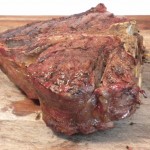
 Photos of recipes from the new book Tender Grassfed Barbecue
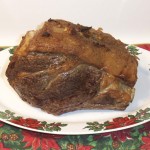 Photos of recipes from the cookbook Tender Grassfed Meat

A New Podcast Interview about Grassfed Meat
By Stanley A. Fishman, author of Tender Grassfed Meat
 Real Food Media blogger Ann Marie Michaels, also known as Cheeseslave, has done a podcast interview with me. Ann Marie is an expert on real food, and it was an honor to be interviewed by her. We covered a number of issues concerning grassfed meat: why it must be cooked differently from factory meat; how I learned how to cook grassfed meat; some barbecue tips for July the Fourth; why grassfed meat is sustainable and better for the planet; how it differs from conventional meat; how grassfed meat is so nutrient-dense and satisfying; the benefits I received from eating grassfed meat; how traditional food combinations provide complete and superior nutrition; even what to add to US Wellness liverwurst to make it into a spreadable pate; and more!
I found Ann Marie’s questions and comments to be insightful and invaluable, and I really learned a lot during this interview, which I greatly enjoyed. Ann Marie has been spreading the word about real food for some time now, and I highly recommend her blog.
Here’s the link to the podcast:
New Podcast: Stanley Fishman Talks About Tender Grassfed Meat
Don’t Fear the Natural Trans Fats in Grassfed Meat and Butter
By Stanley A. Fishman, author of Tender Grassfed Meat
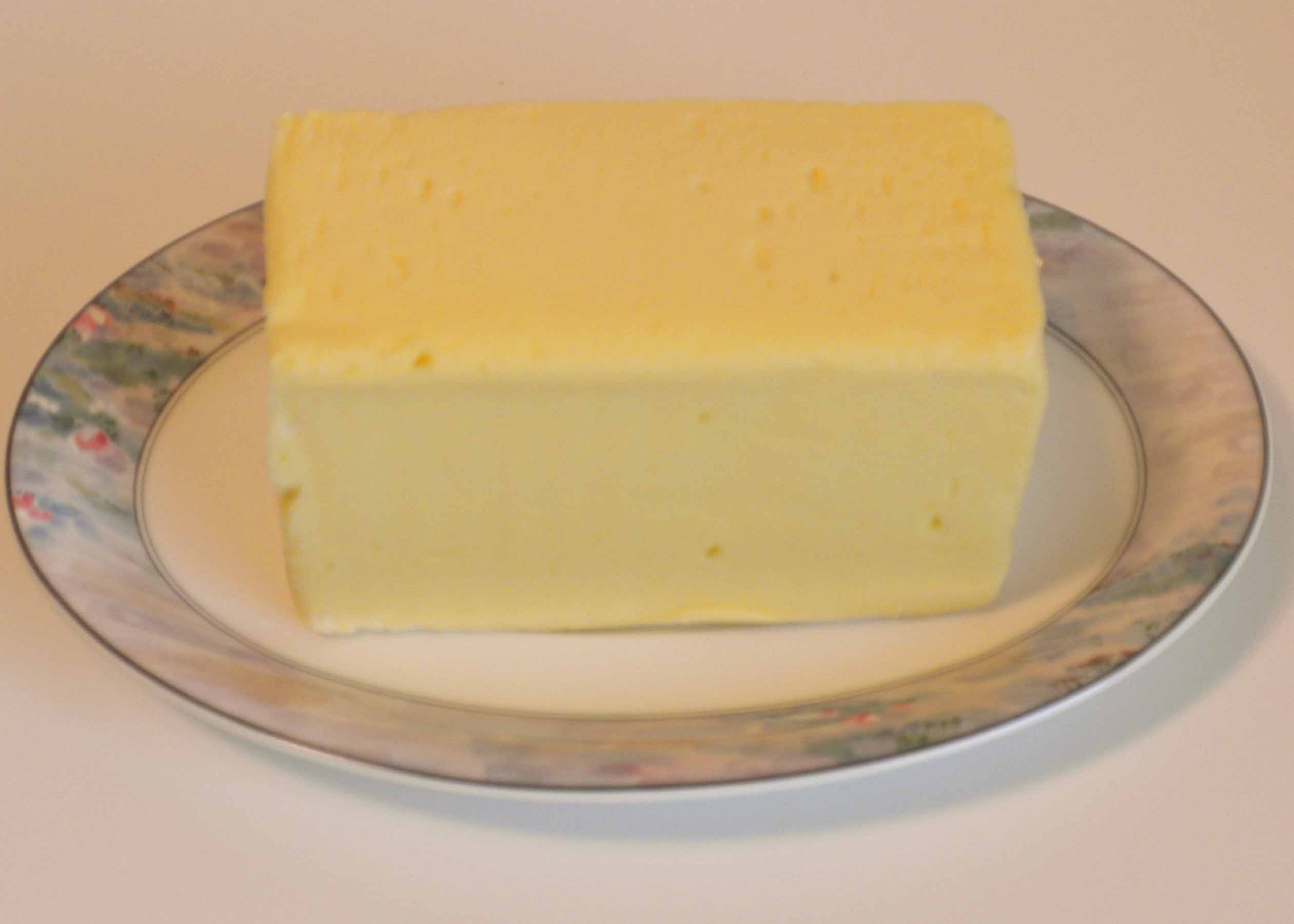
Pastured butter
Trans fats are getting a lot of press today. There is general agreement that the artificial trans fats made in a lab are very bad for human health. Numerous studies have implicated trans fats as contributing to heart disease and other illnesses. The federal government now requires that the presence of all trans fats be labeled. Unfortunately, the labeling requirement does not distinguish between artificial trans fats made in the lab and trans fats that occur naturally in dairy and meat products. This is a shame, because there is solid scientific evidence that natural trans fats actually reduce the risk of heart disease.
Does Grassfed Meat Contain Trans Fats?
My friend, low-carb advocate Jimmy Moore, made me aware of this issue. One of Jimmy’s readers was going to buy some grassfed meat. The reader looked at the package, and saw that the meat contained trans fats. The reader did not want to be harmed by trans fats, and did not buy the meat. Well, grassfed fat does contain a small amount of trans fats. However, the trans fats that occur naturally in meat and dairy products are very different from the lab-made trans fats that have been implicated in the studies. Here’s the link to Jimmy’s excellent article on the subject.
What Are Trans Fats?
There are two major kinds, which are actually quite different from each other. There is a kind of trans fat which occurs naturally in meat fat and dairy products. People have been eating this kind of fat for many thousands of years. Most of this fat is known as transvaccenic acid.
There are also man-made trans fats, which were invented in the 20th century. These fats are created by adding hydrogen under pressure to a liquid vegetable oil. This process turns the oil solid at room temperature. This kind of man-made fat is most commonly called partially hydrogenated vegetable oil. These lab-made oils greatly increase the shelf life of processed foods. They have also been found to increase the risk of heart disease, obesity, and other illnesses, in many studies.
Federal Labeling Requirements Do Not Distinguish Between Natural and Artificial Trans Fats
The federal government requires that all foods containing a certain amount of trans fats be labeled as containing trans fats. This is very confusing, because the labeling requirements do not distinguish between natural and artificial trans fats. It is actually possible that a product could contain both, such as butter that has had partially hydrogenated vegetable oil added to it. You cannot tell from the label if the trans fats in the product are the natural trans fats or the artificial trans fats. This is very unfortunate, because the difference between the two major kinds of trans fats is crucial.
Natural Trans Fats May Reduce the Risk of Heart Disease, Diabetes, and Obesity
Several recent studies done at the University of Alberta in Canada showed that transvaccenic acid substantially reduced risk factors associated with heart disease, obesity, and diabetes. The studies involved feeding transvaccenic acid to rats. The studies showed a substantial reduction in total cholesterol, LDL cholesterol, and an even larger reduction in triglyceride levels. It should be noted that transvaccenic acid is 70-80% of the trans fats that naturally occur in meat and dairy products.
This research is completely consistent with the research done by Dr. Weston A. Price in the 1930s. Dr. Price studied a number of peoples eating their traditional diet. Some of these diets included large amounts of animal fat, and/or very large amounts of full fat dairy products. Both the animal fat and dairy products would have contained natural trans fats. The peoples studied by Dr. Price had no heart disease, no diabetes, no tooth decay, no cancer, and were not obese—as long as they ate their traditional diets, which were full of naturally occurring trans fats.
How to Find Natural Trans Fats and Avoid Lab-Made Trans Fats
Since the labels do not tell you if the trans fats are natural or artificial, how can you tell?
- Natural trans fats occur only in meat and dairy products. So if you see trans fats on the label in any non-meat, non-dairy food, you can be reasonably certain that the trans fats are artificial.
- If you see trans fats on the labels of meat or dairy products, you can expect that they contain natural trans fats, but they could also include artificial trans fats that have been added in processing.
- The best way I have found to deal with this problem is to buy only pure, unadulterated products in their most basic form, as unprocessed as possible. I also avoid products that have additives.
- Any product that has the words hydrogenated or partially hydrogenated vegetable oil, almost certainly contains artificial trans fats.
For myself, I have decided to avoid all artificial trans fats to the extent possible. I have also decided to enjoy the benefits of the natural trans fats contained in grassfed meat and real butter.
Here are links regarding the studies done at the University of Alberta:
Health Benefits Discovered In Natural Trans Fats, University Of Alberta Study Shows
Human Health and Trans Fat in Cattle Products
This post is part of Real Food Wednesday Blog Carnival at Kelly the Kitchen Kop.
Read more at Fight Back Friday at Food Renegade.
Beautiful, Nutritious, Delicious Bones
By Stanley A. Fishman, author of Tender Grassfed Meat
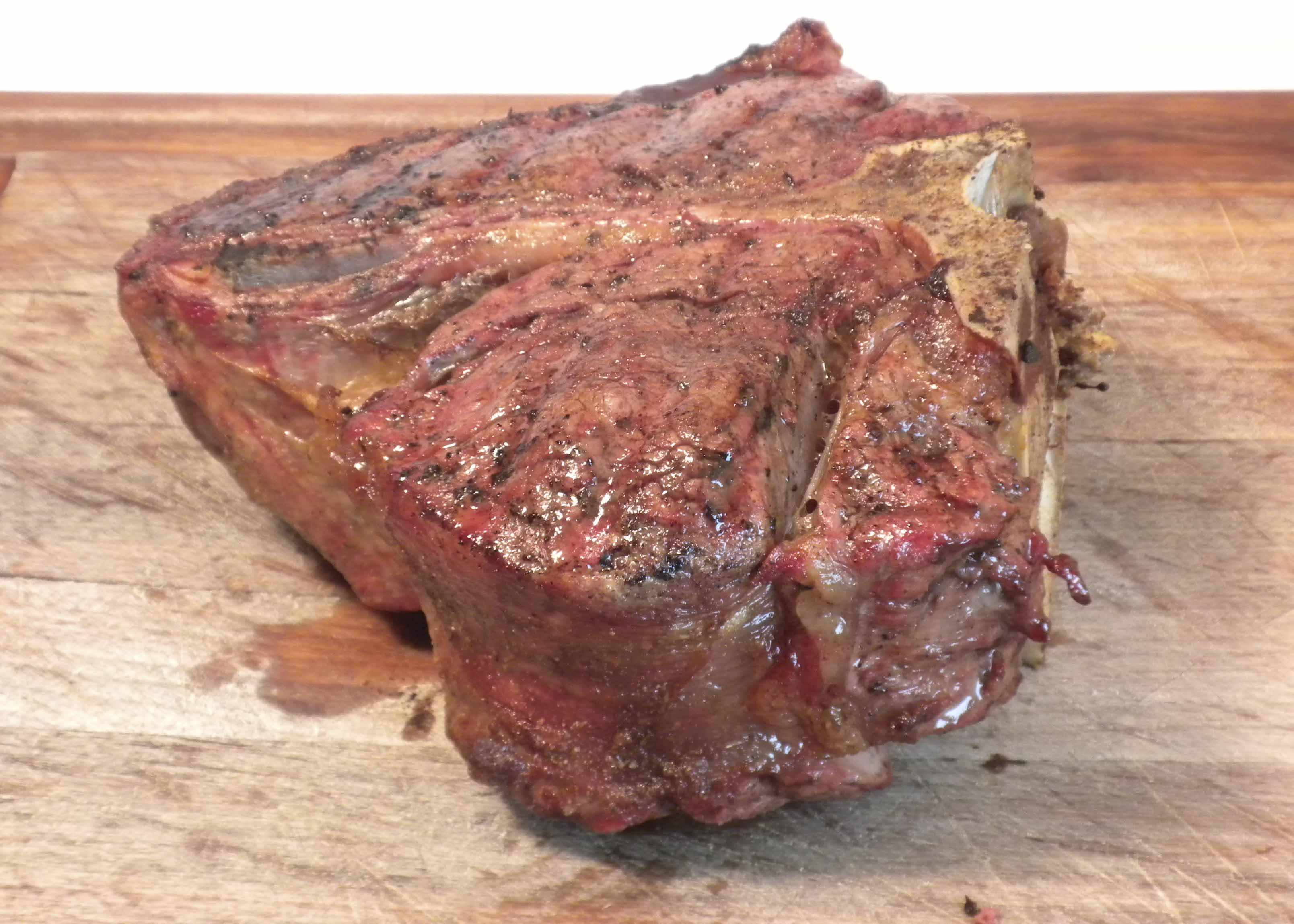
Grassfed Bone In Porterhouse. It tasted even better than it looks.
There is a very old saying,â€the nearer the bone, the sweeter the meat.†This saying celebrates the traditional knowledge that meat on the bone is valuable, both for taste and nutrition. The meat right next to the bone is sweeter and tastier, flavored with bone marrow and other substances that enter the meat during cooking. Grassfed meat cooked on the bone has so much flavor that spices are often unnecessary. I prefer to cook grassfed meat on the bone. Bone in meat has great nutritional benefit. Bone in meat is more tender. Bone in meat cooks more evenly. And it tastes so much better.
Why Most Meat Cuts Are Boneless
Most of the meat cuts sold today, including grassfed cuts, are boneless. There are several reasons for this. Bones are heavy, and most meat is shipped a long way. Cutting off the bones reduces transportation costs. I have talked to grassfed farmers who do not sell bone in meat because they are afraid the bones will penetrate the plastic they ship their meat in. The emphasis on lean meat promotes the use of boneless cuts, as bones contain fatty substances such as bone marrow. Carving bone in meat requires more effort than dealing with boneless cuts. Most people think of bones as waste, and do not want to pay for them. Actually, bones have tremendous nutritional and culinary value.
Bone In Meat Is More Nutritious
Bones are made up of minerals such as calcium, phosphorus, magnesium, and many others. When you put your mouth on a bone, the saliva in your mouth dissolves some of these minerals, which thus enter your body. Your body knows exactly how to digest and process these minerals and the cofactors which come with them. Need minerals? Eat the meat next to the bone, and you will get plenty, in a form that your body can easily assimilate and use. Also, you can suck discreetly on a tasty bone.
Bones also contain bone marrow, a fatty substance that is extremely nutrient dense, and is invaluable in making your own bones strong and healthy. Bone marrow is released into the meat during the cooking process, making the meat more nutritious and sweeter. There have been few, if any, scientific studies on the nutritional value of bones and bone marrow. However, there are some very old “studies,†conducted by our ancestors, the traditional peoples studied by Dr. Weston A. Price, and even wild animals.
Traditional People Knew the Value of Bones
The earliest habitats of primitive humans were found in caves. Many of those caves had one thing in common—a large pile of smashed and split animal bones. It is universally agreed that those bones were smashed and split to get at the bone marrow.
Traditional cuisine is full of references to bone marrow, which was eaten in many forms, and highly prized. The most prized meat in early Europe was the chine portion, a cut of meat reserved for the elite members of society, the heroes. Ancient Irish warriors fought to the death for the right to eat the chine portion, also known as the Hero’s Portion. Even the mightiest warrior in the Iliad, Achilles, cooked a chine portion for himself and the other great heroes of the Greeks. The chine portion was the same cut as a modern rack of lamb, or prime rib, or pork rib roast, except that the chine bone was always left on.
The Native Americans would actually use heavy rocks to pound bison bones into powder, which was made into a nourishing broth.
For most of history, meat was always roasted on the bone. Even stews had bones added to the pot, and the pieces of meat often contained bones. Many traditional peoples would chop chicken and other soft boned meats into pieces, so the marrow and other nutrients would be released into the pot during cooking. These traditions are still carried on today, in traditional cuisines all over the globe.
Several of the peoples studied by Dr. Weston A. Price, particularly the Inuit, split the bones so they could eat the marrow. All of the peoples studied by Dr. Price ate foods made with bones, often in the form of bone broths. These people had excellent teeth, strong bones, powerful immune systems, and were robustly healthy.
Finally, predators such as lions, wolves, and coyotes value the bones of their prey. After eating the liver of their kill, these animals will crack the bones for the marrow and chew on them, often leaving the lean meat for the scavengers. If you have ever given your dog a bone, you can see that dogs also have this traditional wisdom. Chewing on the bones is one of the best ways that these animals can get necessary minerals.
Meat on the Bone Tastes Much Better
Prime rib of beef, Porterhouse steak, T-bone steak, and lamb chops are bone in cuts that are popular even today. These cuts are very expensive and highly prized. Our ancestors ate a much wider variety of bone in cuts. Sirloin steaks, strip loin steaks, lamb roasts, beef roasts, pot roasts, pork roasts, and stews were all cooked with the bones. Almost all poultry was cooked with the bones, as were most fish. The reason for this was that the bones add so much flavor, as well as nutrition. When you cook meat on the bone, the marrow and other substances from the bones actually flavor the meat, adding succulence and a depth of taste that just does not exist with a boneless cut. The bones also help keep the meat moist, and help conduct heat throughout the meat so it cooks more evenly. If you are cooking the meat in liquid, the bone marrow, gelatin, minerals, and other substances from the bone enter the liquid, imbuing it with wonderful flavors, and causing it to thicken into a wonderful, flavorful sauce. There are a number of traditional recipes that call for adding extra bones to stews, pot roasts, and even the roasting pan to add these flavors to the dish. Meat is always tastier when cooked on the bone.
How to Add the Benefits of Bones to Your Diet
The simplest way to enjoy the benefits of bones is to cook bone in cuts. These are cuts of meat that still have the bone attached. When you eat the meat, do not be afraid to chew all the meat off the bones. Do not hesitate to discreetly suck on the bones, especially if you can get some of the marrow. You may find this to be immensely satisfying, as I do. Of course, don’t swallow any bones.
Another great way to enjoy the benefits of bones is to make real bone broth from the bones of pastured animals, simmered for many hours so the nutrients of the bones are released into the broth. My cookbook, Tender Grassfed Meat, has a number of such broth recipes, as does Sally Fallon’s magnificent work, Nourishing Traditions. Tender Grassfed Meat also includes a number of recipes for cooking bone in meat.
This post is part of Fight Back Friday Blog Carnival at Food Renegade.
Butter Helps Weight Loss
By Stanley A. Fishman, author of Tender Grassfed Meat
Pastured butter
Pastured butter is one of the finest foods you can eat. It is perhaps the single most nutritious food available to us. The nutritional benefits of pastured butter are too extensive to summarize here. Here is a link to an excellent article describing the many benefits of butter: Why Butter Is Better. Yet butter has been under attack for decades. Many people are afraid to eat it. People think butter will make them sick and fat. The truth is that butter is very nutritious and helps in weight loss by providing necessary nutrients and satisfying the appetite. Yet a famous cardiologist came out recently and said that butter causes weight gain, citing a Spanish study.
Here is a “study†that I find convincing. Low-carb advocate Jimmy Moore has been eating eight tablespoons of pastured butter a day for the last several weeks. Jimmy Moore lost over 24 pounds in 3 weeks while eating 8 tablespoons of butter every day. Does that sound like weight gain? Butter helps weight loss.
But what about that Spanish study? Jimmy Moore interviewed a number of qualified experts about this Spanish study. They were not convinced, and pointed out many problems with the study and the way it was interpreted. Here is a link to Jimmy’s blog on the subject, which includes the experts’ response:
Does Butter Raise Insulin and Make You Fat? The Low-Carb Experts Respond to this Claim
Here is a link to my podcast interview with Jimmy Moore:
Stanley Fishman Cooks Grassfed Meats the RIGHT Way!
This post is part of Fight Back Friday at Food Renegade.
Energizing Egg Recipe: A Nutritional Powerhouse
By Stanley A. Fishman, author of Tender Grassfed Meat
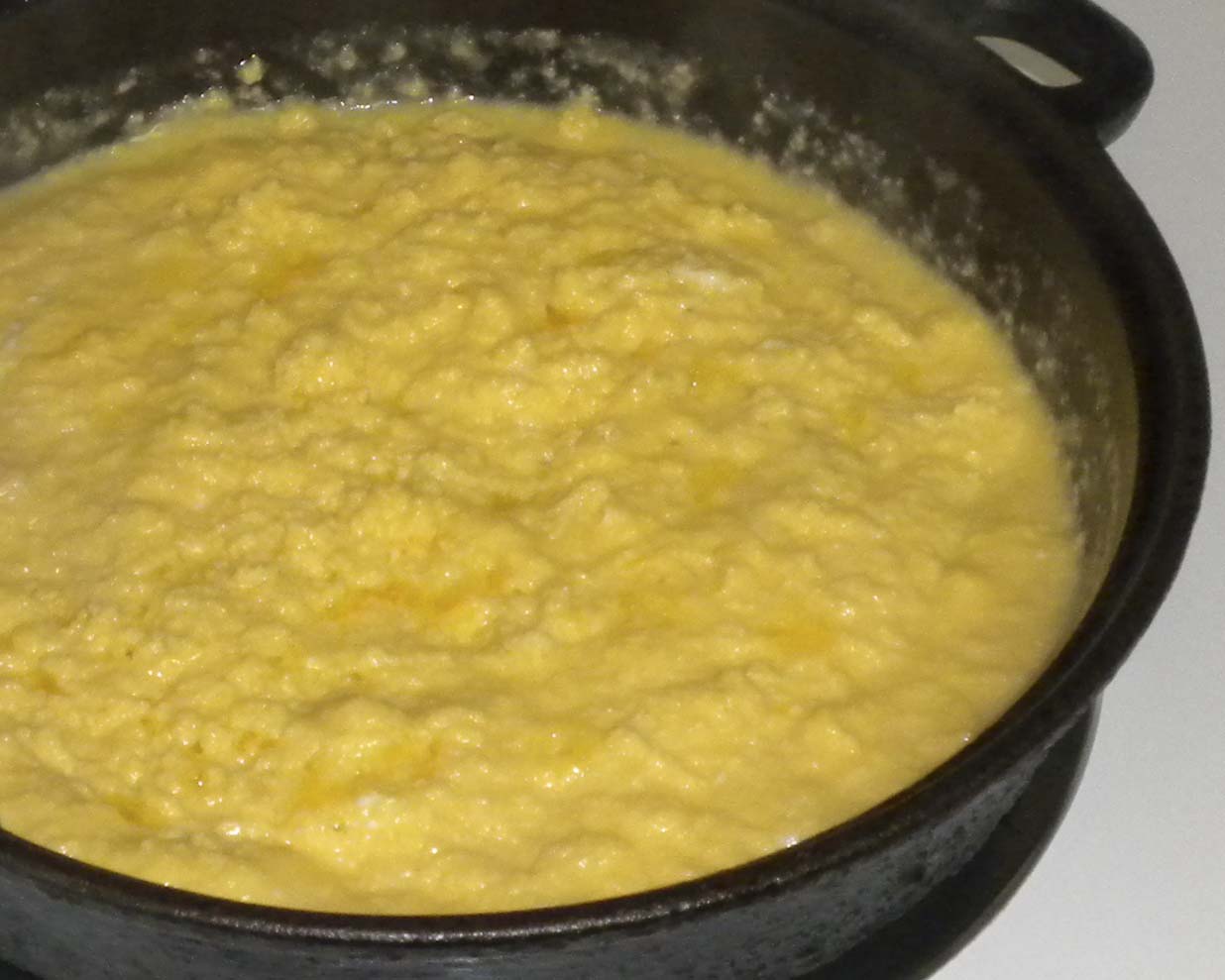
Ultimate Energizing Eggs
This just might be the most nutrient-dense egg dish I know.
This recipe was inspired by low-carb advocate Jimmy Moore. Jimmy is on a very unusual diet. He is eating only eggs, butter, and cheese. For each egg he eats, he has 1 tablespoon of butter and can have up to 1 ounce full fat cheese. Jimmy is using pastured eggs from a local farmer, pastured butter, and raw cheese. The amount of nutrients in each of these ingredients is huge, and combining them enhances their value even more. This diet has ignited a storm of controversy on the Internet, but Jimmy is fine with it. He has lost over 20 pounds in two weeks, and has been able to give up artificially sweetened diet soda for the first time in six years. He is full of energy and feels great. Jimmy calls this diet “eggfest.â€
I should mention that this diet was specifically designed for Jimmy by health care professionals, and he is being carefully monitored while on it. Obviously, this is a short term diet, not a permanent one.
I am not recommending or condemning this diet. I am doing fine with the Weston A. Price Foundation diet, and I am not about to give up my grassfed meat and fat.
But I do recommend this egg dish, which combines all the elements of Jimmy’s eggfest to create a nutritional powerhouse. This is a wonderful dish for breakfast, and I find it really energizes me. And it tastes very good indeed. The stirring is very important as it really combines all the ingredients well. It may look like ordinary scrambled eggs, but wait until you taste it!
Here is a link to my podcast interview with Jimmy Moore:
Stanley Fishman Cooks Grassfed Meats the RIGHT Way!
Ultimate Energizing Eggs (The Jimmy Moore)
4 pastured eggs
4 ounces raw cheddar cheese, full fat
4 tablespoons pastured butter
- Chop the cheese into very small pieces.
- Break the eggs into a bowl and mix well with a fork.
- Add the cheese to the eggs and mix well.
- Heat the butter in a medium sized skillet over medium heat until the butter melts.
- Add the egg/cheese mixture to the butter and start stirring the mixture in a clockwise direction with a fork as it cooks.
- Continue to cook and stir until the eggs set. They should set within a few minutes and look just like the photo of the recipe.
Serve and ENJOY!
This post is part of Real Food Wednesday Blog Carnival for March 31, 2010 at Kelly the Kitchen Kop.
How Grassfed Meat Helps Weight Loss
By Stanley A. Fishman, author of Tender Grassfed Meat
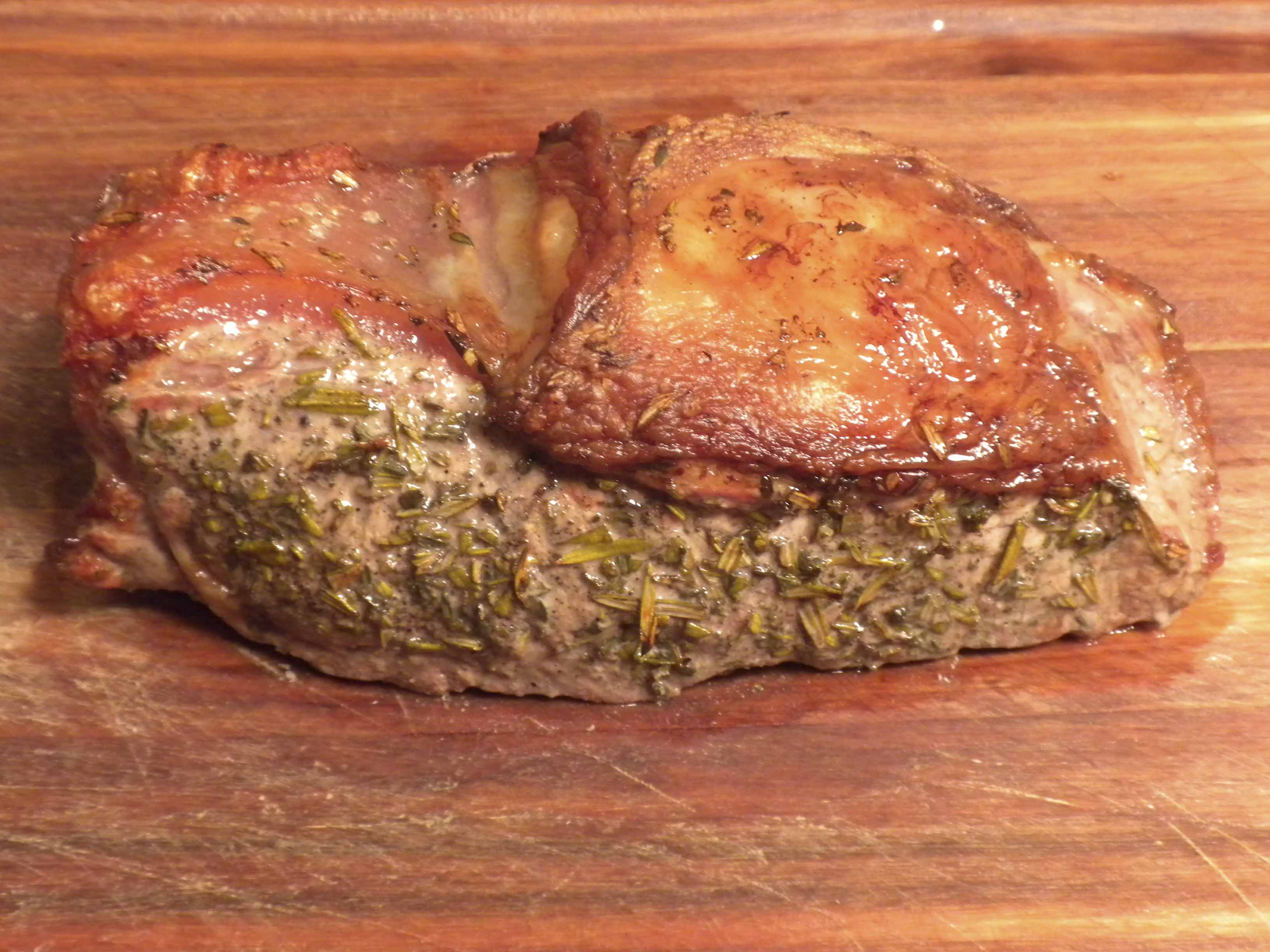
Strip Loin Roast with Double Herb Crust, recipe on page 94, Tender Grassfed Meat Cookbook
Very few people think of grassfed meat and fat as a diet food. But eating grassfed meat and fat can satisfy your appetite so you eat less, stop your body from storing fat, and get your body to start burning fat. Grassfed meat and fat also give you many vital nutrients that you might not otherwise get while dieting. Most of the nutrients are in the fat. To paraphrase the title of one of my favorite books, you eat fat to lose fat. But it must be the right kind of fat—grassfed.
Where is the Fat?
The fat in meat is in two places, the exterior fat, which can be seen as a distinct slab on the top or side of the meat, and the interior fat, which is actually in the meat itself, often visible as small white specks (sometimes referred to as marbling).
Grassfed Meat is Different than Other Meat
The actual composition of grassfed meat is very different from that of conventional meat. Conventional meat has been fed large amounts of grain and other substances which are not the natural food of grassfed animals. This creates many changes in the meat, only some of which are known. For example, conventional beef fat has a much lower ratio of omega-3 fatty acids to inflammatory omega-6 fatty acids than grassfed beef fat. The ratio of omega-3 to omega-6 in conventional beef fat is often 1-20. The ratio of omega-3 to omega-6 in grassfed beef fat ranges from 1-1 to 1-4. Conventional meat did not exist prior to the 20th century. Grassfed meat has been nourishing humanity for uncounted thousands of years.
The Benefits of CLA
CLA, or Conjugated Linoleic Acid, has many benefits for someone who is trying to lose weight, as well as everyone else. CLA is abundant in the fat and meat of grassfed animals, and is easily absorbed in this form, making it available for your body to use.
- CLA normalizes thyroid function, so your thyroid produces substances which help normalize your weight, while avoiding the weight gain which often results from hyperthyroidism.
- CLA increases your metabolic rate, so your body burns more calories.
- CLA actually signals your body to stop storing fat, and to start burning it.
- CLA increases muscle mass while decreasing fat.
- CLA decreases abdominal fat.
Grassfed Meat and Fat Satisfy Your Hunger by Nourishing Your Body
One of the hardest things for anybody on a diet is to eat less, or to give up foods that you are used to eating. The constant hunger can make it very difficult to lose weight. The main reason for most hunger is very simple. The body is not getting the nutrients it needs, so it wants to keep eating until it has what it needs. The problem is that modern foods do not contain all the nutrients your body needs, so eating them does not satisfy hunger.
Grassfed meat and fat are nutrient-dense, containing many of the nutrients we know about, such as vitamins D and A, most B vitamins, vitamin E, many minerals, most amino acids, the proper ratio of omega-3 to omega-6 fats, and high quality protein. Grassfed meat and fat also contain nutrients which have not yet been discovered, but which your body still needs. Your body is ready, willing and able to absorb the nutrients in grassfed meat, as your ancestors have been eating this meat for thousands of years and longer.
Grassfed meat is much denser and less watery, and it satisfies. When you eat a properly cooked serving of grassfed meat and fat, your body is nourished, you are satisfied, and the hunger disappears. I eat about half as much meat since I switched to grassfed, and I am satisfied. When my hunger is satisfied, I lose all desire to eat.
Grassfed meat and fat can really help any dieter, especially the low carb dieter, as grassfed meat and fat are allowed on such diets.
A very good book on weight loss is Eat Fat, Lose Fat: The Healthy Alternative to Trans Fats by Sally Fallon and Mary Enig, PhD. Two great books that really support the low-carb dieter are: LIVIN’ LA VIDA LOW-CARB: My Journey From Flabby Fat to Sensationally Skinny in One Year and 21 Life Lessons From Livin’ La Vida Low-Carb: How The Healthy Low-Carb Lifestyle Changed Everything I Thought I Knew by Jimmy Moore.
Podcast Interview about Grassfed Meat

Low-carb expert and advocate, Jimmy Moore, interviews me on the Livin’ La Vida Low-Carb Show. We talk about all things grassfed—cooking, health, and nutrition. I really enjoyed the interview and think you will too. Here’s a link to the podcast:
Stanley Fishman Cooks Grassfed Meats the RIGHT Way!
Who Was Weston A. Price?
By Stanley A. Fishman, author of Tender Grassfed Meat
Who was Dr. Weston A. Price? He was the man who saved my life and restored my health even though he died before I was born.
Dr. Price was a dentist in Cleveland, Ohio. He was a very distinguished dentist who was also the research director of the American Dental Association. After many years of practice, Dr. Price realized that the teeth and health of his patients were getting worse from year to year. Even more disturbing was the fact that each generation of his patients had worse teeth and was sicker than their parents. Dr. Price decided to find out why.
The Question
After several years of research, Dr. Price decided that the problem was caused by the absence of some essential factors from the modern diet. But he did not know what those factors were. Dr. Price did know that many so-called primitive peoples had excellent teeth. In fact, these “primitives†had much better teeth than the “civilized†peoples who had far superior technology. Dr. Price decided to study those people who had excellent teeth.
The Search
Dr. Price decided to travel directly to where these healthy people lived, so he could study them first-hand and learn why they were healthy. Dr. Price traveled all over the world during the 1920s and early 1930s. He visited isolated, healthy people from Switzerland, the Scottish islands, Australia, Africa, Polynesia, Peru, Native Americans in Canada, and others. He also studied the close relatives of each of these peoples, who were not isolated and lived in more “civilized†circumstances.
The Answer
In every case, Dr. Price learned that the traditional people who ate the diet of their ancestors, which consisted of unprocessed foods, from hunting, gathering, herding, fishing, and natural farming had excellent teeth, without cavities, even though they had no dentists. Not only did these people have excellent teeth, they were free of the chronic diseases that were common in civilization. They did not have cancer. They did not have heart disease. They did not have diabetes. They did not have tuberculosis. They had none of the chronic diseases that plagued the so-called civilized world. They also did not have crime or mental illness. They had no need for police or psychiatrists. Their children were born healthy, without defects. Dr. Price also found that members of the same group of people, when they ate a modern diet, had terrible teeth and were plagued by every one of the chronic diseases that were common in more advanced countries. The only difference was what they ate.
The Solution
Dr. Price discovered that the key to good health is to eat a traditional diet of unprocessed food, and to eat the same kinds of foods that the healthy, isolated people ate. Dr. Price discovered that while the diets of these widely scattered peoples were quite different, they had many elements in common. Dr. Price discovered what these elements were, especially the dietary factors that were essential to good health. He recorded his findings in a book entitled Nutrition and Physical Degeneration, which was published in 1939. This book described exactly what people should and should not eat in order to be healthy.
Ignored and Rediscovered
Unfortunately, Dr. Price’s work was largely ignored. However, his work was preserved by the Price-Pottenger Nutrition Foundation, which devoted itself to keeping his book in print, and keeping his knowledge alive. The Weston A. Price Foundation was founded in 1999. They have done a magnificent job of spreading Dr. Price’s knowledge all over the world and the Internet. Sally Fallon, the founder of the Weston A. Price Foundation, wrote Nourishing Traditions: The Cookbook that Challenges Politically Correct Nutrition and the Diet Dictocrats, a comprehensive cookbook which teaches the reader to cook traditional food that can restore their health. Nourishing Traditions also explains the teachings of Dr. Price in a way that is easy to understand.
How Weston A. Price Saved My Life
I had been chronically ill for most of my life with many illnesses, including life-threatening asthma. I was told in 1998 that I would only get worse, and that my lungs would never heal. Instead of accepting this medical death sentence, I searched desperately for a way to save my life. The website of the Weston A. Price Foundation gave me all the knowledge I needed. I adopted the Weston A. Price diet and became healthy. Once I switched to grassfed meat, I became robustly healthy. If not for Dr. Price, I do not believe I would be here today to write these words.
You can find out more about Dr. Price here.
A Plea for Naturally Fed Pork
By Stanley A. Fishman, author of Tender Grassfed Meat
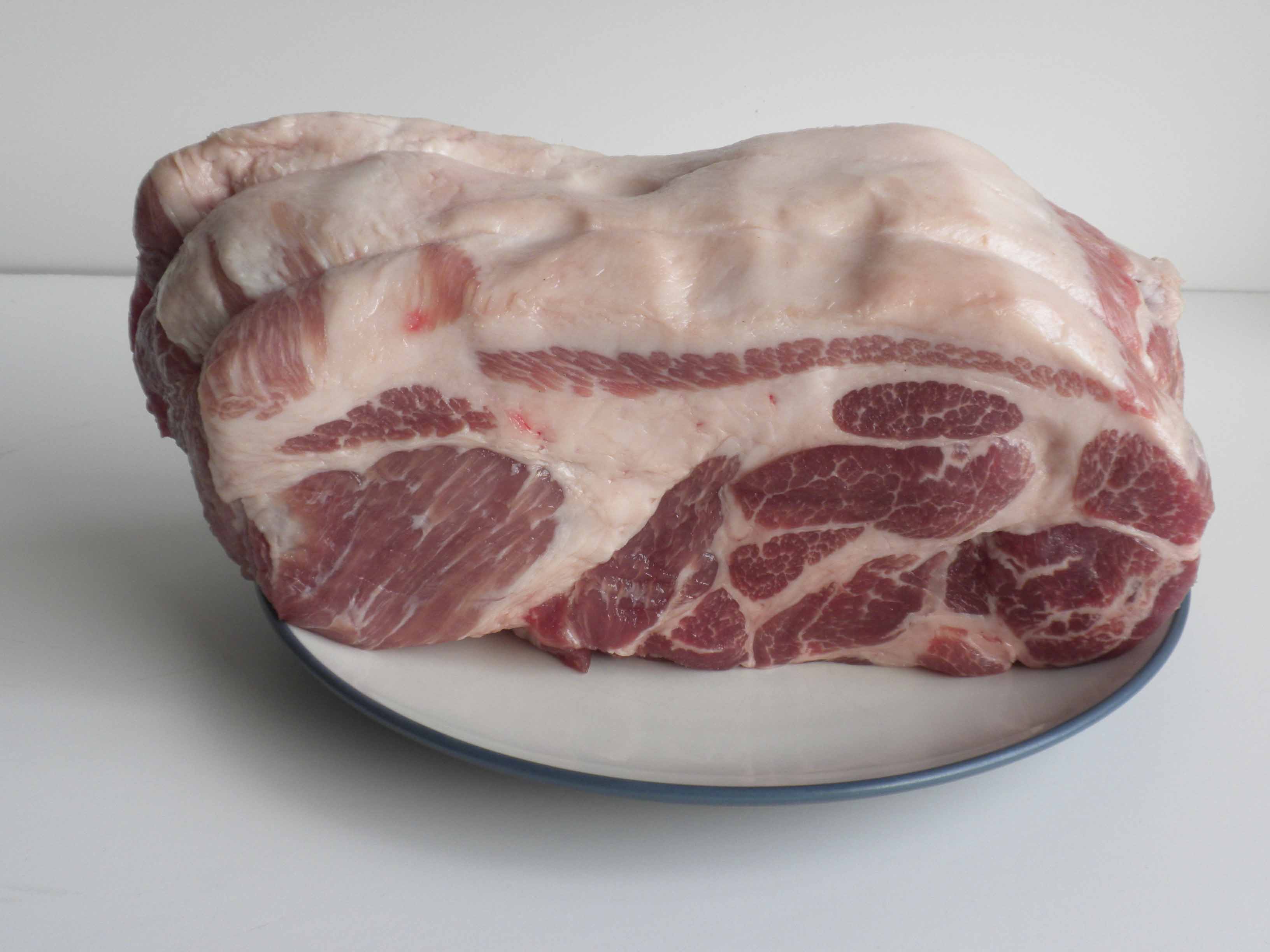
This became a delicious pork roast.
Why didn’t you include pork in your book? That is the most frequent question I get about Tender Grassfed Meat. The answer is simple. It is very hard to find pork that has enough fat. And it is even harder to find pork that is not fed a substantial amount of soy. Lean pork needs a lot of help or it invariably turns out dry and tasteless. Even with a lot of help, it is hard to do better than mediocre, which is not good enough. Soy fed meat is something I try to avoid. The problems are interrelated, because feeding soy to pigs makes their meat leaner. That said, naturally fed, fat pork is one of the most delicious meats you will ever eat.
The Popularity of Pork
Pork has historically been one of the most popular and widely eaten meats. The ancient Greeks, Romans, and Chinese had one thing in common. They all loved pork, which was their favorite meat. Pork was also the favorite and most widely available meat in Europe, and Polynesia. The Georgians of the Caucasus, a people famed for their longevity, love to eat pork, the fatter the better. Pork was without doubt the favorite meat in America, until the 20th century.
The Natural Diet of Pigs
Pigs are omnivores, who will eat anything. Pigs are forest animals, and their natural diet was based largely on nuts, fruits, and seeds that fell to the forest floor, as well as insects. Pigs used to be raised around forests, which allowed them to feed on the nuts of various trees, such as acorns and beechnuts, (also known as mast). When the forest wasn’t available, pigs were often fed surplus crops, table scraps, and nut crops such as peanuts. Both of these diets made it easy for the pigs to get fat, which gave their meat succulence and kept it from drying out. Pigs fed on mast had a particularly fine flavor, often varying depending on the predominant tree in the area. For example, acorn fed pork had a different flavor from beechnut fed pork. However, pigs fed crops, such as peanuts and apples, also had plenty of fat, and a wonderful flavor based on the crops they were eating. Smithfield hams, which were made from peanut fed pork, were renowned for their fine flavor all over the world. The taste of the pork was heavily influenced by the diet of the pigs.
Soy Rears Its Ugly Head
The wonderful quality of American pork was destroyed by an event and a new kind of feed. The event was the advent of the so-called lipid hypothesis, which claimed that heart disease was caused by eating saturated animal fat. This hypothesis was never proven, but was accepted as fact, first by the manufacturers of vegetable oils and artificial fats, then by the marketing influenced medical profession, then by the government, then by the media, and then by almost everybody else. Since the pork of the time had a good amount of fat, (which is one of the main reasons it tasted so good), pork sales plummeted. The pork industry decided to greatly reduce the fat in pork. They learned that feeding soy to pigs would make the meat much leaner. Soy feed was very cheap. They also bred pigs for leanness. The pork industry succeeded in developing much leaner pork—pork that was so lean that they compared it to chicken breasts. This “success†is the reason that most American pork is lean, dry, tough, and tasteless. It takes a great deal of work to make this pork even mildly tender and tasty.
The Difference
On a very few occasions, I have been lucky enough to eat pork that had the traditional amount of fat, and was not fed soy. This meat was so tender and delicious that it is hard to believe it is even remotely related to soy fed lean pork. I truly believe that soy feeding ruins the taste of pork.
A Request to Farmers
I ask you to make good, fat, naturally fed, soy-free pork available again. I think you will find that there is a great market for this product. There are so many of us that want to get soy out of our diet. If you will make quality pork available, I will recreate recipes for this pork that will do it justice. That’s a promise.
This post is part of Real Food Wednesday Blog Carnival at Kelly the Kitchen Kop.
Why I Eat Organic or the Equivalent
By Stanley A. Fishman, author of Tender Grassfed Meat
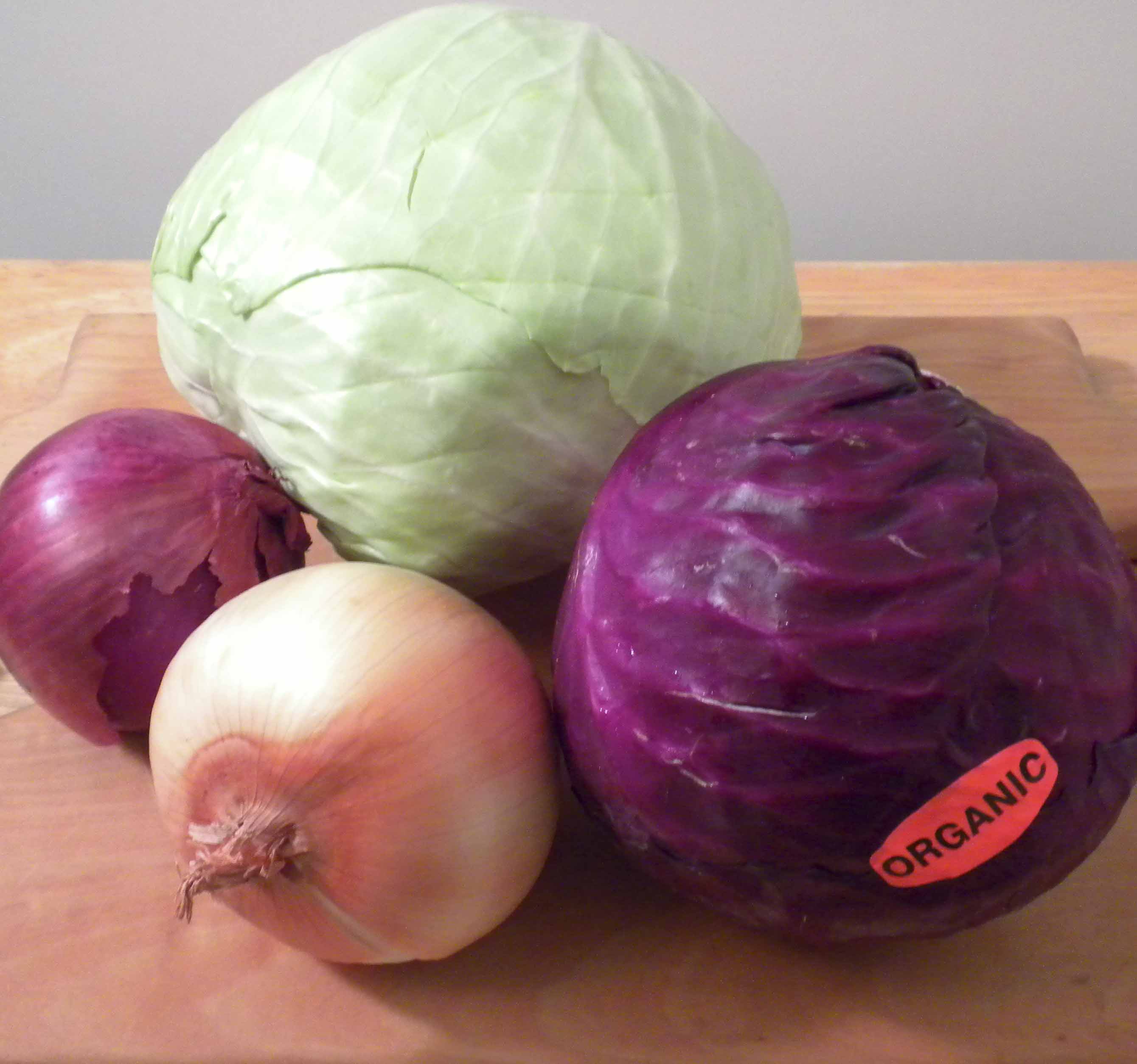 I strongly recommend the use of organic ingredients in Tender Grassfed Meat. The reason is simple. I want to eat the most nutritious food I can, and the tastiest food I can. Dr. Weston A. Price discovered that people eating the traditional diet of their ancestors were healthy. All of the food contained in these traditional diets was organic or the equivalent. My health was restored by trying to copy the diets described by Dr. Price. After I restricted my diet to organic or the equivalent, I learned something. The food tasted better — much better.
The human body is made to process natural, unaltered food.
The methods that the human body uses to sustain, nourish and rebuild itself are many, and very complex. Nutrients are not processed in isolation, but together. For example, it is now known that an oversupply of one B vitamin can actually cause a deficiency in other B vitamins, because the body is set up to process these nutrients together, the way they are present in food. When you get your nutrients from unaltered food, everything is present that is needed to fully assimilate the nutrients. Our ancestors learned which foods were good to eat, and all of the nutrients and cofactors in those foods are necessary to properly assimilate the nutrients. Our ancestors also learned to combine foods to ensure proper nutrition. While they could not identify specific vitamins, minerals, amino acids, and fatty acids, they knew what to eat. This knowledge was passed from generation to generation, over thousands of years.
Non-organic foods are altered and different from traditional foods.
Modern food raising practices have altered the very chemistry of food. For example, feeding grain and other non-grass substances to cattle change the balance of omega-6 to omega-3 fatty acids dramatically, from one to one to twenty to one. When you eat meat from an animal made to eat grass, your body expects the food to have the proper ratio of omega-6 to omega-3. When the meat does not have the proper ratio, your body is not getting what it is ready to process. We do know that an excess of omega-6 fatty acids can cause inflammation and a host of illnesses.
Vegetables that are sprayed regularly with pesticides, which they absorb, are different from the vegetables humankind has eaten for most of history. Artificially fertilized soil lacks many of the nutrients and minerals present in naturally rich soil, and food grown with artificial fertilizers is different from food grown in naturally rich soil. This forces your body to process substances that either have never existed before (artificial chemicals and pesticides), and/or lack the substances the body expects to find in the food, which may be necessary to properly process and assimilate the nutrients.
GMOs did not exist in nature, and were not eaten by our ancestors.
None of the healthy peoples studied by Dr. Price ever ate GMOs (Genetically Modified Organisms), because GMOs did not exist at the time. GMOs are plants that are changed in a laboratory, sometimes having insect genes and other foreign components added to them. This once again presents your body with substances that it does not expect. Most GMO crops are designed with an internal pesticide, or designed to absorb and tolerate huge amounts of pesticides, amounts that might kill a normal plant. The presence of these pesticides in the crops once again forces your body to deal with a substance it does not expect, or know what to do with.
Modern science has identified only some of the nutrients and cofactors needed by our bodies.
Scientists keep discovering new nutrients as time goes on, from vitamin K2 (which used to be unknown), omega-6 and omega-3 fatty acids, which were also unknown decades ago, and a number of other substances. Vitamin K2, omega-6 and omega-3 fatty acids all are very important nutrients. The point is that there are dozens, maybe hundreds of nutrients and substances necessary to process nutrients that are currently unknown. Since conventional agricultural practices change the very chemistry of food, it is impossible to know what nutrients are altered or missing, since so many nutrients have not even been discovered.
How to get all the nutrients and cofactors.
How can we get all of the nutrients and cofactors we need, if science has not identified all of them? The answer is very simple and I know it works because I have done it. Eating the nutrient-dense food enjoyed by our ancestors will give us all the nutrients and cofactors we need. Foods that are organic or the equivalent are the closest we can get to the food that was actually eaten by our ancestors.
What is the equivalent of organic?
The phrase “organic or the equivalent†is often used. “Equivalent†means food that has been raised according to organic food practices, but has not been certified organic by an authorized agency. The food is the same, it just doesn’t have the stamp of approval, which can be quite expensive and time-consuming to obtain. Food meets my definition of “organic or the equivalent†if it is raised without the use of pesticides, artificial fertilizers, chemicals, or ionizing radiation. It cannot be GMO. Animals must be raised without the use of growth hormones or antibiotics. I add another requirement to the meat that I eat. The food that is fed to the animals must be species appropriate, meaning that it is very similar to the natural diet of the animal. For ruminant animals, such as cattle, bison, and lamb, this means 100 percent grassfed.
Organic food tastes much better.
There is another benefit to using ingredients that are organic or the equivalent. They will make your food taste much better. Vegetables grown in good soil, without the use of pesticides or artificial fertilizer, have much more flavor. You can really taste this when you use a recipe that has only a few ingredients. Organic spices grown in good soil that contains the full range of minerals and nutrients have a depth of flavor that is far superior to the conventional varieties. The meat of grassfed animals who have eaten lush, green grass, grown in good soil has a deep, wonderful flavor that no feedlot meat can equal.
I eat organic or the equivalent because it is healthier and tastes better.
This post is part of the blog carnival: Fight Back Friday. Click here to read more great posts at FoodRenegade.com
« Previous Page — Next Page »