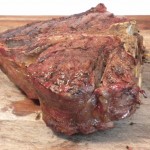
 Photos of recipes from the new book Tender Grassfed Barbecue
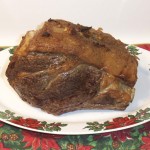 Photos of recipes from the cookbook Tender Grassfed Meat

Grassfed Bone Broth—The Traditional Mineral Supplement
By Stanley A. Fishman, author of Tender Grassfed Meat
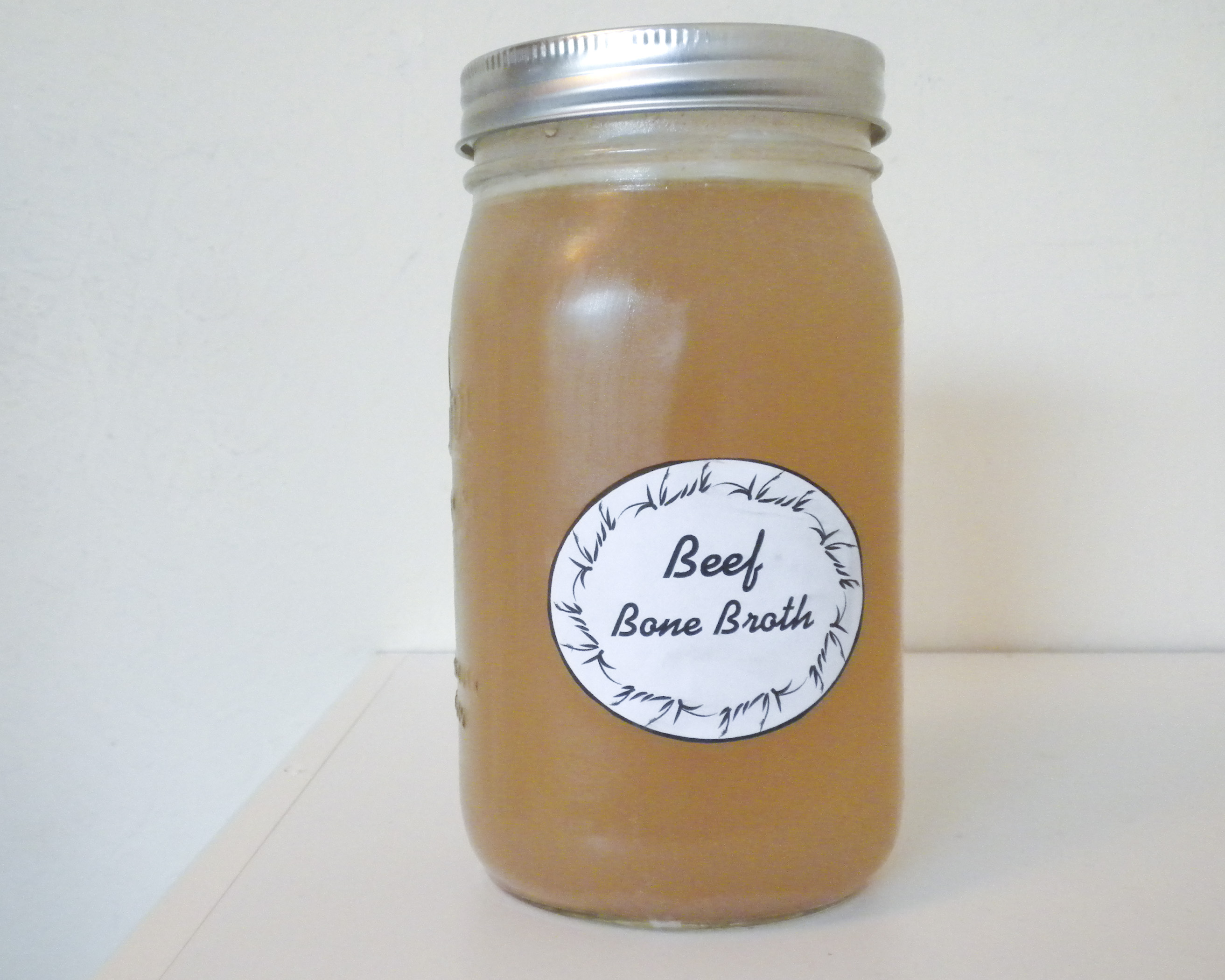
Beef bone broth made from nutrient-rich grass fed beef.
Traditional peoples did not have the ability to purchase mineral supplements. Instead, they had something far better—bone broth. A soup made from the bones, sinew, and meat of grassfed animals.
These people had no scientists to identify and classify the minerals, or to come up with “minimum daily requirements.†Instead, they had something far better. A tradition of simmering the bones, sinew and meat from animals for many hours, and drinking the mineral-rich broth every day, getting everything needed to fully assimilate and use the minerals.
Just about every traditional people used bone broth.
Bone broth is not hard to make, though it must simmer for many hours for the nutrients to be released into the broth. Tender Grassfed Meat contains a number of recipes for traditional bone broth.
Bone broth is still the best and most natural way to ingest minerals and other vital nutrients. We can still get the bones, meat, and sinew to release their nutrients into the broth by simmering for many hours. However, it is vital to make broth from nutrient-rich bones, meat, and sinew. Which is why I make all my broths from the bones, sinew, and meat of grassfed or pastured animals.
The Magic of Bone Broth
We need many minerals to have healthy bones, and to support the proper functioning of our bodies. The bones and sinew of meat animals contain just about all of these minerals. However, the minerals are locked into the bones. Our ancestors found that the best way to get the nutrients out of the bones was to make a broth that would simmer for many hours. Water is a solvent, very good at getting things to dissolve. Simmering water is even better. The sinew and meat that cling to the bones also contain many beneficial nutrients, which are also released into the broth by long simmering.
The nutrients in broth are easily absorbed by the body, and you get the full range of nutrients. Human beings have drunk bone broth for many thousands of years, and our bodies have evolved to easily absorb the nutrients in broth.
The use of bone broth, from the bones of grassfed or pastured animals, or from wild fish, is universal among traditional cultures. Just about every people knew of the nutritional power of bone broth. Broth was a universal remedy for illness used by just about everybody.
Good Soil, Good Bones
It is important to realize that bones cannot release nutrients that are not there in the first place. The animals used for the broth should have been raised on good soil, so the animals got the nutrients that they needed for healthy bones. The animals should also have been fed their natural feed, grass.
Unfortunately, the nutrient content of soil, plants, and animal foods has been steadily declining because of the unnatural practices of industrial agriculture, which deplete the soil of many important nutrients. Industrial agriculture also gives species-inappropriate feed to meat animals, which often has an adverse effect on the nutritional value of the animal.
Grassfed animals, raised on good soil, have healthy bones loaded with nutrients, and are the best choice for bone broth. Grassfed bones also make the broth taste much better.
My family has some homemade bone broth every day. The broth tastes so good, and feels so right as it is slowly sipped and absorbed. Grassfed bone broth is a nutritional treasure.
Related Post
Smelt Soup for Natural Iodine
This post is part of Real Food Wednesday, Fight Back Friday and Monday Mania blog carnivals.
I Am Grateful for Grassfed Meat and Real Food
By Stanley A. Fishman, author of Tender Grassfed Meat
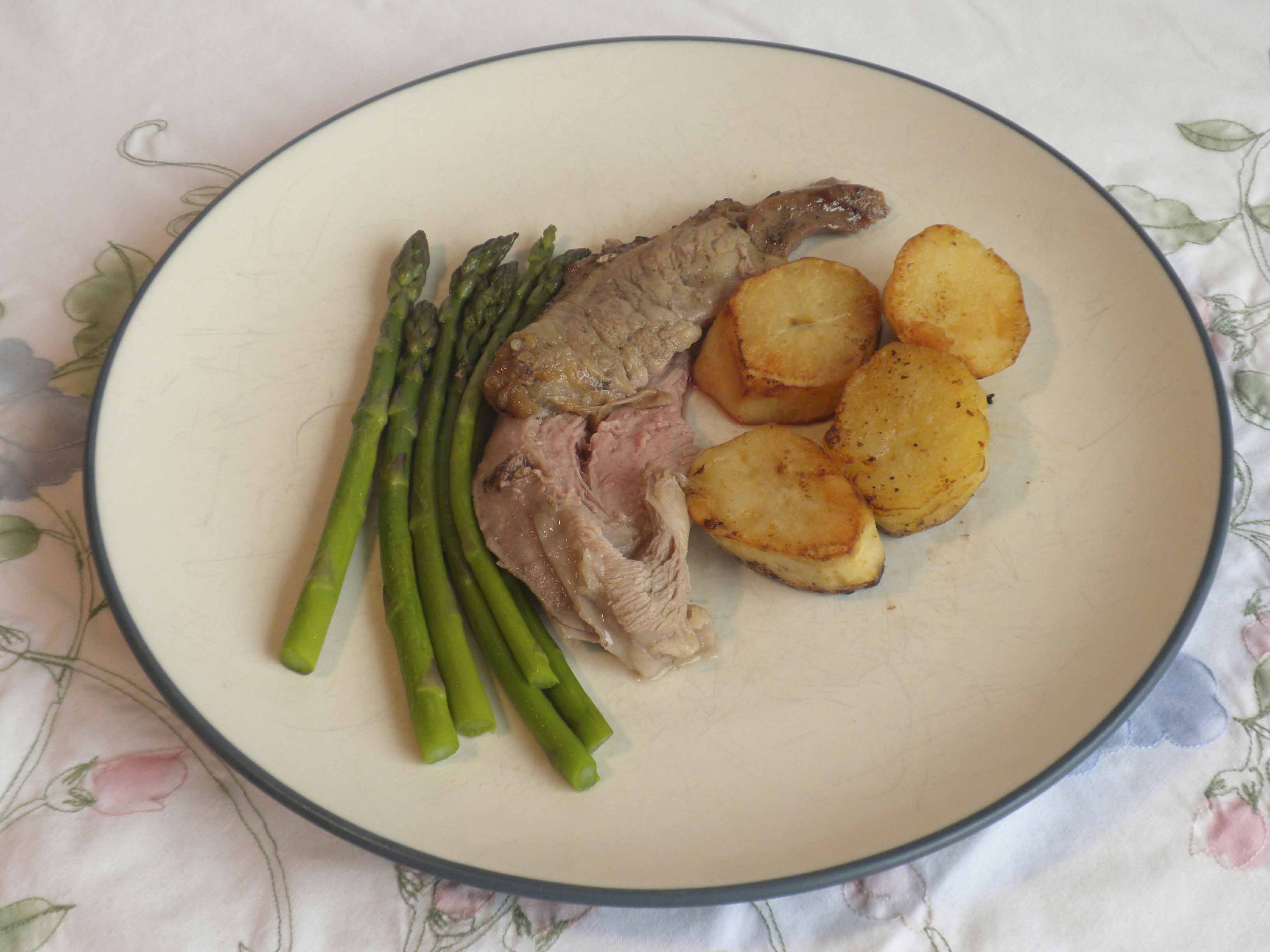
Roast grassfed Spring lamb with organic asparagus and potatoes.
I am grateful for grassfed meat and real food. Thanks to the ranchers and farmers who raise real food. Thanks to those who spread the truth about food.
I was sitting quietly last night, thinking about my life. The life that was supposed to have ended eight years ago. The life that is free of pain and illness. The life that is drug-free, medication-free, doctor-free, and symptom-free. The life that is full of joy and love and purpose. The life that is full of wonderful, delicious, nourishing food, the food that made life itself possible.
And I thought about the people who spread the word, giving me the knowledge that saved my life and made the health and joy I experience every day possible.
I am deeply grateful to those who raise the food, and to those who spread the word.
From There to Here
As discussed in detail in the “About†section on this website, I was very ill for most of my life. After getting a medical death sentence in 1998, and being told I had no more than five years left, I realized that the medical profession could not help me. I searched for another way, and found the teachings of Dr. Weston A. Price, as demonstrated and presented by the Weston A. Price Foundation.
My path to health was nothing more or less than eating the right food, and avoiding the wrong food. The right food is the unmodified food eaten by our ancestors, designed by nature to make us strong and keep us healthy. The wrong food is modern factory food and artificial ingredients, designed by greedy men to make money.
The right food includes the meat and fat of grassfed animals, pastured animals, wild fish, and vegetables grown in good soil, without chemicals. The right food also includes traditional foods like butter, full fat cheese, pastured eggs, unmodified and unprocessed milk, fermented foods like sauerkraut and other lacto-fermented vegetables, organ meats from grassfed or pastured or wild animals, and many other traditional foods. The right food is demonized by the government, the media, the medical profession, the drug industry, industry, the educational system, and big agriculture.
Why do they demonize the food we need to thrive and be healthy? Because people who eat the right food and avoid the wrong food have little or no need for doctors, drugs, or industrial agriculture.
When I avoided the wrong food and ate the right food: my health returned, as did my eyesight, sense of smell, energy, joy of life, enthusiasm, and many other qualities associated with youth. Last night, I enjoyed a wonderful feeling of total well-being, health, and contentment—at age 59.
None of this would have been possible without two very wonderful groups of people. Those who spread the word and those who raise the food.
Thanks to Those Who Spread the Word
My first thanks goes, with all my heart, to Dr. Weston A. Price. Dr. Price spent 10 years traveling around the world to learn the truth about nutrition. He succeeded, and recorded his findings in Nutrition and Physical Degeneration, a book that explains and documents this truth. I am a living example of the truth of his teachings, as are many others. The last words of Dr. Price were not about himself, but his calling – “You teach, you teach, you teach!â€
My second thanks goes to Sally Fallon Morell, the founder and President of the Weston A. Price Foundation. Nobody has heeded the call of Dr. Price better than her. She made the teachings of Dr. Price far more understandable and accessible, posting a free library of nutritional truth at the Foundation’s website, writing a magnificent cookbook and nutrition resource entitled Nourishing Traditions, and selflessly spreading the teachings of Dr. Price throughout the world through the Foundation and her own travels. The website of the Weston A. Price Foundation gave me the knowledge I needed.
My third thanks goes to the many others who spread the teachings of Dr. Price, and/or other nutritional wisdom, often through blogging, writing books and articles, and giving seminars and lectures. The list of these people is just too long to include by name.
My fourth thanks goes to everybody who had the courage and wisdom to actually try real food, and to share their experience with their families, neighbors, and friends.
Thanks to the Ranchers and Farmers
Knowing what to eat is not enough. You have to be able to find the food. Raising real food is much more difficult and requires far more knowledge than raising factory food. My deep gratitude to all who raise grassfed meat and other real food, without chemicals, in accordance with the laws of nature.
I will thank those wonderful farmers and ranchers who raise the food eaten by my family, including John Wood and all the folks at U.S. Wellness, Glenn and Caryl Elzinga of Alderspring Ranch, Ed Wimble and his partners at Homestead Natural Foods, Reed Anderson of Anderson Ranches, Lee and Mary Graese of Northstar Bison, Leland Mora of Humboldt Grassfed Beef, Chris Kerston of Chaffin Family Orchards, the farmers at the Danville and Walnut Creek Farmers’ Markets, and everybody else who has had a part in raising the wonderful food we are so lucky to eat.
I owe my good health to two magnificent groups of people—those who spread the truth, and those who raise real food.
This post is part of Real Food Wednesday and Fight Back Friday blog carnivals.
Real Food, Wise and Robust Old Age
By Stanley A. Fishman, author of Tender Grassfed Meat

 photo credit: conner395. Inverness Castle in the Scottish Highlands, home of a healthy people.
Old people in modern times are considered weak, foolish, and helpless, unable to survive without care. Most people expect to be weak and helpless when they get old, and to end their lives in a “rest home.†We often read in the news media that young workers will have the burden of taking care of an aging population.
Yet this is a new and horrible way of aging. Through most of history, old age was associated with wisdom, strength, and leadership. Most older people who ate a traditional diet not only took care of themselves, but led their communities, taught the young, and were the repository of knowledge and leadership for their peoples.
What is the difference? Why did old age change from a time of wisdom and leadership to a time of failing minds, deteriorating bodies, and chronic illness?
What we do know is that people eating the healthy traditional diets of their ancestors, with little or no medical care, remained wise and strong into their nineties.
We also know that modern people eating the Standard American Diet (SAD) become helpless in their sixties and seventies and even younger, unable to care for themselves, needing all kinds of expensive medical care and procedures just to keep breathing.
In other words, real food is the key to a wise and healthy old age.
Traditional Old Age
Throughout most of history, old age was associated with strength and wisdom.
Age was considered a prerequisite for leadership, and younger leaders always had older advisors. Every village, from England to Africa to the Americas to Russia to India to China, and almost everywhere else, depended on a council of elders, who would make decisions for the whole village, based on their experience and knowledge. It was accepted that these old people were the only ones who had the knowledge and experience to make important decisions. The knowledge of childbirth, cooking, what was safe to eat, and healing was usually taught and administered by the older women, who were universally respected.
On a national level, many traditional societies had councils of elders who would make decisions for the whole nation or tribe.
It should be understood that old people eating traditional diets were not only much wiser, but much healthier physically. History has thousands of examples of people who were “old†but showed great physical prowess. A few examples:
Gebhard Von Blucher
He was a nobleman, growing up on the finest food his culture could provide, eating huge amounts of wild game and grassfed meat.
He commanded the Prussian Army at the battles of Ligny and Waterloo, in 1815. Blucher was 73 at the time. During the battle of Ligny, Blucher led a cavalry charge against the French. His horse was shot, throwing Blucher to the ground. The horse then fell on Blucher, pinning him to the ground. The opposing cavalry forces charged several times over the area, back and forth, which resulted in Blucher being repeatedly trampled by horses, sustaining many wounds from their hoofs. After the battle, the horse was pulled off Blucher. Blucher poured brandy on his many wounds and drank some, and recovered in a few hours. He reorganized his defeated army and led them to Waterloo, a couple days later, where the sudden appearance of his army on the French flank helped the Allies win the battle.
Malcolm Macpherson
He was a Highlander, growing up on a traditional diet that had not changed for thousands of years. At age 57, he took part in the rebellion of Bonnie Prince Charlie, and fought in the battle of Culloden in 1745, wielding a heavy broadsword. Macpherson blamed the French for the Highland defeat. When Britain went to war against France some years later, Macpherson joined a Highland regiment at age 70. He fought the French in North America, using his heavy broadsword so effectively in hand-to-hand combat that he was taken to England to meet the king.
It should be understood that the above examples of robust old people were not unusual, and old people were expected to carry their weight and take part fully in all the activities of life, no matter how difficult.
Dr. Weston A. Price studied healthy peoples eating the diets of their ancestors. The elders of these people kept their teeth and their eyesight, leading active productive lives without illness or doctors. They did not live in fear of chronic diseases like cancer and heart disease—these illnesses did not exist in their societies.
In fact, studies of the healthy peoples eating traditional diets have repeatedly found that most people remain healthy and productive into their nineties or even longer. They will usually slow down at some point, where they become consistently less active for a period of several months, then die in their sleep.
These healthy peoples ate plenty of fat from grassfed animals and wild game, fatty meats, seafood, organ meats, butter, all kinds of animal fat, organic fruits and vegetables, and did not touch modern processed foods.
Modern Old Age
Old age has become a time of sickness and horror for many people eating a modern diet. Most old people are on a number of prescription drugs, and eat a diet of refined foods that does not support the functions of their bodies. Most of them are impaired in their ability to do most things and many are completely unable to care for themselves. There is no wisdom in many of these people—many of them cannot remember what they said one minute ago.
Many cannot walk unaided, and have bones so brittle they break easily. Many have had one or more of their hips and or knees removed and replaced with an artificial construct. Many are emaciated, suffering from severe malnutrition, which makes all their symptoms worse.
Many live each day in a mental fog, and do nothing useful with their time. Many have actually shrunk in size, as their bones deteriorate and collapse. Many have lost all their teeth, and rely on dentures. Many start to die as their organs stop working, suffering from problems with their hearts, livers, kidneys, digestive systems, and just about everything else.
Every function of our bodies requires proper nutrition in order to work effectively. When our bodies are starved of the vital nutrients we need, our bodies deteriorate. The longer we are starved, the faster and more serious the deterioration.
We are told that this deterioration is the inevitable result of old age. However, it appears to be a result of decades of malnutrition on the nutrient-poor modern diet of dead, refined foods.
History and the great research of Dr. Price have shown us that a diet of real, traditional food can save us from this horror. The Dietary Guidelines of the Weston A. Price Foundation are a great place to start.
Related Posts
Eat Fat, Live Long—the Real Food of Okinawa
Call It Medical, Not Mediterreanean
This post is part of Real Food Wednesday, Fight Back Friday and Monday Mania blog carnivals.
Eat Fat, Live Long—the Real Food of Okinawa
By Stanley A. Fishman, author of Tender Grassfed Meat

You may have heard about the longevity and health of the Okinawan people. According to records kept by the Japanese since 1879, the people of Okinawa just may be the longest-lived people in the world, often staying healthy and active into their nineties, or even longer.
Many have claimed that this longevity and health is due to a low-fat, meat-free, high-vegetable diet. Being skeptical of such claims, I researched traditional Okinawan cooking and traditions.
My skepticism was justified, as it usually is. The long-lived, healthy people of Okinawa eat a diet that is heavily based on meat. Mostly pork. Mostly fat pork. The main cooking fat is pork lard. Many foods are fried in pork lard. The Okinawans traditionally do not rely on doctors when they get ill, but on food-based remedies consisting of—pork organs. In fact, pork is so vital to Okinawan culture that Okinawans often refer to their land as the “Island of Pork.â€
The real lesson of Okinawan longevity is “Eat fat, live long.â€
The Real Food of Okinawa
Okinawan cuisine is centered around meat. The most important meat is pork. The Okinawans have a saying, that they use every part of the pig except for the toenails and the squeal. Many of the pork parts eaten are composed almost entirely of fat, such as pork skin, pig ears, and pork belly. All the internal organs of the pig are regularly eaten, such as the liver, kidneys, stomach, and intestines, which are also full of fat. Pork lard is the fat of choice for cooking, and many foods are deep fried in pork lard. Every other part of the pig is also eaten, including more familiar parts like spareribs, pork shoulder, and pork loin. The skin is usually left on and eaten whenever possible.
Goat is also favored by Okinawans, though pork is far more common. What is interesting is that much of this goat meat is eaten raw, and there are restaurants that specialize in the preparation of raw goat meat.
Traditionally, the Okinawans ate very little grain, which used to be sold to pay taxes. Sweet potatoes are a common and favorite food, as are cabbages, carrots, and other vegetables. Vegetables are always cooked, often fried in pork lard.
The Okinawans do eat tofu, but the tofu they eat is different. It is made differently from the rest of the tofu in the world, and is often naturally fermented for several months. Unfermented tofu is often deep fried in pork lard. One of the most common Okinawan dishes is a stir fry made out of pork, vegetables, and tofu, fried in pork lard. It is possible that the protective factors in the pork lard prevent the harm that often occurs from eating soy.
Miso, another fermented soy product, is also used as a seasoning.
Okinawans do not eat that much seafood, which is surprising given that Okinawa is a relatively small island. The explanation is that Okinawa has a tropical climate, and fish spoil very quickly. The island has very rugged terrain, which made it difficult to transport fish before they spoiled. Fish are fermented and made into sausages, which form a small, but important part of the diet.
Most Okinawans do not eat western-style processed and refined foods, though a small amount of brown sugar is used in cooking.
Okinawan Healing with Food
Traditionally, Okinawans had no medical doctors, but relied on food to heal themselves. This system was based on the organs of animals, usually pigs, but often goats. The traditional belief was that disease was caused by an imbalance in an organ, and the imbalance could be corrected by eating the corresponding part of an animal. Someone with breathing difficulty would eat the lungs of a pig. Somebody with a hearing problem would eat the ears. Someone with a digestive problem would eat the stomach of a pig, and/or the kidneys, and so on.
This system is not unique to Okinawa. It was followed by many traditional peoples, including the Native Americans, and by many Western M.D.s before prescription drugs became the remedy of choice.
This system worked so well that many Okinawans still follow this tradition, and do not seek medical help. This may actually contribute to their longevity, because the side effects of the drugs and surgeries used by modern medicine cause the death of many people.
The Real Okinawan Food Is Consistent with the Research of Dr. Weston A. Price
Dr. Weston A. Price spent 10 years studying the diets of the last healthy peoples on Earth. These peoples were free of the chronic diseases that plague the modern world. Dr. Price did not just read studies, he actually traveled right to the people he studied and observed them personally. Dr. Price found a number of similarities in the diets of these people:
- They ate a large amount of animal fat.
- They ate a substantial amount of meat and/or seafood.
- They ate a large amount of organ meats regularly.
- They ate some of their meat and/or seafood raw.
- They ate many kinds of natural foods, unrefined and unprocessed.
- They ate a number of naturally fermented foods.
- They ate at least a small amount of seafood, fermented if they could not get it fresh.
All of these factors are present in the real Okinawan food.
- The Okinawans eat a great deal of pork fat.
- The Okinawans eat a substantial amount of pork and goat.
- The Okinawans eat organ meats regularly.
- The Okinawans eat raw goat meat.
- The Okinawans eat most of their food unrefined and unprocessed.
- The Okinawans eat a number of naturally fermented foods.
- The Okinawans regularly eat a small amount of fermented seafood.
In summary, the diet of the Okinawans is very similar to the diet of the healthy peoples studied by Dr. Price. The longevity of the Okinawan people is further evidence of the benefits of the diet developed by Dr. Price.
Related Posts
Call It Medical, Not Mediterreanean
This post is part of Real Food Wednesday , Fight Back Friday and Monday Mania blog carnivals.
The First Low-Carb Doctor—2500 Years Ago!
By Stanley A. Fishman, author of Tender Grassfed Meat

photo credit: bazylek100
Dr. Robert Atkins is credited (or blamed) for creating the low-carb diet. But Dr. Atkins was not the first to advocate a high-fat, high-protein, low-carb diet for losing weight.
The father of medicine was also the father of low-carb. Hippocrates of Kos, the most famous and honored doctor of all time, known as the “Father of Medicine†was the first to advocate a low-carb diet for losing weight.
Who Was Hippocrates?
Hippocrates was born in the middle of the fifth century before Christ. He revolutionized the practice of medicine in ancient Greece. At that time, there was a conflict in Greek medicine. There was a division between those doctors who relied on aggressive, dangerous treatments like drugs and surgery (yes, the ancient Greeks used both), and those who saw illness as a punishment from the gods and advocated religious means for healing. Hippocrates created a new path for healing.
Hippocrates studied his patients by observing them, taking careful notes, and using his experience to diagnose their conditions. His approach was centered on strengthening the patient through food, exercise, and rest, so the patient’s body could heal itself. Some other techniques used to strengthen the body included massage, inhaling various fragrances, soft music, relaxation, even gentle conversation designed to help calm the patient, and other similar techniques.
Hippocrates taught that it was more important to know the patient’s body and how to strengthen it, than to know the disease the patient had. Hippocrates taught that the body had the power to heal any illness, if the natural processes were properly supported.
The Hippocratic way of healing always started with diet and exercise. Only if those did not work was medication used. The use of medication was stopped when the patient was well enough to respond to diet and exercise. Surgery was the last resort. The doctor was instructed that every patient was a unique individual, and treatment had to be designed for each particular patient. This was the total opposite of today’s “same treatment for the same disease for everybody†approach.
Hippocrates taught that the patient should be treated with kindness, respect, love, and understanding, and knew that a person’s mental attitude had a great deal to do with the healing process.
Hippocrates believed that aggressive medical treatment could do great harm to the patient, and said that the most important rule for the physician was, “First, do no harm.â€
Why Was Hippocrates Considered the Greatest Doctor of All Time?
Hippocrates was considered the greatest doctor of all time, because he was so successful in treating illness. While he did not cure everybody, he cured so many that he became recognized as the greatest and most successful doctor of antiquity, perhaps of all time.
Hippocrates became particularly famous when he was credited with stopping the great plague that hit Athens during the Peloponnesian War. Athens was under siege, with large numbers of people and animals crowded together. All food had to be brought in by sea, and there was a shortage of fresh food. A terrible plague broke out, killing thousands. The drugs and treatments of the conventional doctors proved useless, as did trying to appease the Greek gods. Hippocrates and his followers came to Athens to try to cure the plague, as it was feared that this terrible disease would wipe out Athens and threaten the very survival of the rest of Greece.
Diet and exercise would not work here, as the victims of the plague were too sick to keep food down, or to exercise. Hippocrates carefully observed the situation. He noticed that the only group of people not affected by the plague were the blacksmiths and their workers. Hippocrates noted that the blacksmiths spent a great deal of time around burning fires, and often drank warm water that had been brought to a boil, since they were always around hot fires. Hippocrates gave these instructions to the people of Athens:
- They were to light large fires in every home, and keep them burning.
- All corpses were to be burned completely.
- All water was to be boiled before drinking.
The people of Athens followed his prescription, and the plague soon ended.
I should mention that modern doctors and historians call this a legend, refusing to believe that an ancient physician could cure the plague. After all, he had no modern drugs or antibiotics. Any end to the plague must have been a coincidence that had nothing to do with Hippocrates. But the people who were actually there gave credit to Hippocrates, and considered him the greatest doctor in the world.
How to Lose Weight—“Let the Foods Be Richâ€
Hippocrates lived in a time when many people were fat, and wanted to lose weight. He said: “People who wish to become thin should let the foods be rich.â€
Hippocrates believed that a diet consisting of rich foods would satisfy the appetite, giving the body what it needed so the patient would not eat too much. “Rich food†in his day meant the fat from grassfed animals and pigs, fatty cheeses, and fatty meats. By limiting his patients to the rich foods, he was putting them on a low-carb diet, a diet that was very similar to the one advocated by Dr. Atkins, 2500 years later!
Hippocrates also cautioned doctors to avoid a “one size fits all†approach to weight loss. He stated that each patient had a natural weight that was ideal for that person. The goal was to reach the degree of thinness that the patient’s body would support, and maintain naturally with a good diet.
By advocating that each patient reach the level of thinness that was right for them, Hippocrates rejected the idea that every person must reach the same degree of thinness. The modern idea of identical thinness for everyone has caused so much pain and misery, causing the horrible cycle of drastic weight loss followed by drastic weight gain that is so common today. This horrible cycle is repeated by person after person, resulting in huge profits for the diet industry.
It should be noted that Hippocrates prescribed various diets to help sick people. Sometimes he would prescribe a diet that contained carbs, and sometimes he would put a patient on an all-barley diet for a short period, but not for weight loss. As always, he customized his treatment to the individual patient.
Hippocrates Said
Some of the quotes from Hippocrates really show his philosophy, and are completely consistent with the alternative doctors of today:
“Let food be thy medicine, thy medicine shall be thy food.â€
“Leave your drugs in the chemist’s pot, if you can cure the patient with food.â€
“Walking is man’s best medicine.â€
The Hippocratic Oath
Hippocrates is famous for establishing a code of ethics for the medical profession, which was embodied in an oath he wrote for all physicians to take.
There was a time when all Western doctors took the oath, though many did not honor it. The modern version of the Hippocratic Oath does not even resemble the oath written by Hippocrates, and is completely different.
To me, the most important part of the original Hippocratic Oath is stated in this paragraph:
“I will use those dietary regimens which will benefit my patients according to my greatest ability, and judgment, and I will do no harm or injustice to them.â€
In other words, doctors used to take an oath to heal with diet! Not drugs, radiation, or surgery, but diet.
Hippocrates and the Research of Dr. Weston A. Price
The healing approach of Hippocrates, based on a healthy diet that supports the natural functioning of the body, is completely consistent with the findings of Dr. Weston A. Price.
Dr. Weston A. Price studied a number of healthy peoples who ate the diet of their ancestors. All of these peoples followed the Hippocratic method of using diet to support the natural functions of their bodies. All of these peoples were completely free of the chronic diseases that plague the modern world. All of these peoples ate a diet that was much higher in animal and fish fat, and much lower in carbs than modern diets. And all of these peoples were in great physical shape, with obesity being unknown.
Dr. Robert Atkins, the founder of the modern low-carb diet, had been demonized, vilified, and heavily criticized. His critics constantly claimed that his findings had no support in science or history. They were wrong, as the greatest physician of all time, Hippocrates of Kos, also prescribed a low-carb diet for losing weight, using very much the same approach as Dr. Atkins.
Related Posts
How Grassfed Meat Helps Weight Loss
This post is part of Real Food Wednesday, Fight Back Friday and Monday Mania blog carnivals.
Grassfed Brisket Pot Roast with Traditional Flavors
By Stanley A. Fishman, author of Tender Grassfed Meat
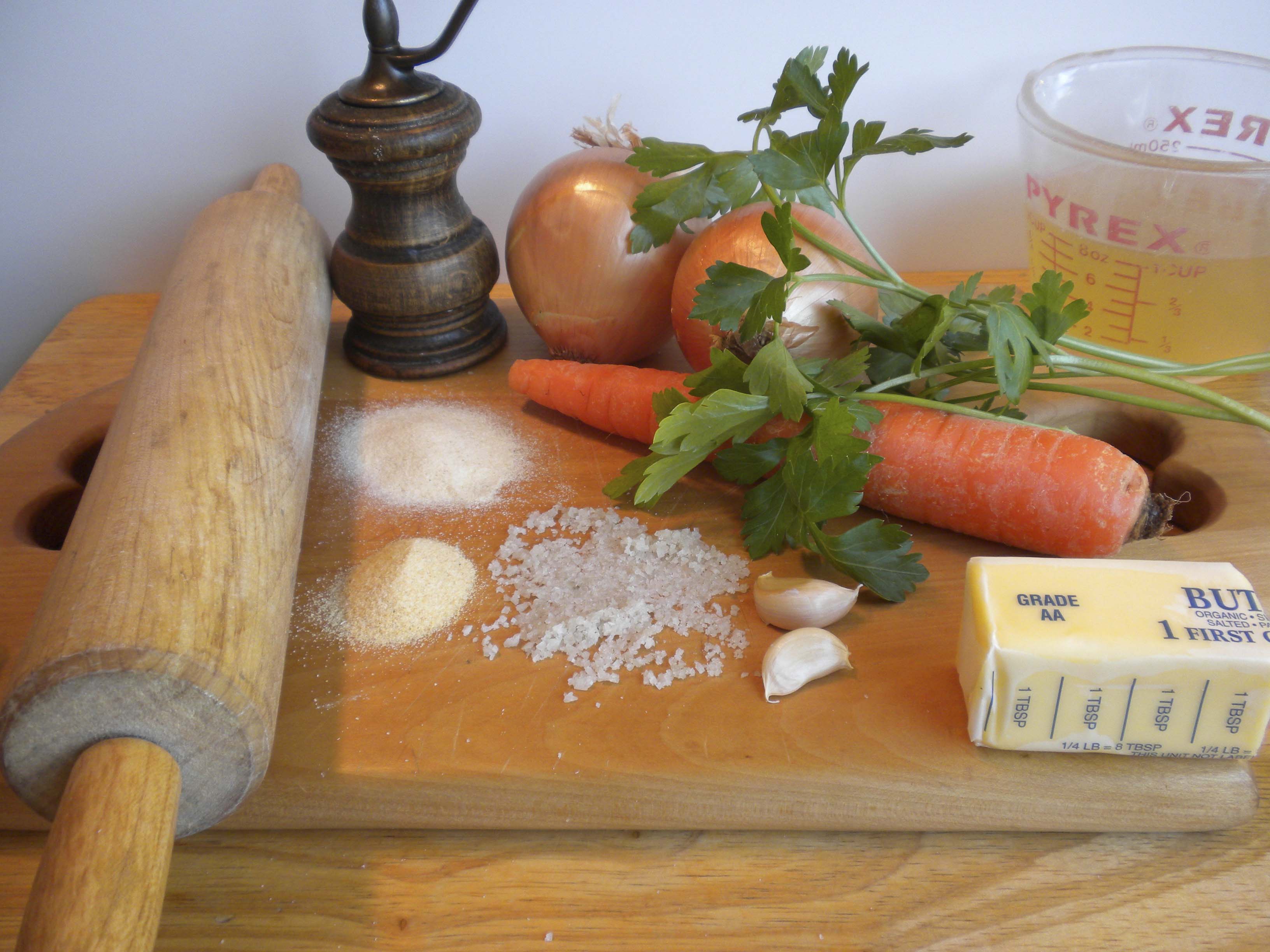
Ingredients for a traditional grass fed brisket pot roast.
Many people have asked me for a recipe for grassfed brisket pot roast. While Tender Grassfed Meat has a number of pot roast recipes, it does not have a recipe for brisket. I received so many requests that I decided to create one.
Brisket is one of the most beefy, flavorful cuts. It can also be one of the toughest. Grassfed brisket has a reputation for being particularly tough. But a grassfed brisket, treated with the magic of traditional pot roasting, can be so tender, with a rich texture that is a pleasure to chew, and a deep beefy flavor that almost no other cut of meat can match.
Pot roasts from brisket are a tradition in French, Italian, Belgian, German, Czech, Austrian, Jewish, Russian, Polish, and American cuisines—and in many others. Just about all of these traditions use onions to flavor the meat, and most of them also use carrots. Many other ingredients are used, and these can vary greatly.
Grassfed briskets usually have most or all the fat trimmed off. An untrimmed brisket will have a great deal of fat, actually too much for a pot roast, and the fat should be trimmed to no more than one quarter inch in thickness. Brisket has so much deep beefy flavor that this recipe will be great even if the brisket is completely trimmed of fat (but a light covering of fat is best).
The amount of time it takes to cook a grassfed brisket to be wonderfully tender can vary, but it usually takes a long time. The best way to tell if it is done is to stick a fork in it. If the fork goes in easily, with little resistance, it is ready. If not, it needs more cooking. Just about every cookbook will tell you never to pierce cooking meat, or you will “lose valuable juices.†This “rule†does not apply to grassfed meat. I stick forks and instant read thermometers into grassfed meat all the time, and the meat still comes out tender and delicious.
A cast iron casserole, or an enameled cast iron casserole, is the traditional pot for cooking this dish, and works beautifully. But any sturdy casserole that can be used for browning on the stove (with an ovenproof cover) will do, if you do not have the traditional casserole.
This recipe combines a number of traditional flavors for brisket pot roast. The use of powdered onion and garlic along with fresh onion and garlic creates a rare depth of flavor. Beef suet gives a wonderful flavor to the meat, but so does butter. Your choice. Either way, the gravy will be wonderful.
This is a great recipe for a cold day, which is why brisket pot roasts were popular winter fare all over Europe.
Traditional Grassfed Pot Roast
1 grassfed brisket pot roast, about 3 pounds
1 teaspoon freshly ground organic black pepper
1 teaspoon organic onion powder
1 teaspoon organic granulated garlic powder
1 teaspoon coarse unrefined sea salt (such as Celtic Sea Salt®), crushed,
4 tablespoons melted beef suet, (or 4 tablespoons pastured butter)
2 medium organic onions, peeled and sliced
1 large organic carrot, peeled and cut into small circles
1 cup homemade broth, preferably beef
4 sprigs organic flat leaf parsley, coarsely chopped
2 cloves organic garlic, peeled and coarsely chopped
2 teaspoons arrowroot, mixed with one tablespoon of water
- Take the meat out of the refrigerator at least 1 hour before cooking, so it will be at room temperature.
- Combine the pepper, onion powder, garlic powder, and salt, and mix well. Rub this mixture all over both sides of the meat. Preheat the oven to 250 degrees.
- Heat 2 tablespoons of the suet (or butter) over medium heat, in the bottom of the casserole. When the fat is hot and slightly smoking, add the roast to the pan. Brown for about 5 minutes, then turn the meat over and brown the other side, also for 5 minutes.
- Remove the meat from the pan. Add the remaining 2 tablespoons of suet (or butter). Add the onion and carrot and cook for 5 minutes, stirring from time to time. Remove the vegetables from the pan.
- Return the meat to the pan. Pour the vegetables over the meat, and use a spoon to push them so they surround the meat. Add the broth, parsley, and garlic, and bring the mixture to a slow simmer.
- Cover the pot and place in the oven. Cook until a fork goes easily into the meat, which could be anywhere from 2½ to 3½ hours.
- Remove the meat to a plate. Bring the gravy to a simmer over the stove. Stir the arrowroot and water together until they combine, then add the arrowroot mixture to the simmering gravy. Simmer briskly until the gravy thickens, stirring well. Once the gravy thickens, place it in a pitcher and serve the tender meat.
Serve and taste why brisket pot roasts have been cherished for so many years.
This post is part of Real Food Wednesday, Fight Back Friday and Monday Mania blog carnivals.
Weston A. Price Diet Means Strong Bones
By Stanley A. Fishman, author of Tender Grassfed Meat
photo credit: carlos.a.martinez
I had my second real food miracle several weeks ago.
It’s one thing to read about how the Weston A. Price way of eating strengthens the body, but it is really powerful to experience it.
A medical prediction proved worthless once again, and I had definite proof that my bones are stronger and healthier now than they were 37 years ago, when I was in college.
The difference? 37 years ago, I was eating the Standard American Diet, also known as “SADâ€. In 2010, I had been eating a Weston A. Price type diet for several years.
The First Accident
Being young, oblivious, and foolish, I ran into a crosswalk. I was hit by a vehicle, sent flying through the air, and landed directly on my right knee. The knee was severely fractured. I could not stand up, and had to be taken to a hospital. After x-rays, the doctor told me the knee would always be seriously weakened. The knee would deteriorate over time, and there was no way to stop it. I would inevitably need to have the knee replaced at some future date.
Over the years, I was protective of the knee, which gradually became stiffer and achier as time went on. Sometime after I switched to a Weston A. Price diet, the stiffness and aches just diminished and eventually disappeared.
What I Ate
I followed the nutritional advice given by the Weston A. Price Foundation. I stopped eating processed foods. I stopped almost all sugar and sweeteners. I made a real effort to eat organic (or the equivalent) whenever possible. I had nutrient-dense food such as eggs, cheese, grassfed meat, bone broth, cream, mountains of butter, cod liver oil, wild seafood, and many kinds of animal fat.
The Second Accident
A few weeks ago, I was walking on a wet loading dock. All my attention was on the conversation I was having, and I slipped on something and toppled over the edge of the dock. I fell some distance and landed heavily, with all my weight, directly on the previously injured knee on a solid steel loading step. I landed with great force, greater than when my knee had been injured the first time. I felt a moment of panic, which immediately passed when I realized that something was missing—pain. There was no pain. I carefully got up, and felt a very slight stiffness and very minor pain. I looked at the knee. There was a very small bruise, about the size of a pea. That was it. No fracture. The skin was not even broken.
The pain soon disappeared, and I felt a very slight stiffness for the rest of the day.
When I woke up the next morning, the stiffness was gone, the bruise was gone, and there was no pain. It was like it never happened. I came to realize that the knee had actually healed, and that my bones were stronger than ever.
When It Come to Bone Health, SAD Is Bad
Many Americans suffer from thin and brittle bones, especially when they get older. It is very common for an older person to break a hip or some other bone from a relatively minor fall. Even younger people are breaking bones more often. Many people in their 40s or younger are having their joints surgically replaced. In fact, so many younger Americans are getting artificial knees and hips that special forms of these creations of metal and plastic have been designed for younger people.
The Standard American Diet, which its focus on processed factory food full of sugar and chemicals, does not supply our bodies with the nutrients needed to maintain strong bones.
No Artificial Joints for Me, Thanks to Dr. Weston A. Price
Most people in this nation believe that they will have a knee, or both knees “replaced†at some time in their lives. They also believe that they will need to have a hip, or both hips “replaced.†They think of these surgeries as an inevitable part of growing old.
Interestingly enough, the healthy peoples studied by Dr. Weston A. Price never had their joints replaced, and never needed to. Even in extreme old age, they remained mobile and active, keeping their own knees and hips.
No artificial creation of metal and plastic can possibly “replace†the joints we were born with. At best, these contraptions can be a very poor substitute for our own bones.
Replacing knees and hips is a very profitable business in the United States. Over a million knee replacement surgeries are done every year, and over a quarter of a million hip replacement surgeries. These surgeries often have complications, which are treated by more drugs, more surgeries, more hospitalization, which requires the spending of more and more money. Recently a major network reported that a particular artificial hip was being recalled. The problem was that unless it was installed with complete perfection, it was likely to release metal shavings into the bloodstream, which could cause dementia and/or heart failure. “Recall†means that everyone who has had a defective artificial hip installed must have it surgically removed and replaced.
I prefer to keep my own joints. Thanks to Dr. Weston A. Price and the Weston A. Price Foundation, I know how to do that just by eating a traditional, nutrient-dense diet. The Dietary Guidelines of the Weston A. Price Foundation are a great place to start.
This post is part of Real Food Wednesday, Fight Back Friday, and Monday Mania blog carnivals.
Primal Fuel, Primal Meat, Total Satisfaction
By Stanley A. Fishman, author of Tender Grassfed Meat
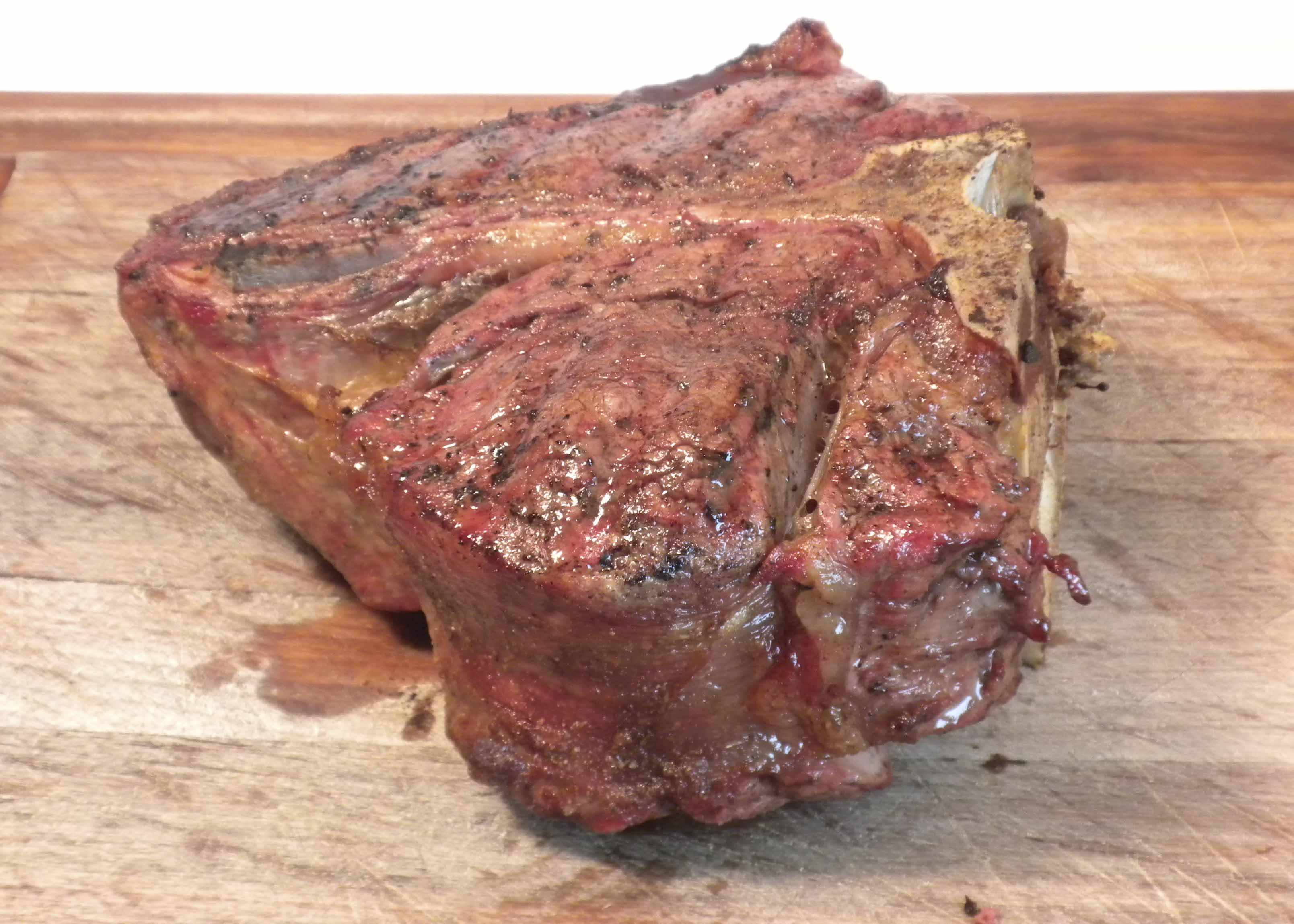
Barbecued Grassfed Bone In Porterhouse
The taste of the most basic and primal of foods, grassfed meat, cooked with one of the oldest and most traditional fuels, 100 percent hardwood charcoal, is the best. Not only to me, but to countless millions of people.
The Primal Taste of Primal Meat
There is something about the taste of this food—one of the oldest taste combinations known to humanity—that calls to us, awakens old primal memories, and is satisfying like no other food. When we smell this meat cooking, we instinctively salivate, as our bodies recognize that the smell means good food is on the way. The salivation signals our bodies to get ready to eat, and the digestive system prepares for action. We get hungry and our sense of taste and smell is somehow enhanced. We become hungry, and hungrier, as the smell changes as the meat finishes cooking. When we finally bite into the tender meat, and taste the primal flavor of the charcoal-imbued meat, the satisfaction is unequaled, we want more, and the meal becomes a joy to be savored.
Somehow, this meat is incredibly easy to digest, and we do not feel stuffed or bloated. We eat with eager hunger until we have had enough, and the hunger ends. The feeling of satisfaction and well-being we get from such a meal is unique, not matched by any other food.
Why Primal Meat Cooked with Primal Fuel Tastes So Good
Meat and fat have been prized by most of humanity for countless thousands of years. This may be our oldest cooked food. I have studied the traditional cooking of almost every European, North American, Asian, and Latin American nation in the world. I have also studied some of the cooking of the Middle East, Micronesia, and Africa. Just about every traditional cuisine treasured meat cooked with charcoal or wood coals, though people were often unable to get it. Even today, barbecue excites people like no other food.
I believe that barbecued meat is so popular because humanity has been eating it for so long. The love of it may be in our very genes, and our bodies have adapted to recognize and digest it easily.
We now have a fear of barbecue, created by studies claiming that barbecued meat contain substances that could cause cancer. However, none of those studies involved primal meat that was cooked with primal fuel. The traditional peoples studied by Dr. Weston A. Price cooked meat this way, and cancer was unknown to them.
Much of what is now called barbecue is a sad imitation of the real thing, scorched, tasteless, or sooty.
We can recreate the primal taste of primal meat cooked with primal fuel. All we need is primal meat, primal fuel, and the right method.
Primal Meat
This can only be 100 percent grassfed and grass finished meat, or wild game, or omnivorous animals such as pigs eating their natural diet.
Most of the meat eaten in the United States is processed through a feedlot, where the animals are fed a diet of foods they would never eat in their natural habitat, and altered by chemicals and antibiotics, among other things. This causes the meat of feedlot animals to taste different, and to behave differently in cooking. Humanity never experienced this kind of meat until the 20th century.
Primal meat is the kind of meat humanity has been eating for uncounted thousands of years. Meat from animals eating their natural diet, unaltered by chemicals, drugs, and species-inappropriate foods.
Fortunately, we can get such meat today, thanks to a small but noble band of intrepid farmers and ranchers.
Primal Fuel
The kind of primal fuel we can easily get today is 100 percent hardwood lump charcoal, or the same charcoal in the form of briquets. We can also burn unsprayed, chemical-free wood down to coals.
No other fuel will do to recreate the wonderful combination of primal meat and primal fuel.
The Right Method
This involves cooking the meat in front of a fire of coals, without scorching, charring, or clouds of smoke. Traditional peoples never let the flames hit the meat, and some old time cooks warned about how too much smoke and flame would impart a nasty taste to the meat.
Interestingly enough, the substances found hazardous by the studies are created by direct high heat, especially when the flames hit the meat.
I am finishing a book on barbecuing grassfed meat that shows a method that works beautifully to create the magnificent taste of primal meat cooked with primal fuel. The book adopts traditional methods of cooking this food to our time, and the results have been absolutely delicious. I have barbecued almost every day this last spring and summer, and I have been blessed by the wonderful flavor and satisfaction of eating primal meat cooked with primal fuel.
This post is part of Real Food Wednesday blog carnival.
Related Post
Traditional Barbecue Methods Avoid Risk Factors
Live Food, Dead Food
By Stanley A. Fishman, author of Tender Grassfed Meat
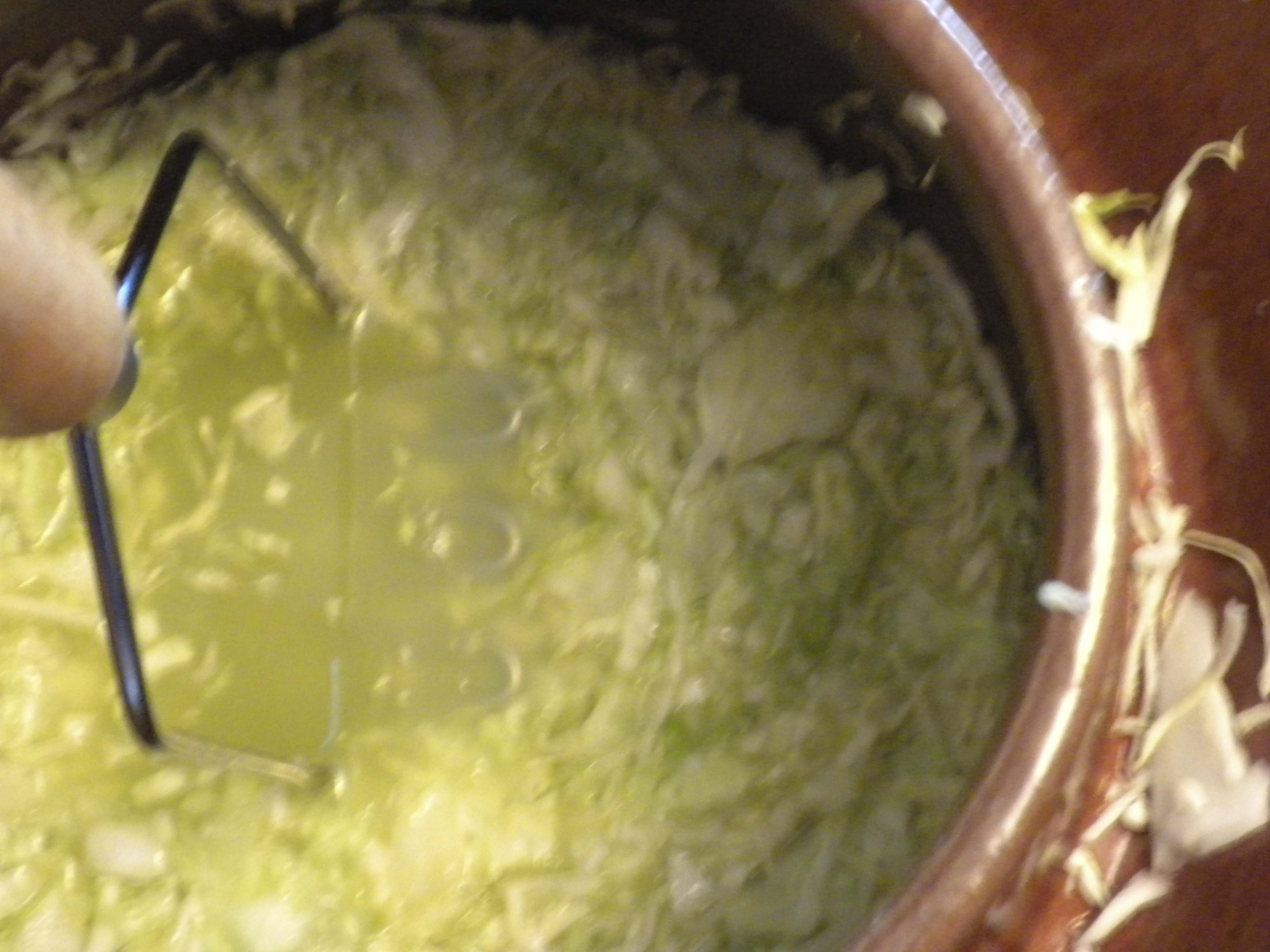
Traditional homemade sauerkraut is full of life.
Human beings need live food to support their life and health. Food that is full of vitamins, enzymes, co-factors, and many other substances that exist naturally in the food of our ancestors. Our bodies know how to use these substances to support life and health.
Modern processed foods are full of chemicals and preservatives that have killed almost all the life in the food. Many so called “fresh†foods are irradiated, which kills the life in the food. Many of these foods will not spoil, because there is no life in them to spoil. These dead foods do not give us the nutrients needed to support the natural functions of our bodies, which require nutrients that can only be found in live food.
Traditional Foods Are Live Foods
Our ancestors ate live food. It was either fresh and unmodified, or it was preserved by traditional methods such as fermentation, drying, and smoking. These traditional food preservation methods actually used beneficial bacteria to increase the life in the food, often increasing the amount and quality of the nutrients.
Dr. Weston A. Price spent ten years travelling around the world, studying the diets of healthy traditional peoples. He found that traditional peoples eating the diets of their ancestors were free of the chronic diseases that plague modern humanity.
- They did not have tooth decay, though they had no dentists.
- They did not have cancer, or heart disease, or arthritis, or asthma, or allergies, or birth defects, though they had no doctors.
- They did not have any form of mental illness, though they had no psychiatrists.
- They did not have crime, though they had no police.
- They kept their sight, hearing, balance, mental acuity, and mobility well into extreme old age, though they had no glasses, no hearing aids, no hip or knee replacements, and no prescription drugs.
What they did have was plenty of good live food in its natural state, free of added chemicals, brimming with enzymes, vitamins, beneficial bacteria, and other co-factors that were alive, not dead. While the diets of these people were diverse, all of them ate raw or very rare meat and/or seafood, though they also cooked much of their food. All of them ate the organs of animals and fish raw, or lightly cooked. All of them ate some form of fermented live foods. All of them ate some form of raw, live animal fat, whether in the form of pastured butter, raw milk, raw cheese, raw fish fat, or raw animal fat. All of them ate raw fruit and berries. All of them ate some vegetables raw. All of them preserved food by fermentation, or drying, or smoking. These traditional methods preserved or actually increased the life in the food.
Dr. Price also found that traditional peoples eating modern processed foods suffered greatly from every modern disease; had terrible teeth that they often lost; and often suffered from epidemics such as tuberculosis. The modern processed foods eaten by these sick people were dead foods from cans and jars, often filled with sugar, processed in such a way that they did not spoil.
Modern Foods Are Dead Foods
The food industry loves dead food. Why? Dead food lasts longer. Dead food will not spoil. As an example, some cupcakes have lasted 15 years without spoiling. See this fine article about 15 year old cupcakes. Dead food has a very long “shelf life,†which means it can be transported for weeks, and sit on shelves for months or years, and still be the same. Dead food increases profits.
Live foods spoil, which really hurts profits. The fact that live foods will spoil makes it much harder to transport them, requiring intensive refrigeration, or freezing.
The food industry developed chemical preservatives, substances that prevent food from spoiling by killing the life in the food. These preservatives change the food they touch, changing it into something that we were not evolved to eat, something that our bodies do not recognize or know what to do with.
Dead food is not limited to packaged foods. Pesticides are poisons, whose purpose is to kill. Some pesticides are designed to kill plants, and others are designed to kill insects. When they are in the food, they change the food, almost certainly killing some or all of its live qualities.
Genetically modified plants have been changed so they can survive huge amounts of pesticides without dying. This means that genetically modified plants have been sprayed with even more pesticides than ordinary factory crops. Other forms of genetically modified plants actually have internal pesticides that will kill insects.
Many fruits, vegetables, spices, meats, and other foods are irradiated. The purpose is to kill bacteria, but the radiation changes the food itself, into something different, something new and foreign to our bodies. The purpose of radiation is to kill, and radiation kills life, including much of the life in the food.
The food industry has now introduced nanites, tiny particles much smaller than a single cell, as a new way to preserve food. These nanites are designed to kill bacteria, and they will kill all bacteria, including the beneficial bacteria our bodies need to function properly. These nanites are often used in food packaging, and no labeling is required. It is not known what happens when these tiny particles penetrate our cells, especially the cells of our organs.
How to Eat Live Food
The basic rule is, if it does not spoil, don’t eat it. This applies to meat, fish, vegetables, fruits, milk, cheese, butter—just about every food.
- Eat only real, basic food that humanity has eaten for many centuries.
- It is also best to find foods that are raised and processed without the use of added chemicals, such as foods that are organic or the equivalent. Processed foods should be avoided. If you buy processed foods, try to buy foods packed in glass, to avoid chemicals and nanites in the packaging. Even organic foods can have chemicals in the packaging, as organic tomato cans are lined with BPA.
- Avoid all foods that have been irradiated.
- Avoid all foods that have chemical preservatives.
- Avoid all foods that have been genetically modified.
- Eat traditionally fermented condiments, such as old fashioned sauerkraut. Traditional fermentation actually increases the life in food.
- Eat a large portion of your food raw. This can include high-quality dairy, fruits, and vegetables (though some vegetables, especially cruciferous vegetables, should not be eaten raw).
- Eat only grassfed, grass finished meats and wild seafood. These foods are especially full of life when cooked rare, or eaten raw. As Sally Fallon Morell has pointed out in her great cookbook, Nourishing Traditions, the US Department of Agriculture has stated that parasites are killed if food is frozen for at least 14 days.
- Learn about traditional foods, and how to prepare and eat them. I recommend Nourishing Traditions, by Sally Fallon Morell. For grassfed meats, I recommend my own book, Tender Grassfed Meat.
Live foods give life, by supporting the natural functions of our bodies.
This post is part of Real Food Wednesday and Fight Back Friday and Monday Mania blog carnivals.
Seven Reasons to Attend the Weston A. Price Foundation Conference
By Stanley A. Fishman, author of Tender Grassfed Meat

The Weston A. Price Foundation is having its annual conference on November 12 to 14, 2010, in King of Prussia, Pennsylvania. If I could go to any conference in the world, anywhere, this is the one I would choose, above all the others.
This conference has so many benefits: priceless knowledge; incredible seminars; the heroes of the real food movement who will be teaching, speaking and attending; and being surrounded by the nicest, healthiest, most enlightened group of people I have ever met. There is a feeling of wisdom, understanding, kindness, community, goodness, and life that is so strong you can practically touch it. There is so much to experience here: the incredible foods and products available from the vendors, and the wonderful real food that is served at every meal. If you are new to the world of real food, you will be amazed at how good it tastes and feels.
I encourage everybody who possibly can to go, and I thought I would mention just seven of the many reasons for going.
1.     The conference presents the very best information on food and wellness.
There is nothing you can possibly learn that is as important as what to eat, and what not to eat. This is the most important knowledge you can have, and most people are totally misinformed on the subject by a system that thrives on ignorance. Your physical health, mental health, emotional health, ability to fight off illness, fertility, ability to have healthy children, energy, immune system, happiness, eyesight, hearing, ability to focus, everything—depends heavily on your ability to put the right fuel into your body, so it can function properly.
The Standard American Diet, “SAD,†results in severe malnutrition, illness, premature aging, the slow loss of every one of your body functions, the need for intensive and never-ending medical treatment, and a slow, painful death. The information presented at the conference can give you the knowledge to abandon SAD and eat a diet that will actually support your body functions, and improve every aspect of your life.
2.     You may hear of miracles.
When I attended the 2008 conference, I was waiting for a seminar to start when two people sitting behind me began talking. It turned out that both of them had been diagnosed with terminal cancer many years ago. Instead of following the conventional approach of having their bodies destroyed by chemotherapy, they turned to real food instead. Not only were they still alive, they were thriving. Everyone I knew who had been diagnosed with terminal cancer soon looked like a concentration camp victim—a dying skeleton who could barely breathe. I turned around to look at these two people and was astonished at how healthy they looked. They looked healthier and more robust than most people. It is one thing to hear of a miracle, it is truly impressive to see one.
3.     You can attend Sally Fallon Morell’s superb seminar on traditional foods.
I had the joy of attending this seminar at the 2008 conference. In one day, you learn enough to drop SAD forever and learn the secrets of a healthy diet. A diet that can restore the natural functions of your body, which will then get about their job of fixing everything that is wrong with you. Sally is a magnificent speaker, and she knows the subject like nobody else. I thought I knew a lot before I attended this seminar, but I learned so much.
4.     You will be surrounded by the nicest, healthiest group of people you will ever meet.
Many of the people who attend the conference are so healthy that they literally glow, and are a walking testament to the benefits of a real food diet. People are friendly, accepting, excited, happy, and enthusiastic. These are people who have the courage and wisdom to think for themselves, who make good decisions based on reason and knowledge rather than simply obeying the authorities. The feeling of community was so strong I felt like I was always among friends. I have seen babies and toddlers at that conference who are so active, so healthy, so alert, and so enthusiastic, that they make other children seem lifeless by comparison.
5.     You can meet and hear some of the best food bloggers in the world.
Some of the world’s best food bloggers will be attending the conference. These include my friends, Kimberly Hartke (Hartke is Online), Ann Marie Michaels (Cheeseslave), Kelly the Kitchen Kop, Sarah Pope (the Healthy Home Economist), Raine Saunders (Agriculture Society), and others. These bloggers give of themselves day after day, posting nutritional wisdom on their sites, fighting the good fight on issue after issue, making desperately needed information available to all, and telling the truth about nutrition and health amidst all the propaganda that poisons the media. You can actually meet them, and talk with them, and some of them will be speaking. This is a unique opportunity to actually meet and talk to the people who write the very best real food blogs.
6.     You will be supporting the best nonprofit organization on the planet.
Attending the conference provides important financial support for the Weston A. Price Foundation, the best organization on earth.
Why is it the best? They know the truth about nutrition, and they have the will, the wisdom, and the courage to spread it, despite being under constant attack. Most Americans are deceived by propaganda into eating an unnatural diet that is starving and killing them—while making a fortune for the processed food industry, industrial agriculture, the supermarkets, the medical profession, the drug companies, the health insurance industry, and a host of other parasites who make their money by keeping Americans malnourished and sick. Poor nutrition makes everything worse, not only causing physical illness, but contributing to mental and emotional problems. Traditional peoples eating a healthy diet not only did not have illness, they did not have crime.
If the American people were to learn and follow the wisdom of the Weston A. Price Foundation, almost everybody would enjoy robust good health, and there would be little or no need for the factory food industry, the health insurance industry, the drug companies, and all the other parasites who feed off of the illnesses of the American people like vampires. The need for doctors would drop dramatically, and we would have the best possible solution to the cost of medical care—a healthy population that does not need it.
The Weston A. Price Foundation is on the right side of every issue, fighting bravely in Congress and many states to protect farmers, protect real food, challenge the propaganda, and confront the endless nutritional lies with the truth. They maintain a magnificent website, free to all, which has invaluable information about food and health. The information on that website saved my life. Unlike so many other organizations, nobody in the Weston A. Price Foundation is becoming rich from it, and you may be assured that every penny that goes to them is used to help their cause.
7.     You can help make the world better.
We live in a world that is drowning in ignorance about food. We have forgotten the wisdom of our ancestors, which has been replaced by propaganda designed to make money. Everything most people are taught about nutrition is wrong. The truth about nutrition will be presented at this conference in hundreds of ways. Here, you can learn the real truth about food, and change your life for the better—not only your life, but the lives of your family, your friends, and everybody you influence. Each person who learns the truth about food is like a spark of light against the darkness of propaganda and ignorance. When we have enough sparks, we can unite to form a bonfire that can light the way back to truth and health.
I wish I could go to the conference this year, but I can’t. I have duties at that time that cannot be postponed and cannot be delegated. But I hope that you will do what I cannot, and enjoy the many blessings of this wonderful event.
This post is part of Real Food Wednesday and Fight Back Friday blog carnivals.
« Previous Page — Next Page »