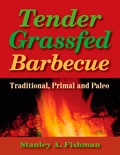
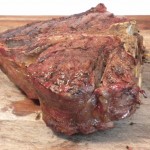
 Photos of recipes from the new book Tender Grassfed Barbecue
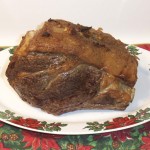 Photos of recipes from the cookbook Tender Grassfed Meat

Three Great Reasons to Attend the Annual WAPF Conference
By Stanley A. Fishman, author of Tender Grassfed Meat and Tender Grassfed Barbecue

Anyone who reads my books or this blog will soon learn that I often refer to Dr. Weston A. Price and the Weston A. Price Foundation. There is a very good reason for that. The information presented by the Weston A. Price Foundation enabled me to save my life and restore my health. Much of the very same information that saved my life and restored my health, and more, will be presented at a wonderful conference in just a few weeks.
The Weston A. Price Foundation will be having its annual conference in Dallas, Texas, from Friday, November 11 through Sunday, November 13. There are also some activities on Monday, November 14. You can sign up for the conference and get more information here.
I recommend that everyone who can attend this conference do so. Here are the reasons for my recommendation:
Knowledge
It is said that the truth will make us free. Here, the truth can make us healthy. There will be more invaluable knowledge presented on human health and nutrition at this conference than anywhere else on earth. There will be many lectures and classes, presenting the best real food and alternative health information available anywhere. I believe that the key to human health is great nutrition. Most people suffer greatly from malnutrition. Most people know very little about good nutrition, as they have been misled by those who exploit them. The theme of this conference is “Mythbusters,†and the invaluable truth about nutrition will be presented along with the busting of nutritional myths. This is information you can use to make your life much, much better.
Many of the leading people in the real food and alternative health movements will be speaking, including famous alternative physicians like Dr. Natasha Campbell McBride, Dr. Thoman Cowan, and Dr. Joseph Mercola. Also speaking will be Sally Fallon Morell, the founder and president of the Weston A. Price Foundation, my friends Kimberly Hartke and Sarah Pope, and many, many others. The information they have to share is invaluable.
Food
This is probably the one time that you can not only trust that the food at a conference will be good and healthy, but something to really look forward to. All meals will be available at the conference, including special selections for those who are gluten-intolerant. Grassfed meat is featured in the menus in a big way, along with pastured pork and a multitude of healthy, delicious, real foods ranging from wonderful grassfed butter, to the finest fermented foods such as traditional sauerkraut, many wonderful cheeses, to all kinds of real vegetables, Most of this food is from some of the finest producers in the world, such as U.S. Wellness Meats, Pure Indian Foods, Miller Organic Farm, and many others.
It is usually so hard to find food worth eating when we travel. At the conference, not only will the food be well worth eating, it should be delicious!
People
The first time I attended the WAPF conference, I was astonished at how healthy most of the people looked. So many of them literally glowed with health and vitality. I will never forget the sight of babies and small children raised on a real food diet—they were so alert, so happy, so alive that they made most other children seem like sleepwalkers in comparison.
People were so friendly, so welcoming, so committed to helping others. We had so many wonderful conversations, and heard so many great stories about how people had use the Weston A. Price wisdom and real food to heal all kinds of illness and to improve the health of themselves and their families. It is such a joy to be in a place where just about everybody you talk to really understands about nutrition, and knows the truth about food and medicine. It is so inspiring to hear how people have restored their health and become healthy in natural ways, often by real food alone. It gave us a great sense of community, and confirmed once and for all that there are many other fine people on the same path, enjoying the same benefits.
If you go, you can expect a wonderful, delicious, inspiring experience that you may never forget.
This post is part of Monday Mania, Real Food Wednesday and Fight Back Friday Blog Carnivals.
Presenting Tender Grassfed Barbecue: Traditional, Primal, and Paleo
By Stanley A. Fishman, author of Tender Grassfed Meat

Tender Grassfed Barbecue: Traditional, Primal and Paleo
I am happy to announce the availability of my second book, Tender Grassfed Barbecue: Traditional, Primal and Paleo. It is now available at Amazon.
Traditional
This cookbook adapts traditional methods of barbecue to modern times, making it easy, yet so delicious. The recipes are specifically designed for grassfed beef, bison, lamb, and pastured pork, using a wide variety of traditional flavorings and marinades from all over the world.
Grassfed meat is different from factory meat, and should be cooked differently. This is even more true in barbecue than other cooking methods, because charring a grassfed steak over a very hot fire will ruin it. The methods in this book are adaptations of traditional methods of barbecue that work beautifully with grassfed meat, bringing out its naturally wonderful flavor and tenderness.
Traditional peoples cooked with fire very differently than modern Americans. Tender Grassfed Barbecue adapts some of their methods to modern times. These methods are actually safer and easier to use than modern techniques. The book explains how to use these simple methods in great detail, using clear illustrations to demonstrate exactly how the coals, meat, drip pan and grill should be arranged, and providing clear and precise instructions as to how to barbecue this way. Even if you have not barbecued before, the clearly presented methods used in this book will make it easy!
The recipes in this book use traditional flavors from many cultures, ranging from Ancient Rome and China to the Native Americans, Koreans, French, Italians, Sardinians, Romanians, and many more. This includes several “lost†barbecue secrets that have been rediscovered, and were used traditionally by many peoples. These wonderful flavors give a wonderful enhancement to the great natural taste of barbecued grassfed meat, resulting in tender meat that is absolutely delicious. The book also offers different traditional ways of preparing American barbecue favorites such as brisket and spareribs.
Primal
The flavor of meat cooked with fire is one of the oldest human flavors, enjoyed over countless thousands of years, stimulating our taste buds in a way no other food ever does. The traditional cooking techniques in Tender Grassfed Barbecue create this primal flavor, using lump and hardwood charcoal to awaken the primal taste memories, imbuing the meat with the unforgettable tang of wood flavor. Many of the recipes are simply seasoned to bring out the primal flavor of wood and charcoal. Methods for using herbs and wood to provide a deeper smoky flavor are also included.
Paleo
The meat of grass-eating animals cooked with fire is one of the oldest human foods, eaten widely in the Paleolithic period and earlier. In contrast, the grain-feeding of grass-eating animals was not adopted until the 20th century and created a meat that is very different in composition and content from the meat enjoyed by humanity over most of history. Most of the meat recipes in Tender Grassfed Barbecue are very useful for those on Paleo diets, as they are designed for barbecuing grassfed meat. The ingredients used for flavoring are very basic foods, and allowed on most Paleo-style diets.
Lower-Carb
While this is not a low-carb cookbook, most of the recipes are very low in carbohydrates. A section on low-carb side dishes is also included.
Weston A. Price Style Diet
The recipes in this cookbook are faithful to the teachings of Dr. Weston A. Price. Sugar and soy are not used in the recipes. Refined food ingredients are rare, and the benefits of using animal fats in cooking are not only discussed, but shown in a number of recipes. Butter is a key ingredient in a number of recipes, and modern vegetable oils are not used.
Safer Barbecue
There have been a number of studies that raise health concerns about barbecued meats. The traditional techniques used in Tender Grassfed Barbecue avoid the risk factors identified in the studies.
Compared with Tender Grassfed Meat
If you liked Tender Grassfed Meat, you will enjoy this book if you barbecue. All the recipes are brand new, as are the techniques and cooking methods. The marinades in this book could be used to cook indoors as well, using the timing for roasts and steaks contained in Tender Grassfed Meat. One major difference is the inclusion of recipes for pastured pork, which was not included in Tender Grassfed Meat.
I am very happy to present this book. You will find cooking and barbecuing tips here that are just not available elsewhere. The recipes are easy to prepare, nourishing, and delicious. My family and I have been enjoying the recipes in this book for most of the past two years, whenever the weather allowed barbecuing. I hope that you too will enjoy the wonderful flavors and tastes in Tender Grassfed Barbecue.
Related Post
Traditional Barbecue Methods Are Worth the Effort
This post is part of Fat Tuesday and Real Food Wednesday blog carnival.
Eating the Whole Wild Fish
By Stanley A. Fishman, author of Tender Grassfed Meat

 photo credit: phoosh
Why does a blog devoted to grassfed meat mention fish? I eat fish too. I consider some seafood to be important for a balanced diet.
But more importantly, the quality of most fish sold in the U.S. has become just as compromised as the quality of feedlot beef.
Today I had an absolutely fantastic whole wild fish for lunch, which inspired me.
Farmed Fish are Not the Same as Wild Fish
When I was a child, just about all fish were wild, eating their natural food, which was usually a smaller kind of fish. Fish were often very fresh, often caught near the place where they were sold, and packed with all kinds of nutrients that they received from their natural diet. Fish were also very cheap, except for a few very expensive varieties.
In some areas (especially Asia), freshwater fish were farmed in tranquil ponds, ponds that were full of the natural food of such fish.
Times sure have changed. Most fish sold in U.S. stores have been farmed and frozen. The fish at fish farms are fed a variety of substances, but the feed often contains substantial amounts of GMO soy, something that was never fed to fish before. Much fish feed consists of various kinds of fishmeal, which consists of the bodies of smaller fish that have gone through industrial processing to be turned into meal. Other substances are also used, which are not part of the natural diet of fish.
I have not seen any studies, but wild fish eating their natural diet tastes much better to me than any farmed fish. When food is natural, truly natural, the way it tastes is a message to you from your body as to whether you should keep eating it. I believe this to be a good indication of how nutritious the food is. Obviously, the use of chemicals and flavor enhancers can confuse this taste system, which is yet another good reason to eat only food that is free of chemicals and unprocessed. Good food is also satisfying, meaning you do not have to eat huge amounts of it to be satiated and full. I have found farmed fish to be watery and tasteless. Farmed fish never satisfied me.
The oceans, lakes, and rivers have become seriously polluted, and some of the pollutants find their way into the fat and flesh of some fish. Mercury especially is a concern.
Even the wild fish you buy may have been frozen twice, if it is cut into fillets. That is because these fish are frozen when they are caught, then shipped to China where they are defrosted, cut into fillets, and refrozen, then shipped back to the U.S. to be sold in the markets. They are often defrosted a second time and put on the counter.
Fish has also become very expensive, farmed or wild.
Most people only see fish in the form of boneless, skinless fish fillets. This was not the way our ancestors ate fish. Wild fish were caught, and often cooked the same day, whole, with all their nutrients. Large fish were often cut into thin strips, and dried or fermented to provide food that could be stored. Some medium-size fish were preserved by smoking and salting, as were pieces of larger fish. Some fish were cut up and preserved by salting. Salt cod became a staple food all over Europe.
How I Find Healthy Wild Fish
It took a while, but I finally found a way to get wild fish that satisfies me.
The best way to get fish is to catch your own, preferably from waters that are only lightly polluted, and process them yourself. This is beyond the circumstances of many of us.
What I do is buy small or medium-sized whole fish, and cook the whole thing in one piece. Best to leave the head on for flavor, but you do not have to. I will later use the bones and head for fish broth, a wonderful elixir that is said to cure anything. There is an excellent recipe for fish broth in Nourishing Traditions by Sally Fallon Morell.
I try to buy fish from the less polluted waters such as Alaskan waters.
The small size of the fish means that it has not absorbed much mercury.
The fact that it is whole means it has not been filleted in China, with the necessary defrosting and refreezing.
The fact that it is wild means that it was eating its natural diet when caught, and should be rich in nutrients.
I will also buy fillets if they appear to have been frozen only once, and have not gone the China route. A few wonderful markets process whole fish and cut them into fillets themselves, rather than subcontracting the job to China.
I will even buy flash-frozen fish fillets, as flash freezing of a quickly frozen fish preserves freshness (though it can never compare with a truly fresh fish), if I am convinced that it was only frozen once.
Just like grassfed meat is vastly superior to the industrial variety in taste and nutrition—whole wild fish are far superior to the farmed variety.
This post is part of Monday Mania, Real Food Wednesday and Fight Back Friday blog carnivals.
Related Post
Smelt Soup for Natural Iodine
A Real Paleo Diet — Grassfed Meat, Fat, and Organ Meats
By Stanley A. Fishman, author of Tender Grassfed Meat
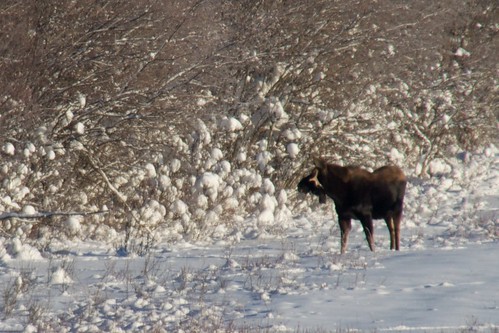
photo credit: tuchodi
The idea behind the Paleo diet makes a great deal of sense. For tens of thousands of years, humans have been eating the foods available during the Paleolithic period. Our bodies have adapted to use these foods and easily digest and process them. Our bodies know how to use the nutrients in these foods, and how to dispose of the waste in these foods.
But what is the Paleo diet? What did Paleolithic peoples really eat?
The Paleo diet is generally agreed to consist of foods that were only available during the Paleolithic period, before agriculture and the keeping of domestic animal herds had been developed. All grains, dairy products, all modern processed foods and oils are excluded. Wild meat, fish, roots, shellfish, berries, fruits, eggs, some tree nuts, vegetables, and edible fungi such as mushrooms are included.
Some say that the Paleo diet should be meat-heavy. with an emphasis on lean meats. Others say it can be mostly fruits and vegetables. Some say it should be high-fat, and others say it should be low-fat. But what did the Paleolithic peoples really eat?
A true Paleolithic diet was discovered and recorded by Dr. Weston A. Price, the great food researcher. In 1933, Dr. Price visited a native people living in the far north of Canada, far from the sea. These people were eating the same diet their ancestors had, consisting only of foods that were readily available during the Paleolithic period.
These people had no agriculture, and no herds. They were so far north that they were deprived of all fruits and vegetables for most of the year. They were far from the sea, and the rivers were so frozen that there were no fish. In fact, they ate very little other than the wild animals they hunted, often moose.
They ate not only the meat of the animals, but the organs, and the fat, especially the fat. Meat was always eaten with fat. They also ate bone marrow, chewed on the bones, and used the bones in cooking. The animals they ate were mainly herbivores, grass-eaters, so they were eating grassfed meat and fat, and the organs of grassfed animals. And just about nothing else.
Dr. Price found that these people were in excellent health, strong, happy, and vital. Though the temperature would often be seventy below zero during the long, cold winters, these people had learned how to keep warm and well-fed. The women would give birth quickly and easily, to healthy children who were free of birth defects. They had no dentists, and no cavities. Despite the extreme cold, nobody had arthritis. They did not have heart disease or cancer. They did not have diabetes or any of the chronic diseases so common in the modern world.
Dr. Price wanted to know why they did not get scurvy, a disease caused by the lack of Vitamin C that causes teeth to fall out, and eventually results in death. Dr. Price learned that they got the Vitamin C they needed by eating the adrenal glands and second stomachs of the animals they hunted. Scientific research later confirmed that the adrenal glands of grassfed animals were the richest known source of Vitamin C, containing far more than any fruit or vegetable. These native people knew what part of the animal to eat, so they could get the nutrition they needed. In fact, they got all their vitamins and minerals from the fat, organs and bones of the animals they hunted.
These people were so free from crime that nobody locked their doors, and nothing was ever stolen.
After Dr. Price left these people, he traveled south, and studied the native peoples he met on the way. Many of these people had adopted modern food like jam, sugar, syrup, and bread. The native peoples eating modern foods were riddled with disease, many suffering from crippling arthritis. Tuberculosis, cancer, and tooth decay were very common.
Dr. Price’s research described a true Paleolithic diet, and the wonderful health of the people who followed it.
While this is not the only Paleolithic diet, it shows how beneficial a true Paleolithic diet can be.
This post is part of Monday Mania and Real Food Wednesday blog carnivals.
The Blessings of Pastured Pork Lard
By Stanley A. Fishman, author of Tender Grassfed Meat
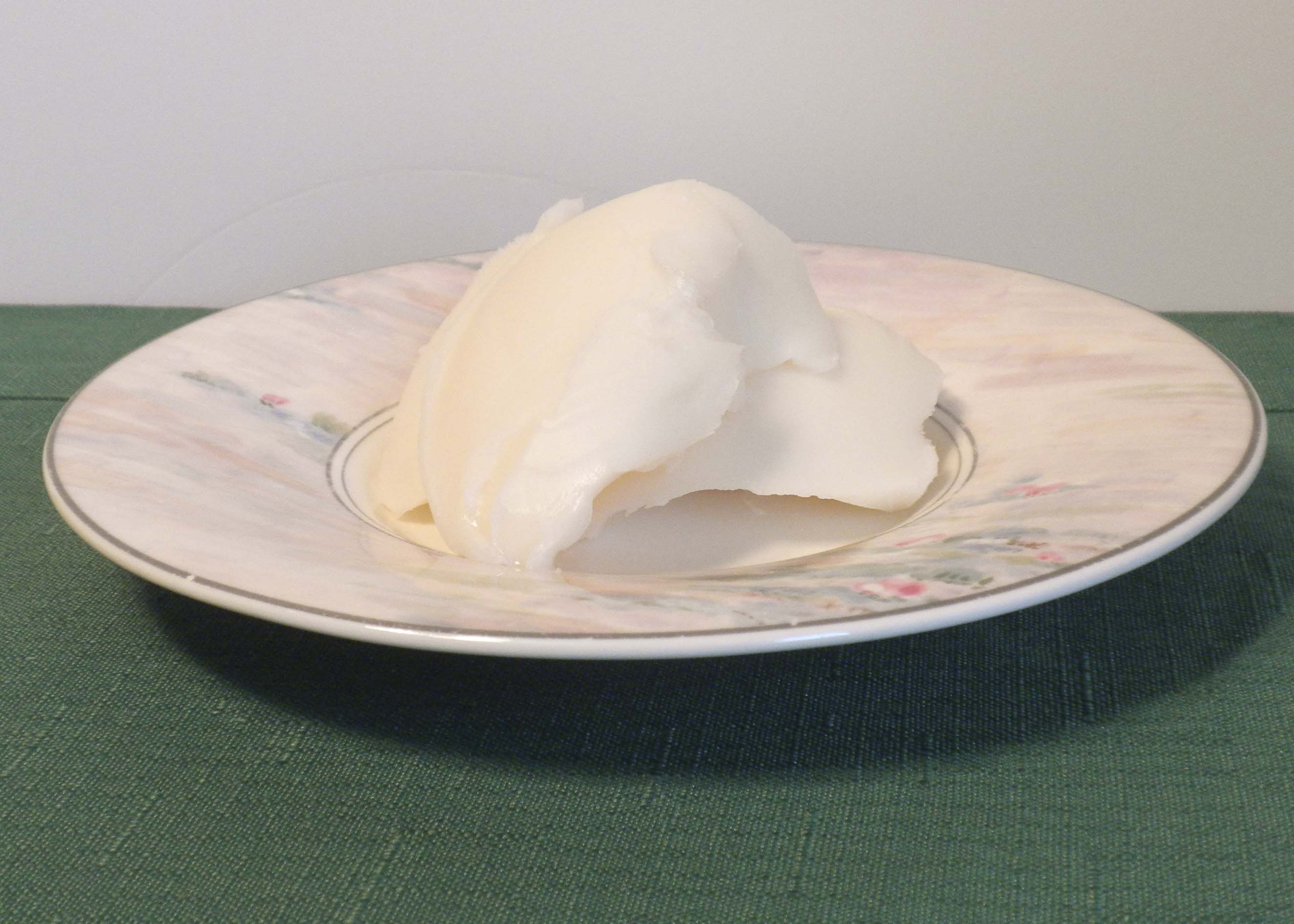
Natural, unhydrogenated, pastured pork lard.
Animal fat is demonized in our society, and this includes pork lard. People are brainwashed into thinking that eating pork lard, or any animal fat, will “clog” their arteries, causing heart attacks and strokes. Animal fat seems to be blamed as the cause of almost every conceivable disease. This is truly ironic, as animal fat, especially pork lard, was the most popular cooking fat for most of humanity, throughout most of history.
The traditional diets of two of the healthiest peoples studied in modern times, the Georgians of the Caucasus, and the Okinawans of the Pacific, were quite different in the actual foods they ate. Yet both of these healthy peoples did share a favorite food—pork lard and fatty pork. Despite the fact that these healthy peoples ate large amounts of pork lard, along with fatty pork, heart disease and strokes were very rare for them. Both of these cultures were known for a very high number of people who lived to be 100 years old, or older, and were healthy at that advanced age.
The truth is that traditional peoples whose religion did not forbid it loved pork lard and animal fat, and ate huge amounts of it. Not only did they eat it and cook with it, they would often use pork lard to treat damaged skin, and as a moisturizer.
Pork lard has many uses in cooking, and excels in all of them. Breads, biscuits, pies, and cakes made with pork lard come out especially delicious, and the fat in the lard helps counter the glycemic effect of the grains.
Pork lard is perhaps the perfect frying medium, having a very high smoke point, cooking at an even heat, and providing a wonderful flavor to the foods fried in it. In fact, pork lard was the traditional fat used for stir-frying in Chinese cooking, and is still perfect for it, enhancing the flavor of every dish. Pork lard (along with duck and goose fat), was used for making confit, a way of cooking and preserving meat in large amounts of fat.
Though pigs are omnivores, and not grassfed, I use a lot of pork lard in my recipes for grassfed meat. I use pork lard to sauté other meats, which gives them a nice flavor. I will also rub pork lard on various grassfed roasts, especially those which lack fat. The lard keeps the meat moist, adds great flavor, and causes any vegetables added to the pan to come out caramelized and delicious. The flavored pork lard from such a roast is also perfect as a base for gravies or sauces, making them utterly delicious. The ancient Chinese would often fry other meats in pork lard, just for the flavor. I have tried this, and it is delicious.
But it is very important to know your pork lard, just as it important to know all of your food.
I would not even taste most of the pork lard on the market, and I avoid it. If that sounds odd after I have been filling this article with praise for pork lard, there is a reason. Most of the pork lard sold in the U.S. has been hydrogenated, which means that it has had an additional molecule added to its structure through artificial processing. Not only does this create a fat which never existed in nature, it affects the nutrition and the taste. But the food industry invented this kind of modified lard because it can be stored at room temperature, and can stay on the shelf for a very long time.
I make a real effort to eat food only in a natural, unmodified state, and it creeps me out to have the very molecular structure of a food altered for profit. It is now accepted that hydrogenated fats are bad for human health. I strongly dislike the taste of hydrogenated lard.
All of the benefits of lard described in this post came from real, unmodified lard, the kind that will actually spoil, and must be refrigerated or frozen. The best of this lard comes from pastured pigs, from heritage breeds, who are raised in a traditional manner, rather than being stuffed with GMO corn and GMO soy. This kind of lard is actually very good smeared on bread, like butter, and has a pleasant, nutty flavor. This is the only kind of lard I use or recommend.
Natural, unmodified pastured pork lard is wonderful for cooking and eating.
This post is part of Monday Mania, Real Food Wednesday and Fight Back Friday blog carnivals.
Raw Vidalia Salsa Provides Balance for Grassfed Meat
By Stanley A. Fishman, author of Tender Grassfed Meat
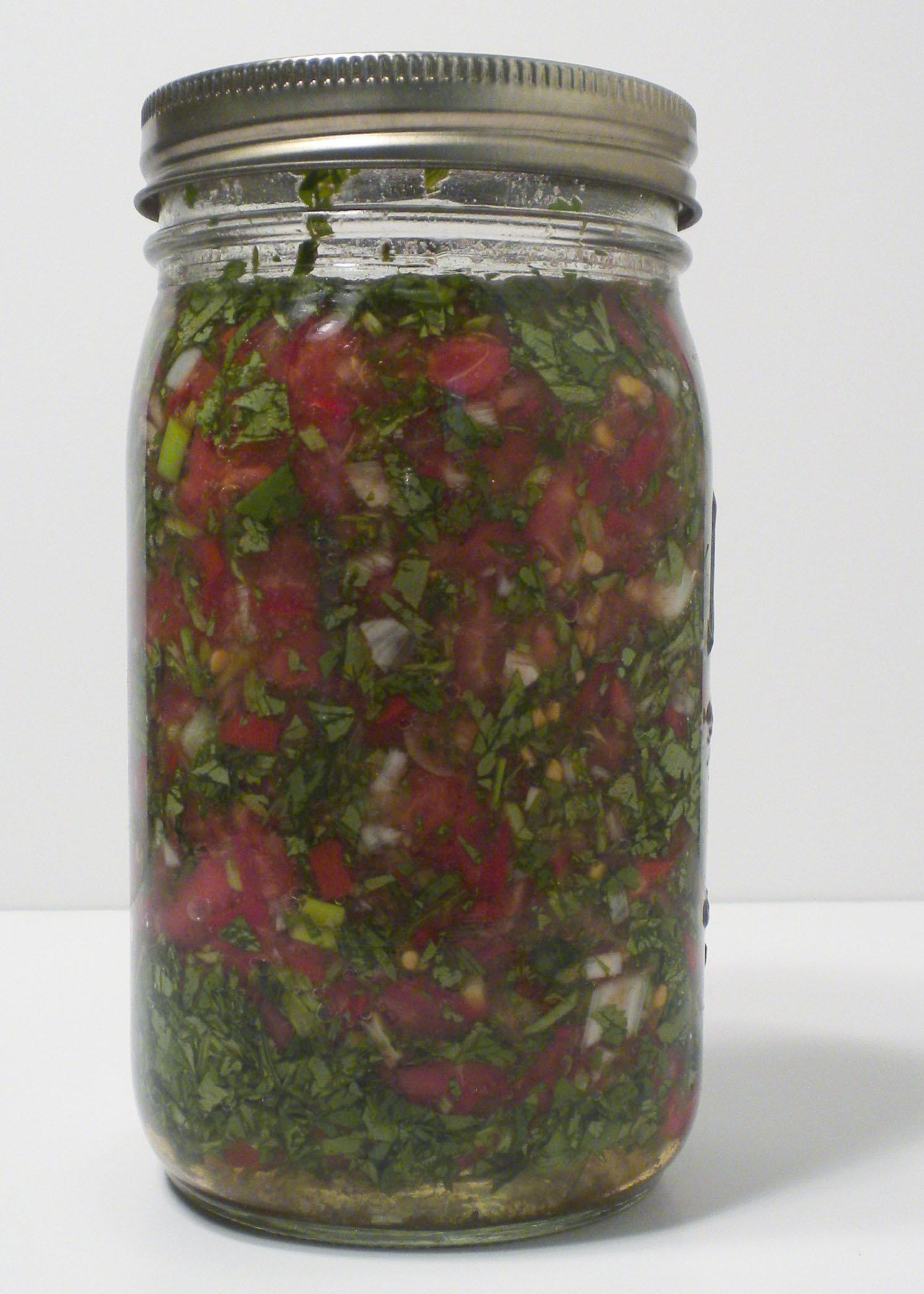
Raw vegetable salsa goes so well with grassfed meat.
Many traditional peoples would always eat vegetables with their meat. Since meat is acidic, and vegetables are alkaline, this helped them maintain a proper pH balance in their bodies.
It is a German tradition to eat plenty of vegetables with steak, and a Latin American tradition to eat a raw vegetable condiment with meat, in the form of a salsa, chimichurri, or Pebre.
My upcoming barbecue book includes several such recipes for raw vegetable condiments. This recipe did not make it into the book, because I invented it last week, and the book is done except for the index, which is well on the way. It is a very tasty and satisfying recipe, so I thought I would print it here as a gift for my readers.
This recipe combines the sweetness of organic Vidalia onions with traditional salsa ingredients to form an absolutely delicious side dish for any grassfed meat. The fresh vegetables are full of enzymes and other nutrients, which will help with digestion. While it calls for organic ingredients, the equivalent of organic is just as good.
INGREDIENTS:
5 ripe red organic tomatoes, finely chopped
1 medium organic Vidalia onion, peeled and finely chopped
1 organic red bell pepper, seeded and finely chopped
1 organic green bell pepper, seeded and finely chopped
¼ cup fresh organic cilantro leaves, finely chopped
2 stalks organic celery, finely chopped
2 tablespoons unfiltered organic extra virgin olive oil
1 tablespoon unfiltered raw organic apple cider vinegar
1 tablespoon Thai fish sauce
1 teaspoon freshly ground organic black pepper
1 teaspoon coarse unrefined sea salt, crushed
1 teaspoon to 1 tablespoon organic hot sauce of your choice, depending on how hot you like it (optional)
Combine all ingredients in a large bowl. Stir until well mixed. Let rest in a covered bowl for an hour before serving. Tastes best at room temperature. You can refrigerate this for a few days, if you have any left.
This post is part of Weekend Gourmet Blog Carnival, Monday Mania, Real Food Wednesday and Fight Back Friday blog carnivals.
Traditional Drink Cools and Restores Nutrients
By Stanley A. Fishman, author of Tender Grassfed Meat
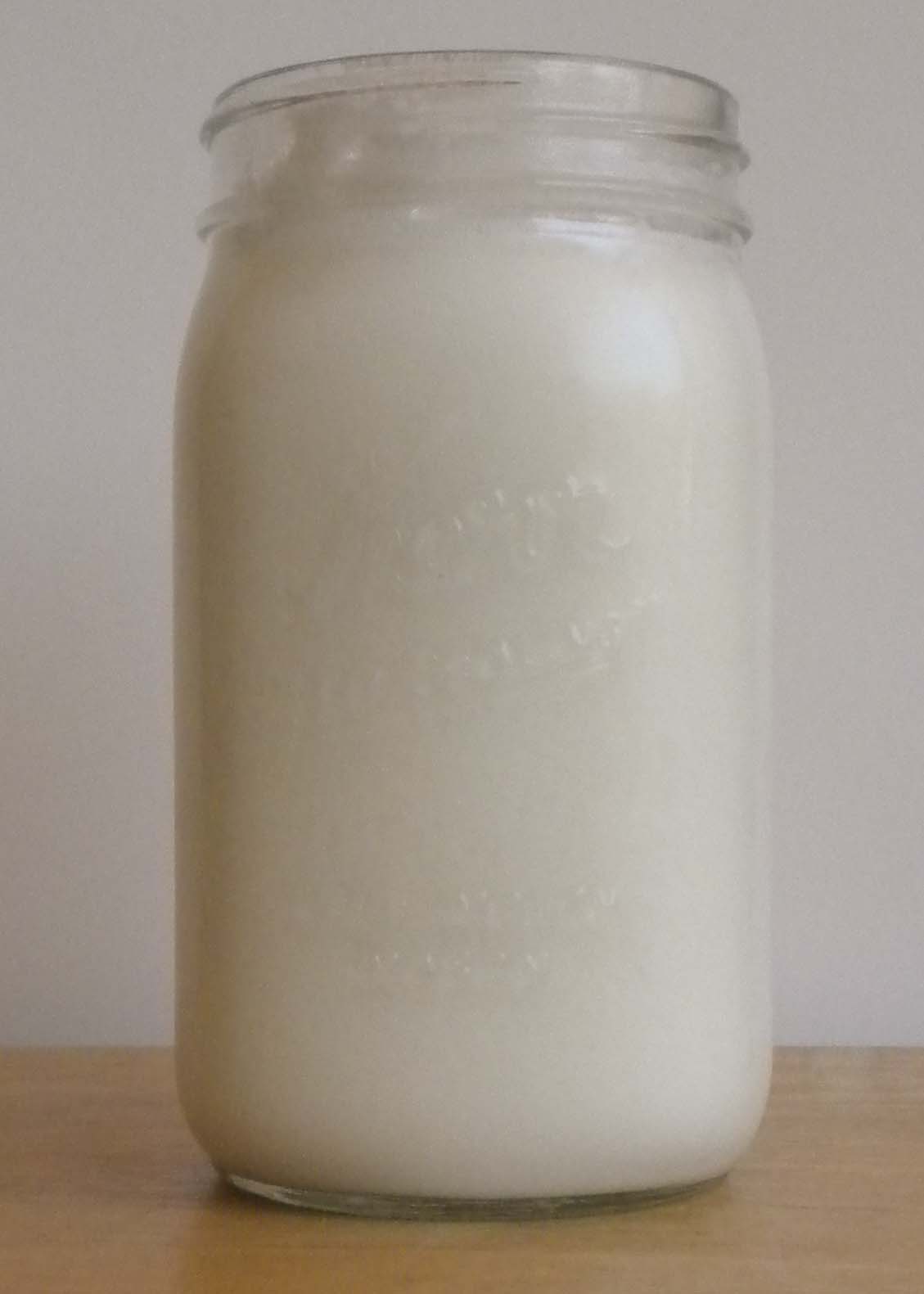
Cool, refreshing, nutritious traditional drink Ayran.
The United States is suffering from a widespread heat wave. The heat causes people to lose electrolytes, water, and minerals through sweating. Traditional peoples also suffered from hot weather. But they developed their own ways of cooling down. One of the oldest and easiest is a drink called Ayran, which also has other names.
Ayran was probably developed in Turkey, but it is widely used in the Middle East and the Balkans. While there are only two to four ingredients, the details and proportions differ, and there are many different versions.
Ayran includes old-fashioned, full-fat unflavored yogurt, and water. Salt is often added, sometimes mint leaves. The yogurt is full of nutrients that replenish a sweating body. The fat in the yogurt also provides energy. The salt not only replenishes lost salts, but minerals. The drink is very cooling and refreshing, and really helps deal with the heat. Ayran has no sweeteners and no chemicals, being a very pure drink.
It is best to use organic or the equivalent full-fat plain yogurt, which is what was used traditionally. Unrefined sea salt is ideal for this recipe, as it contains many minerals.
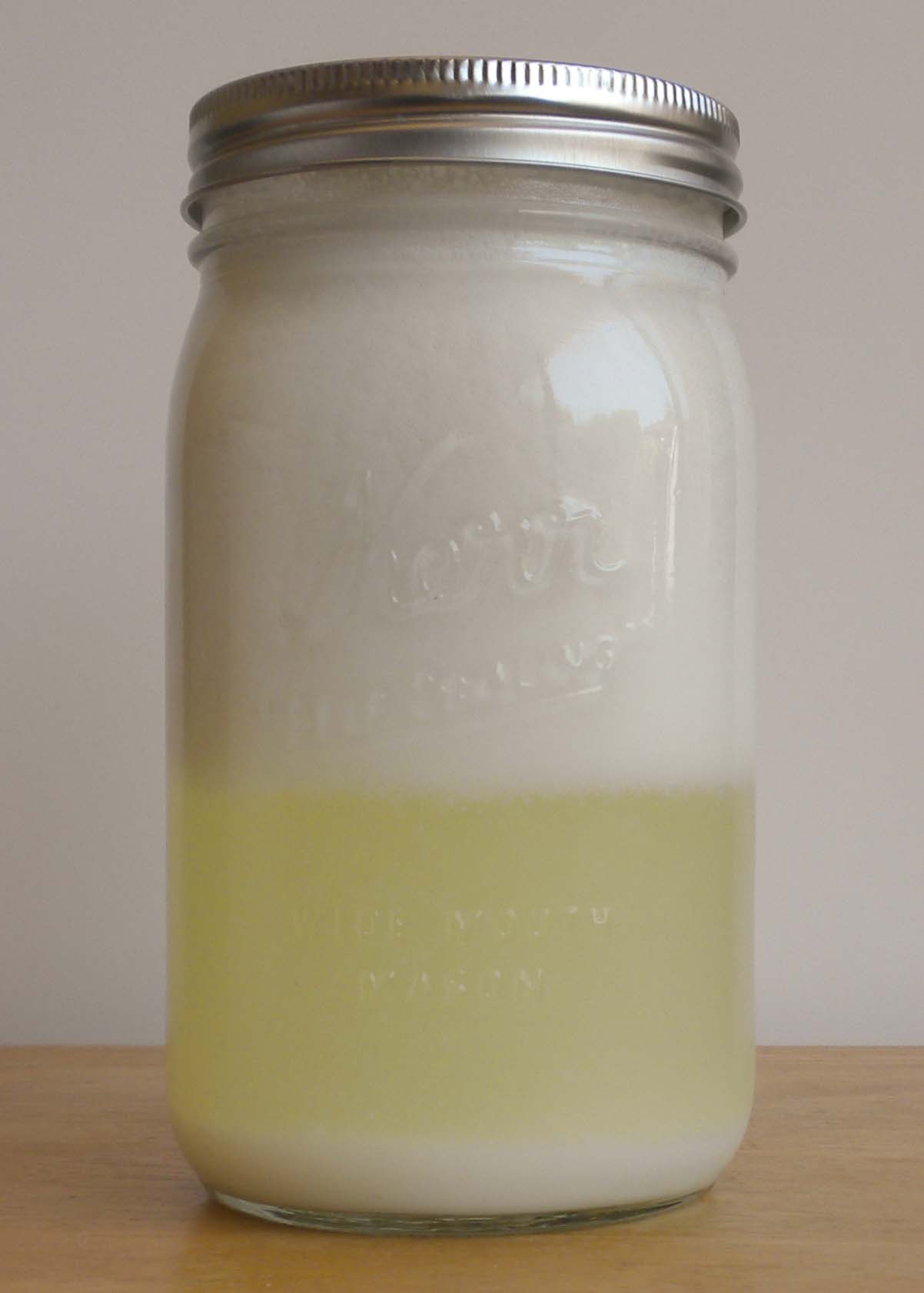
It is quite common for the drink to separate in the refrigerator. If this happens, a brisk stirring with a long fork will solve the problem.
Here is the version I like best:
Makes one quart. (You can double the recipe if you wish.)
INGREDIENTS
1 pound full-fat unflavored yogurt, preferably organic or the equivalent
2 cups cold filtered water
½ teaspoon unrefined sea salt
- Combine all ingredients in a blender or mixer. Blend for 1 minute.
- Chill in the refrigerator for at least 1 hour.
- If the mixture has separated, stir briskly until it recombines, which should happen very quickly.
Serve and enjoy this cooling drink.
This post is part of Weekend Gourmet, Real Food Wednesday, Fight Back Friday and Monday Mania blog carnivals.
Traditional Barbecue Methods Are Worth the Effort
By Stanley A. Fishman, author of Tender Grassfed Meat
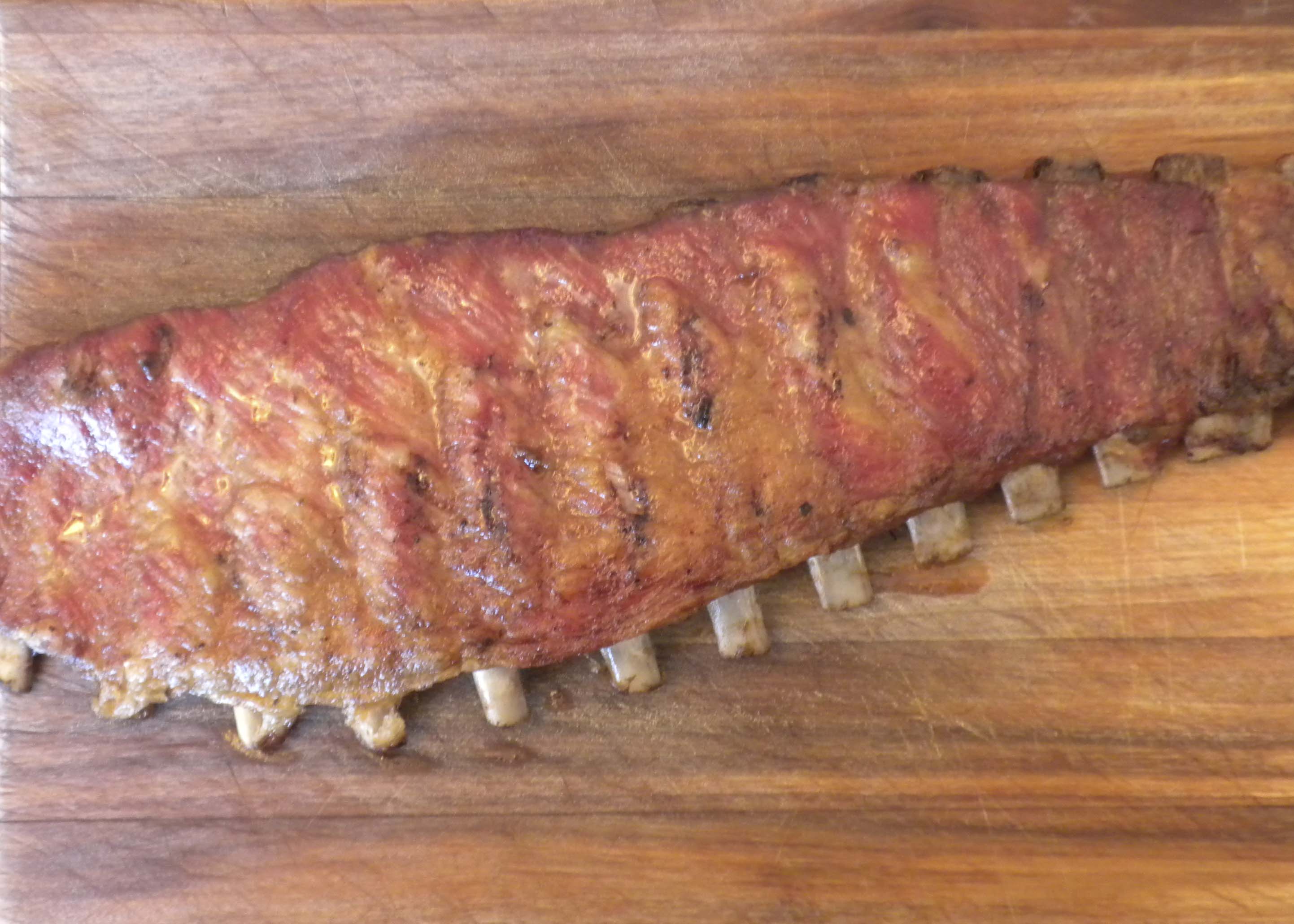
Pastured pork spareribs barbecued the traditional way.
Convenience has a high price. I just threw out an old cookbook that was all about making cooking easier by using prepackaged mixes, canned soups, broth cubes, microwaves, and other modern ways to make cooking easier. The main cooking skill you needed to use this book was the ability to open packages. Nothing was mentioned about the miserable nutritional profile of such “foods,†or about the effects of all the chemicals and preservatives. Or the fact that real cooking tastes so much better.
Convenience is a big part of modern American barbecue. Gas grills, pellet grills, premade factory sauces, premade factory rubs, premade factory marinades, all make barbecuing so convenient. The problem is that this convenience destroys the very factors that make true barbecue so delicious and nourishing.
I used to barbecue on an electric-powered grill that used wood pellets as fuel. You could actually set the temperature for how hot you wanted it, in degrees just like an oven. All you had to do was make sure the hopper was full of pellets, and then turn it on. It was easy to use. I thought the food cooked on it had a nice flavor, much better than any gas grill.
Well, a funny thing happened in the two years I spent writing my upcoming barbecue book. I decided to try to recreate traditional barbecue methods. This meant making a real fire, with real lump charcoal, or hardwood briquets that were made completely from hardwood, or burning hardwood down to coals. This meant making all my own marinades and bastes, from scratch. I got a common kettle grill that was powered by nothing but my own body and the fires I built in it. I used this grill to cook every meat recipe in the book, at least twice. And the barbecue I produced on this traditional style grill was so much better than the pellet grill, there was no comparison.
It was less convenient, and took a bit more effort. But it was worth it.
I decided that I was going to make the most traditional American sparerib barbecue I could, for a friend who came over two days ago.
I made an heirloom baste that was developed in the 1930s, by simmering various fresh vegetables and spices for hours, straining the liquid, and refrigerating it overnight, then adding a few traditional seasoning liquids, and simmering it again.
I used this baste as a marinade for some pastured spareribs, which sat in the baste for two days.
I built a fire out of hickory wood and hickory charcoal, and burned it down to coals, using tongs to move various pieces so they would fit properly in the fire bed.
I drained the ribs, boiled and strained the baste that had marinated them.
I made a rub out of various traditional spices, and sprinkled it all over the ribs.
I cooked the ribs slowly, first with moderate heat, then with low heat, basting them every 20 minutes, for two and a half hours.
We were rewarded with spareribs that were so good it is hard to describe them. So tender, with a nice pink smoke ring, and the kind of deep, smoky barbecue taste that can only be created by real barbecue, with a real fire, made with real fuel. That taste was so outstanding and memorable that I am still savoring it, two days later. It was the real thing.
No gas grill, no pellet grill, no processed condiments will ever come close to producing the real thing.
It was well worth the effort.
This recipe for spareribs is advanced, but I was trying to make the best ribs I possibly could, in the old style.
I intentionally kept most of the recipes in my upcoming barbecue cookbook simple and easy to make. All of these recipes rely on the magic of real fire, real fuel, real seasonings, and real grassfed and pastured meat to make totally delicious and nourishing food.
This post is part of Fight Back Friday and Monday Mania blog carnivals.
Hungarian Potato Dish Is Great for Hot Weather
By Stanley A. Fishman, author of Tender Grassfed Meat
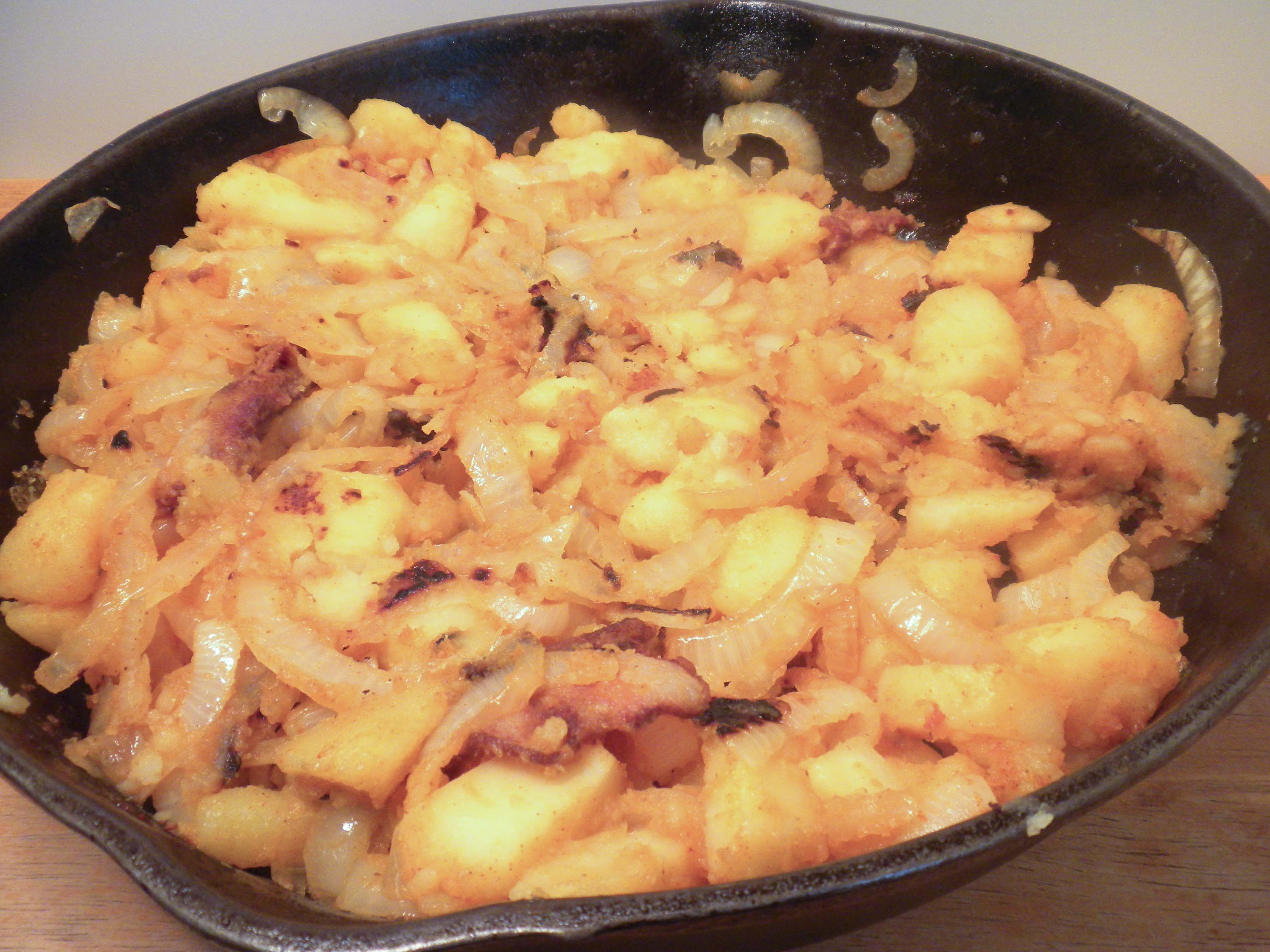
Potatoes with Hungarian Flavors
It is often hard to choose which recipe to put into a book. I had developed two recipes for Hungarian-style potatoes, but there was room for only one. Another version of this recipe will be in my new book, which will be finished soon. But this version is so good I decided to post it so my readers can enjoy it.
This recipe is based on the traditional Hungarian flavor combination of onions, paprika, and bacon fat. This simple combination results in a rich, sweet, savory flavor that is a joy to taste. This dish is cooked at low heat on top of the stove, which makes it a good choice for a side dish on a hot day. Actually, it tastes so good that it can be enjoyed in any weather.
The basic Hungarian flavor base is made by sautéing onions in bacon fat until lightly colored, lowering the heat, and adding paprika. Very simple, but care must be taken in the selection of ingredients.
I recommend using organic potatoes and organic onions for this dish, as they have a better flavor.
The paprika should be from Hungary, if possible, and should be sweet. However, you could, if necessary, make it with sweet paprika (dulce) from Spain, or organic paprika.
I also recommend using bacon that does not contain nitrates, or other artificial preservatives, preferably from pastured pigs. The bacon absolutely must be very fat, as plenty of bacon fat is necessary for the success of this recipe.
Like many traditional recipes, this dish is simple, but the flavor is over the top, being much more than the sum of its parts.
INGREDIENTS
Filtered water for boiling
1 teaspoon coarse unrefined sea salt
6 medium organic potatoes, peeled, and quartered lengthwise
4 thick slices fat bacon, without nitrates
2 medium organic yellow onions, sliced
1 tablespoon organic or imported sweet paprika, preferably Hungarian
DIRECTIONS
1.     Heat a medium-sized pan of filtered water to boiling. Add the salt and the potatoes, and bring it back to a boil. Reduce the heat to medium, and let the potatoes cook at a slow boil for 10 minutes. Drain the potatoes.
2.     Place the bacon in a cold heavy-bottomed frying pan. Turn the heat to medium. When the fat starts to melt, lower the heat to medium low. Turn the bacon from time to time so the fat can render from both sides without burning.
3.     When most of the fat has rendered from the bacon, add the onions and sauté over medium low heat for about 5 minutes, stirring occasionally. The onions should soften and take on a golden color.
4.     Turn the heat down to low. Add the paprika and mix well into the onions. Cook over low heat for 2 minutes, stirring, being careful not to burn the paprika.
5.     Add the potatoes and stir well, making sure that all the potatoes are coated by the fat and paprika. Use a heavy spoon to break each potato quarter into two or three pieces as you stir.
6.     Turn the heat back up to medium and stir. Cook for another 5 minutes, turning the mixture occasionally.
7.     Cover the pan, and turn the heat to low. Cook for another 10 minutes, lifting the lid and stirring occasionally.
You should wind up with a meltingly soft, caramelized mélange of onions and potatoes, subtly flavored by the paprika that goes well with any barbecued meat.
This post is part of Weekend Gourmet, Real Food Wednesday and Fight Back Friday blog carnivals.
Grassfed Meat and Fat are Ideal for Paleo Diets
By Stanley A. Fishman, author of Tender Grassfed Meat
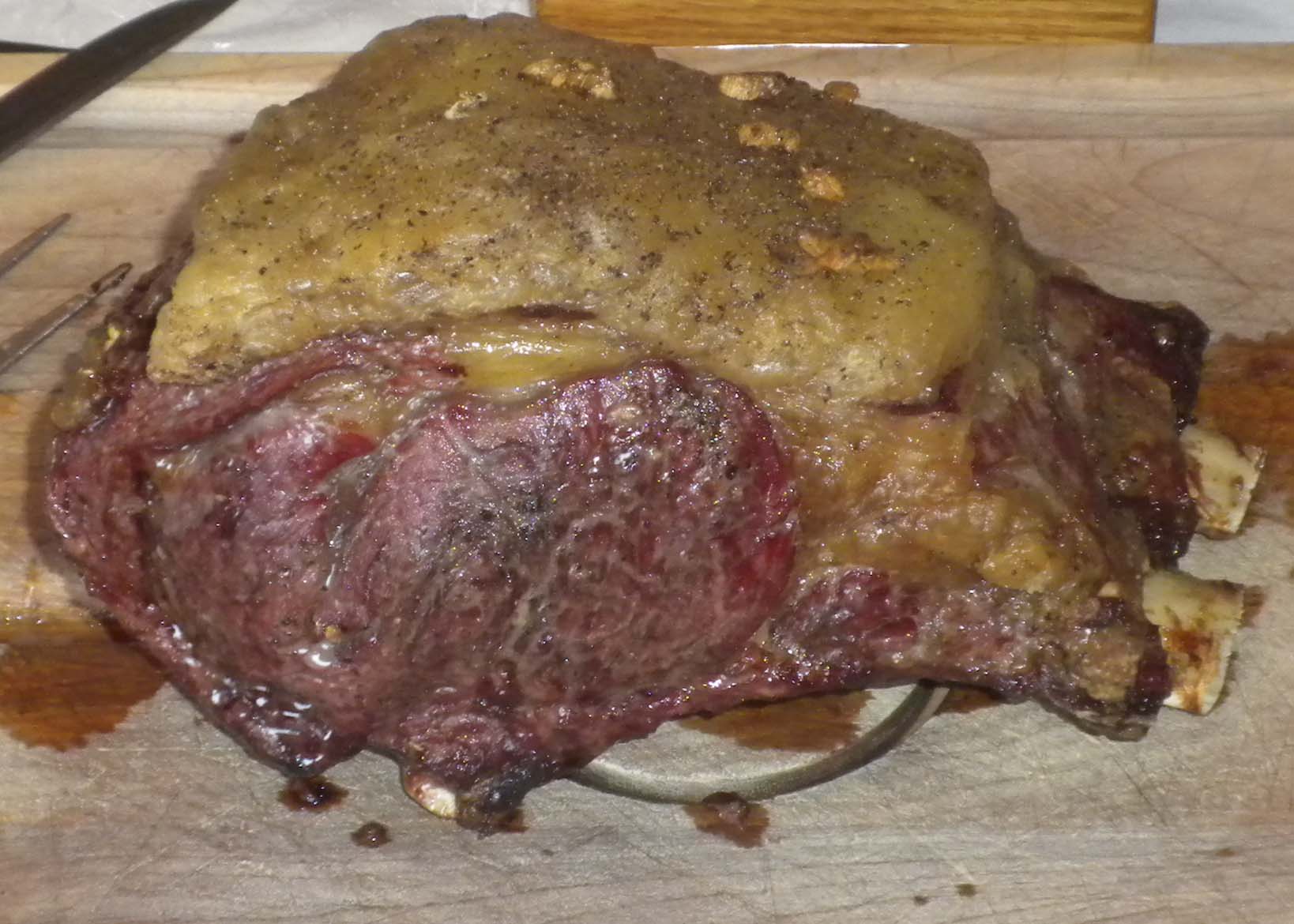
Barbecued Grassfed Prime Rib with a Garlic Marinade from my upcoming book.
The Paleo diet has been adopted by many people, and the numbers are growing. The idea that we should eat like our ancestors makes complete sense, as our bodies have evolved to eat and process the foods they used over tens of thousands of years. While there are different variations of Paleo diets, one thing is true for all of them—grassfed meat is ideal, especially when barbecued.
What is Paleo?
I did not know about the Paleo diet when I wrote my first cookbook, Tender Grassfed Meat. As I followed news of my book on the Internet, I came across a number of comments on Paleo websites that praised my book and talked about how it was great for people following a Paleo diet. These comments inspired me to learn about Paleo.
The Paleo concept is both simple and profound. The idea is that we should eat the same foods that our distant ancestors ate, before agriculture was developed. The argument is a powerful one—agriculture is only a few thousand years old, but humanity has existed for tens of thousands of years, or much longer.
The foods eaten by humanity over these tens of thousands of years included the meat and fat of ruminant animals, the meat and fat of other animals such as wild boar, the meat and fat of a huge variety of birds, wild fish, and seafood. Nuts, berries, wild roots, and plants were also eaten. Meat was eaten on the bone whenever possible, and bones were cracked open for their marrow, and formed the basis of early broths. Because humans have been eating these foods since the beginning, they are ideal for our bodies, since we have evolved to eat and digest them.
The food of agriculture, such as grains and dairy, as well as all of the modern processed foods, are new to our bodies and can cause problems with digestion and absorption, as well as allergies and other problems.
Therefore, a true Paleo diet would avoid all modern foods, and many traditional foods, including all grains and dairy.
I personally eat lots of dairy, but only in its traditional forms. Humans have been eating traditional dairy for about ten thousand years, and my body does fine with it. I avoid most grains, and find that I can easily do without them. I avoid all modern processed foods. But the food I enjoy and crave the most is Paleo—grassfed meat and fat, cooked in front of burning coals.
But it is not enough just to eat meat and fat. Modern industrial meat has a totally different nutritional content from the meat eaten by our ancestors. Grassfed meat and fat is as close as we can get to the meat that nourished our ancestors (with the exception of wild game).
The Price–Paleo Connection—Modern Examples of a Real Paleo Diet
Dr. Weston A. Price, spent ten years studying the diets of the traditional peoples who were free from the chronic diseases that plagued the modern world, such as tooth decay, heart disease, asthma, cancer, allergies, birth defects, and just about every chronic modern illness. He did not read reports or studies, but actually travelled to where these people lived and met them, taking detailed notes on what they ate and how they lived.
Three of the healthy peoples studied by Dr. Price were eating a Paleo diet, in that they had no agriculture and no dairy. They lived completely from hunting and gathering. Their traditional diets had not changed for many thousands of years. These peoples included Alaskan Eskimos (Inuit), Australian Aborigines, and Canadian Native Americans.
When these peoples ate their traditional Paleo diet, they were healthy. When they ate modern foods, they were riddled with all kinds of chronic disease, and died in large numbers from diseases such as tuberculosis.
These peoples all ate the meat, organs, and fat of grass-eating animals, as well as other animals. Those who lived by the sea also ate huge amounts of wild seafood and fish. While all of these peoples gathered and ate a variety of nuts, berries, and plants, their diets focused heavily on meat, organs, and fat, both from land and sea animals. All of the animals they ate were eating a species-appropriate diet such as grass and meadow plants for herbivores.
Grassfed and Paleo—a Perfect Match
Most of the foods eaten by early humans are not readily available to us. But we can find and eat foods that have a similar nutritional profile. The major food of these people was the meat and fat of animals, especially ruminant animals. We can get an almost identical set of nutrients by eating plenty of grassfed meat and fat, as well as the organs of grassfed animals.
Grassfed bison meat, from bison grazing their natural habitat, is just about identical with the bison that was eaten by early humans.
Grassfed beef is very similar, even though the breed and characteristics of the animals have changed from the wild varieties available before agriculture.
Grassfed lamb and goat also have a similar nutritional profile.
Pastured pork, from pigs who have been allowed to root in the forest like their wild ancestors, is another meat that is close to the meat eaten by early humans.
Grassfed Barbecue and Paleo—an Even Better Match
While the peoples studied by Dr. Price ate some of their meat raw or fermented, much of their meat was cooked, and it was almost always cooked in front of a fire.
I do not know if any nutrients are enhanced by the barbecue process, but the taste certainly is. The mouthwatering smell and taste of charcoaled meat appeals to most people on a primal level. The smell of meat roasting in front of a fire, the flavor added by the burning coals, is one of the oldest human pleasures, one that has been enjoyed for ages.
By barbecuing grassfed meat in a traditional manner, we can enjoy this primal taste, as did our ancestors.
This article was taken from my upcoming book on grassfed barbecue.
This post is part of Real Food Wednesday, Fight Back Friday and Monday Mania blog carnivals.
« Previous Page — Next Page »