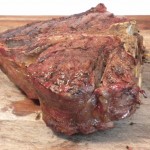
 Photos of recipes from the new book Tender Grassfed Barbecue
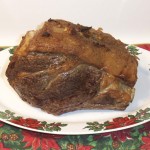 Photos of recipes from the cookbook Tender Grassfed Meat

Why Is Fattier Grassfed Meat Best?
By Stanley A. Fishman, author of Tender Grassfed Meat
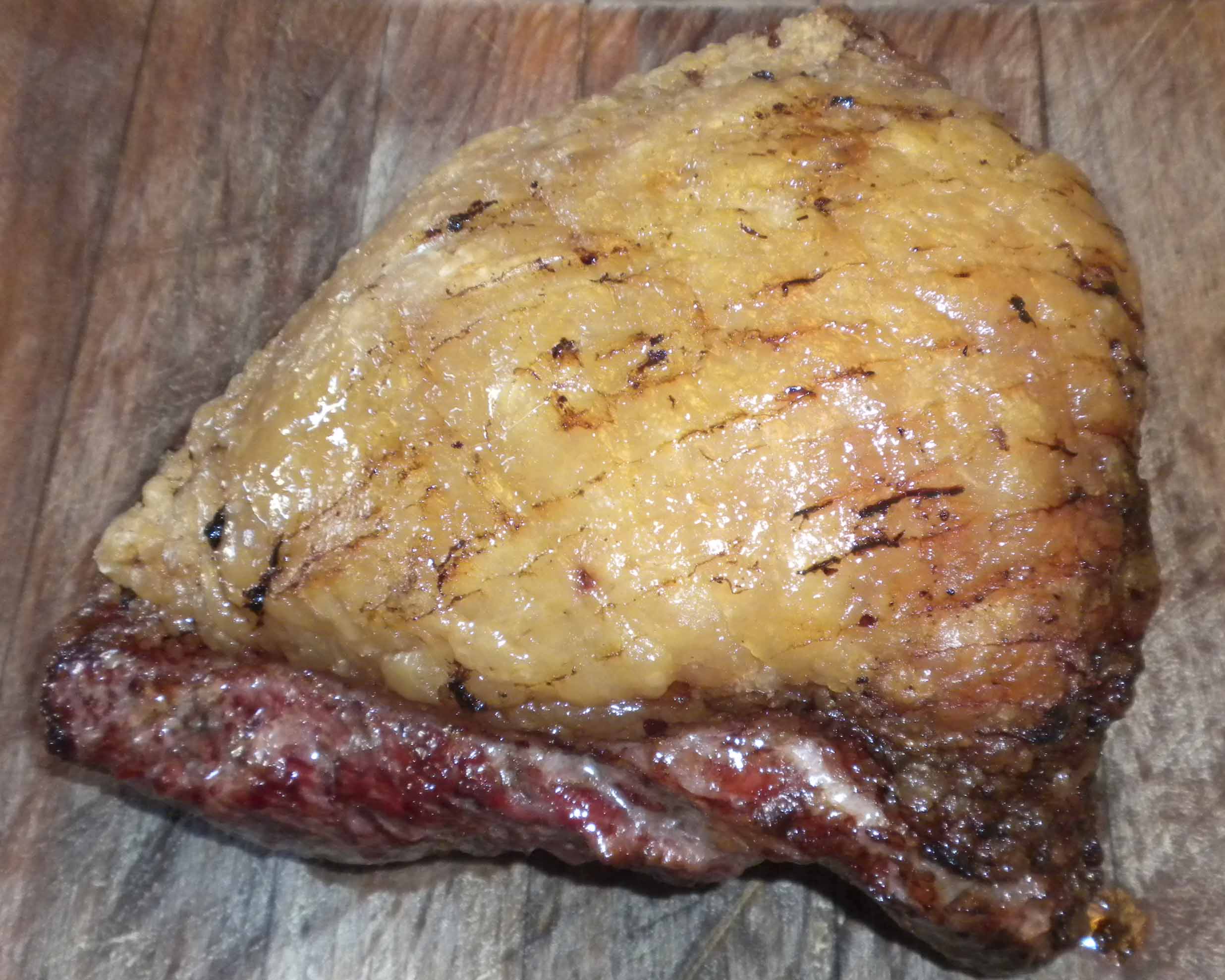
Grassfed sirloin roast, with a delicious, nutritious fat cap.
Our culture has a phobia about animal fat. The horrid nutritional guidelines just issued by the U.S. government tell us to eat meat only occasionally, and eat only lean meat. This is truly a shame, because animal fat from pastured animals contains many vital nutrients that are easily absorbed and hard to get elsewhere. Animal fat from grassfed animals also gives great taste, tenderness, and satisfaction (unlike the lumpy, greasy fat so prevalent in factory meat).
All grassfed meat is leaner than factory meat. Many producers advertise how lean their grassfed meat is. Some grassfed meat is much leaner, and some contains more fat. So which is better? For our ancestors, the choice was simple. Fat meat was desirable and cherished—lean meat was eaten to avoid starvation or thrown to the dogs.
For me, the answer is also simple. Most of the nutrients in grassfed beef are in the fat. Fattier cuts of grassfed meat have more flavor and come out more tender. The fattier the better, when it comes to grassfed meat.
Grassfed Fat vs. Factory Fat
There is a great difference in the content and composition of the fat of grassfed animals and the fat of factory animals finished in the feedlot.
The fat of grassfed animals has a much higher ratio of omega-3 fatty acids to omega-6 fatty acids, has much more CLA, and is much richer in other nutrients. The fat of feedlot-finished factory animals has a much higher omega-6 to omega-3 fatty acid ratio, much less CLA, and contains substances from the feed that get stored in the fat.
The fat in grassfed meat appears both as a covering over the cut of meat, and in small white flecks that can be seen in the meat itself. These small flecks are called marbling. The fat of feedlot-finished factory meat also appears as a covering, but it can often be seen in the meat itself as thick, blocky veins of fat, or lumps of fat. No grass finished meat has this appearance.
I personally find the fat in grassfed meat to be delicious and satisfying. It smells so good when the meat cooks that it makes me very hungry. I find the fat in feedlot-finished factory meat to be greasy, unpleasant, and downright disgusting. Factory meat does not satisfy me, and leaves me hungry and bloated. Grassfed meat always leaves me feeling satisfied and good—which is one of the main reasons why I only eat grassfed and grass finished  meat.
What about the Studies?
The media often publicizes studies that claim that eating meat, especially fat meat, is unhealthy.
While I never blindly believe any study, knowing how flawed and biased they can be (though some are completely valid, you just have to study the details), I have noticed two important points that make them inapplicable to grassfed meat and fat:
- All of these studies include the eating of highly processed factory meat, meat that is full of preservatives and chemicals, such as luncheon meat. It is impossible to know if the negative results claimed by the studies come from the meat or the chemicals.
- None of these studies are limited to the eating of pastured meat processed without the use of chemicals, but are based almost totally on feedlot-finished factory meat that has been raised with artificial hormones, chemicals, antibiotics, species-inappropriate feed, and other factors that were never used by our ancestors. It is impossible to know if the negative results claimed by the studies come from the meat or the hormones, chemicals, antibiotics, species-inappropriate feed, or other factors, or any combination of them.
The main studies we have on the nutritional effects of traditional meats, fats, and diets are the customs of our ancestors, and the vital research of Dr. Weston A. Price. These traditions and the research of Dr. Price support the health benefits of eating traditional unprocessed animal fats.
Why Fattier Grassfed Meat Is Better than Leaner Grassfed Meat
Once again, the traditions of our ancestors are the key to understanding. Every traditional meat eating culture preferred fat meat to lean meat. Traditional recipes for meat always make sure that it is cooked and eaten with plenty of fat, with roasts being inevitably covered by a glorious crown of their own magnificent fat. The most prized, luxurious cuts of meat were always the fattest.
Traditional Inuit were known to reserve the organ meats, fatty meats, and fat for themselves, while throwing the really lean meat to their dogs.
The most valued traditional foods included the fats of pastured animals, with lard, beef tallow, goose fat, duck fat, and chicken fat being heavily used for cooking in traditional Europe. The Native Americans used bear fat, bison fat, and the fat from other game. Lamb fat was prized in the Middle East, where breeds of lamb were raised that had huge tails composed almost completely of fat, which was used in all kinds of cooking. Lard was the most important fat in China, used for cooking almost everything.
I am convinced that cooking traditions reflect the collective experience of the people who have them, representing thousands of years of trial and error, passed down from parent to child, from teacher to student. The wisdom of these traditions was proved by Dr. Weston A. Price, who discovered that traditional peoples eating their traditional diets were completely free of the chronic diseases that afflicted modern peoples, remaining healthy and vigorous into extreme old age. Every one of the peoples studied by Dr. Price only ate meat with plenty of fat.
An example of this wisdom is pemmican, a staple preserved food of the Native Americans who lived on the Great Plains of the United States. Pemmican consisted of dried bison meat, dried cherries, and a great deal of bison fat. The Native Americans knew that the fat was absolutely necessary for the pemmican to sustain life.
Most of the nutrients in grassfed meat are in the fat, not the meat itself. Very lean grassfed beef, that has no visible marbling, will have fewer nutrients than grassfed meat that is nicely marbled. A roast that has all the fat cover trimmed off will have fewer nutrients than a roast cooked with a cover of its own natural fat.
I have found that the fattier the grassfed meat, the more tender and tasty and satisfying it is. You can make lean grassfed meat tender and delicious, with the proper technique and marinades. But the grassfed meat that has the little flecks of fat in the meat will be more tender, and more tasty, and more satisfying. The grassfed roast cooked with a cap of its own magnificent fat will always come out much better that the totally trimmed roast. Our ancestors knew this, and it is a delicious and healthy tradition to follow!
Related Posts
The Joy of Fat, Why We Lost It, and How to Get It Back
This post is part of Real Food Wednesday, Fight Back Friday and Monday Mania blog carnivals.
The First Low-Carb Doctor—2500 Years Ago!
By Stanley A. Fishman, author of Tender Grassfed Meat

 photo credit: bazylek100
Dr. Robert Atkins is credited (or blamed) for creating the low-carb diet. But Dr. Atkins was not the first to advocate a high-fat, high-protein, low-carb diet for losing weight.
The father of medicine was also the father of low-carb. Hippocrates of Kos, the most famous and honored doctor of all time, known as the “Father of Medicine†was the first to advocate a low-carb diet for losing weight.
Who Was Hippocrates?
Hippocrates was born in the middle of the fifth century before Christ. He revolutionized the practice of medicine in ancient Greece. At that time, there was a conflict in Greek medicine. There was a division between those doctors who relied on aggressive, dangerous treatments like drugs and surgery (yes, the ancient Greeks used both), and those who saw illness as a punishment from the gods and advocated religious means for healing. Hippocrates created a new path for healing.
Hippocrates studied his patients by observing them, taking careful notes, and using his experience to diagnose their conditions. His approach was centered on strengthening the patient through food, exercise, and rest, so the patient’s body could heal itself. Some other techniques used to strengthen the body included massage, inhaling various fragrances, soft music, relaxation, even gentle conversation designed to help calm the patient, and other similar techniques.
Hippocrates taught that it was more important to know the patient’s body and how to strengthen it, than to know the disease the patient had. Hippocrates taught that the body had the power to heal any illness, if the natural processes were properly supported.
The Hippocratic way of healing always started with diet and exercise. Only if those did not work was medication used. The use of medication was stopped when the patient was well enough to respond to diet and exercise. Surgery was the last resort. The doctor was instructed that every patient was a unique individual, and treatment had to be designed for each particular patient. This was the total opposite of today’s “same treatment for the same disease for everybody†approach.
Hippocrates taught that the patient should be treated with kindness, respect, love, and understanding, and knew that a person’s mental attitude had a great deal to do with the healing process.
Hippocrates believed that aggressive medical treatment could do great harm to the patient, and said that the most important rule for the physician was, “First, do no harm.â€
Why Was Hippocrates Considered the Greatest Doctor of All Time?
Hippocrates was considered the greatest doctor of all time, because he was so successful in treating illness. While he did not cure everybody, he cured so many that he became recognized as the greatest and most successful doctor of antiquity, perhaps of all time.
Hippocrates became particularly famous when he was credited with stopping the great plague that hit Athens during the Peloponnesian War. Athens was under siege, with large numbers of people and animals crowded together. All food had to be brought in by sea, and there was a shortage of fresh food. A terrible plague broke out, killing thousands. The drugs and treatments of the conventional doctors proved useless, as did trying to appease the Greek gods. Hippocrates and his followers came to Athens to try to cure the plague, as it was feared that this terrible disease would wipe out Athens and threaten the very survival of the rest of Greece.
Diet and exercise would not work here, as the victims of the plague were too sick to keep food down, or to exercise. Hippocrates carefully observed the situation. He noticed that the only group of people not affected by the plague were the blacksmiths and their workers. Hippocrates noted that the blacksmiths spent a great deal of time around burning fires, and often drank warm water that had been brought to a boil, since they were always around hot fires. Hippocrates gave these instructions to the people of Athens:
- They were to light large fires in every home, and keep them burning.
- All corpses were to be burned completely.
- All water was to be boiled before drinking.
The people of Athens followed his prescription, and the plague soon ended.
I should mention that modern doctors and historians call this a legend, refusing to believe that an ancient physician could cure the plague. After all, he had no modern drugs or antibiotics. Any end to the plague must have been a coincidence that had nothing to do with Hippocrates. But the people who were actually there gave credit to Hippocrates, and considered him the greatest doctor in the world.
How to Lose Weight—“Let the Foods Be Richâ€
Hippocrates lived in a time when many people were fat, and wanted to lose weight. He said: “People who wish to become thin should let the foods be rich.â€
Hippocrates believed that a diet consisting of rich foods would satisfy the appetite, giving the body what it needed so the patient would not eat too much. “Rich food†in his day meant the fat from grassfed animals and pigs, fatty cheeses, and fatty meats. By limiting his patients to the rich foods, he was putting them on a low-carb diet, a diet that was very similar to the one advocated by Dr. Atkins, 2500 years later!
Hippocrates also cautioned doctors to avoid a “one size fits all†approach to weight loss. He stated that each patient had a natural weight that was ideal for that person. The goal was to reach the degree of thinness that the patient’s body would support, and maintain naturally with a good diet.
By advocating that each patient reach the level of thinness that was right for them, Hippocrates rejected the idea that every person must reach the same degree of thinness. The modern idea of identical thinness for everyone has caused so much pain and misery, causing the horrible cycle of drastic weight loss followed by drastic weight gain that is so common today. This horrible cycle is repeated by person after person, resulting in huge profits for the diet industry.
It should be noted that Hippocrates prescribed various diets to help sick people. Sometimes he would prescribe a diet that contained carbs, and sometimes he would put a patient on an all-barley diet for a short period, but not for weight loss. As always, he customized his treatment to the individual patient.
Hippocrates Said
Some of the quotes from Hippocrates really show his philosophy, and are completely consistent with the alternative doctors of today:
“Let food be thy medicine, thy medicine shall be thy food.â€
“Leave your drugs in the chemist’s pot, if you can cure the patient with food.â€
“Walking is man’s best medicine.â€
The Hippocratic Oath
Hippocrates is famous for establishing a code of ethics for the medical profession, which was embodied in an oath he wrote for all physicians to take.
There was a time when all Western doctors took the oath, though many did not honor it. The modern version of the Hippocratic Oath does not even resemble the oath written by Hippocrates, and is completely different.
To me, the most important part of the original Hippocratic Oath is stated in this paragraph:
“I will use those dietary regimens which will benefit my patients according to my greatest ability, and judgment, and I will do no harm or injustice to them.â€
In other words, doctors used to take an oath to heal with diet! Not drugs, radiation, or surgery, but diet.
Hippocrates and the Research of Dr. Weston A. Price
The healing approach of Hippocrates, based on a healthy diet that supports the natural functioning of the body, is completely consistent with the findings of Dr. Weston A. Price.
Dr. Weston A. Price studied a number of healthy peoples who ate the diet of their ancestors. All of these peoples followed the Hippocratic method of using diet to support the natural functions of their bodies. All of these peoples were completely free of the chronic diseases that plague the modern world. All of these peoples ate a diet that was much higher in animal and fish fat, and much lower in carbs than modern diets. And all of these peoples were in great physical shape, with obesity being unknown.
Dr. Robert Atkins, the founder of the modern low-carb diet, had been demonized, vilified, and heavily criticized. His critics constantly claimed that his findings had no support in science or history. They were wrong, as the greatest physician of all time, Hippocrates of Kos, also prescribed a low-carb diet for losing weight, using very much the same approach as Dr. Atkins.
Related Posts
How Grassfed Meat Helps Weight Loss
This post is part of Real Food Wednesday, Fight Back Friday and Monday Mania blog carnivals.
Live Food, Dead Food
By Stanley A. Fishman, author of Tender Grassfed Meat
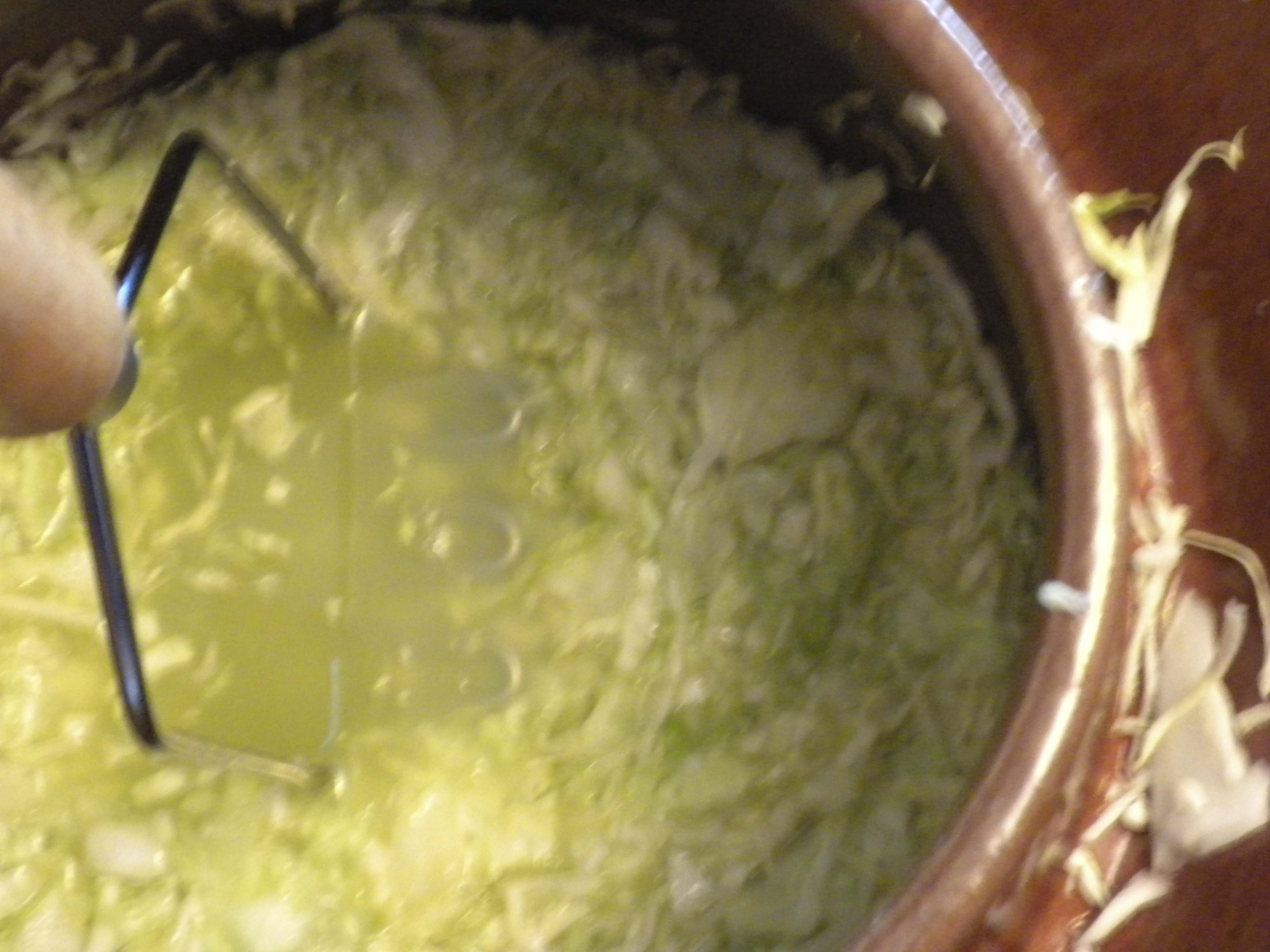
Traditional homemade sauerkraut is full of life.
Human beings need live food to support their life and health. Food that is full of vitamins, enzymes, co-factors, and many other substances that exist naturally in the food of our ancestors. Our bodies know how to use these substances to support life and health.
Modern processed foods are full of chemicals and preservatives that have killed almost all the life in the food. Many so called “fresh†foods are irradiated, which kills the life in the food. Many of these foods will not spoil, because there is no life in them to spoil. These dead foods do not give us the nutrients needed to support the natural functions of our bodies, which require nutrients that can only be found in live food.
Traditional Foods Are Live Foods
Our ancestors ate live food. It was either fresh and unmodified, or it was preserved by traditional methods such as fermentation, drying, and smoking. These traditional food preservation methods actually used beneficial bacteria to increase the life in the food, often increasing the amount and quality of the nutrients.
Dr. Weston A. Price spent ten years travelling around the world, studying the diets of healthy traditional peoples. He found that traditional peoples eating the diets of their ancestors were free of the chronic diseases that plague modern humanity.
- They did not have tooth decay, though they had no dentists.
- They did not have cancer, or heart disease, or arthritis, or asthma, or allergies, or birth defects, though they had no doctors.
- They did not have any form of mental illness, though they had no psychiatrists.
- They did not have crime, though they had no police.
- They kept their sight, hearing, balance, mental acuity, and mobility well into extreme old age, though they had no glasses, no hearing aids, no hip or knee replacements, and no prescription drugs.
What they did have was plenty of good live food in its natural state, free of added chemicals, brimming with enzymes, vitamins, beneficial bacteria, and other co-factors that were alive, not dead. While the diets of these people were diverse, all of them ate raw or very rare meat and/or seafood, though they also cooked much of their food. All of them ate the organs of animals and fish raw, or lightly cooked. All of them ate some form of fermented live foods. All of them ate some form of raw, live animal fat, whether in the form of pastured butter, raw milk, raw cheese, raw fish fat, or raw animal fat. All of them ate raw fruit and berries. All of them ate some vegetables raw. All of them preserved food by fermentation, or drying, or smoking. These traditional methods preserved or actually increased the life in the food.
Dr. Price also found that traditional peoples eating modern processed foods suffered greatly from every modern disease; had terrible teeth that they often lost; and often suffered from epidemics such as tuberculosis. The modern processed foods eaten by these sick people were dead foods from cans and jars, often filled with sugar, processed in such a way that they did not spoil.
Modern Foods Are Dead Foods
The food industry loves dead food. Why? Dead food lasts longer. Dead food will not spoil. As an example, some cupcakes have lasted 15 years without spoiling. See this fine article about 15 year old cupcakes. Dead food has a very long “shelf life,†which means it can be transported for weeks, and sit on shelves for months or years, and still be the same. Dead food increases profits.
Live foods spoil, which really hurts profits. The fact that live foods will spoil makes it much harder to transport them, requiring intensive refrigeration, or freezing.
The food industry developed chemical preservatives, substances that prevent food from spoiling by killing the life in the food. These preservatives change the food they touch, changing it into something that we were not evolved to eat, something that our bodies do not recognize or know what to do with.
Dead food is not limited to packaged foods. Pesticides are poisons, whose purpose is to kill. Some pesticides are designed to kill plants, and others are designed to kill insects. When they are in the food, they change the food, almost certainly killing some or all of its live qualities.
Genetically modified plants have been changed so they can survive huge amounts of pesticides without dying. This means that genetically modified plants have been sprayed with even more pesticides than ordinary factory crops. Other forms of genetically modified plants actually have internal pesticides that will kill insects.
Many fruits, vegetables, spices, meats, and other foods are irradiated. The purpose is to kill bacteria, but the radiation changes the food itself, into something different, something new and foreign to our bodies. The purpose of radiation is to kill, and radiation kills life, including much of the life in the food.
The food industry has now introduced nanites, tiny particles much smaller than a single cell, as a new way to preserve food. These nanites are designed to kill bacteria, and they will kill all bacteria, including the beneficial bacteria our bodies need to function properly. These nanites are often used in food packaging, and no labeling is required. It is not known what happens when these tiny particles penetrate our cells, especially the cells of our organs.
How to Eat Live Food
The basic rule is, if it does not spoil, don’t eat it. This applies to meat, fish, vegetables, fruits, milk, cheese, butter—just about every food.
- Eat only real, basic food that humanity has eaten for many centuries.
- It is also best to find foods that are raised and processed without the use of added chemicals, such as foods that are organic or the equivalent. Processed foods should be avoided. If you buy processed foods, try to buy foods packed in glass, to avoid chemicals and nanites in the packaging. Even organic foods can have chemicals in the packaging, as organic tomato cans are lined with BPA.
- Avoid all foods that have been irradiated.
- Avoid all foods that have chemical preservatives.
- Avoid all foods that have been genetically modified.
- Eat traditionally fermented condiments, such as old fashioned sauerkraut. Traditional fermentation actually increases the life in food.
- Eat a large portion of your food raw. This can include high-quality dairy, fruits, and vegetables (though some vegetables, especially cruciferous vegetables, should not be eaten raw).
- Eat only grassfed, grass finished meats and wild seafood. These foods are especially full of life when cooked rare, or eaten raw. As Sally Fallon Morell has pointed out in her great cookbook, Nourishing Traditions, the US Department of Agriculture has stated that parasites are killed if food is frozen for at least 14 days.
- Learn about traditional foods, and how to prepare and eat them. I recommend Nourishing Traditions, by Sally Fallon Morell. For grassfed meats, I recommend my own book, Tender Grassfed Meat.
Live foods give life, by supporting the natural functions of our bodies.
This post is part of Real Food Wednesday and Fight Back Friday and Monday Mania blog carnivals.
The Joy of Fat, Why We Lost It, and How to Get It Back
By Stanley A. Fishman, author of Tender Grassfed Meat
Grassfed sirloin roast, with a delicious, nutritious fat cap.
“People are missing out on the joy of fat. It keeps the meat tender, makes the meat taste so much better.â€
These words of wisdom came from my friend Brian, head of the meat department at my local market. Brian is not only a master butcher, he is a classically trained chef who studied in France and cooked in Denmark. Brian knows grassfed meat.
We were talking about customers who want all the fat trimmed off every piece of meat they buy. These customers and so many others are truly missing out on the joy of fat.
The Joy of Fat—Taste, Tenderness, Satisfaction, and Nutrition
The natural fat on a piece of grassfed meat cooks down into the meat, keeping the meat tender while adding fantastic flavor and nutrients. The wonderful smell given off by the roasting fat is the best appetizer on earth, causing our bodies to prepare for digestion, and the joy of a great meal. You can roast vegetables like potatoes, carrots, peppers, celery, etc. right in the same pan, and the melting fat will brown them, caramelize them, and give them incredible taste and flavor that goes so well with the meat.
There is also the joy of satisfaction. Meat and vegetables cooked with grassfed fat are the most satisfying food on earth. After a serving of this delicious food, full of all kinds of nutrients, hunger disappears and the urge to eat and eat and eat that plagues so many people disappears. You stop eating because you are satisfied, and no longer want to. When your body has the nutrients it needs, the desire to eat is gone.
The fat from grassfed animals and wild fish has the natural ratio of omega-3 to omega-6 essential fatty acids, and contains many other beneficial substances that factory meat and farmed fish lack. This fat was cherished by our ancestors, who ate as much of it as they could, and our bodies have evolved to know how to use it. It is prime fuel for our bodies. More information on the benefits of animal fat is explained here.
All of the healthy peoples studied by Dr. Weston A. Price ate plenty of animal fat, from animals that were wild or pastured. Most of them ate as much fat from wild seafood as they could get. These healthy people had perfect teeth, and were free from the chronic diseases that plague us.
How the Joy of Fat Was Replaced by the Fear of Fat
Most people are afraid of animal fat. They fear that eating animal fat will clog their arteries with cholesterol, causing heart attacks and strokes. They fear that eating animal fat will make them fat. They fear that eating animal fat will give them all kinds of diseases. All of these fears are just not true. In fact, cholesterol is beneficial, as explained in this article: Cholesterol: Friend or Foe?
So why does the government, the news media, the medical profession, the food industry, the drug industry, and the educational system, all support and repeat this misinformation?
The answer is very simple—money.
It has been written that “Money is the root of all evil.†There is much truth in that statement.
Extensive marketing campaigns, backed by many “studies†based on incomplete, mistaken, or biased research, convinced the public to fear real fat. When people were convinced to avoid the most important nutrient, it had to be replaced with something. This created several very lucrative markets.
The Food Industry Makes Money from the Fear of Fat
Real animal fat satisfies hunger like no other food. When you remove fat, people are hungry because they are not getting the nutrients their bodies crave. When people are hungry they buy more and eat more.
This process was described beautifully by my friend Sarah Pope, of the Healthy Home Economist blog:
“. . . some brands of commercial ice cream are now called “dairy dessert” instead of ice cream as they have lowered the butterfat content so much it can no longer even qualify as ice cream. This is deliberate because when the butterfat content decreases, the customer EATS MUCH MUCH MORE and the ice cream becomes more addictive as sugar replaces the butterfat! . . . You can get addicted to sugar but you can’t get addicted to butterfat.â€
Addiction and overeating makes a fortune for the food industry. The food industry favors products based on grains, sweeteners, artificial flavors and preservatives, and modern vegetable oils. These ingredients are highly processed, and the raw materials are very cheap for the food industry. The products they create with these ingredients lack vital nutrients, so the customer’s hunger will never be satisfied. Yet the ingredients are often addictive, so the customer will buy more and more of the product. This is why people can eat a whole bag of cookies and still be hungry.
Fear of Fat Makes a Fortune for the Diet Industry
If you look at old photos of Americans at the beach taken during the early 20th century, you will be astonished at how fit almost everybody was. Obesity was very rare. Prior to the demonization of animal fat, most doctors had a simple and effective cure for overweight people who wanted to lose weight. Reduce the amounts of carbs and sugars, and eat a high-fat diet full of butter and other animal fats. These kinds of diets worked, because nothing satisfies like animal fat. There was no diet industry.
Once people became afraid of animal fat, these time-tested, high-fat diets went out the window, and the diet industry came to life. The diet industry has created a myriad of ways to lose weight, based on counting calories, eating a low-fat, nutrient-poor diet, and exhausting exercise. All of these programs are expensive. All of these programs are difficult to do, which allows the victim to be blamed when the program does not work. Typically, these programs work well for a few people, and some may lose a lot of weight on them, but the weight always comes back, and the victims end up fatter than ever, and are soon looking for a new diet program, which is always there. The severe malnutrition and exhaustion that many experience during such programs often leads to chronic illness, sometimes death.
The Medical Industry Makes a Fortune from the Fear of Fat
The fats of wild and pastured animals contain many nutrients that are found nowhere else, except in wild fish. Our bodies need these nutrients for the natural functions of the body to work properly. One of the most vital functions of our bodies is the immune system. When the immune system is compromised, people get sick with all kinds of illnesses. Another important function is the ability of the body to repair itself. Most of the symptoms of old age are greatly worsened when the body’s repair functions are compromised, again leading to illness, including the failure of organs, bones, joints, and the mind.
This causes people to seek relief from the medical profession, leading to countless prescriptions, surgeries, tests, radiation sessions, and other procedures that are expensive and often harmful. Many medical interventions never cure anything, but require the “patient†to have ever increasing amount of “care,†with huge profits being made from the “patient’s†illness. Many medical interventions create a new problem in the “patient’s†body, which requires yet more medical interventions, which creates yet more problems, until the cycle is finally stopped by death.
How We Can Rediscover the Joy of Fat
I did relearn the joy of fat. The first step I took was to follow the dietary guidelines of the Weston A. Price Foundation.
The second step was to find grassfed meat, and cook it with the fat on. I also learned the way of our ancestors and cooked all meat and vegetables with plenty of pastured animal fat, like pastured butter, real cream, beef tallow, duck fat, pork lard, lamb tallow, bison fat, and others.
If you are not used to eating fat, it is best to start with small amounts, so your system may get used to it. Use the best, most natural ingredients you can afford, and you too may rediscover the joy of fat.
This post is part of Monday Mania and Real Food Wednesday and Fight Back Friday blog carnivals.
Seven Reasons to Attend the Weston A. Price Foundation Conference
By Stanley A. Fishman, author of Tender Grassfed Meat

The Weston A. Price Foundation is having its annual conference on November 12 to 14, 2010, in King of Prussia, Pennsylvania. If I could go to any conference in the world, anywhere, this is the one I would choose, above all the others.
This conference has so many benefits: priceless knowledge; incredible seminars; the heroes of the real food movement who will be teaching, speaking and attending; and being surrounded by the nicest, healthiest, most enlightened group of people I have ever met. There is a feeling of wisdom, understanding, kindness, community, goodness, and life that is so strong you can practically touch it. There is so much to experience here: the incredible foods and products available from the vendors, and the wonderful real food that is served at every meal. If you are new to the world of real food, you will be amazed at how good it tastes and feels.
I encourage everybody who possibly can to go, and I thought I would mention just seven of the many reasons for going.
1.     The conference presents the very best information on food and wellness.
There is nothing you can possibly learn that is as important as what to eat, and what not to eat. This is the most important knowledge you can have, and most people are totally misinformed on the subject by a system that thrives on ignorance. Your physical health, mental health, emotional health, ability to fight off illness, fertility, ability to have healthy children, energy, immune system, happiness, eyesight, hearing, ability to focus, everything—depends heavily on your ability to put the right fuel into your body, so it can function properly.
The Standard American Diet, “SAD,†results in severe malnutrition, illness, premature aging, the slow loss of every one of your body functions, the need for intensive and never-ending medical treatment, and a slow, painful death. The information presented at the conference can give you the knowledge to abandon SAD and eat a diet that will actually support your body functions, and improve every aspect of your life.
2.     You may hear of miracles.
When I attended the 2008 conference, I was waiting for a seminar to start when two people sitting behind me began talking. It turned out that both of them had been diagnosed with terminal cancer many years ago. Instead of following the conventional approach of having their bodies destroyed by chemotherapy, they turned to real food instead. Not only were they still alive, they were thriving. Everyone I knew who had been diagnosed with terminal cancer soon looked like a concentration camp victim—a dying skeleton who could barely breathe. I turned around to look at these two people and was astonished at how healthy they looked. They looked healthier and more robust than most people. It is one thing to hear of a miracle, it is truly impressive to see one.
3.     You can attend Sally Fallon Morell’s superb seminar on traditional foods.
I had the joy of attending this seminar at the 2008 conference. In one day, you learn enough to drop SAD forever and learn the secrets of a healthy diet. A diet that can restore the natural functions of your body, which will then get about their job of fixing everything that is wrong with you. Sally is a magnificent speaker, and she knows the subject like nobody else. I thought I knew a lot before I attended this seminar, but I learned so much.
4.     You will be surrounded by the nicest, healthiest group of people you will ever meet.
Many of the people who attend the conference are so healthy that they literally glow, and are a walking testament to the benefits of a real food diet. People are friendly, accepting, excited, happy, and enthusiastic. These are people who have the courage and wisdom to think for themselves, who make good decisions based on reason and knowledge rather than simply obeying the authorities. The feeling of community was so strong I felt like I was always among friends. I have seen babies and toddlers at that conference who are so active, so healthy, so alert, and so enthusiastic, that they make other children seem lifeless by comparison.
5.     You can meet and hear some of the best food bloggers in the world.
Some of the world’s best food bloggers will be attending the conference. These include my friends, Kimberly Hartke (Hartke is Online), Ann Marie Michaels (Cheeseslave), Kelly the Kitchen Kop, Sarah Pope (the Healthy Home Economist), Raine Saunders (Agriculture Society), and others. These bloggers give of themselves day after day, posting nutritional wisdom on their sites, fighting the good fight on issue after issue, making desperately needed information available to all, and telling the truth about nutrition and health amidst all the propaganda that poisons the media. You can actually meet them, and talk with them, and some of them will be speaking. This is a unique opportunity to actually meet and talk to the people who write the very best real food blogs.
6.     You will be supporting the best nonprofit organization on the planet.
Attending the conference provides important financial support for the Weston A. Price Foundation, the best organization on earth.
Why is it the best? They know the truth about nutrition, and they have the will, the wisdom, and the courage to spread it, despite being under constant attack. Most Americans are deceived by propaganda into eating an unnatural diet that is starving and killing them—while making a fortune for the processed food industry, industrial agriculture, the supermarkets, the medical profession, the drug companies, the health insurance industry, and a host of other parasites who make their money by keeping Americans malnourished and sick. Poor nutrition makes everything worse, not only causing physical illness, but contributing to mental and emotional problems. Traditional peoples eating a healthy diet not only did not have illness, they did not have crime.
If the American people were to learn and follow the wisdom of the Weston A. Price Foundation, almost everybody would enjoy robust good health, and there would be little or no need for the factory food industry, the health insurance industry, the drug companies, and all the other parasites who feed off of the illnesses of the American people like vampires. The need for doctors would drop dramatically, and we would have the best possible solution to the cost of medical care—a healthy population that does not need it.
The Weston A. Price Foundation is on the right side of every issue, fighting bravely in Congress and many states to protect farmers, protect real food, challenge the propaganda, and confront the endless nutritional lies with the truth. They maintain a magnificent website, free to all, which has invaluable information about food and health. The information on that website saved my life. Unlike so many other organizations, nobody in the Weston A. Price Foundation is becoming rich from it, and you may be assured that every penny that goes to them is used to help their cause.
7.     You can help make the world better.
We live in a world that is drowning in ignorance about food. We have forgotten the wisdom of our ancestors, which has been replaced by propaganda designed to make money. Everything most people are taught about nutrition is wrong. The truth about nutrition will be presented at this conference in hundreds of ways. Here, you can learn the real truth about food, and change your life for the better—not only your life, but the lives of your family, your friends, and everybody you influence. Each person who learns the truth about food is like a spark of light against the darkness of propaganda and ignorance. When we have enough sparks, we can unite to form a bonfire that can light the way back to truth and health.
I wish I could go to the conference this year, but I can’t. I have duties at that time that cannot be postponed and cannot be delegated. But I hope that you will do what I cannot, and enjoy the many blessings of this wonderful event.
This post is part of Real Food Wednesday and Fight Back Friday blog carnivals.
Call It Medical, Not Mediterranean
By Stanley A. Fishman, author of Tender Grassfed Meat

photo credit: Roby Ferrari
Most medical institutions, and organizations recommend what they call the “Mediterranean diet†as ideal for human health. There is no denying that many of the European peoples living on the Mediterranean are healthier than Americans, though that is not much of an accomplishment, given how much factory food is eaten here.
The problem is that the “Mediterranean diet†pushed by the medical establishment has almost nothing to do with the real diet of the European peoples who live on the Mediterranean.
The “Mediterranean diet†recommended by the medical industry is very similar to the horrid “food pyramid†advocated by our government (though there are a few differences). The real Mediterranean diet had nothing in common with the food pyramid.
Contrary to the propaganda, the healthy peoples of the Mediterranean prized fatty pork, lamb, and goat, ate large quantities of unpasteurized full-fat cheese and milk, made heavy use of salted fish and brined vegetables, salty and fatty sausages, used butter and pork lard copiously in their traditional recipes, looked down on whole grains, ate small quantities of pasta as a side dish, hunted wild game such as rabbits and small birds, often went without vegetables, and generally ate as much saturated animal fat as they could get their hands on.
What Is the “Mediterranean Diet�
There are a number of European countries and several large islands that border the Mediterranean Sea, including, Spain, Italy, France, Croatia, Serbia, Greece, Crete, Corsica, Malta, Sardinia, and Sicily. I have studied the traditional cuisines of all these countries, including their Mediterranean regions. While each cuisine is unique, they do have a lot of common characteristics.
The Medical establishment claims that the traditional diets of the Mediterranean peoples had the following characteristics:
- Low salt
- Low fat, rejecting animal fats in favor of fats like olive oil and canola oil
- Ate red meat in tiny portions, only a couple times a month
- Ate mostly fruits, vegetables, legumes, whole grains
- Ate fish at least twice a week
- Avoided all saturated fats
- Ate 9 or more servings of fresh fruits and vegetables a day
Basically, none of these characteristics are accurate.
Mediterranean Peoples Ate Lots of Saturated Animal Fats
Almost every peasant kept a small herd of goats, or sheep. These animals were raised mostly for their milk, which was drunk raw, made into curds, made into a huge variety of full-fat cheeses, and widely used in cooking. The milk was unpasteurized and always full-fat. These dairy products were a huge part of their diet. The meat prized by the Mediterranean people was not lean, but fatty, consisting mostly of pork, lamb, and goat. Butter and lard were widely used in cooking, along with olive oil. While olive oil was widely used, it was used in addition to, not instead of animal fats. Canola oil was unknown, not even existing until it was invented in the late 20th century.
Mediterranean Peoples Ate Lots of Salt
Salting food was the main way of preserving food, given the warm climate, and the Mediterranean peoples were masters of salting fish, cheeses, and meat. They had hundreds of traditional recipes for meat sausages, which were heavily salted to preserve them, and contained a large amount of animal fat. In the inland areas, most of the fish consumed was salted, and dozens of traditional recipes were developed for cooking salted fish. In fact, salted fish is still very popular, even though fresh fish is now widely available.
Mediterranean Peoples Ate Red Meat Whenever They Could Get It, Eating As Much of It As They Could
Meat is perhaps the food most prized by the peoples of the Mediterranean. Meat was often difficult to get, as the flocks of sheep and goats were needed mainly for their milk, and the people were often poor. Nevertheless, pigs were widely raised, and made into a multitude of sausages, which were eaten throughout the year. There are thousands of recipes for pork roasts, chops, stews, and braises. Lambs and goats would be barbecued whole for special occasions and holidays. The meat eaten on these occasions was not served in tiny portions, but feasted on. Various kinds of grilled lamb were a beloved specialty in every one of these countries. Veal was also a favorite, when available. Most peasants hunted the abundant rabbits, and various small birds, and ate them whenever possible.
Most of the people would have liked to eat meat much more often than they could. In fact, many of the immigrants that came to the USA from these countries were lured to the USA by the stories they had heard of cheap, abundant meat. But even in Malta, where most meat had to be imported and was very expensive, meat was eaten at least once a week.
Mediterranean Peoples Were Often Short of Vegetables, and Put Fat on their Bread
Because of the often arid climate, vegetables and fruits were only available in season, though many were preserved by drying. There were a number of times during the year when little fresh produce was available. Beans and potatoes were widely available, and often eaten. Grains usually meant bread, which was usually not whole grain, and usually eaten with butter, or olive oil, or pork lard. In fact, raw pork lard smeared on bread is a traditional combination in rural Italy.
Mediterranean Peoples Did Not Eat Fish at Least Twice a Week
Most of the people in these countries lived inland, often in the mountains, and avoided the coast, though there were some coastal cities and fishing villages. There were two reasons for this. First, many coastal areas were infested by malaria-carrying mosquitoes. Second, pirates were a real danger during most of the history of this region. These pirates specialized in raiding coastal villages, and most of the villagers responded by moving inland, to the easily defended hills and mountains. Most of the food in these areas was of animal origin. Fish was eaten (especially when meat was forbidden during Lent and other such religious events), but it was usually salted or dried. Because of the lack of roads, it was very hard to get fresh fish to the hills and mountains, even on islands like Corsica and Sardinia.
Mediterranean Peoples Did Not Eat Nine or More Servings of Fresh Produce a Day
As discussed above, the variety of available fruits and vegetables was limited, and seasonal. The supply of food was often limited, and it is doubtful that most people ate nine servings of anything a day. Most calories came from dairy products, the full-fat cheeses and milk produced by the herds.
The Origin of the Mainstream “Mediterranean Diet “Was Based on What the People Ate During a Wartime Food Shortage
The first doctor to write of the “Mediterranean diet†was stationed in poor coastal areas of Italy, in 1945, during the last days of World War II. Food—especially the most valuable foods such as meat and butter—were in very short supply, and the hungry people ate whatever they could get. If they ate their bread dry, it was because they could not find fat to put on it, because of the food shortage. To portray what they ate during this wartime food shortage as their traditional diet was a mistake.
The “Mediterranean Diet†Is Really the Medical Diet
The medical and food industries have tried to portray the low-fat, low-protein, high-carb diet they favor as being traditional. It is not traditional. In fact, no traditional people anywhere, in all of history, ever ate a diet like this. “Mediterranean†sounds a lot better than “medical,†but the diet they advocate is the medical diet. The only thing the medical diet has in common with the Mediterranean diet is the first three letters of their names.
This post is part of Real Food Wednesday, Fight Back Friday and Monday Mania blog carnivals.
The Benefits of Organ Meats
By Stanley A. Fishman, author of Tender Grassfed Meat
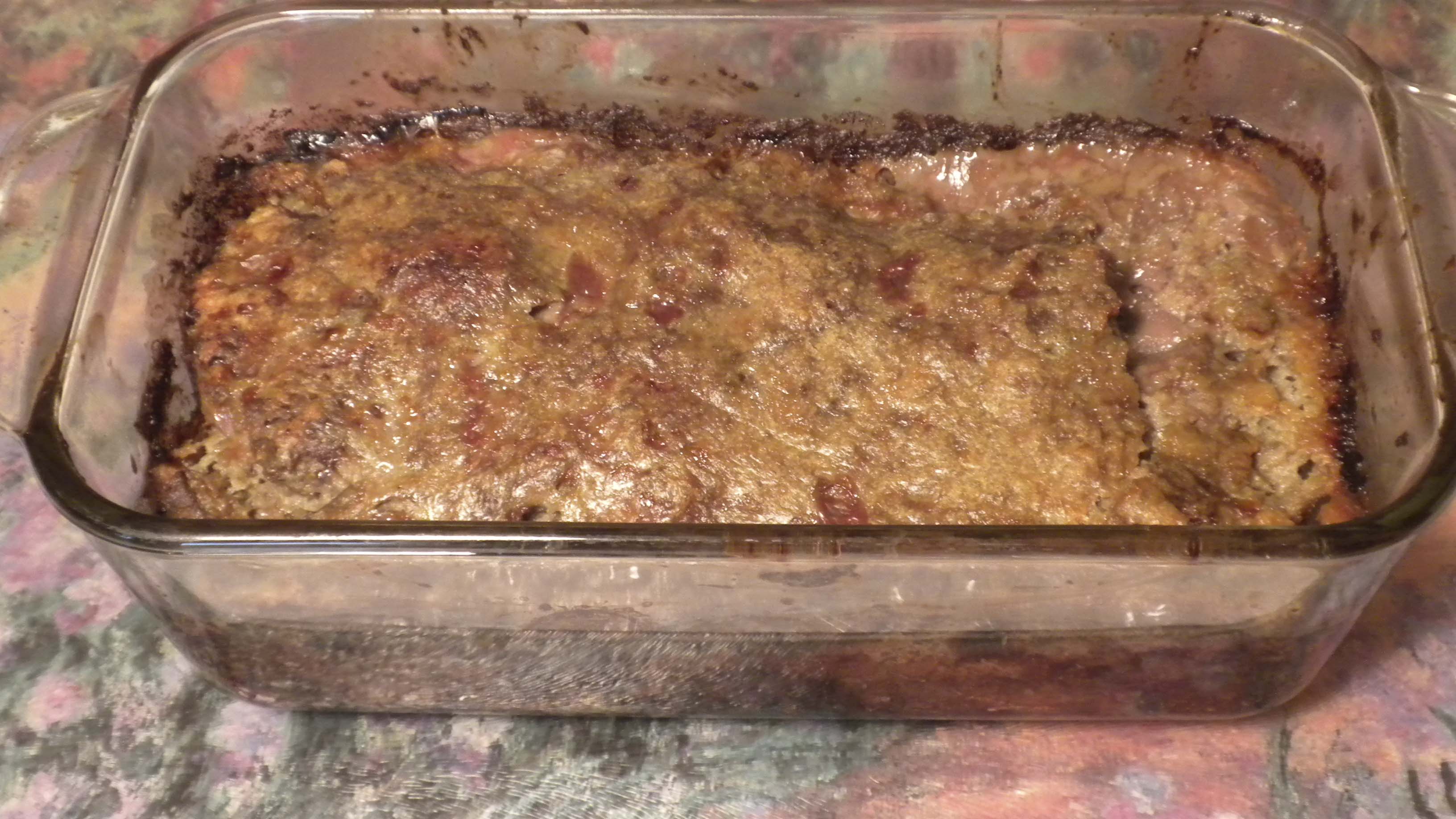
Liverloaf made with US Wellness Meats Grassfed Braunschweiger.
The standard American diet, known as “SAD†(and it is really sad, especially for those who eat it) does not contain any organ meats. In fact, organ meats are demonized for having fat and cholesterol. This is truly a shame, because organ meats from grassfed animals are one of the most nutrient-dense foods available, being packed with vitamins, minerals, amino acids, and other nutrients.
Our ancestors knew the value of organ meats. They gave great value to liver, heart, and kidney, and used these foods to support the health of their own organs. We can do the same.
Organ Meats Were Crucial in Traditional Diets
When I did the research for Tender Grassfed Meat: Traditional Ways to Cook Healthy Meat, I read a number of old cookbooks. I was astonished to find literally hundreds of recipes for all kinds of organ meats. Liver was considered a staple of the diet, and was sautéed, made into dumplings and pastries, eaten raw, puréed, roasted, and minced. When hunters killed an animal, it was a tradition to eat the warm liver on the spot, raw, with everyone in the hunting party having a share. This was not only a tradition among European hunters, but was also done by the Native Americans, and other people all over the world. Even predators such as lions, bears, and tigers will eat the liver first. There are hundreds of traditional European sausages made from liver, liverwurst being just one of them. Pâtés are one of the tastiest results of this tradition.
There were a myriad of recipes containing kidneys, heart, brains, sweetbreads (thymus gland), intestines, even lungs, spleens, and other organs. These organs were also made into sausages, pies, soups, fritters, and preparations unique to each organ. It was also traditional to stuff the stomach of an animal with chopped organ meat and other foods, the famous Scottish Haggis being an example of this. Most of these recipes were a great deal of work, because most organ meats require a great deal of trimming. There are often membranes, veins, arteries, and other inedible parts that must be removed, and the edible portions often required soaking, often multiple soakings, pounding, and intense cleaning. These recipes would often go into great detail as to how to prepare the organ meats for cooking.
The healthy peoples studied by Dr. Weston A. Price all ate organ meats, and valued them highly. Their traditional preparations of these meats also involved a great deal of work in cleaning and preparing the organs.
It should be noted that many of these dishes did not taste particularly good, and were resisted by children. People ate them anyway, and forced their children to eat them.
Why did all of these traditional peoples go to all that work and trouble? Because they knew there was something in these organ meats that was good for them, and because this knowledge had been handed down from generation to generation.
The Traditional Use of Organ Meats to Support Organ Functioning
Many traditional peoples, including the Native Americans, and even the pre-drug medical profession, believed that eating the organs from a healthy animal would support the organs of the eater. A traditional way to treat a person with a weak heart was to have the person eat the heart of a healthy animal. There were a number of country doctors who reported success with using this method. Eating the brains of a healthy animal was also believed to support clear thinking. People with bladder and kidney problems would be fed kidney meat from healthy animals. Native Americans with a vision problem or eye injury would be given the eyes of animals to eat. There are many reports confirming the success of such practices. In modern times, a number of people who need thyroid hormones have eaten the thyroids of animals, as an effective alternative to thyroid medication. However, I do not recommend that anybody do this on their own, without the supervision of a qualified medical professional. Nevertheless, many people have reported success with this practice.
Liver was often given to sick people, as the huge amounts of quality nutrients in this organ helped rebuild their bodies. Great emphasis was placed on only eating the organs from healthy animals.
However, most of the organ meats were eaten as part of the regular diet, by healthy people whose culture knew that eating these organs would support the natural functioning of their bodies. That is why they went through all the work necessary to prepare them.
Science Has Confirmed the Nutritional Benefits of Organ Meats
The development of the ability to identify and test for the presence of nutrients has confirmed what most people already knew—organ meats are a nutritional powerhouse, full of vitamins, minerals, amino acids, and many other substances vital for nutrition. Liver in particular is crammed full of vital nutrients, which is why predatory animals eat it first, and why it has been so valued over the course of time.
Unfortunately, organ meats have been demonized because they contain fat and cholesterol, and most people are afraid to eat them. The cholesterol myth is just that, a myth, and the fat of healthy animals is beneficial for human health, as shown in these articles: Know Your Fats Introduction and Cholesterol: Friend or Foe?
The organ meats eaten by our ancestors and traditional peoples have great nutritional value.
An Easy Way to Eat Organ Meats
We can get the benefits of organ meats, even today. I do not recommend eating the organs of factory animals. The organ meat of factory animals is not the same meat that has been eaten for thousands of years, but is different, as the animals have usually been given hormones and antibiotics, and have not been fed their natural feed. My personal choice is to eat the organs of grassfed and grass finished animals only. In the case of omnivorous animals such as pigs and chickens, I choose to only eat the organs of pastured animals.
But I will confess that all the preparatory work that is necessary for enjoying most organ meats is more than I want to do. I will buy organ meats that come ready to cook, but my favorite way to eat organs is by eating organ sausages.
Great care must be taken in choosing sausage, because all kinds of undesirable ingredients are often added to them. I insist on knowing everything that is in a sausage before I eat it. Currently, I know of only one Internet source for grassfed organ sausage that has no undesirable ingredients. These sausages are of the highest quality, and I eat them at least once a week. These are the organ sausages made and sold by US Wellness Meats. They make a delicious liverwurst that contains liver, heart, and kidney. They make two kinds of braunschweiger that contain a lot of liver: one cooked, and the other one raw. They also sell a headcheese that contains tongue and heart. These sausages can be made into delicious recipes. Here is a link to a recipe I created for the raw braunschweiger: liverloaf. There are also recipes using these sausages on pages 179-182 of Tender Grassfed Meat.
Organ meats are some of the most vital and nutrient-dense foods available to us. Our ancestors knew this, and we can learn from them.
This post is part of Real Food Wednesday Blog Carnival at Kelly the Kitchen Kop.
This post is part of Fight Back Friday Blog Carnival at Food Renegade.
This post is part of Monday Mania Blog Carnival at the Healthy Home Economist.
All Milk Is Not the Same
By Stanley A. Fishman, author of Tender Grassfed Meat

We are told that all milk is the same. This is just not true. There have been at least two different kinds of milk for almost 200 years. There is the milk that has nourished humanity for thousands of years, and there is swill milk. Swill milk was invented to maximize profits at the expense of everything else. Dairy cows were fed the leftover garbage from making beer and other alcoholic drinks, instead of their natural food—grass. This brewery and distillery waste was called swill. Cows who ate swill were weak and sickly and had very short lives. Their milk was full of deadly bacteria that was often fatal to children. In fact, the city of New York once had a child mortality rate of 50%, largely because of swill milk. Swill milk was particularly deadly to the poor, as it was the cheapest milk available, and many parents bought it because they were short of money.
Illness from raw milk was very rare before the introduction of swill milk. Millions of children died from swill milk. Pasteurization was developed to deal with the dangers of swill milk. While pasteurization may keep swill milk from killing people, pasteurization does not make the milk nutritious. There is a lesson in this horrible history. We should not feed garbage to milk cows. We should not feed garbage to any food producing animal. We should only feed these animals the food that nature intended for them.
Swill milk had a devastating effect on my grandfather’s family. This led him to become the first dairy farmer in the history of his family. He produced clean, nutritious milk of the very highest quality from grassfed cows. This milk was not pasteurized, and was a blessing to his family.
I have told this story in a guest post on Kimberly Hartke’s fine blog. Click on this link to read more:
Russian Immigrant to Canada Discovers Healing Power of Raw Milk
This post is part of Monday Mania Blog Carnival at the Healthy Home Economist.
The Magic of Steak and Eggs
By Stanley A. Fishman, author of Tender Grassfed Meat
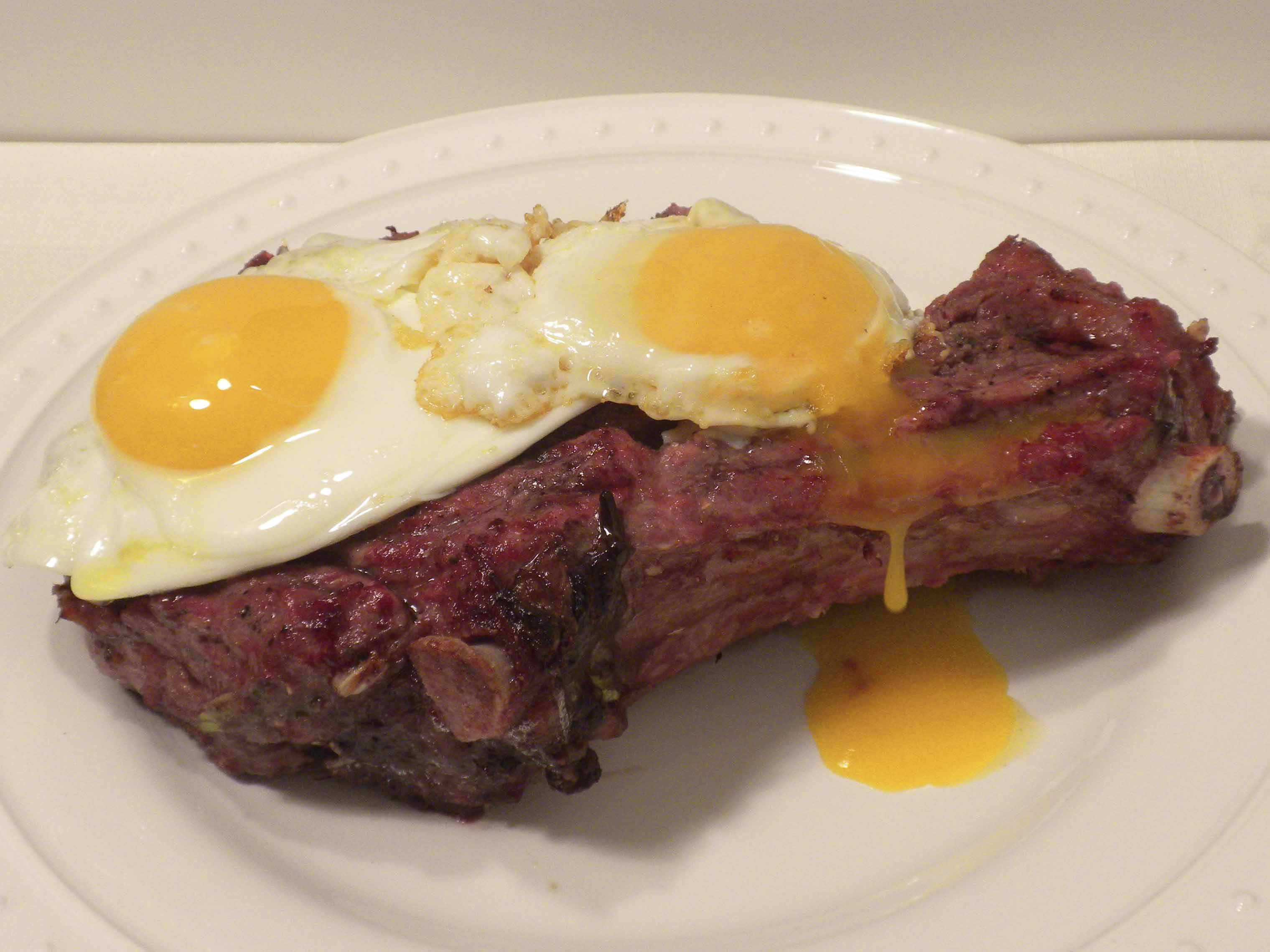
Grassfed rib steak with pastured eggs.
Scarlet fever almost killed my mother. She was only ten years old. She could not eat while the fever was raging. Her wealthy parents hired a famous doctor to treat her. When the fever finally broke, she was emaciated, and so weak she could not stand. Her immune system was exhausted, and she was in great danger of dying from other illnesses. The renowned doctor prescribed—steak and eggs.
Three times a day she was given tenderloin steak and eggs, all sautéed in butter, as ordered. At first she could not eat that much, but her appetite improved until she could eat the prescribed amount. Within a month, she regained her weight and health, and made a complete recovery.
The very steak and eggs that restored her are now demonized as unhealthy. Actually, this traditional food combination is renowned for its ability to enhance and rebuild the natural functions of the body.
The Benefits of Steak and Eggs
Grassfed steak is a nutritional powerhouse, full of valuable nutrients, including high quality proteins, amino acids, and many crucial vitamins and minerals. Eggs, especially pastured eggs, are just as full of vital nutrients, including some nutrients that are very hard to find anywhere else. See Sally Fallon Morell’s Oral Testimony to the USDA Dietary Guidelines Committee. Eggs also contain high quality fats that aid in the absorption of nutrients. Together, steak and eggs are a wonderful nutrient combination, providing a full range of vitamins, minerals, fats, cofactors, and other nutrients that complement each other perfectly, aiding in the absorption of each other’s nutrients.
Traditional peoples may not have known the science, but they did know it was good to combine steak with eggs. Steak and eggs were a valued combination in Russia, Poland, France, Italy, Spain, the Netherlands, Belgium, England, Germany, Portugal, and just about every other European country. This was true even though steak was very expensive in those countries. Steak and eggs were also very popular in the United States, Canada, Uruguay, and Argentina, nations where most people could afford beef.
By steak, I mean the 100% grassfed and grass finished beef that has nourished humanity for thousands of years. This means that the cattle graze on living plants out on the pasture when the weather permits, and when grazing is not possible are fed dried grass or hay. Nothing else, and certainly not any added hormones or antibiotics. I do not recommend the grain and byproduct-fed factory version of beef.
By eggs, I mean the whole egg. Yes, that includes the yolk, which contains almost all the nutritional value of the egg. A new practice has arisen in our fat-phobic modern society that would have astonished and outraged our ancestors—the practice of eating only the egg whites, while discarding the best part—the yolk. This reminds me of watching The Three Stooges when I was a child. I remember an episode where the Stooges broke eggs, threw out the contents of the eggs, hammered the shells into a frying pan, and tried to eat the fried shells. Throwing out the yolks is just as absurd.
The Demonization of Steak and Eggs
The makers of factory foods have always had a huge problem. The stuff they produce cannot possibly taste as good as real food. Also, the stuff they make cannot possibly compete with the nutritional value of real food. So they came upon a strategy that worked very well in the past and is still in use today—demonize good food. If people think good food is unhealthy for them, they will buy the artificial stuff out of fear.
Massive marketing campaigns convinced people that foods that made their ancestors robust and strong were unhealthy. Cholesterol, which is a vital component of every cell in the body, was blamed for heart disease and a host of other illnesses. Ignorance, fear, and marketing have largely succeeded. Most people actually believe that eating steak and/or eggs will “clog their arteries,†and cause a heart attack. This is simply not true, as shown in the following articles— Cholesterol: Friend or Foe? and Cholesterol and Heart Disease: a Phony Issue.
The food industry has made a fortune by convincing people to replace eggs with dried cereals, full of chemicals, in a form that never existed before the 20th century. The food industry has made another fortune by convincing people to replace meat with products made from soy proteins, full of chemicals, again in forms that never existed before the 20th century. No wonder they continue to demonize meat and eggs.
How to Enjoy Steak and Eggs
Many modern people have never had steak and eggs. The basic idea is to sauté a grassfed steak in butter, and to sauté a pastured egg or two, so the eggs will be ready at the same time as the steak. It is very important not to cook the eggs too long, as the yolks must remain liquid. When the steak and eggs are ready, place the eggs on top of the steak. The egg yolks provide a perfect sauce for the steak, and the combination is absolutely delicious. Tender Grassfed Meat has a recipe for this classic combination on page 68. Tender Grassfed Meat also has a number of other recipes for steaks cooked in butter, every one of which can be enjoyed with eggs. Eggs are also a terrific side dish for steak that can be used by people who are avoiding carbohydrates.
There is a reason why the combination of steak and eggs has been treasured in so many countries. They are wonderful together, both in taste and nutrition.
This post is part of Real Food Wednesday Blog Carnival at Kelly the Kitchen Kop.
This post is part of Fight Back Friday Blog Carnival at Food Renegade.
Related Posts
The Blessings of Bread and Butter
Steak and French Fries–Still My Favorite Meal
Understanding Dr. Weston A. Price
By Stanley A. Fishman, author of Tender Grassfed Meat

photo credit: TAYLOR149
“Life in all its fullness is nature’s laws obeyed.†Dr. Weston A. Price.
I have seen these words many times, but I did not really understand them. Until now.
I have been very ill for most of my life. I have had a lot of medical treatment. Most treatments would relieve the symptoms, for a while, than the symptoms would return, worse than ever.
Yet when I followed the Weston A. Price diet, did what I could to avoid toxins, switched to grassfed meat, and had no medical care, all my symptoms went away, and they did not return. And my body functions began to improve, and they are still improving. At 58.
Many body functions that did not work, such as having a sense of smell, being able to breathe through my nose, breathe effortlessly, and sleeping through the night, returned. Other body functions that had been deteriorating such as hearing, eyesight, digestion, sense of touch, taste, and flexibility, are now improving. My mental attitude also improved enormously. I began waking up with a sense of joy and eagerness to live the day, a feeling I last had when I was a child. My usual mental feeling could best be described as a happy, peaceful contentment.
What happened?
Modern Medicine
Modern medicine is focused on treating a particular disease, defined by a set of symptoms. These days, the disease is treated with artificial medication, or surgery, or radiation, or all three. All of these treatments are a massive and powerful assault on the body and its natural systems, often doing great harm. Success is defined by a cessation of the symptoms. Usually, the symptoms return in the future, worse than before, and the cycle begins again.
Nature’s Laws
We all have an immune system, and other bodily functions that are designed to fight off disease and keep us healthy and regenerating. Modern science and medicine arrogantly claim to know how they work, but this knowledge is still incomplete. They just know the tip of the iceberg. This iceberg is powerful and complex beyond our understanding.
We have a powerful desire to eat, and eat food that will satisfy us. We are born with it.
The healthy peoples studied by Dr. Weston A. Price did not have the chronic diseases that plague modern humanity. They did not have scientists, or laboratories. They did not have doctors or dentists, though they had healers. They knew far less about the tip of the iceberg than we do. But they knew something very important. They knew how to feed the body, the whole body. And the body sustained and protected them, just as nature intended.
These peoples did not have peer-reviewed studies, or computers, but they had something else. The accumulated experience of thousands of years of living, passed down from mother to daughter, from father to son, from healer to healer, from wise person to wise person. This priceless knowledge was based on the combined experience of tens of thousands, even millions of the ancestors of their people, who paid careful attention to their own observations, filtered through the wisdom of common sense, and passed on this knowledge.
The healthy peoples studied by Dr. Price knew what to eat, and what not to eat. They knew how to prepare food. They knew how to combine food. They knew how to preserve food, though they had no refrigerators. They knew how to satisfy their hunger, with the right foods, properly prepared. They did not decide what the laws of nature were, they discovered them. They knew how to avoid the natural toxins and dangers in their land. They obeyed the laws of nature, and were rewarded.
I think modern people have lost most of this knowledge, and no longer know how to obey nature’s laws. We have tried to substitute the incomplete knowledge of science and technology for the laws of nature, to make our own laws. And we have suffered terribly for this, as shown by the huge and increasing amount of chronic illness in the most “advanced†nations.
Science and technology have accomplished wonderful things in many areas, and have greatly improved life. But their knowledge in the area of nutrition and health is partial and incomplete. I support real research, research based on the desire to learn and share, rather than the desire to exploit. But much of this research has not been completed.
What happened to me?
I think my body’s functions were supported and activated. I think that the changes I made enabled my body’s systems to function the way nature intended them to. I think the avoidance of toxins reduced the burden on my body’s systems, enabling them to function better. I think that following the Weston A. Price diet, eating traditional foods, and eating traditional food combinations gave my body’s systems the fuel and resources they needed to function properly.
I don’t know how to cure, prevent, or mitigate any disease. But following the old wisdom discovered by Dr. Price has allowed me to follow nature’s laws, which has enabled my body to function properly. And I enjoy the fullness of life.
For more information about Dr. Weston A. Price, please visit these websites: The Weston A. Price Foundation and Price-Pottenger Nutrition Foundation.
This post is part of Real Food Wednesday Blog Carnival at Kelly the Kitchen Kop.
This post is also part of Fight Back Friday Blog Carnival at Food Renegade.
« Previous Page — Next Page »