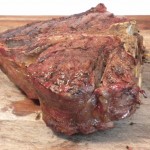
 Photos of recipes from the new book Tender Grassfed Barbecue
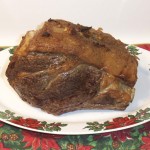 Photos of recipes from the cookbook Tender Grassfed Meat

This Free Ingredient Makes Everything Taste Better
By Stanley A. Fishman, author of Tender Grassfed Meat
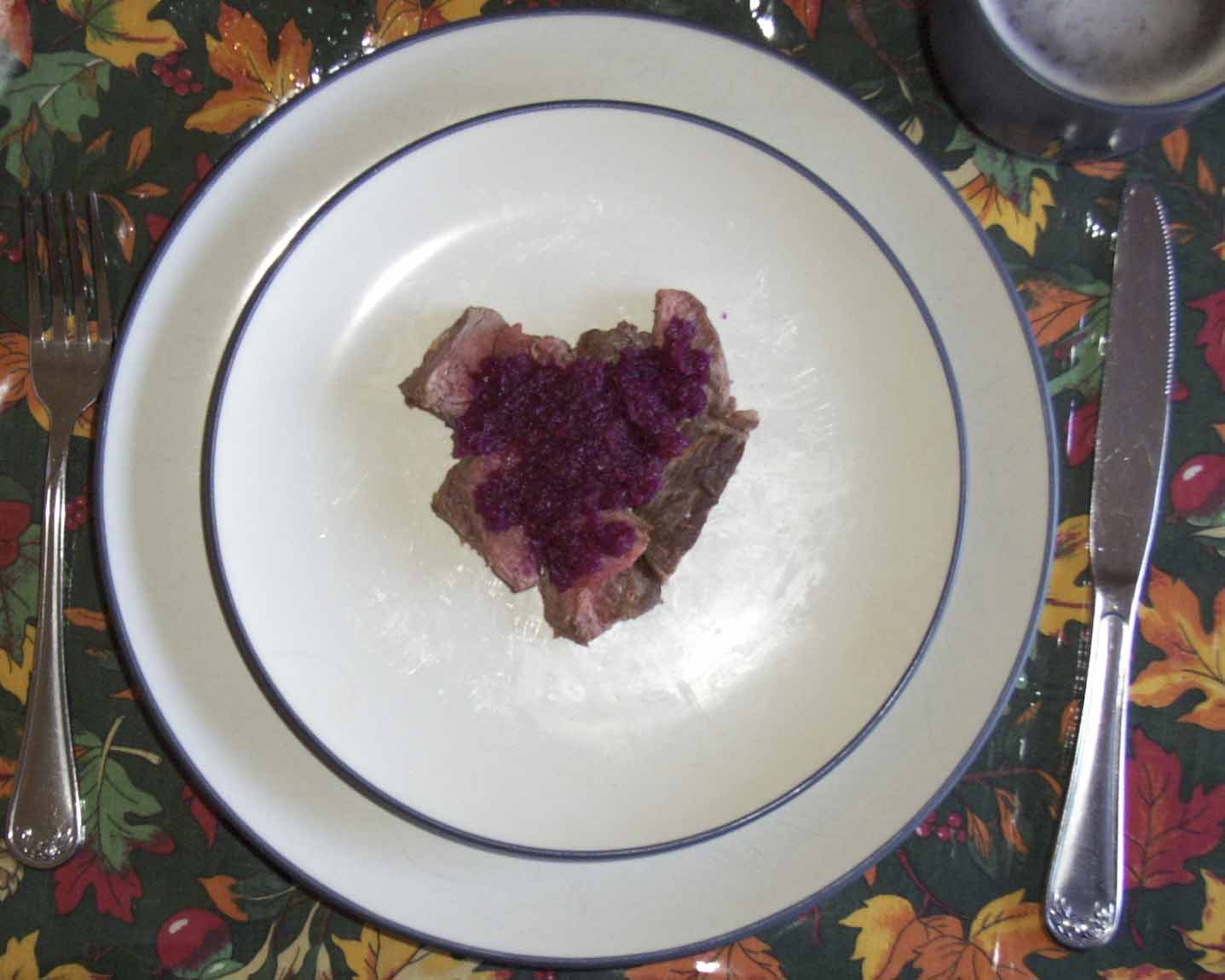
My wife made this appetizer in the shape of a heart for me.
There is an ingredient that makes all food taste better. It is not MSG. This ingredient also makes your food healthier. It is not a vitamin or mineral. This ingredient also makes it easier to cook the food, and makes the cooking more enjoyable. It is not a cooking gadget. Where can you buy this ingredient? You can’t. But you can create it. And it is free.
This secret ingredient is to maintain a cheerful, happy, loving, thankful attitude while you cook.
I know this kind of attitude is totally opposite from the competitive frenzy shown on so many cooking shows. These shows imply that good food is created through stress, conflict, complex cooking techniques, time pressure, and competition. I consider this modern attitude to be the psychic equivalent of factory food. But I know the ancient secret.
I came across this ancient secret while I was researching my cookbook, Tender Grassfed Meat. I read a number of old cookbooks, from every corner of Europe, America, and other parts of the world. Time and time again I came across this advice, in dozens of old cookbooks, from many different countries, expressed in many ways—never, ever cook when you are angry or upset. Be cheerful, happy, and grateful while you cook.
I also remembered the story of Marya Palma. Marya Palma was the family cook for my grandparents. My grandfather, an eater of mythic proportions, ate a meal at her tiny restaurant in Poland. The meal was so good that he paid her a small fortune to travel to his home in Manchuria and cook for him. Marya Palma was a huge, combative, formidable woman who had known great tragedy in her life, and was afraid of nothing and nobody. But when Marya Palma cooked, she was happy and cheerful. Marya Palma was such a magnificent cook that it was common for the guests to carry all 300 pounds of her around the dining room after a dinner, the ultimate tribute they could give to a cook.
Since I kept reading this advice, over and over again, I decided to take it. That was a very good decision indeed.
First, I plan the cooking so as to minimize any chance of being angry or upset. I select a recipe I have time for. I prepare and organize all the ingredients so they are pre-measured and ready to be added when the time comes. I do not start cooking until everything is in its place.
I learned to create this cheerful attitude by focusing on the food and thinking about its benefits. I look at the good ingredients, think of where they came from, of how much work and effort and wisdom it took to raise this good food, which will nourish and sustain the lives of me and my family. I think of how the real, healthy food I cook will nourish my family and friends. I think of how this good food will make them stronger and healthier. I think of how much they will enjoy the tasty food. And, to be honest, I think of how much I will enjoy the food. After a few minutes of this, I am quite cheerful and happy. I maintain this attitude by paying attention to the food as it cooks. I watch the changing colors of the browning meat, the deep green color of perfectly cooked vegetables. I listen to the sounds the food makes as it cooks. I smell the enticing smells of cooking meat, as my mouth waters. Good food appeals to all our senses. All we have to do is pay attention.
I became a much better cook when I added this free ingredient.
I know this may sound mystical, and there is no way to prove this through science, but I truly believe that the happy, cheerful feelings I cook with somehow improve the food, making it healthier, more digestible, and certainly tastier. Traditional wisdom supports my belief.
If you add this free ingredient to your food, I predict that your food will taste better. Everything you cook will taste better, and you will enjoy cooking so much more.
Related Post
Cooking Real Food—The Most Important Task
Organ Sausages Make Innards Delicious
By Stanley A. Fishman, author of Tender Grassfed Meat
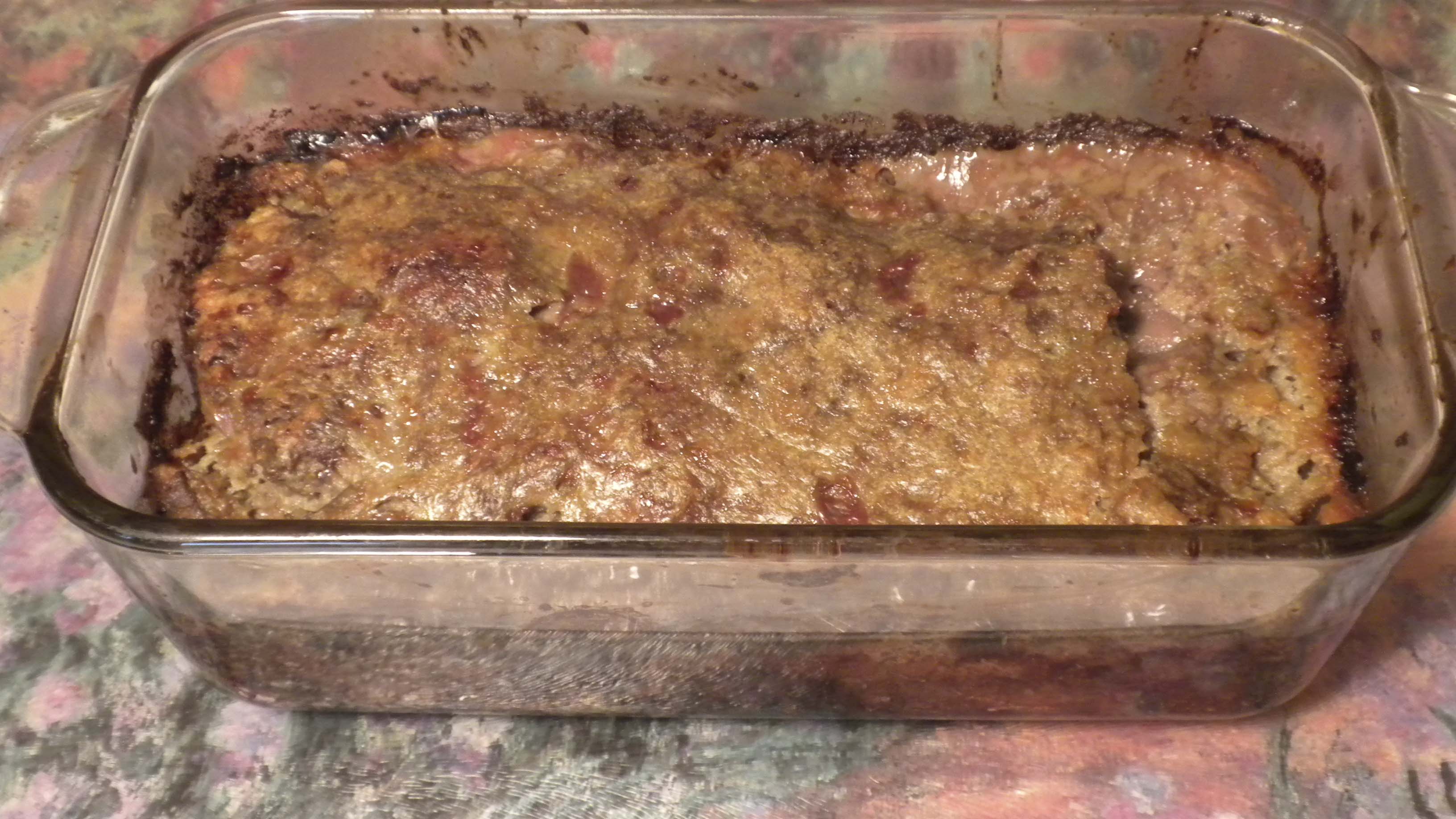
Liverloaf made with US Wellness Meats Grassfed Braunschweiger
How would you like to eat a totally natural food that would give your body most of the nutrients it needs, in a form that your body can easily digest and use? What if I told you that this food contained the entire B complex family of vitamins, in the right proportions? What if I told you that this food was rich in true vitamin A, in a form that is ideal for your body? What if I told you that this food contained natural vitamin D, again in a form that your body can easily use? What if I told you that this food contained many other vital nutrients? What if I told you that your body had evolved over time to process, use, and digest this food? What if I told you that this food is so full of nutrition that it was sacred in many traditional cultures? Would you want to eat this food?
Well, everything I have said about this food is true. Interested? The food is liver from grassfed and grass finished animals.
One of the great ironies of nutrition is that some of the most nutrient dense foods are the most feared and despised. Organ meats have lost their popularity in the west, despite their wonderful nutritive qualities. Saturated animal fat has also been demonized, but that is another subject.
How nutritious is organ meat? A study was done at the University of Chicago, in the 1930s. The study had a single subject, an arctic explorer who had lived with the far northern Inuit, and ate their diet. The explorer agreed to eat only animal and fish foods during the study, which went on for months. No grains, no vegetables, no plant foods. The study found that the explorer thrived, as long as he was able to eat liberally of the fat and the organs of the fish and animals he consumed. All the fish were wild and all the animals were grassfed, as no other versions were available at that time. The organ meats provided the explorer with all the vitamins and minerals he needed. At one point in the studies, the researchers restricted the explorer to lean meat only. He very quickly became sick and lethargic, but recovered completely when the fat and organ meats were restored to his diet.
Why are liver and other organ meats so despised? There are a number of reasons. I personally find organ meat from factory animals to be particularly unappealing. The organs of grassfed and grass finished animals are far more appealing to my senses.
All organ meats contain a good portion of saturated animal fat, a nutritional powerhouse that has been demonized in western culture.
Even the best grassfed organ meats require the removal of membranes, veins, tubes, and other parts before preparation, which is a lot of rather slimy work.
The solution for me is grassfed organ sausage. US Wellness Meats makes several varieties of organ sausages. I do not know of any other grassfed organ sausages. These sausages use only quality natural ingredients. They are made out of meat, organs, and a few seasonings—with no filler material.
I have two favorites. US Wellness Liverwurst is 30% beef and fat, 30% liver, 20% heart, and 20% kidney. It is an easy to eat treasure of grassfed organ meat. The sausage comes fully cooked, so you can eat it right out of the package, though I usually make it the main ingredient in an absolutely delicious meatloaf.
I should note that many traditional peoples and some old time doctors believed that one of the best ways to keep a strong heart was to eat the hearts of healthy animals. It was also believed that the liver would be strengthened by eating liver, and the kidneys would be helped by eating kidneys. While I cannot speak as to whether this is true, I can tell you that I feel better all over after eating this sausage.
My other favorite is US Wellness Raw Braunschweiger. This is 60% beef and fat, and 40% liver. This sausage is raw, and must be cooked before eating. Here is a link to a recipe I developed specifically for Raw Braunschweiger, a delicious meatloaf that uses the old European tradition of using butter and onions to complement the liver.
Liverloaf Recipe at US Wellness Meats
Frugal and Delicious: Traditional Ways to Stretch Grassfed Meat
By Stanley A. Fishman, author of Tender Grassfed Meat
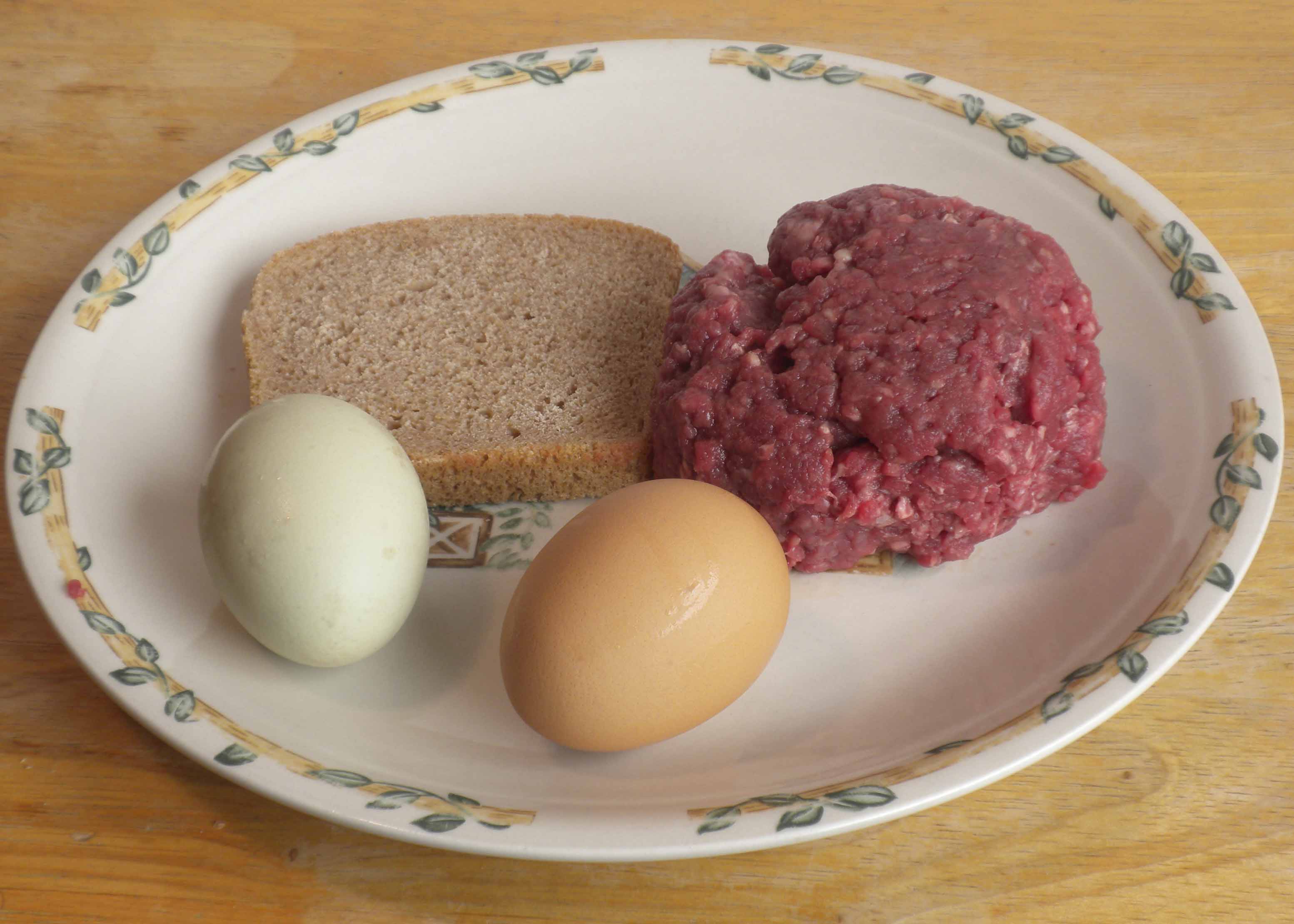
Ingredients for Traditional Burger Mix: ground grassfed beef from U.S. Wellness Meats; pastured eggs; and chemical-free sourdough spelt bread.
Many people who eat grassfed meat have trouble affording the higher cost. Grassfed meat is more expensive than factory meat, in a per pound cost. However, there are many ways to reduce the cost of grassfed meat, such as buying a whole, half, or quarter animal, joining a CSA, searching the websites of trusted providers for specials, making a good deal with a local farmer, and other similar methods. But there is another way to make grassfed meat feed more people and provide more meals, which was developed over the centuries in Europe and elsewhere. Add wholesome and less expensive ingredients that literally enable you to stretch the meat, while adding a delicious taste and texture. Done right, these dishes can actually taste better than a dish made up only of meat.
The ordinary European had a hard time getting meat, so they made the most of it. Meat scraps were made into stews combined with many different vegetables. Chopped or cubed meat was often added to grains such as wheat, rye, oatmeal, rice, kasha, and barley. Sausages often contained a large number of non-meat ingredients such as grains, fat, sometimes blood, and sometimes all three. Onions, chopped, or sliced, or pureed, were added to almost every meat dish other than roasts or steaks, and often to those dishes as well. Herbs, fresh and dried, were added for flavor, as were spices such as pepper, cloves, cinnamon, nutmeg, and others. Spices were usually added in very small amounts, because spices were expensive. The use of small amounts meant that the spices did not overwhelm the meat, but blended with the other ingredients to create a wonderful taste.
Ground meat is usually the lowest priced form of grassfed meat available, especially in bulk. Traditional European cuisines had many recipes for ground meat, almost always stretched by the addition of other ingredients, both for economy and taste. The added ingredients often included eggs, onions, milk, cream, stale bread or bread crumbs, small amounts of various spices, and always some of the fat of the animal. Ground meat was cooked in the form of meatballs, meatloaves, as part of the filling for pies, in sausages, as part of a filling for all kinds of pastries, and in dumplings. These methods and flavors work very well with modern grassfed beef. Adding traditional ingredients to ground meat can result in a hamburger, for example, that is much tastier than an all meat burger.
I want to make a distinction between the traditional use of stretching meat with other ingredients, and the modern factory food method of making more money by adding ingredients such as soy protein, water, and all kinds of other filler materials to ground meat before the meat is sold. The traditional practice of adding other ingredients to ground meat occurred only when the meat was actually cooked, not when it was bought. Any ground meat I buy is 100% grassfed and grass finished, with no ingredients except meat and meat fat.
The following is my version of a typical European meat mixture for hamburgers. There are hundreds of different versions. This one contains many of the typical ingredients used to stretch ground meat in Europe and is delicious. It is intended for grassfed hamburgers. The mixture can be grilled, sautéed in a frying pan, or cooked under a broiler. It should be cooked thoroughly, with medium rather than high heat. Stale bread does not appeal to me, so I have substituted fresh bread crumbs.
Traditional Burger Mix
1 pound grassfed ground beef
2 slices chemical free sprouted or sourdough bread of your choice
1 small organic onion, very finely chopped
2 pastured or free range organic eggs
1 teaspoon coarse unrefined sea salt, crushed
1/2 teaspoon organic freshly ground pepper
1/8 teaspoon ground organic cloves
- Chop the bread into cubes, and crumb in a blender.
- Break the eggs into a small bowl, and beat lightly with a fork until well combined.
- Add the crumbs, eggs, and all other ingredients to a large bowl, and mix until well combined. Traditionally, this would be done with your clean hands, but it is a sticky experience, and it can be hard to wash the mixture off your hands. A large spoon is a very practical alternative.
- Form into hamburgers and cook, or refrigerate until just before cooking. This delicious mixture should be used within 24 hours of being made.
This post is part of Real Food Wednesday Blog Carnival at Kelly the Kitchen Kop.
Read more frugal real food blogs at Pennywise Platter Thursday at the Nourishing Gourmet.
Mushroom Cream Sauce Makes Luxurious Leftovers
By Stanley A. Fishman, author of Tender Grassfed Meat

Grassfed meat is so filling and satisfying that we often have leftovers. I have just discovered a new favorite way to enjoy leftovers. In fact, this is so delicious that you may find yourself eating less just so you can have more leftovers to reheat.
The secret to luxurious leftovers is this traditional recipe for mushroom cream sauce. Forget about the stuff that comes out of a can, this is the real deal, made from scratch in this simple, but absolutely delicious recipe. This sauce is perfect for leftover beef, lamb, and bison. It is also excellent with any kind of ham, and could be used to reheat any meat. This is the tastiest way I know to reheat previously cooked meat. Just make sure the meat is sliced very thin. This sauce is so good that we make sure that every bit of it is served and enjoyed.
Traditional Mushroom Cream Sauce for Leftovers
2 tablespoons pastured butter
1/4 pound fresh mushrooms of your choice, sliced, (I prefer crimini, but any good fresh mushroom will do)
2 more tablespoons pastured butter
2 tablespoons organic sprouted flour, either spelt or wheat, (you could substitute your favorite unbleached healthy flour)
1 cup whole organic full fat unhomogenized milk, (you could substitute your favorite full fat unhomogenized healthy cows milk)
1/3 cup full fat organic cream, (you could substitute your favorite full fat healthy cream)
1/4 teaspoon coarse unrefined sea salt, crushed
Thinly sliced leftover meat of your choice
- Melt 2 tablespoons butter in a medium-size, heavy-bottomed pan over medium heat. When the butter is hot and bubbly, turn the heat to medium high, add the mushrooms and stir until the mushrooms are nicely browned, but not scorched. Remove the mushrooms from the pan and reserve.
- Turn the heat down to medium. Add 2 more tablespoons of butter to the pan. When the butter is hot and bubbly, add the flour. Stir the flour and butter with a wire whisk, until well combined. Slowly pour in the milk, a little at a time, whisking well to incorporate the milk as you add it. When all the milk has been added, add the cream and whisk well. Continue to cook, stirring, until the mixture starts to thicken. Add the salt, and the reserved mushrooms. Stir well.
- Add the thinly sliced meat, and cover with the sauce. Turn the heat down to low, and simmer for a minute or two, until the meat has been reheated.
Serve with the sauce and enjoy.
This post is part of Real Food Wednesday Blog Carnival at Kelly the Kitchen Kop.
Also check out Fight Back Friday at Food Renegade.
Beautiful, Nutritious, Delicious Bones
By Stanley A. Fishman, author of Tender Grassfed Meat
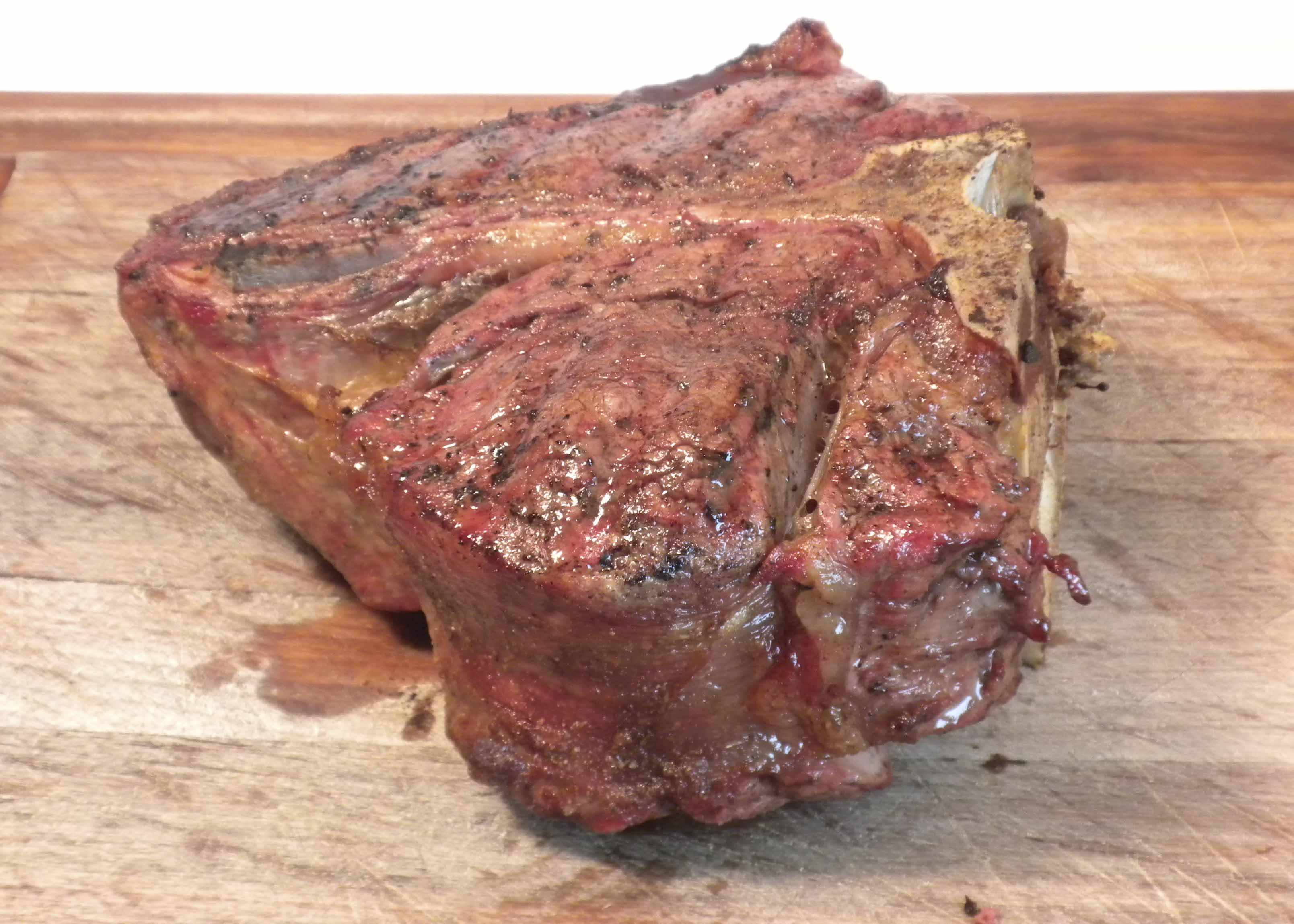
Grassfed Bone In Porterhouse. It tasted even better than it looks.
There is a very old saying,â€the nearer the bone, the sweeter the meat.†This saying celebrates the traditional knowledge that meat on the bone is valuable, both for taste and nutrition. The meat right next to the bone is sweeter and tastier, flavored with bone marrow and other substances that enter the meat during cooking. Grassfed meat cooked on the bone has so much flavor that spices are often unnecessary. I prefer to cook grassfed meat on the bone. Bone in meat has great nutritional benefit. Bone in meat is more tender. Bone in meat cooks more evenly. And it tastes so much better.
Why Most Meat Cuts Are Boneless
Most of the meat cuts sold today, including grassfed cuts, are boneless. There are several reasons for this. Bones are heavy, and most meat is shipped a long way. Cutting off the bones reduces transportation costs. I have talked to grassfed farmers who do not sell bone in meat because they are afraid the bones will penetrate the plastic they ship their meat in. The emphasis on lean meat promotes the use of boneless cuts, as bones contain fatty substances such as bone marrow. Carving bone in meat requires more effort than dealing with boneless cuts. Most people think of bones as waste, and do not want to pay for them. Actually, bones have tremendous nutritional and culinary value.
Bone In Meat Is More Nutritious
Bones are made up of minerals such as calcium, phosphorus, magnesium, and many others. When you put your mouth on a bone, the saliva in your mouth dissolves some of these minerals, which thus enter your body. Your body knows exactly how to digest and process these minerals and the cofactors which come with them. Need minerals? Eat the meat next to the bone, and you will get plenty, in a form that your body can easily assimilate and use. Also, you can suck discreetly on a tasty bone.
Bones also contain bone marrow, a fatty substance that is extremely nutrient dense, and is invaluable in making your own bones strong and healthy. Bone marrow is released into the meat during the cooking process, making the meat more nutritious and sweeter. There have been few, if any, scientific studies on the nutritional value of bones and bone marrow. However, there are some very old “studies,†conducted by our ancestors, the traditional peoples studied by Dr. Weston A. Price, and even wild animals.
Traditional People Knew the Value of Bones
The earliest habitats of primitive humans were found in caves. Many of those caves had one thing in common—a large pile of smashed and split animal bones. It is universally agreed that those bones were smashed and split to get at the bone marrow.
Traditional cuisine is full of references to bone marrow, which was eaten in many forms, and highly prized. The most prized meat in early Europe was the chine portion, a cut of meat reserved for the elite members of society, the heroes. Ancient Irish warriors fought to the death for the right to eat the chine portion, also known as the Hero’s Portion. Even the mightiest warrior in the Iliad, Achilles, cooked a chine portion for himself and the other great heroes of the Greeks. The chine portion was the same cut as a modern rack of lamb, or prime rib, or pork rib roast, except that the chine bone was always left on.
The Native Americans would actually use heavy rocks to pound bison bones into powder, which was made into a nourishing broth.
For most of history, meat was always roasted on the bone. Even stews had bones added to the pot, and the pieces of meat often contained bones. Many traditional peoples would chop chicken and other soft boned meats into pieces, so the marrow and other nutrients would be released into the pot during cooking. These traditions are still carried on today, in traditional cuisines all over the globe.
Several of the peoples studied by Dr. Weston A. Price, particularly the Inuit, split the bones so they could eat the marrow. All of the peoples studied by Dr. Price ate foods made with bones, often in the form of bone broths. These people had excellent teeth, strong bones, powerful immune systems, and were robustly healthy.
Finally, predators such as lions, wolves, and coyotes value the bones of their prey. After eating the liver of their kill, these animals will crack the bones for the marrow and chew on them, often leaving the lean meat for the scavengers. If you have ever given your dog a bone, you can see that dogs also have this traditional wisdom. Chewing on the bones is one of the best ways that these animals can get necessary minerals.
Meat on the Bone Tastes Much Better
Prime rib of beef, Porterhouse steak, T-bone steak, and lamb chops are bone in cuts that are popular even today. These cuts are very expensive and highly prized. Our ancestors ate a much wider variety of bone in cuts. Sirloin steaks, strip loin steaks, lamb roasts, beef roasts, pot roasts, pork roasts, and stews were all cooked with the bones. Almost all poultry was cooked with the bones, as were most fish. The reason for this was that the bones add so much flavor, as well as nutrition. When you cook meat on the bone, the marrow and other substances from the bones actually flavor the meat, adding succulence and a depth of taste that just does not exist with a boneless cut. The bones also help keep the meat moist, and help conduct heat throughout the meat so it cooks more evenly. If you are cooking the meat in liquid, the bone marrow, gelatin, minerals, and other substances from the bone enter the liquid, imbuing it with wonderful flavors, and causing it to thicken into a wonderful, flavorful sauce. There are a number of traditional recipes that call for adding extra bones to stews, pot roasts, and even the roasting pan to add these flavors to the dish. Meat is always tastier when cooked on the bone.
How to Add the Benefits of Bones to Your Diet
The simplest way to enjoy the benefits of bones is to cook bone in cuts. These are cuts of meat that still have the bone attached. When you eat the meat, do not be afraid to chew all the meat off the bones. Do not hesitate to discreetly suck on the bones, especially if you can get some of the marrow. You may find this to be immensely satisfying, as I do. Of course, don’t swallow any bones.
Another great way to enjoy the benefits of bones is to make real bone broth from the bones of pastured animals, simmered for many hours so the nutrients of the bones are released into the broth. My cookbook, Tender Grassfed Meat, has a number of such broth recipes, as does Sally Fallon’s magnificent work, Nourishing Traditions. Tender Grassfed Meat also includes a number of recipes for cooking bone in meat.
This post is part of Fight Back Friday Blog Carnival at Food Renegade.
Two Simple Rules for Good Nutrition
By Stanley A. Fishman, author of Tender Grassfed Meat
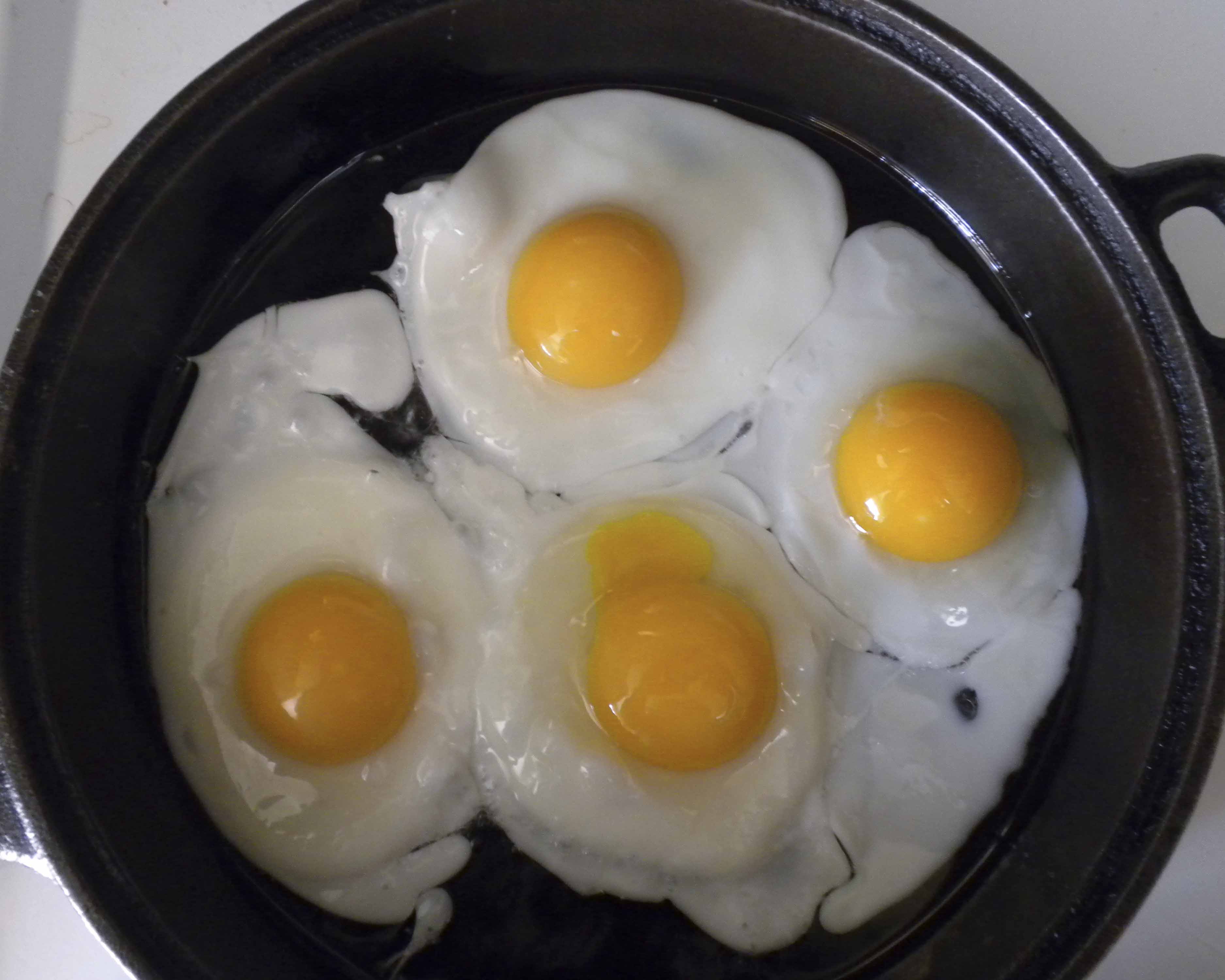
These beautiful pastured eggs were raised by my dear friend Sheri. Note the beautiful orange yolks full of nutrition.
Understanding nutrition may seem hopeless. There are hundreds of books, thousands of articles, thousands of studies, dozens of conflicting theories, and endless advertisements. All this information can be very confusing. But you don’t have to know all of it. I enjoy the benefits of great nutrition by following two simple rules.
Rule Number 1: Eat only the natural, whole, and unmodified foods humankind has been eating for thousands of years.
Rule Number 2: Eat only those natural, whole, and unmodified foods which have been raised, processed, and prepared by the methods humankind has used for thousands of years.
Following these rules has literally taken me from constant chronic illness to robust good health. Here is why I follow these rules:
Rule Number 1: Eat Only the Natural, Whole, and Unmodified Foods Humankind Has Been Eating for Thousands of Years
Our bodies know how to digest and handle natural molecules, especially those that humankind has been eating for thousands of years or longer. For thousands of years, our bodies have adapted to digest these molecules, and this knowledge is passed down in our genes, and in the very makeup of our bodies. We are born with it.
When we eat foods made up only of natural substances that our bodies are programmed to digest, our bodies and organs know exactly what to do. The nutrients are extracted from the foods and used to nourish, fuel, and regenerate our bodies. The waste and toxins are identified and removed from the body.
Unfortunately, now humans eat foods where the very molecules have been modified into something no human body has ever been programmed to deal with. This started a few hundred years ago with refined sugar and refined flour, increased enormously in the 20th century, and is very common today, with all kinds of hydrogenated foods, trans fats, many thousands of artificial laboratory-made and/or modified foods and chemicals, artificial fertilizers, pesticides, livestock raised on feed that is not part of their natural diet, the use of artificial hormones and antibiotics, and other unnatural foods.
Our bodies literally do not know what to do with these new molecules, which do not exist in nature and are created by technology.
Rule Number 2: Eat Only those Natural, Whole, and Unmodified Foods which Have Been Raised, Processed, and Prepared by the Methods Humankind Has Used for Thousands of Years
The knowledge of how to raise, process, and prepare food has been passed down over many thousands of years. This knowledge represents the collective experience of many millions of our ancestors, who learned over time how best to raise, process, and prepare food. They knew a lot more that they are given credit for.
For example, they did not have refrigeration, but they knew how to preserve food, by natural fermentation, smoking, drying, salting, and many other methods, including cold storage and freezing when permitted by the weather. These methods often increased the nutritional value of the food.
Our ancestors knew how to process foods so the nutrients were available, often by soaking, sprouting, fermenting, and other such methods.
Our ancestors knew how to cook foods so as to preserve and enhance the nutritional value, and how to combine different foods into nourishing meals.
Our bodies adapted to the traditional methods of raising, processing, and preparing foods over thousands of years, and know how to digest such foods.
Modern methods of raising, processing, and preparing food change the very molecular structure of the food, once again giving us molecules that our bodies do not know how to digest, or what to do with.
Even the most natural and traditional foods will have their molecular structure and content changed by modern methods such as: cooking with very high heat; using cookware made of space age materials like aluminum and the metals in non-stick cookware; irradiation; microwaving; hydrogenation; modification; homogenization; preservatives; artificial colors and flavors; and many other modern methods of dealing with food. Again, our bodies do not know what to do with these artificially changed molecules.
The result of following these two rules is that you know what food to put into your body and your body knows what to do with the food you put into it.
How I Follow These Rules
Learning how to follow these rules is simple, though it is a lot of work. The blessings of good nutrition are more than worth the effort. And it becomes easier and easier, once you are used to it.
I rely on two cookbooks in following these rules. Nourishing Traditions: The Cookbook that Challenges Politically Correct Nutrition and the Diet Dictocrats, the magnificent work by Sally Fallon and Dr. Mary Enig, provides information and recipes on just about everything except how to cook grassfed meat. Tender Grassfed Meat: Traditional Ways to Cook Healthy Meat, my cookbook, provides information on grassfed meat and how to cook it, in detail. Yes, I do use my own cookbook.
This post is part of Real Food Wednesday Blog Carnival at Kelly the Kitchen Kop.
This post is part of Fight Back Friday at Food Renegade.
Eating in Season: Roast Spring Lamb on the Bone
By Stanley A. Fishman, author of Tender Grassfed Meat
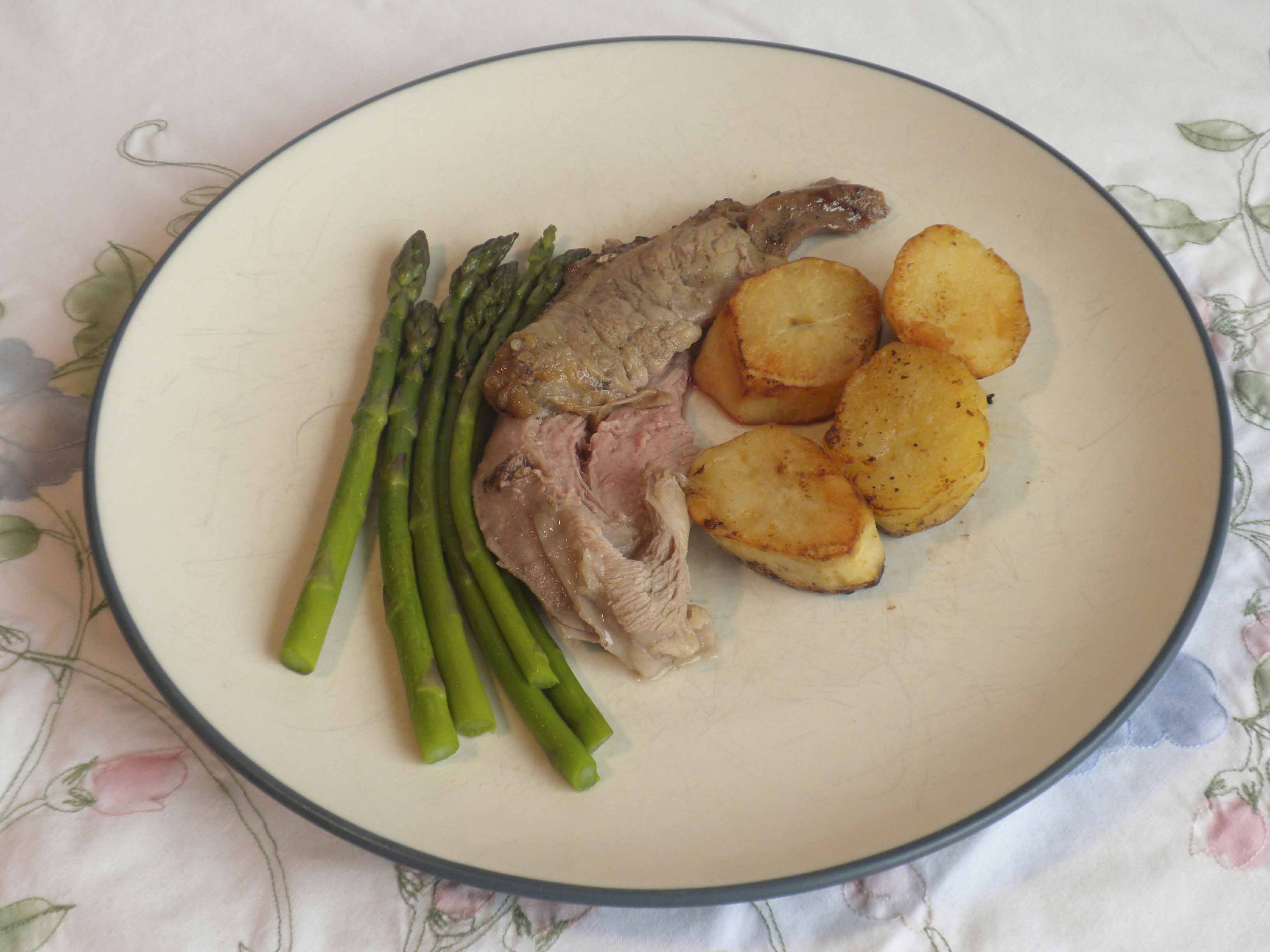
Roast Spring Lamb with Asperagus and Potatoes
Food is always better in season. Our ancestors knew this. Before food was industrialized, we would wait for that particular time of year that each fruit and vegetable would reach its peak of flavor and nutrition, when it would arrive at the markets with great anticipation. The first plump, juicy cherries, the first sweet corn of the year, the first fragrant peaches—were awaited eagerly and consumed with joy. People welcomed the first spring lamb of the year. This lamb, nourished by the rich green grass of spring, often flavored by the young flowers and herbs also loved by sheep, had a tenderness and flavor that was exquisite, beyond compare.
Lamb is available all year round now, and is not very popular in the United States. Most lamb raised in the US has been bred to gargantuan sizes, finished on grain rather than grass, and tastes nothing like the lamb humanity has enjoyed for most of history. No wonder people don’t like it. I don’t like it. But you can still find the real spring lamb, lamb finished on the sweet green grass of spring, lamb that is mild and sweet and tender, infused with the flavor of herbs, lamb that is absolutely delicious.
This lamb is at its absolute best when cooked on the bone, with the flavor of the meat being enhanced by the marrow, and the internal cooking aided by the heat conducted by the bone. It is even better when naturally basted with a cap of its own natural fat.
You can only find the real traditional lamb from grassfed farmers, who raise lamb the traditional way. This recipe was made with a bone in leg of lamb from Northstar Bison, whose lamb is exquisite (as is their bison).
No people honored lamb more than the Greeks, a tradition going back thousands of years. I have used Greek flavors with this wonderful grassfed lamb. Once you taste this lamb, you will understand why spring lamb was so valued.
Roast Spring Lamb on the Bone
1 (4-5½ pound) bone in leg of lamb, (if you cannot find a whole leg of lamb this small, you could use a half leg of lamb of equivalent weight)
4 cloves organic garlic, quartered
1 medium sized organic lemon, well washed
2 teaspoons fresh organic thyme leaves
1 teaspoon dried organic or imported oregano, preferably Greek or Italian
1 teaspoon freshly ground organic black pepper
1 teaspoon coarse unrefined sea salt, preferably French, crushed
4 tablespoons unfiltered organic extra virgin olive oil
- The night before you plan to cook the roast, cut 16 slits, about an inch deep, all over the top and sides of the lamb. Push a garlic quarter into each slit, as deep as it will go.
- Roll the lemon on a flat, hard surface, pressing down with your hand. This will help release the juice. Cut the lemon in quarters, and squeeze the juice into a glass bowl. Remove any seeds from the bowl. Reserve the lemon quarters.
- Add the thyme, oregano, pepper, salt, and olive oil to the lemon juice, and mix well to make a marinade. Place the lamb in a glass bowl, and coat well with the marinade. Crush the lemon quarters a bit in your hand (warning, your hand will smell like lemon), and press the yellow side of the lemon quarters into the meat. Cover, and refrigerate overnight.
- Remove the lamb from the refrigerator an hour before you plan to start cooking it, so it can come to room temperature. Preheat the oven to 425 degrees.
- Place the lamb in a roasting pan, fat side up, and pour any marinade left in the bowl over the lamb. Cook for 15 minutes. Remove the pan from the oven, baste with the pan drippings, and return to the oven. Cook for another 15 minutes. Remove the pan from the oven, baste with the pan drippings, and return to the oven. Turn the heat down to 300 degrees. Cook for another 30 to 50 minutes, depending on how you like your lamb.
Serve and enjoy! Remember that lamb tastes best when it is hot, not warm.
This recipe is part of Real Food Wednesday Blog Carnival at Kelly the Kitchen Cop.
Another Way to Improve Pork
By Stanley A. Fishman, author of Tender Grassfed Meat
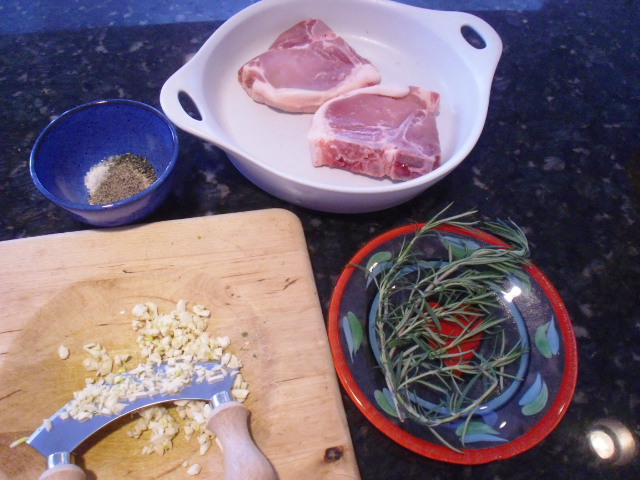
Wet Pork Rub Ingredients
Even the best pork I can find today is just too lean. Modern pork often comes out tough and tasteless because it is so lean. I have experimented with a number of different ways of improving modern pork. This wet rub does the job, giving a wonderful flavor to pork and making it tender. I used a 2,000 year old seasoning tradition and the pork came out great. Here is the link to the article on Kim Hartke’s fine blog:
Wet Rub for Pork
Who Was Weston A. Price?
By Stanley A. Fishman, author of Tender Grassfed Meat
Who was Dr. Weston A. Price? He was the man who saved my life and restored my health even though he died before I was born.
Dr. Price was a dentist in Cleveland, Ohio. He was a very distinguished dentist who was also the research director of the American Dental Association. After many years of practice, Dr. Price realized that the teeth and health of his patients were getting worse from year to year. Even more disturbing was the fact that each generation of his patients had worse teeth and was sicker than their parents. Dr. Price decided to find out why.
The Question
After several years of research, Dr. Price decided that the problem was caused by the absence of some essential factors from the modern diet. But he did not know what those factors were. Dr. Price did know that many so-called primitive peoples had excellent teeth. In fact, these “primitives†had much better teeth than the “civilized†peoples who had far superior technology. Dr. Price decided to study those people who had excellent teeth.
The Search
Dr. Price decided to travel directly to where these healthy people lived, so he could study them first-hand and learn why they were healthy. Dr. Price traveled all over the world during the 1920s and early 1930s. He visited isolated, healthy people from Switzerland, the Scottish islands, Australia, Africa, Polynesia, Peru, Native Americans in Canada, and others. He also studied the close relatives of each of these peoples, who were not isolated and lived in more “civilized†circumstances.
The Answer
In every case, Dr. Price learned that the traditional people who ate the diet of their ancestors, which consisted of unprocessed foods, from hunting, gathering, herding, fishing, and natural farming had excellent teeth, without cavities, even though they had no dentists. Not only did these people have excellent teeth, they were free of the chronic diseases that were common in civilization. They did not have cancer. They did not have heart disease. They did not have diabetes. They did not have tuberculosis. They had none of the chronic diseases that plagued the so-called civilized world. They also did not have crime or mental illness. They had no need for police or psychiatrists. Their children were born healthy, without defects. Dr. Price also found that members of the same group of people, when they ate a modern diet, had terrible teeth and were plagued by every one of the chronic diseases that were common in more advanced countries. The only difference was what they ate.
The Solution
Dr. Price discovered that the key to good health is to eat a traditional diet of unprocessed food, and to eat the same kinds of foods that the healthy, isolated people ate. Dr. Price discovered that while the diets of these widely scattered peoples were quite different, they had many elements in common. Dr. Price discovered what these elements were, especially the dietary factors that were essential to good health. He recorded his findings in a book entitled Nutrition and Physical Degeneration, which was published in 1939. This book described exactly what people should and should not eat in order to be healthy.
Ignored and Rediscovered
Unfortunately, Dr. Price’s work was largely ignored. However, his work was preserved by the Price-Pottenger Nutrition Foundation, which devoted itself to keeping his book in print, and keeping his knowledge alive. The Weston A. Price Foundation was founded in 1999. They have done a magnificent job of spreading Dr. Price’s knowledge all over the world and the Internet. Sally Fallon, the founder of the Weston A. Price Foundation, wrote Nourishing Traditions: The Cookbook that Challenges Politically Correct Nutrition and the Diet Dictocrats, a comprehensive cookbook which teaches the reader to cook traditional food that can restore their health. Nourishing Traditions also explains the teachings of Dr. Price in a way that is easy to understand.
How Weston A. Price Saved My Life
I had been chronically ill for most of my life with many illnesses, including life-threatening asthma. I was told in 1998 that I would only get worse, and that my lungs would never heal. Instead of accepting this medical death sentence, I searched desperately for a way to save my life. The website of the Weston A. Price Foundation gave me all the knowledge I needed. I adopted the Weston A. Price diet and became healthy. Once I switched to grassfed meat, I became robustly healthy. If not for Dr. Price, I do not believe I would be here today to write these words.
You can find out more about Dr. Price here.
« Previous Page